AUTOMOTIVE DOOR TRIM COMPONENT DEVELOPMENT
AIM
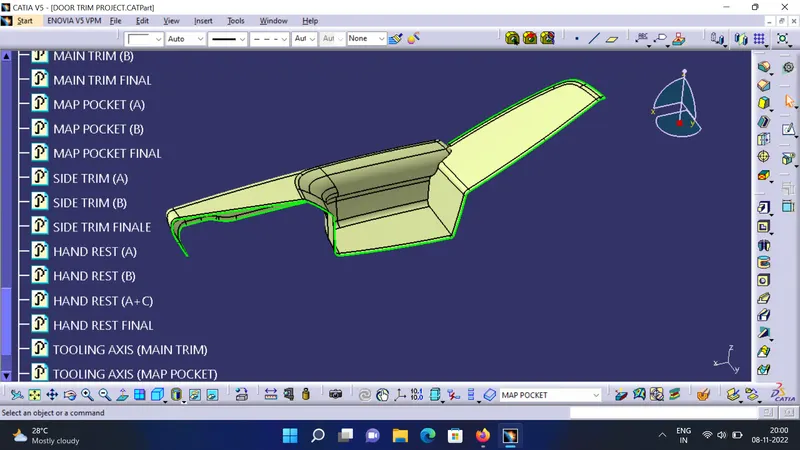
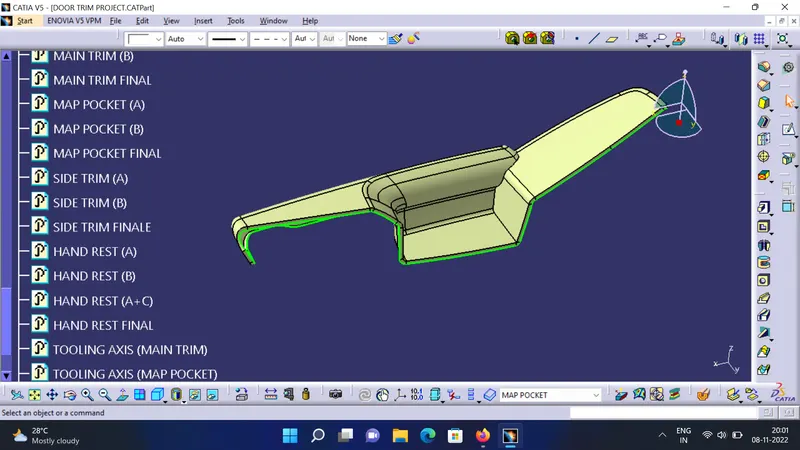
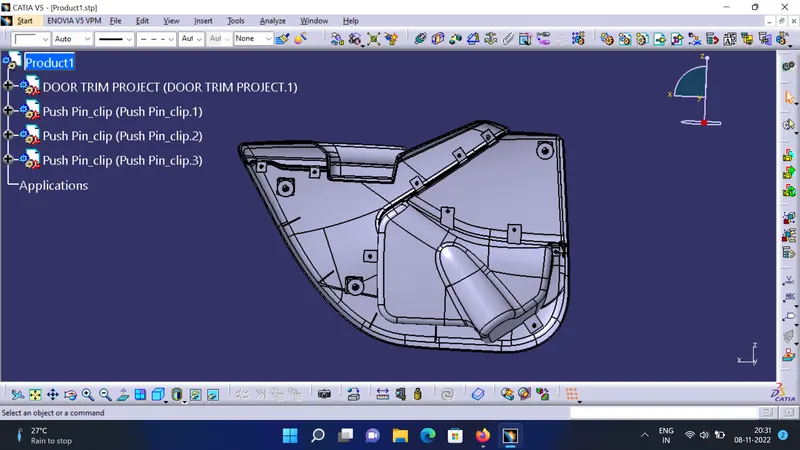
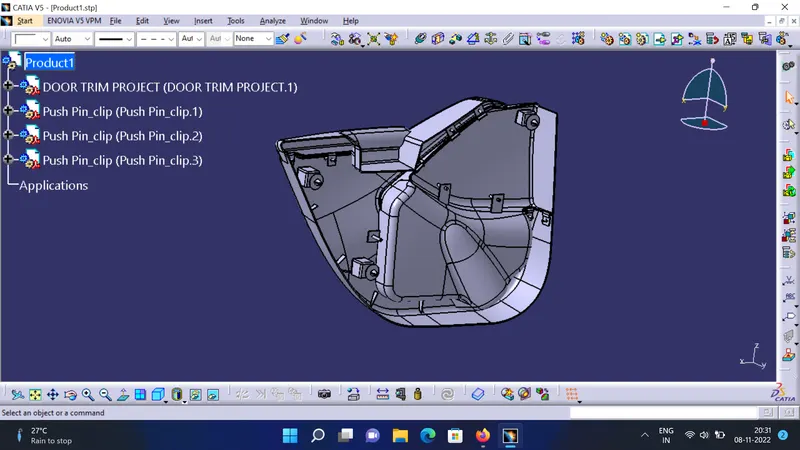
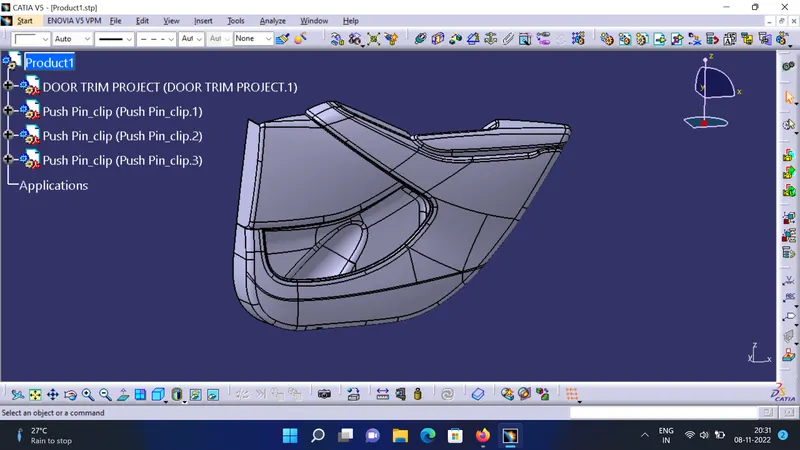
To make a solid body of a side door trim of a vehicle from the given class As of 4 parts of the door trim which are main trim, hand rest, Map Pocket, and Door side trim. Also, B side features like doghouse, heat stake and ribs should be added, all obeying the design rules and guidelines.
THEORY
PLASTICS IN AUTOMOTIVE INDUSTRY:
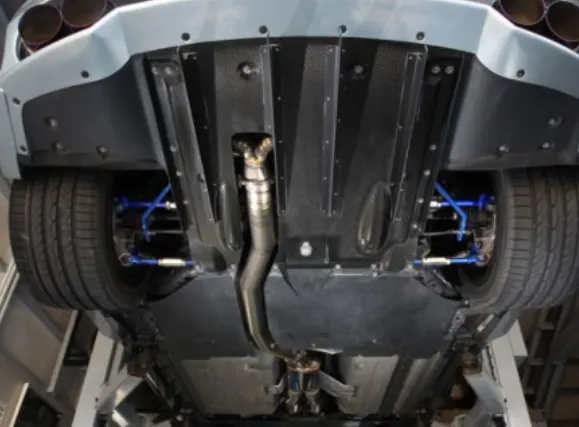
Because plastics are lightweight and affordable, they’re an incredibly best option for automotive manufacturers now a days. As fuel efficiency becomes an increasing threat for consumers, any reduce in weight can translate directly into a increase in sales. What’s more, plastics are corrosion-resistant, long-lasting, malleable, and offer best design freedom than metals.The following plastics are among the most likely to be used in car manufacturing, though polypropylene, polyurethane, and polyvinyl chloride are by far the three most commonly-used.Modern exterior body panels, many internal mechanics, and vehicle interiors consist of almost 100% plastic components. This change is due in part to the invention of synthetic plastic by Leo Baekeland that is marketed as a lightweight, durable, non-conductive, and heat resistant. It was lauded as a solution that could boost the small parts manufacturing process. In the automotive industry, Bakelite start to be used in instrument panels, controls surfaces, and in parts under the hood since it was heat resistant and non-conductive.
MANUFACTURING PROCESS
INJECTION MOULDING:
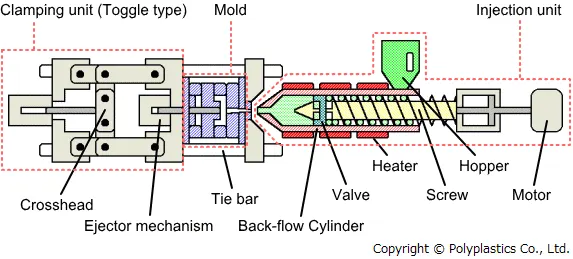
Injection Molding is a manufacturing process for producing parts in large production. It is most usually used in mass-production processes where the same part is being created thousands or we can even millions of times in succession.Because of the massive manufacturing scale usually involved in injection molding, small mistakes can have big consequences - financially and logistically. While the margin of win is big, the implications are substantial.
TOOLING DIRECTION:
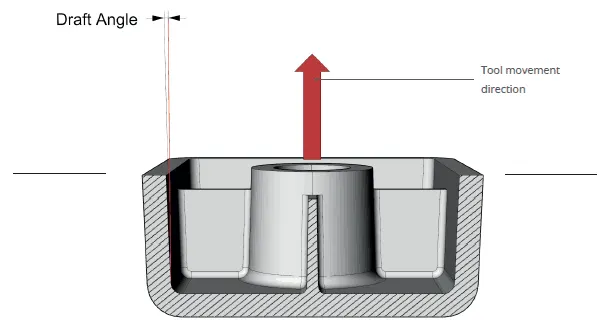
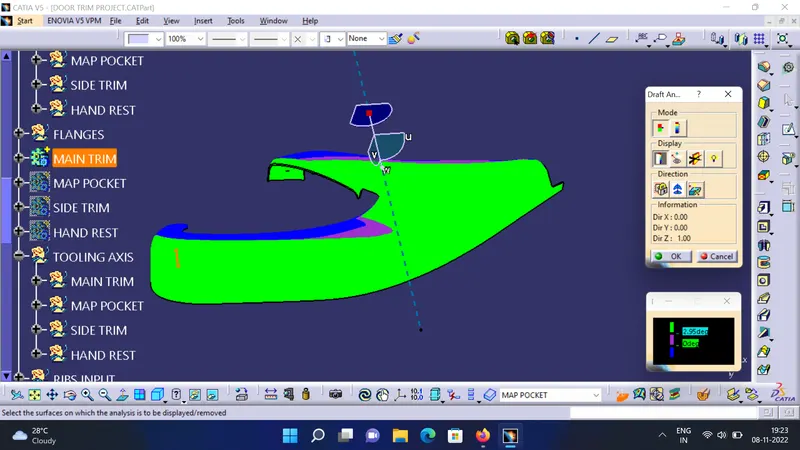
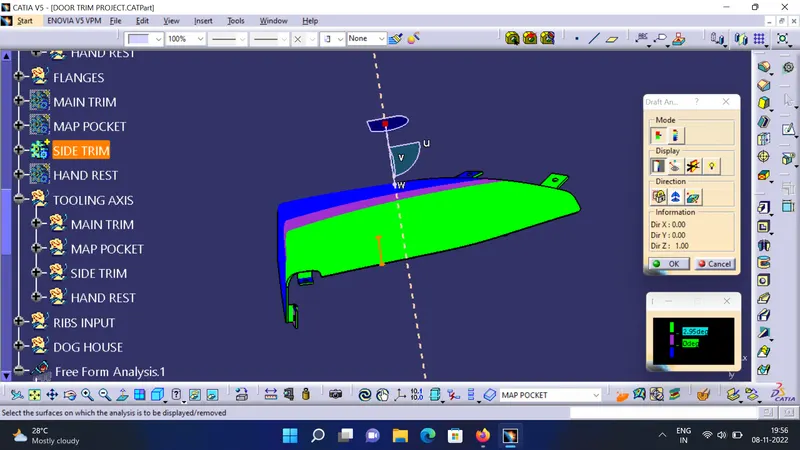
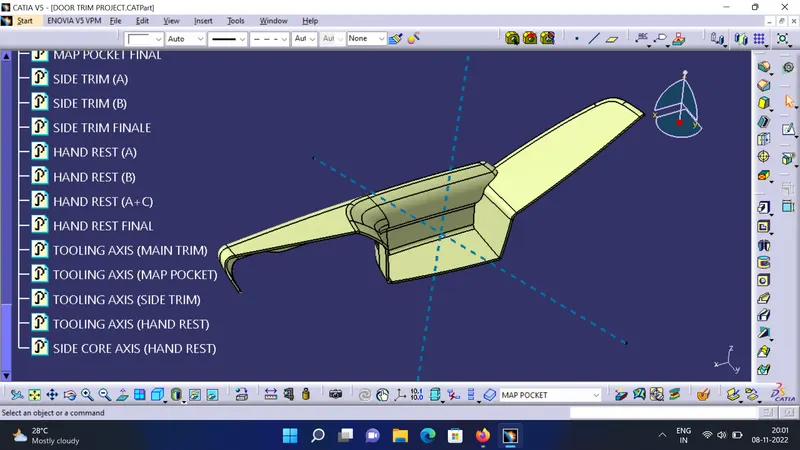
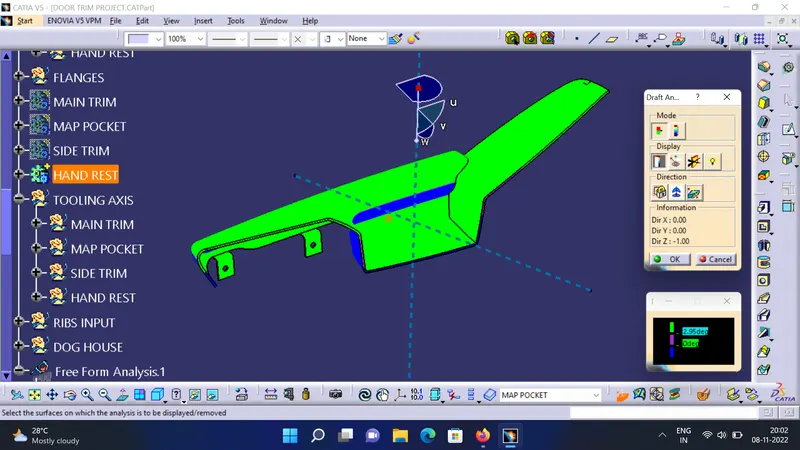
The Tooling Direction is generaly the direction that the mold seperate apart. The mold is built in two separate pieces, basically. You can have a Cavity side and you have the Core side. The Core seperate apart from the Cavity and that's the Dyeline or the Tooling Direction.
HEAT STAKE:
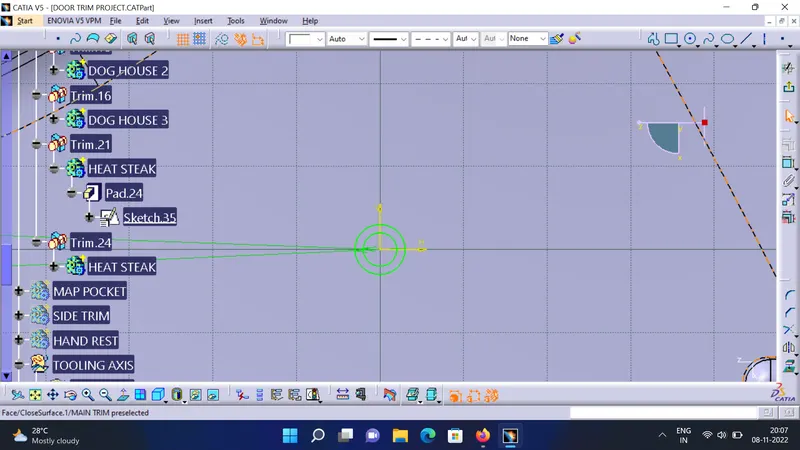
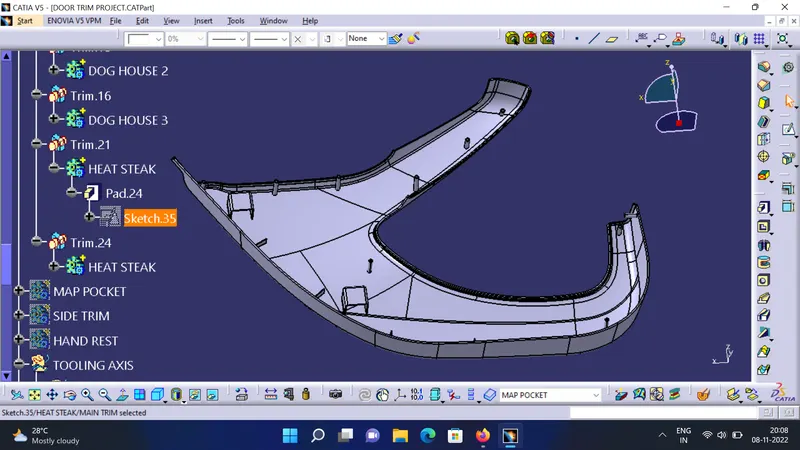
Heatstaking is a method of combining two or more parts, where at least one is created out of plastic. The bond is created by partially de-forming the plastic product to fix the other. Heatstaking is the most best way to bond metal to plastic, and is mostly used in high mass/low cost applications in the automotive, telecom and appliance industries.
DOG HOUSE:
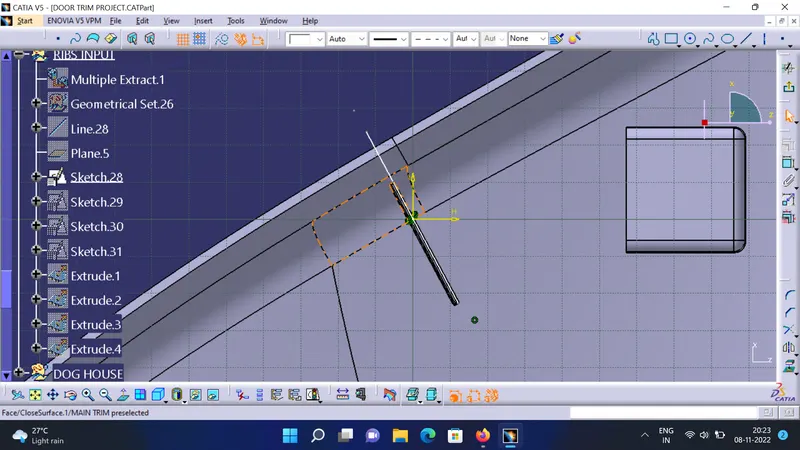
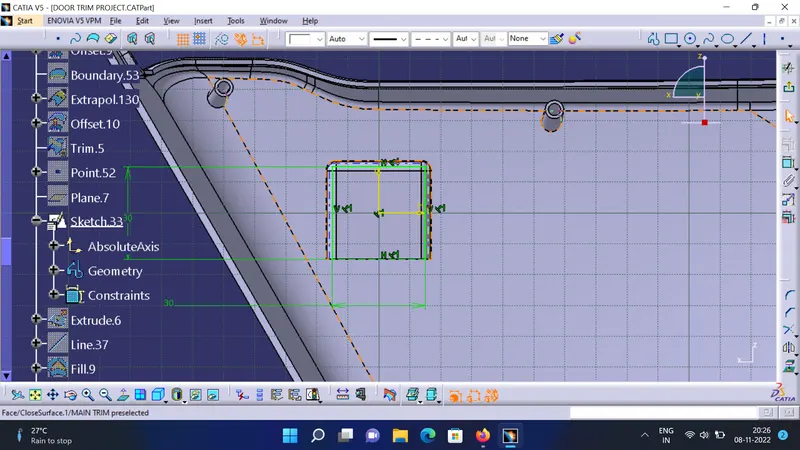
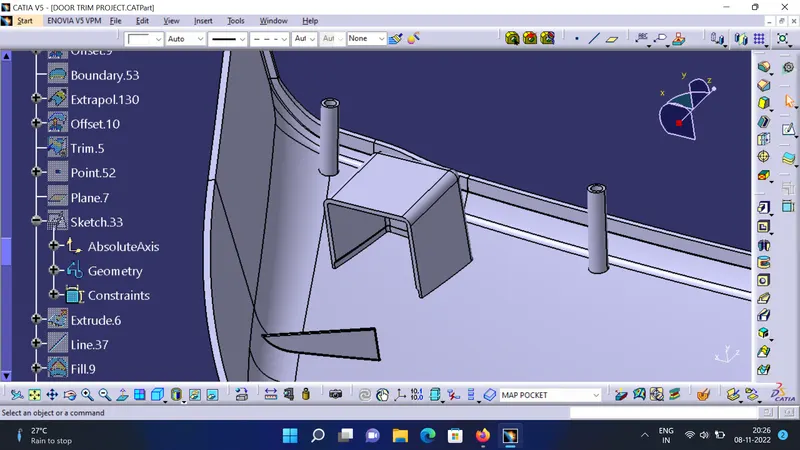
Dog house is an engineering feature used in plastic design.it is used as supporting feature.It used to increase the height of other engineering features without causing sink marks.
RIBS:
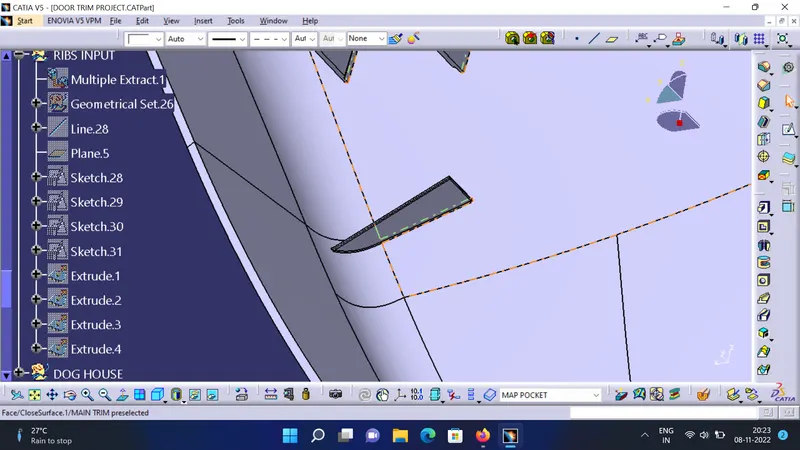
Ribs are features in plastic injection molded parts.They are thin extensions that run perpendicular from a walls. They are usually used to provide additional support and strength to a part. Thickness and location are big factor to rib design.
PROCEDURE:
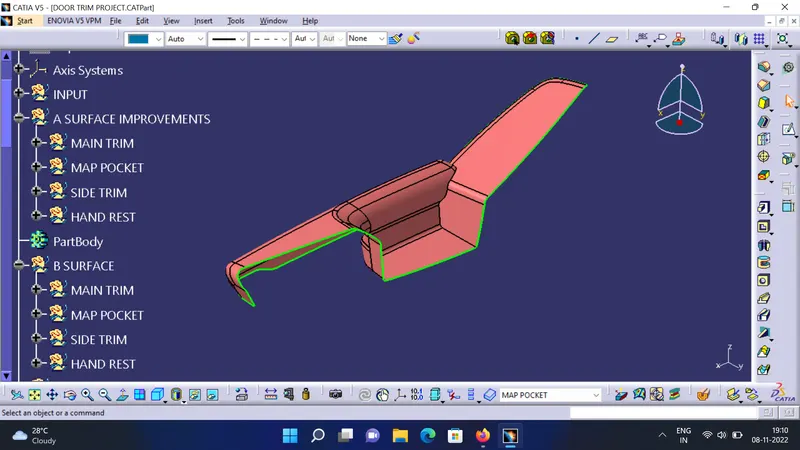
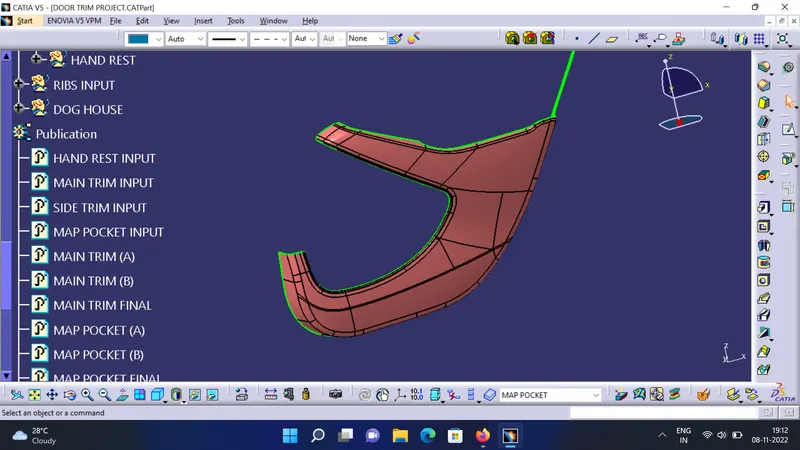
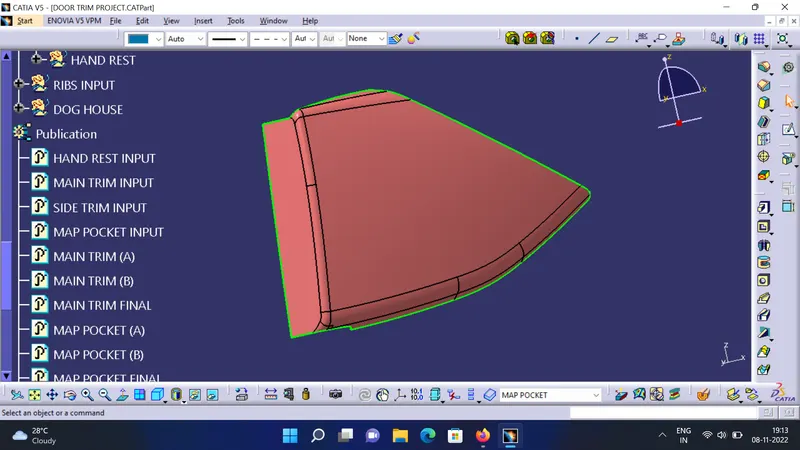
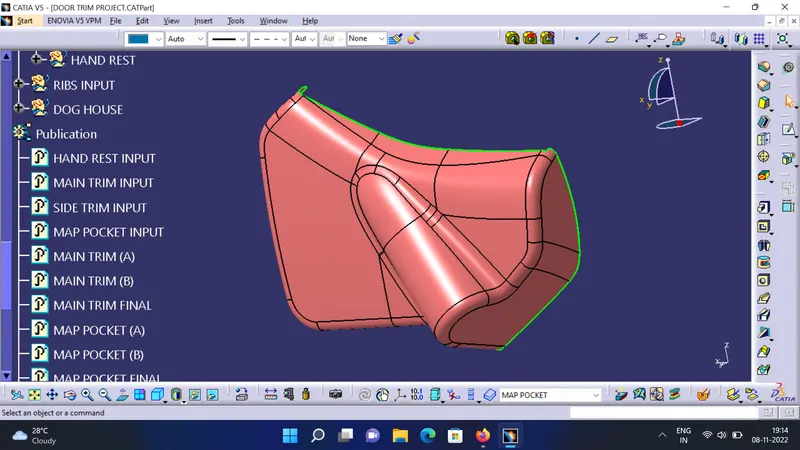
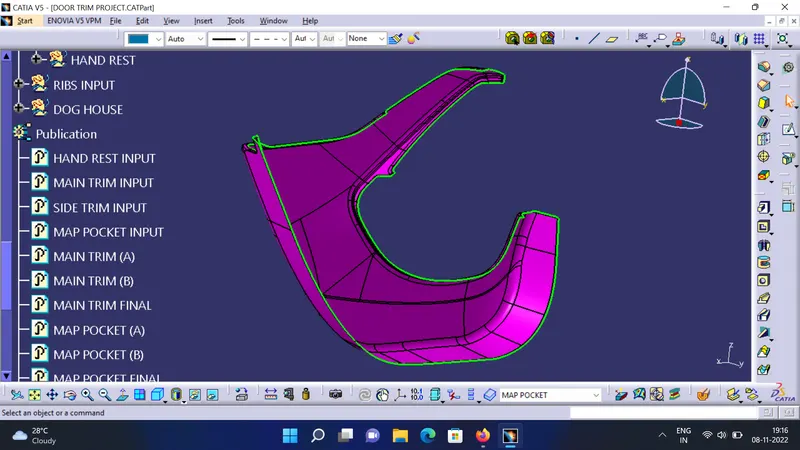
These are the given input of given class A surface of different parts which is slightly modified for practical feasibility.
HAND REST:
MAIN TRIM:
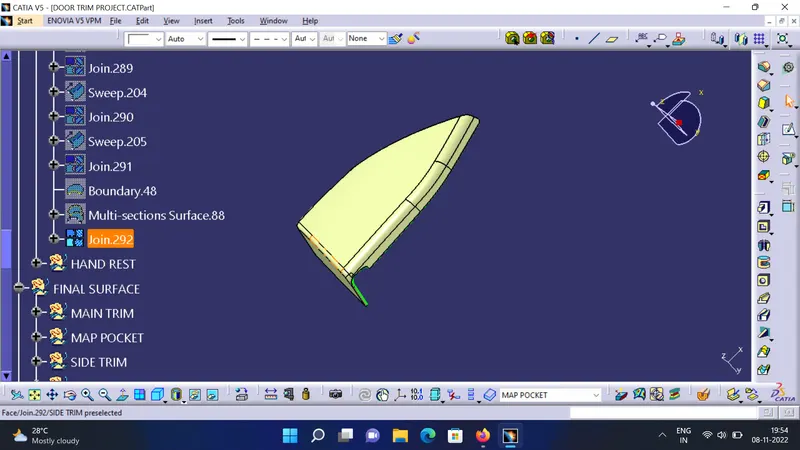
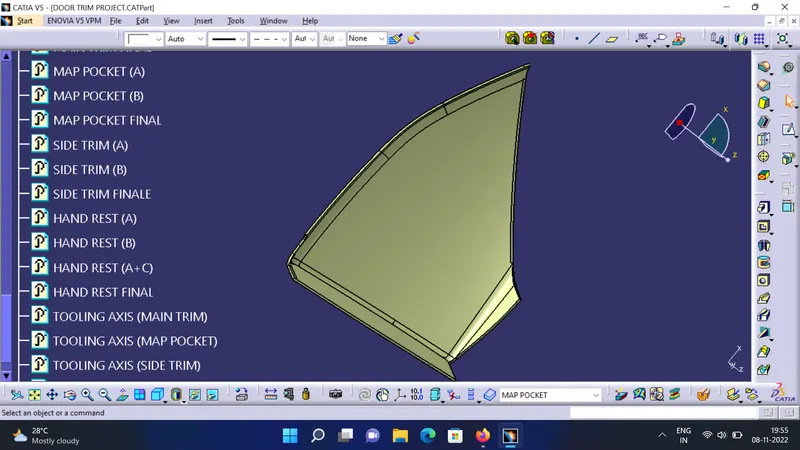
SIDE TRIM:
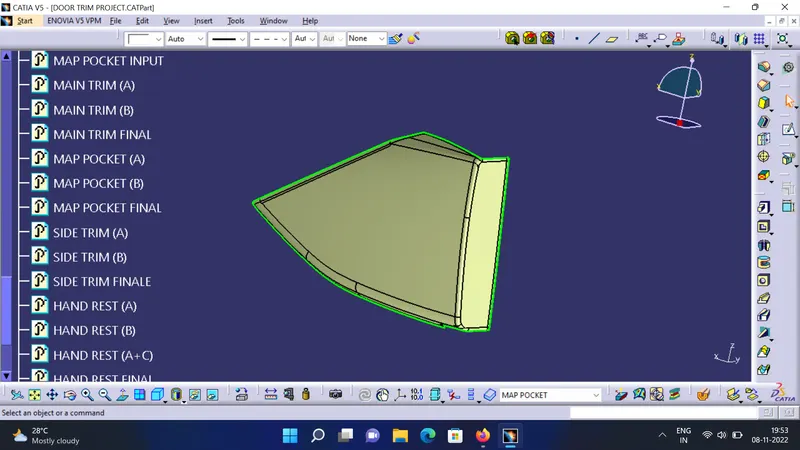
MAP POCKET:
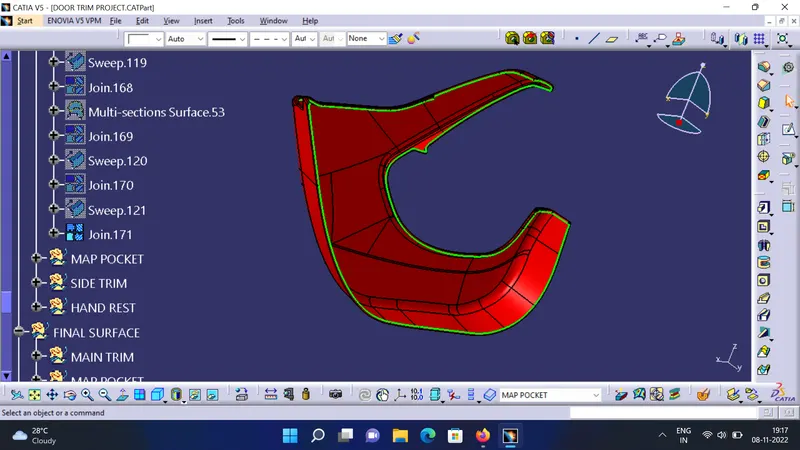
MAKING CLASS B AND C FOR MAIN TRIM:
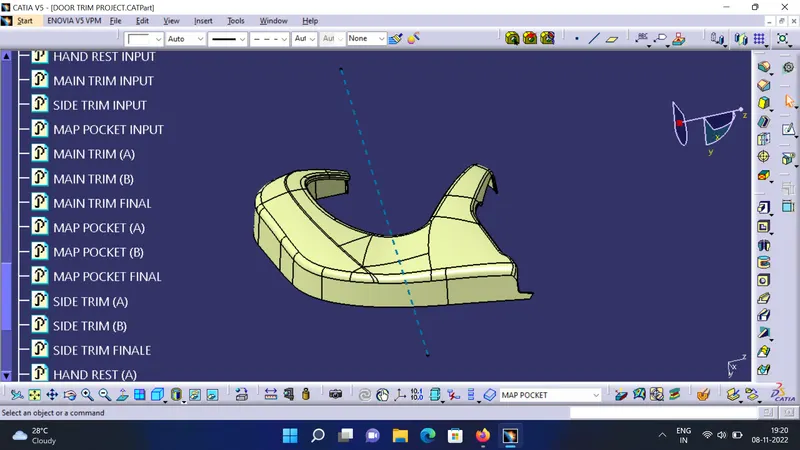
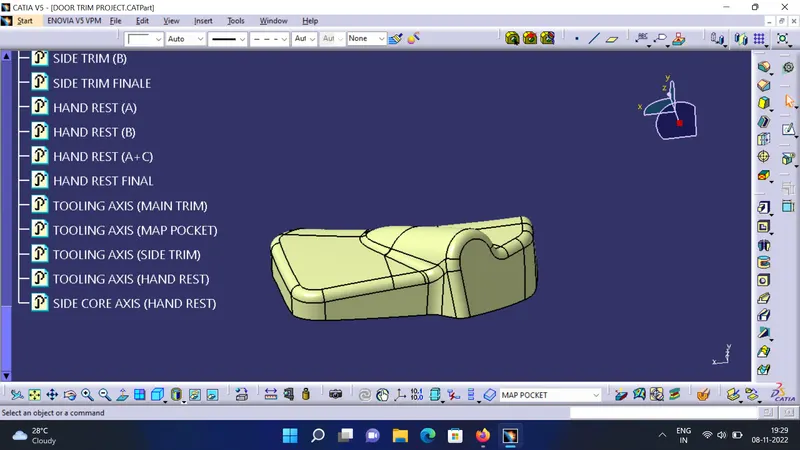
FINAL TRIM AND TOOLING AXIS:
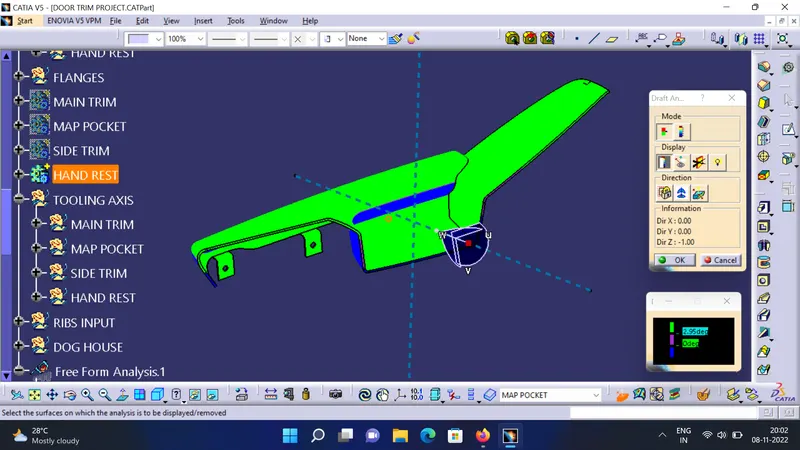
DRAFT ANALYSIS FOR MAIN TRIM:
SIMILIARLY THE OTHER PARTS
MAP POCKET
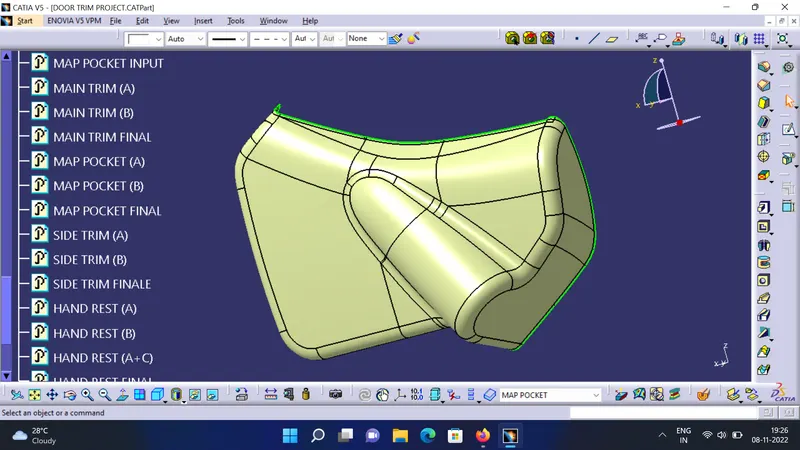
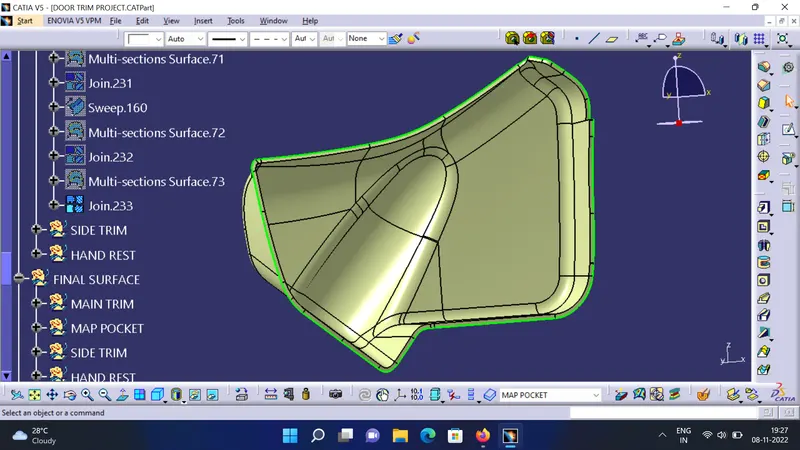
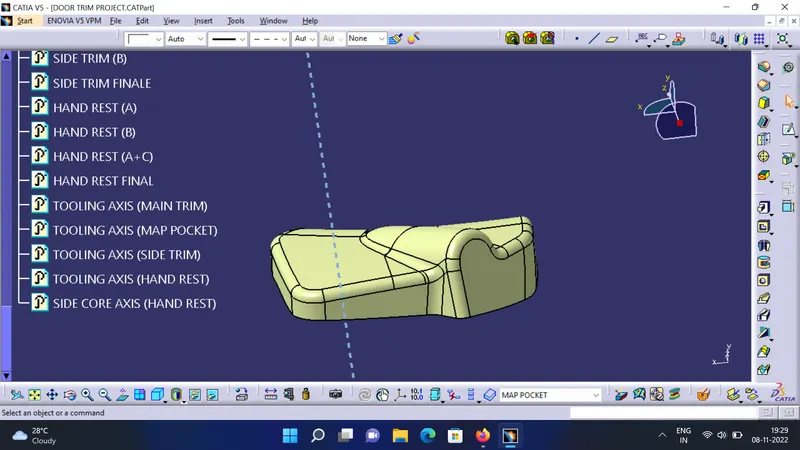
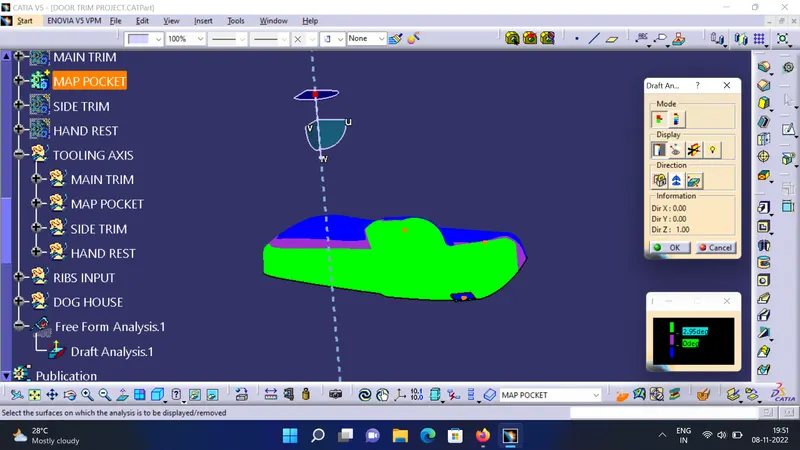
SIDE TRIM:
HAND REST:
B SIDE FEATURES
HEAT STAKES:
RIBS:
DOG HOUSE:
PUSH CLIPS:
FINAL COMPONENT:
CONCLUSION
Hence the solid body of various parts of the door trim was made successfully with all necessary B-side features following all the design rules and guidelines.