Week 11 - Final project
ALL REQUIRMENTS AND REPORTS :
TOOLING DIRECTION :
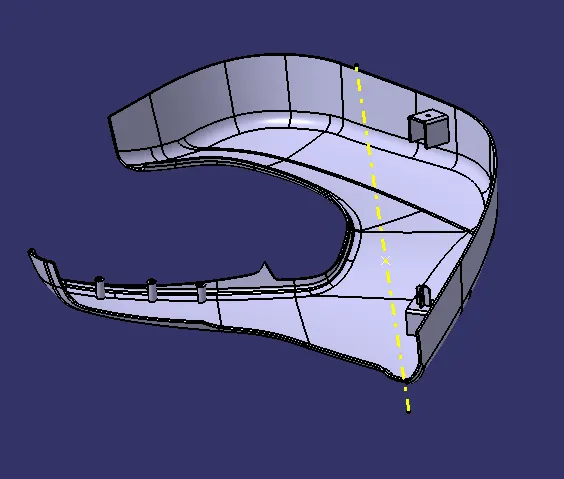
The tool axis is a rotated an Angle 1 about the x-axis, then rotated an Angle 2 about the y-axis. The tool
axis is a rotated an Angle 1 about the z-axis, then rotated an Angle 2 about the x-axis. The tool axis is a
rotated an Angle 1 about the y-axis, then rotated an Angle 2 about the z-axis.
The direction in which the mold or core and cavity opens is the tooling axis. STEP-01. Connectivity of
Class-A surface: Checking the connectivity of the surface, this can be done by creating boundaries or by
simply using the join option such that any openings can be easily visualized.
DOG HOUSE :
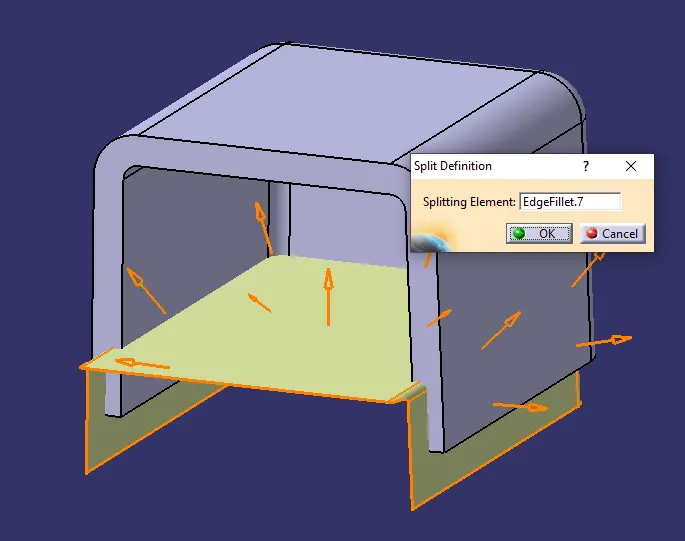
Dog house is an engineering feature used in plastic trim design. Dog houses are used as supporting
feature. Sometimes other engineering features like snaps; locators etc.
LOCATORE :
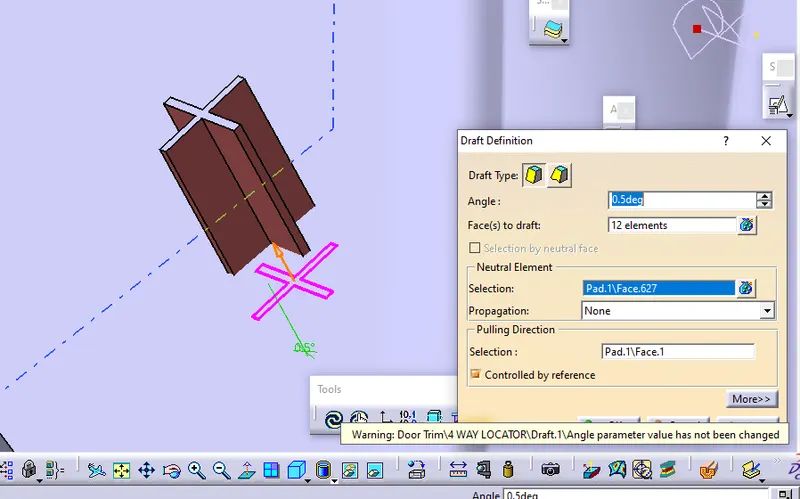
Locators. Carr Lane precision locating pins can be used to locate a workpiece on a fixture, or to align two
pieces of a fixture. One round fixture locating pin and one diamond pin are often used together to locate two
holes without binding, because the diamond pin is relieved to locate in only 1 axis.
A 2-way locating pin restricts motion along 1 axis (or 2 degrees of Freedom), like a round pin in a
slot. Likewise, a 4-way pin restricts 4 degrees of freedom along 2 axes. A round locating pin located
concentrically in a hole is a common application of a 4-way pin, and helps to further secure the piece.
TREE STRUCTURE AND CLASS B & CLASS C :
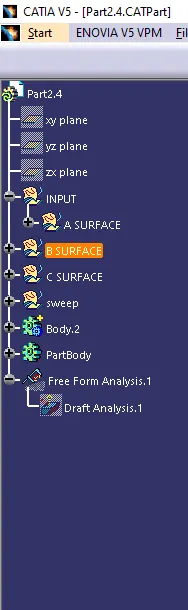
THE PROCEDURE IS STEP BY STEP PROPERLY STAGES IS CALLED TREE STRUCTURE.
HEAT STAKES :
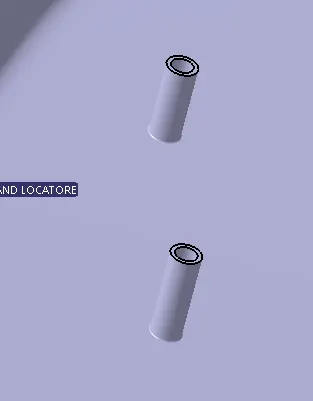
Heat staking also known as thermoplastic staking is the process of joining two dissimilar materials
together. In heat staking we use local heating and cooling to raise the temperature of plastic components and
allow plastic reforming to be carried out. This reforming can be used in a wide variety of applications.
MASTER SECTION :
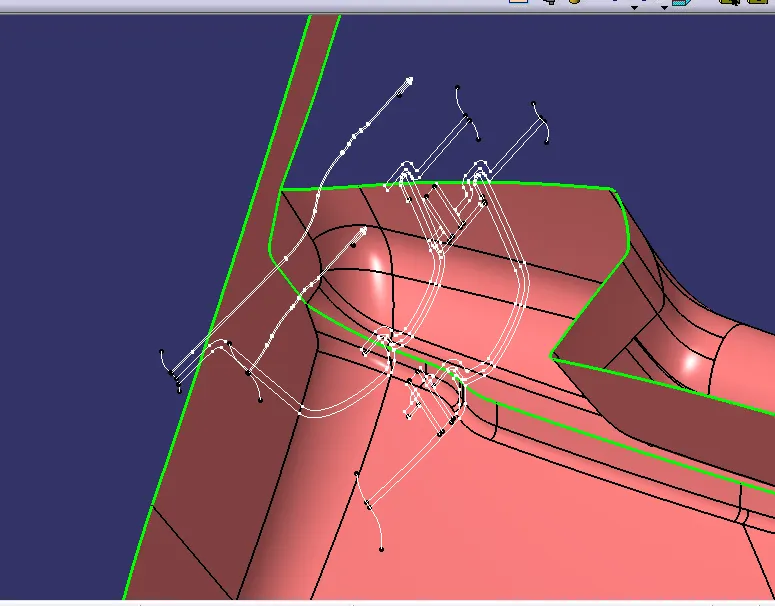
Master sections are the guides for design requirements which decide the component packaging after
technical (Styling, Concept or Class-A) surfaces.
Concept development in BIW
Concept & Feasibility
•Concept design / Design support and feasibility study
•Concept surface description
•Generate master sections and component packaging
•Technical surface description (A class)
•Deciding part configuration / split lines
•Gap & Flush requirement
•Feasibility study & simulations
•Assembly sequence & develop process diagram & spot plan drawings
•Preliminary weight analysis and bill of Material
Package analysis
•Interior, exterior, engine, underbody, and luggage compartments
•Engine and passenger compartments
•Closures
Detail Design
•Modeling & drafting of vehicle components
•Sub assemblies & assemblies: Body in white, closures
•Tolerance analysis
Facelifts and Variants
•Minor freshening: rub rails, door trims, steering wheels, roof carriers, and decorative trims
•Moderate facelifts: bumpers, spoilers, grilles, steering wheels, door trims
•Mid-life facelifts: changes in bumpers, lamps, instrument panels & consoles, spoilers, grilles, steering wheels, door trims, new engine, RVMs, BIW changes to suit trim changes
•Major Facelifts: carryover platform
•Variants: from base hatch back platform to sedan and station wagon with or without W/B increase
Engineering Documentation
•Bill of Material generation and controlling
•Material specifications
•Chain of Dimension, Gap and Flush study and GD&T on drawings
•Design Failure Mode Effective Analysis (DFMEA)
•Product specifications, Design Validation Plan (DVP)
•Fastener selection
3D-engineering, 2D-drawings releases
•Body contour development
•Design according to tool, manufacturing or process requirements
•FMEAs
•Data management and Releasing
Geometrical Integration / Digital Mock Up (DMU):
•Package
•Collisions-check
•Design studies
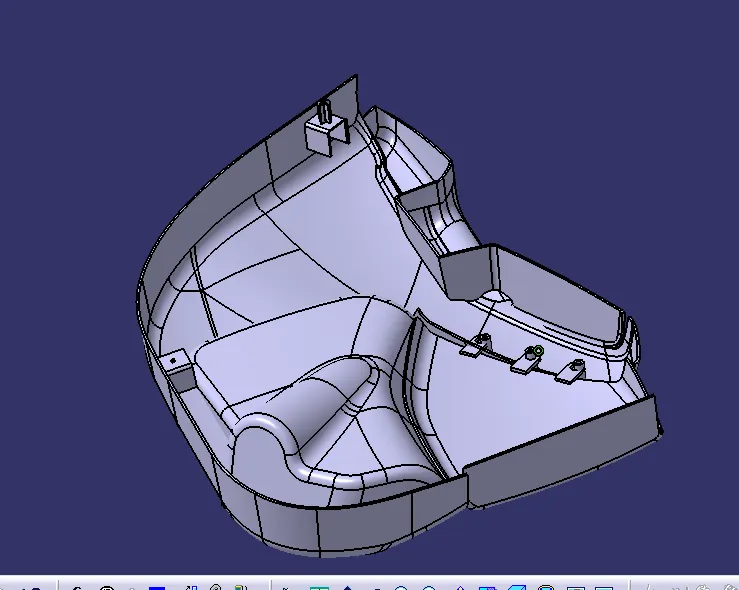
final part :
PUSH PIN :
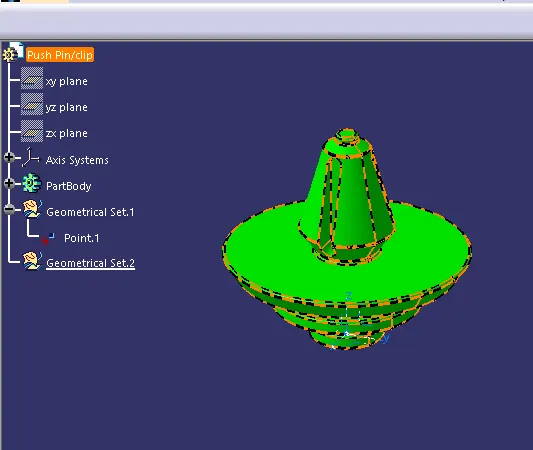
Push pin is used for upper part fix and flexbility.
FILES :
Cat part and cat product are submitted.