Week-11 Challenge: Braking
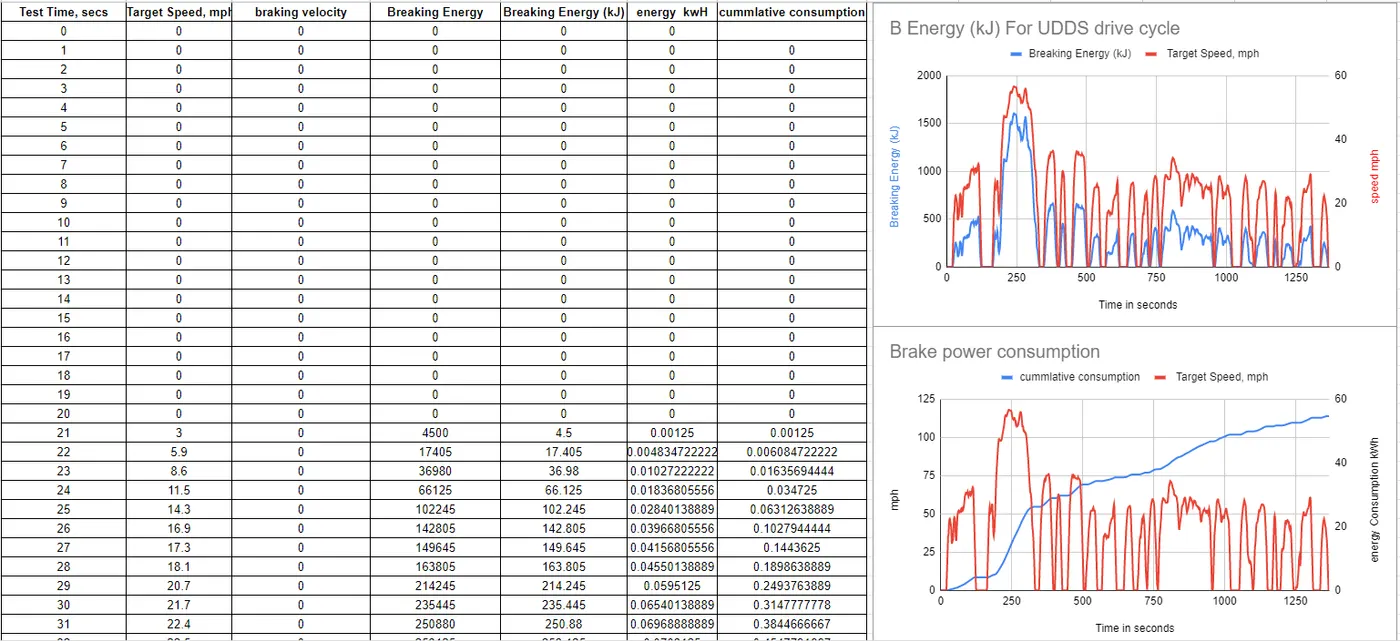
- For a defined driving cycle, calculate the energy required for braking.
Link to sheet
By using kinetic energy formulae in sheets in a cell..we can calculate energy required for each individual velocity
By considering the zero velocity as braking velocity reference we can calculate the energy required for braking.
Note: for formulae please click on the cell in the sheets.
2. Why electric motor can’t develop braking torque at high speed similar to starting? How electric and mechanical brakes are coordinated?
Braking systems are necessary for the correct and safe operation of mechatronic systems. Most functional braking is achieved using electrical braking, which is made possible by the addition of a variable speed drive system (e.g., variable frequency drive system). Electrical braking is efficient and ensures smooth operation and allows the designer to recover the mechanical energy. However electrical braking cannot be used as a safety braking system for the cases of emergency braking and parking braking. It is for these reasons that mechanical braking systems are still employed today, in order to act as emergency and parking brakes.
The Rationale for Braking Systems
In any motion control system, braking is necessary for the following reasons:
2. In order to stop the system in cases of emergency.
3. In order to ensure that the system remains stationary when not in operation.
Two types of braking systems are employed in most drive systems: electrical and mechanical. In this note a general overview is presented of the two types of braking systems, and it concludes with a comparison of the two types.
Comparison between Electrical and Mechanical Braking Systems
The following is a comparison between electrical and mechanical braking systems:
a. Electrical braking systems are used for functional braking (controlling the
speed; bringing the load to standstill). Mechanical braking systems are used
for emergency stopping or for parking.
b. Electrical braking is usually very smooth and comfortable. Mechanical braking
is usually rough and uncomfortable.
c. No wear results from electrical braking. Mechanical braking on the other hand
causes wear in the braking components and requires regular maintenance.
d. It is possible (but not always feasible) in electrical braking systems to return
the regenerated energy back to main supply. This is not possible in
mechanical braking systems and the energy is always lost as heat, noise and
wear.
e. The electrical braking system cannot be used as a safety device. Most
systems will require a mechanical braking system as a backup safety device.
Breaking torque of electric motors:
Electric motors provides high torque only at low speeds, but once it attains high speed the torque becomes relatively low, due to this breaking torque is slightly less compared to mechanical braking.
Because in electrical braking the conversion of energy takes place from electrical to mechanical energy due to this time taken for conversion leads to ramping break torque through power electronic semiconductor drives.
While in mechanical breaking, the break will be applied direct on the force to force mechanically which leads to faster response in breaking compared to electrical thats why these kind of breakings always used as emergency breaking.
But if both electric and mechanical breaking are combined and coordinated, the efficiency and control of breaking will be drastically increases.
it can be combined either by parallel or series
The most commonly seen, this kinds of combinational breaking was available in our washing machines.
In inverter model i.e BLDC motor version uses regenerative breaking that means shorting of the input terminals(lower switches turned ON) of bldc motor will eventually lead to electrical becauses bldc acts like generator once its power is removed, so the energy will be consumed by the resistance of the wires via power electronic switches thereby mechnical breaking will be relased at low speed such that wear out will be reduced.
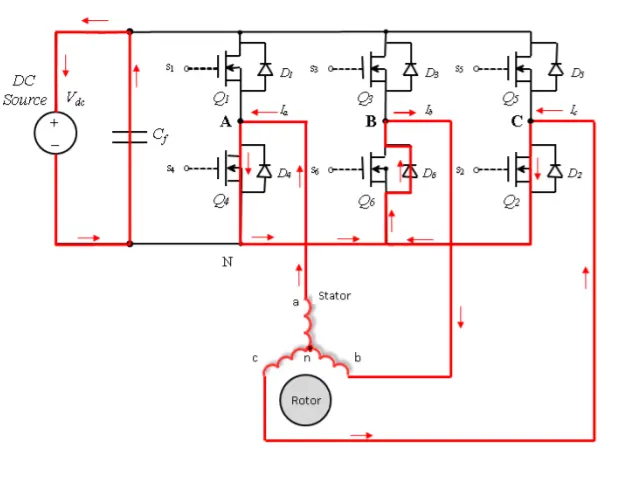
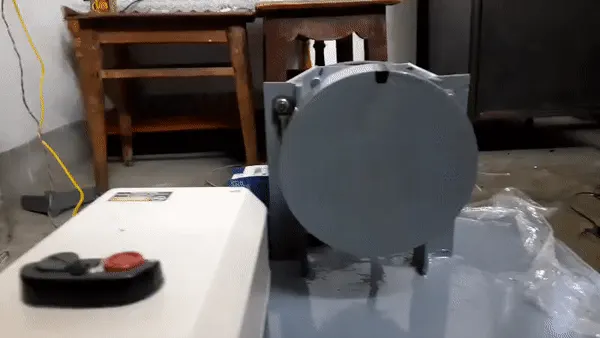
Similarly in Non inverter models i.e induction motors there either by plugging or dynamic breaking or EMB in the end of spin thereby mechnical breaking will be applied to stop the spin or these breakings will be done simultaneously.
The above examples can be used parallel or series based on their design criteria
Factors limiting in electric breaking are :
battery power in EV , power delivery of incoming supply, resistance of the field winding, magnetization of the core,
Example of combined electrical & mechanical parallel breaking in washing machine:
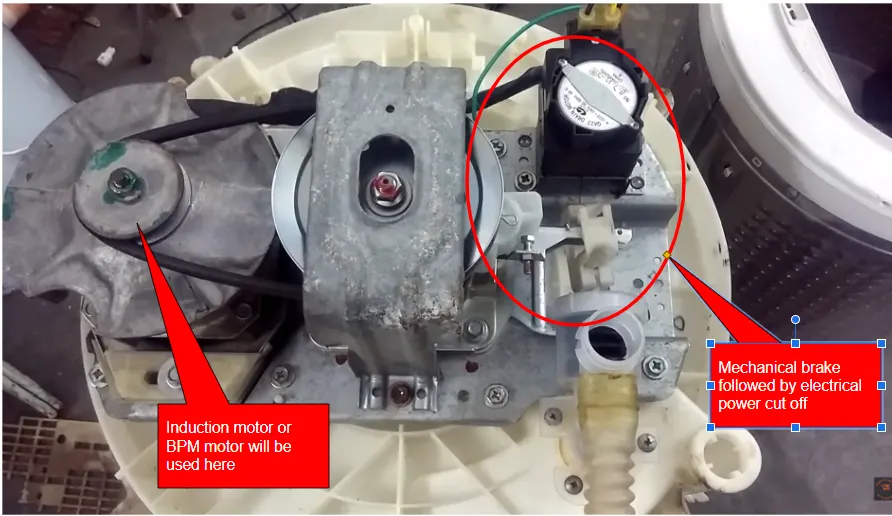
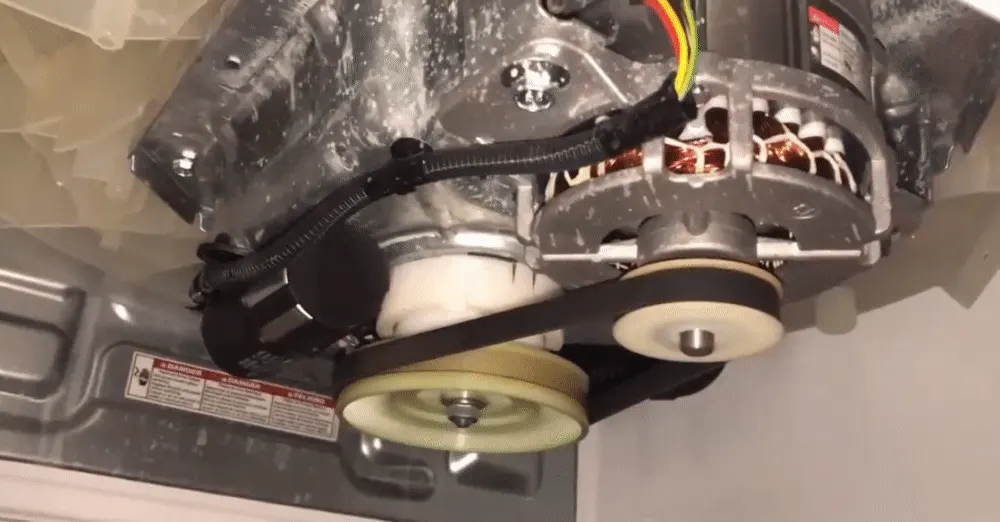
EMB breaking of Induction motor (Pure electrical Breaking) Also known as DC injection Breaking:
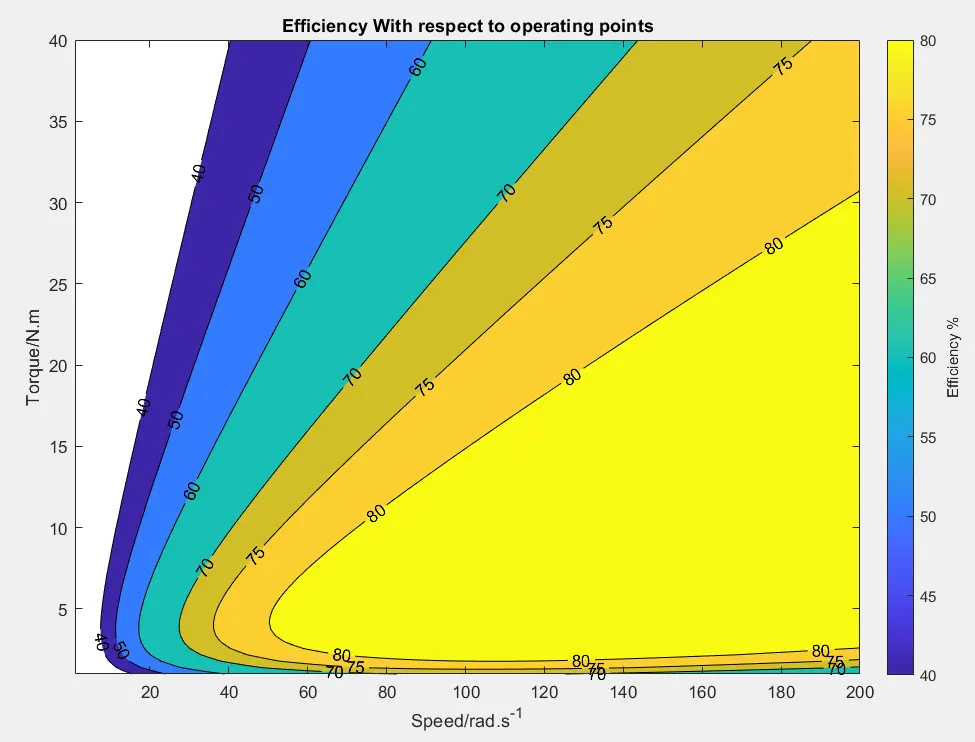
3. Make a MATLAB program which plots contour of given motor speed, torque and efficiency values. Attach the code as a .m file attach a screenshot of all the plots
% A program for plotting efficiency contours for electric motors.
% The x axis corresponds to motor speed (w),and the y axis to torque T.
% First, set up arrays for range.
clc;
clear;
close all;

x=linspace(1,200);% speed, N.B. rad/sec NOT rpm
y=linspace(1,40); % 1 to 40 N.m
% Allocate motor loss constants.
kc=1.5;              % For copper losses
ki=0.1;              % For iron losses
kw=0.00001;          % For windage losses
ConL=20;             % For constant motor losses
[X,Y]=meshgrid(x,y); % Now make mesh
Outputpower=(X.*Y);  % Torque x speed = power
B=(Y.^2)*kc;         % Copper losses
C=X*ki;              % Iron losses
D=(X.^3)*kw;         % Windage losses
Inputpower = Outputpower+B+C+D+ ConL;
Z = (Outputpower./Inputpower)*100;
% We now set the efficiencies for which a contour will be plotted.
V=[40,50,60,70,75,80];
box off
grid off
contourf(X,Y,Z,V);
[C,h]=contourf(X,Y,Z,V)
clabel(C,h)
xlabel("Speed/rad.s^-^1")
ylabel("Torque/N.m");
title("Efficiency With respect to operating points");
c = colorbar;
c.Label.String = 'Efficiency %';