Week 11 Car Crash simulation
CAR CRASH SIMULATION
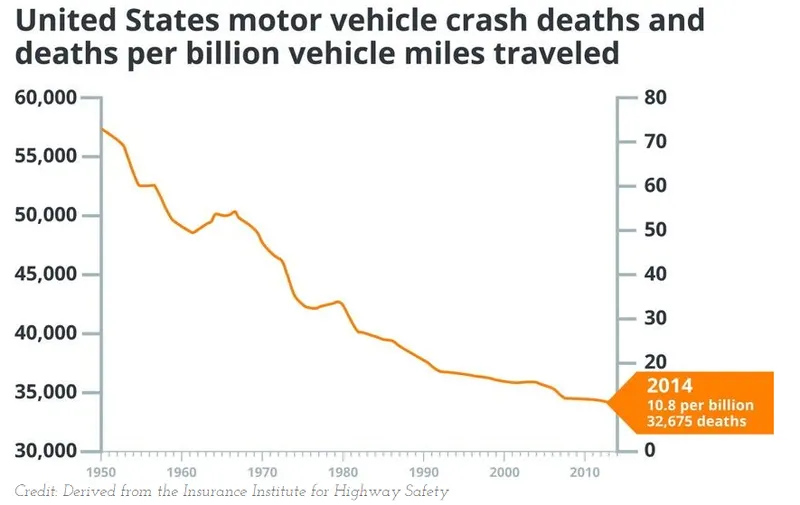
Car Crash Simulation has become an integral part for the Auto and passengers safety over the decade. Software lets engineers run crash tests inside computers rather than on roads. It also allows them to compare the performance of different designs early in the process while cars are still on the drawing board, saving money and injuries.The below data shows how the car crash deaths declined by more than half over the years.
Car Crash tests takes place in the "Crash Halls".A lot of things happens during the Crash test, so engineers puts sensors throughout the car to get the data.The observed results is displayed on the computer, this virtual data is then compared with the actual data.
OBJECTIVE-
We will have to perform a parametric study using three different values of thickness for the car body.Analyse the total deformation and Equivalent stresses acting on the model.
PROCEDURE-
- We will carry out the Frontal Impact Test using the Explicit Dynamics Analysis System.
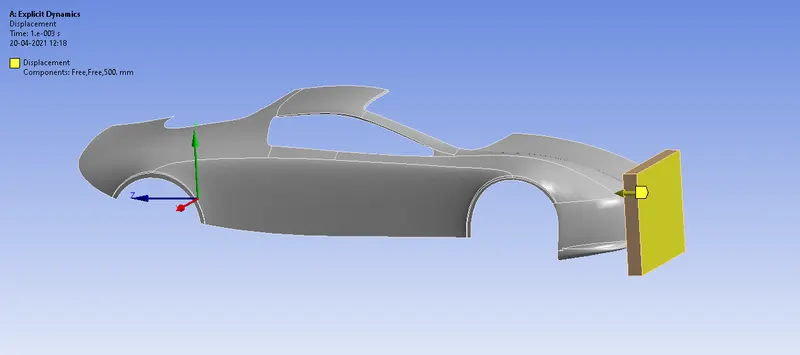
- The model involves a Car Body and a Wall.Car body is assigned with a thickness of 0.3mm.We will carry out parametric study for the different thicknesses of the car body.Stainless steel is used as material for the car body.
- Symmetry Region is provided to one of the side face of the wall.Another symmetry region is used for the edges of the car.
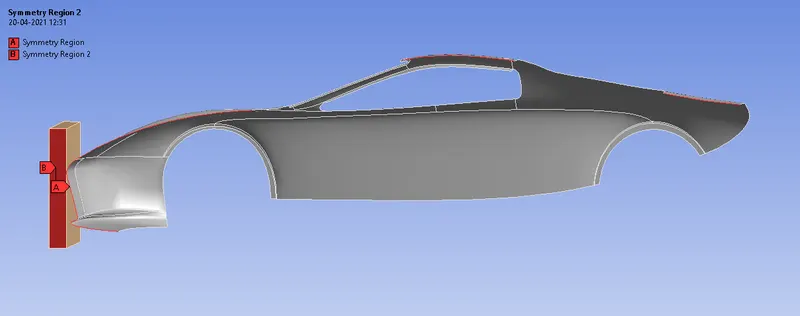
Body Interaction is set to frictionless for this analysis.
MESHING-
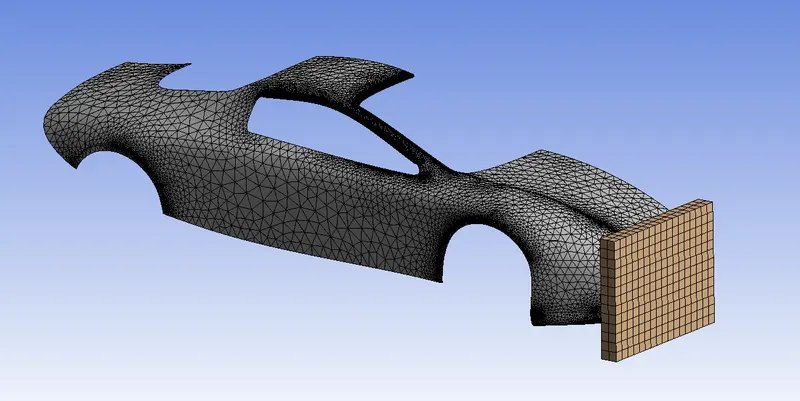
- Triangles meshing method is used for the car.A sizing of 100mm is provided to the faces of the car.
- The wall is meshed with Hex elements.
ANALYSIS SETTINGS-
End time- 0.001
Maximum Energy Error- 2
Initial,Minimum & Maximum Time step- Program Controlled.
BOUNDARY CONDITIONS
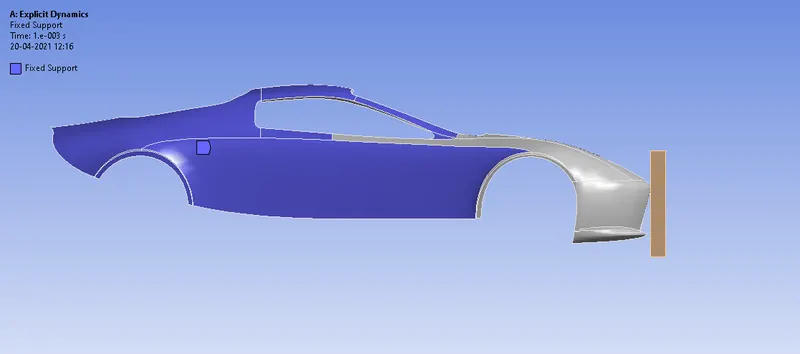
- To reduce the computational time,Fixed support is provided to the back faces of the car.
- Displacement is given to the Wall of 500mm along the Z-Direction.
RESULTS-
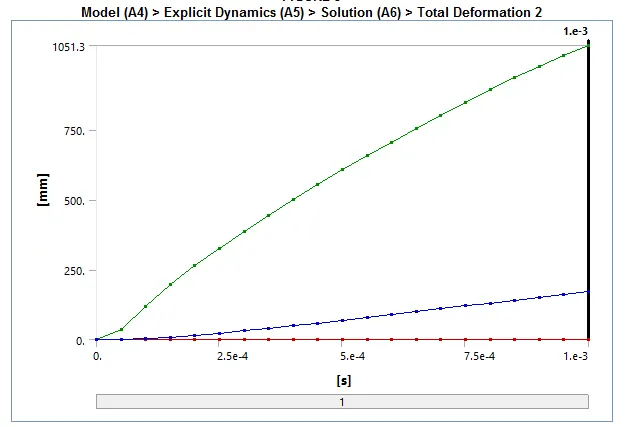
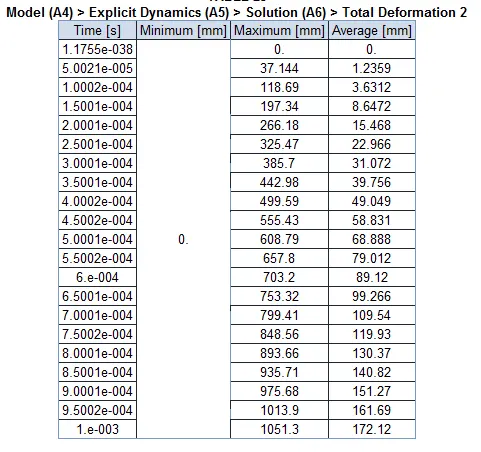
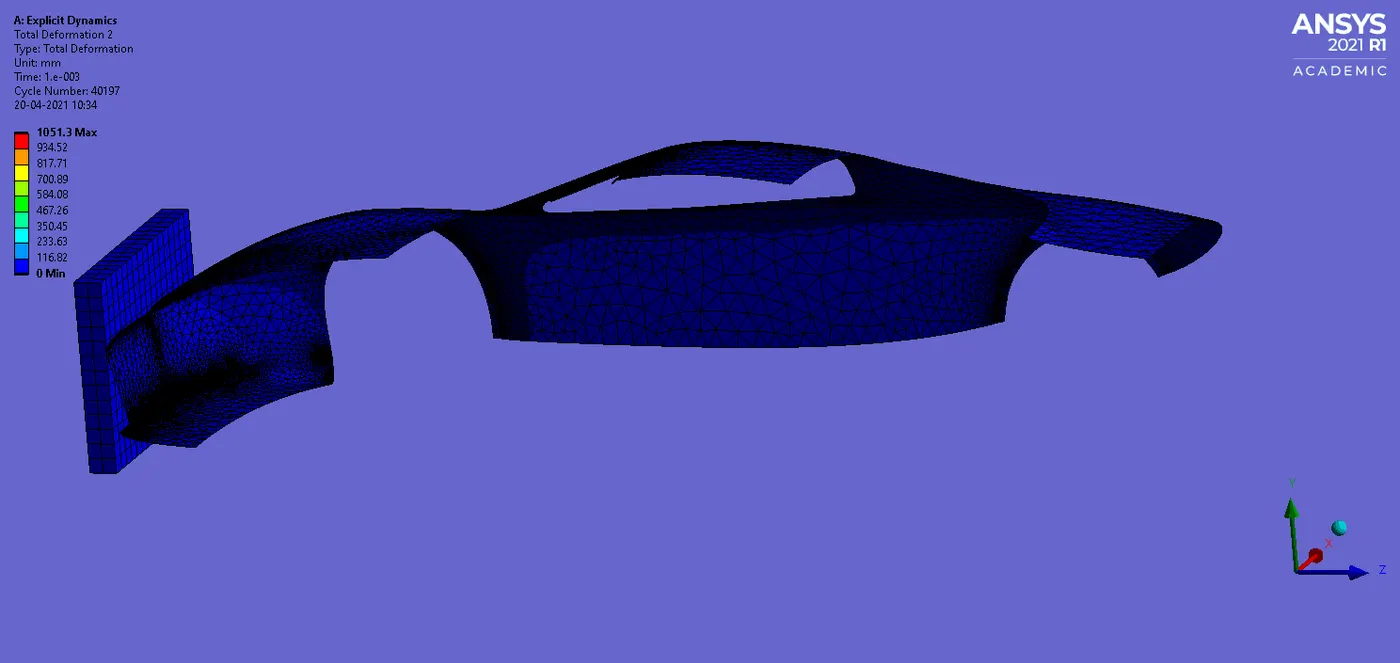
Case-III: Car body Thicknessis assigned as 0.4
Total deformation for the model-
Equivalent Stress for the model-
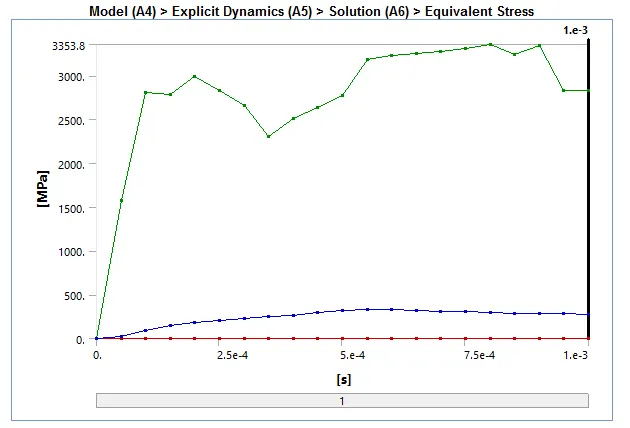
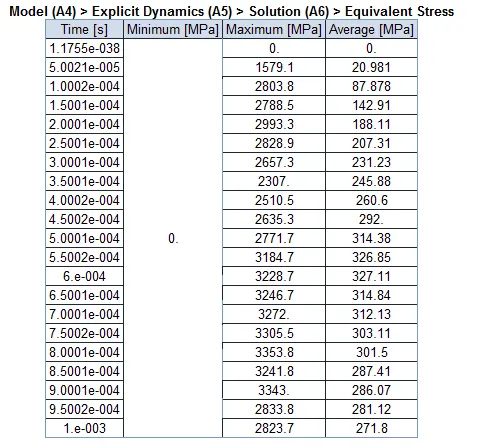
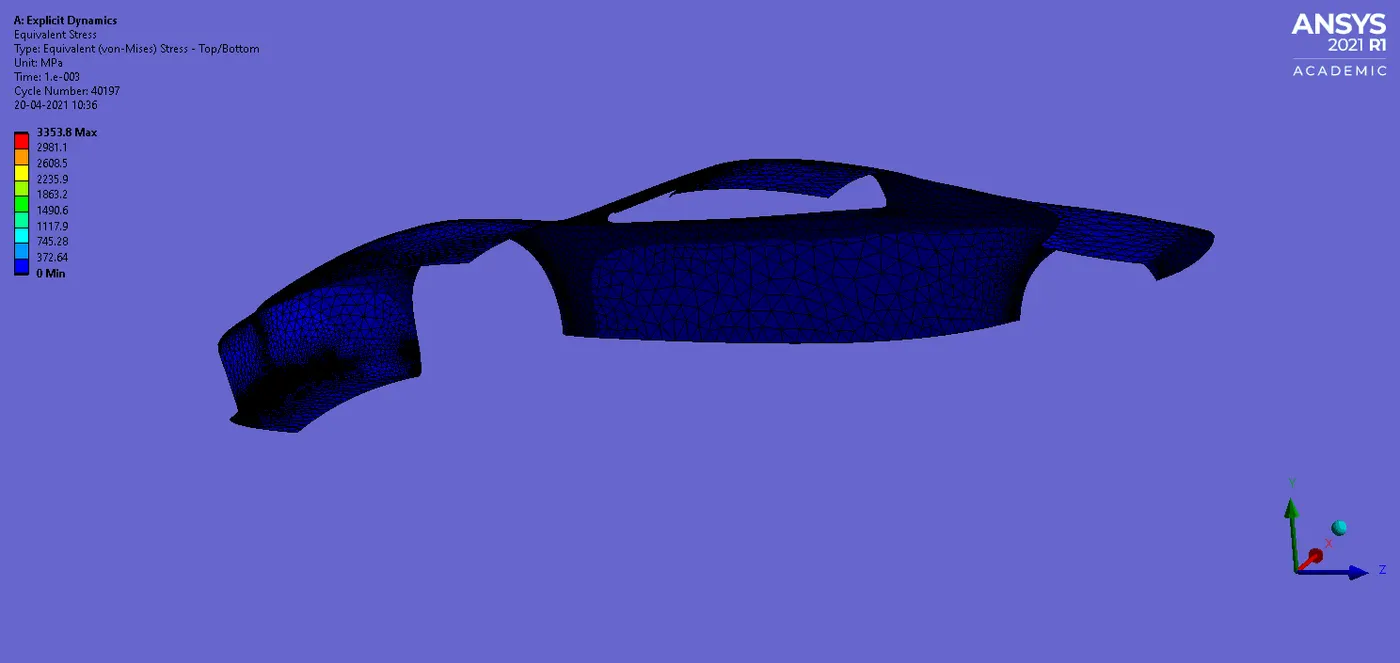
The observed results can be summed up in the below table: -
| CASES | Car Body Thickness (mm) | Maximum Equivalent Stress (MPa) | Total deformation(mm) |
| I | 0.2 | 2804.3 | 1055.7 |
| II | 0.3 | 2719.4 | 1053.2 |
| III | 0.4 | 2823.7 | 1051.3 |
CONCLUSION-
Sheetmetal generally comes in three forms—mild steel, aluminium, and stainless steel. Of these, aluminum and mild steel are by far the most commonly used for automotive projects.Automotive sheet metal once ran in the range of 18-gauge, which was 48 thousandths of an inch thick (actually 0.0478 inch). 20-gauge became common in more recent times, and this meant 0.0359-inch-thick metal—still a lot to work with in-bumping and metal finishing.
From the above table we can observe that increasing the thickness of the material will result in less deformation.Increasing the thickness of the car body sheet will also account in reduction of performance of the car.