Week 10 Thermal Management
Study – Prepare a report summarizing thermal management techniques for electric car battery pack.
Electric vehicle technology is a promising source which helps us to reduce pollution specially if source of electrical energy is a renewable source. Hybrid electric vehicle technology reduces petroleum consumption and in it, battery pack plays a key role. If temperature is not regulated, capacity of battery reduces over the time and they might explode or burn due to thermal runaway. Battery cell is sensitive to temperature and to ensure a proper thermal management a battery thermal management system is integrated with battery pack. Battery thermal management is a key solution to reduce cell temperature and keep it under a certain value, but each cell has different characteristics and they don’t supply same current, so temperature of each cell or a group of cell like at middle, at corner may be different. A uniform cooling system can fulfill battery pack temperature requirement by distributing uniform temperature. There are a few options to cool an electric car battery with air, liquid, phase change material.
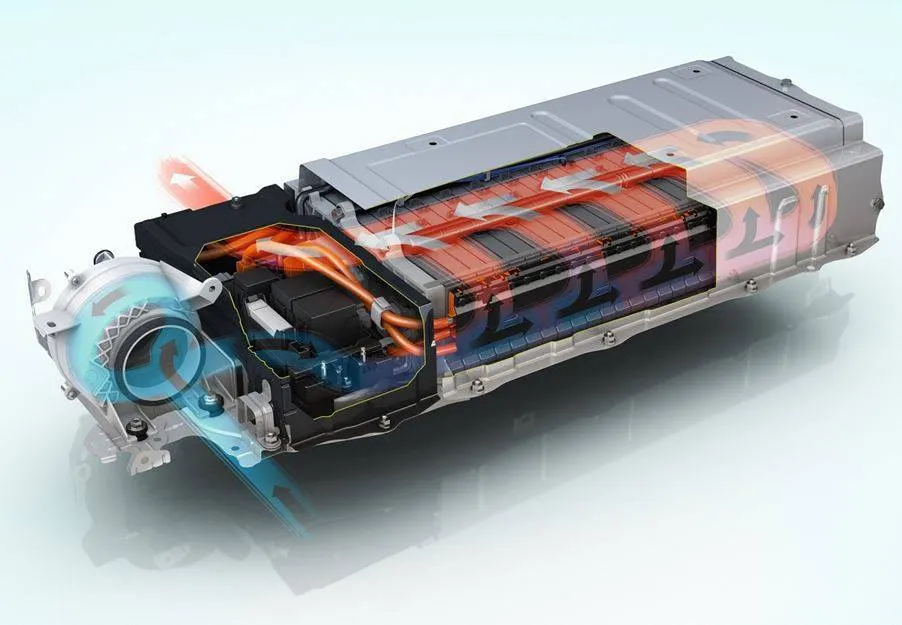
Cooling techniques for EV batteries –
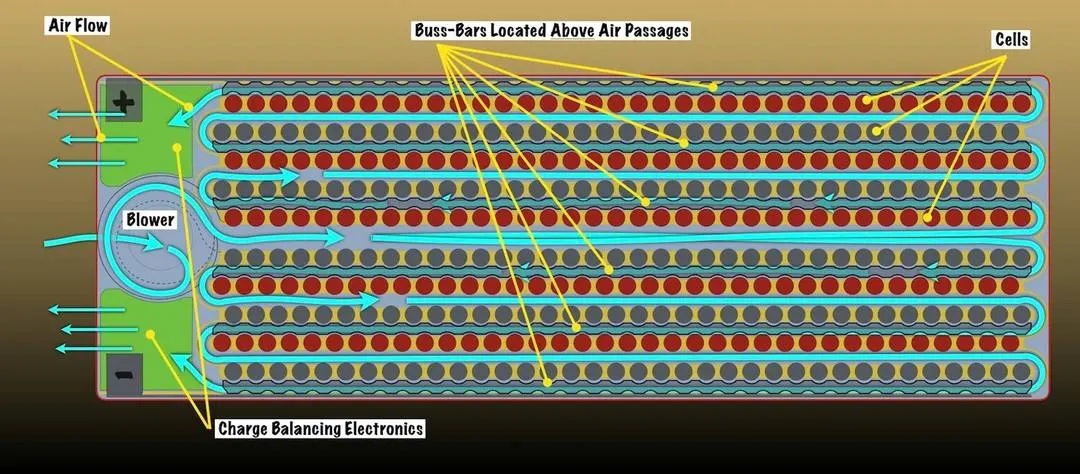
1. Air cooling – air cooling is simplest technique among other cooling techniques. Air removes heat from battery pack using convection technique. As air runs over the surface, it will carry away heat. Air can be taken from atmosphere or from cabin. Air colling is less sophisticated and cheap but it is not efficient for high performance application due to the inability to cope up with a wide range of ambient temperature. In hot ambient temperature thermal runaway become real. One of the earliest electric car Nissan leaf’s battery pack installed with air cooling system.
2. Liquid cooling – besides air liquid is also used for cooling. It is better than air cooling because they have higher heat capacity and heat conductivity than air. Liquid cooling technique can be implemented with two types - direct contact with cells and indirect contact with cells. At present no one using direct cooling but some developers are trying to use non conducting coolants. Indirect cooling is most common technique and it uses a mixture of glycol and water mostly. This technique is used by EV manufacturer like Tesla, Jaguar, BMW, others.
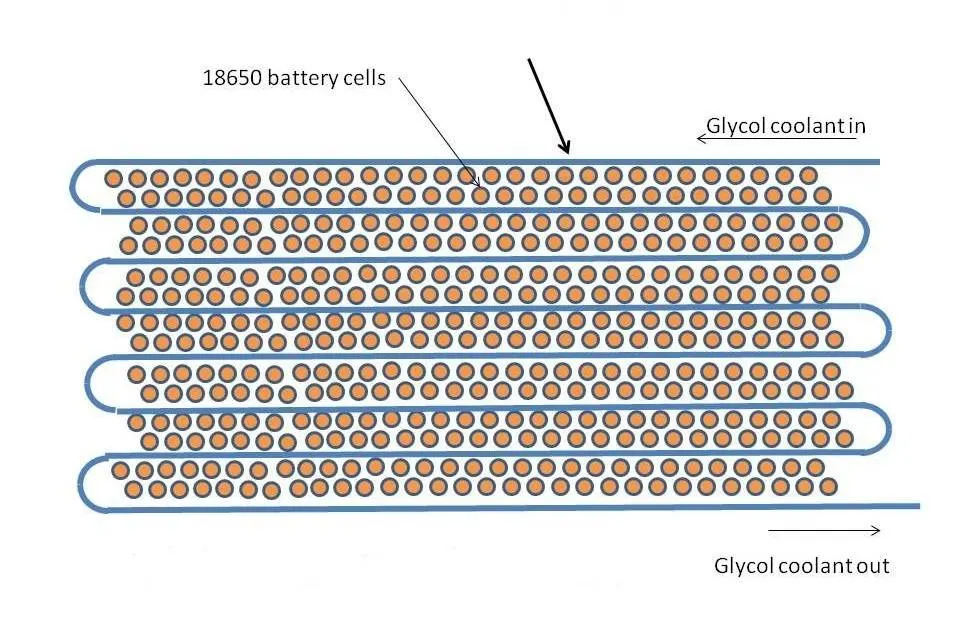
Liquid cooling system can be installed easily but it has its own safety and leakage concerns, like glycol could be dangerous and there are disposal concerns also.
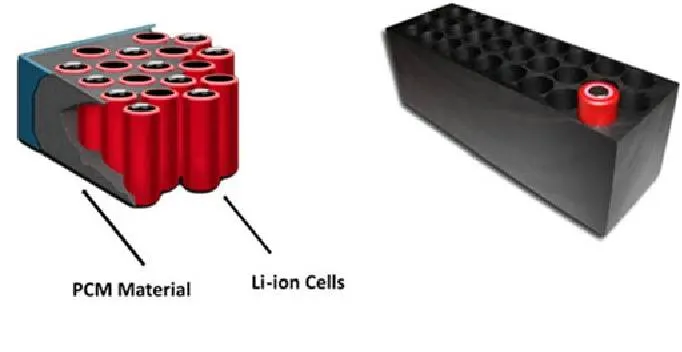
3. Phase change material – as the name shows in this technique material changes the phase from solid to liquid after absorbing heat from battery pack. PCM stores absorbed heat as latent heat up to its maximum limit. The thermally conductive structure holding the PCM provides a fast heat transfer path through battery pack, minimizing temperature difference between the cells This technique can meets the cooling requirement but volume change during phase change limits its application and it gathers heat not transfers it away, so it is not useful for electrical vehicle.
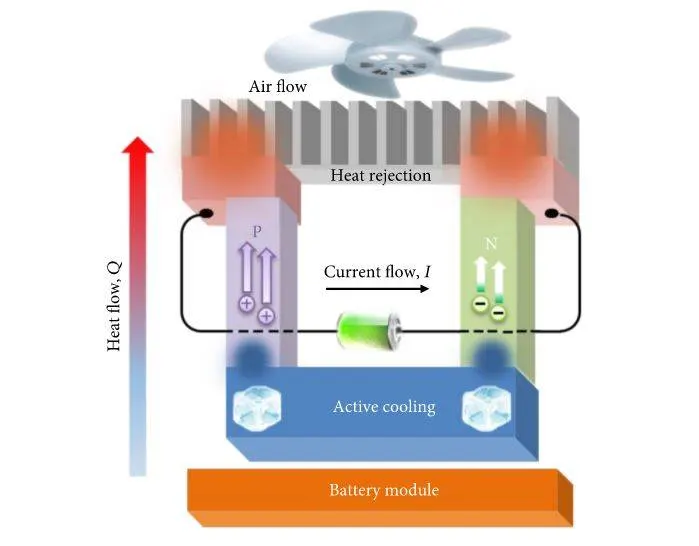
4. Thermo electric cooling – in recent years, thermoelectric effect in a semiconductor has been widely investigated because it can produce temperature gradient when electric current is launched and thermoelectric generator cooling can promptly create a relatively lower temperature than the surrounding temperature. The degree of cooling can be adjusted according to current size. This system can be combined with air cooling system to get further lower temperature.
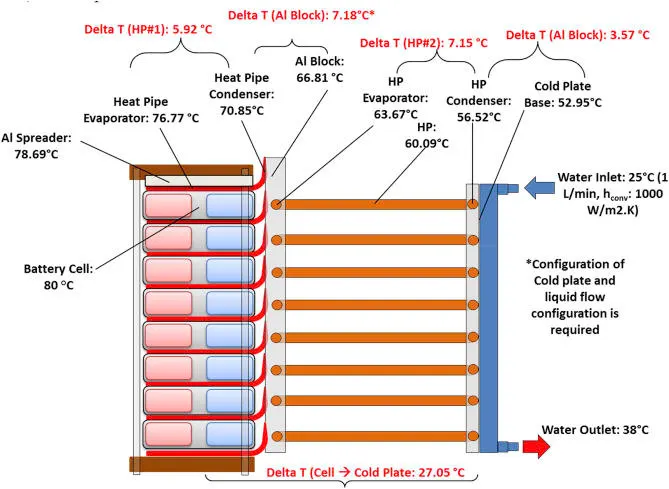
5. Heat pipe – cooling through heat pipe is another way to reduce the temperature of battery pack. Heat pipe can be installed with air cooling system to get enhanced cooling. Heat pipe poses high thermal conductivity, compact and flexible structure, easy maintenance and long life. Heat pipe works on phase change technique means mostly water is used as working fluid and it goes under phase change (liquid to vapour) by absorbing heat from battery pack.Use of heat pipe is more reliable because it involves no moving parts and we know moving part consumes energy and they make system unstable.
We have discussed some cooling techniques, but which one should be used for EV applications. We saw every method has their unique perks and cons, but to get efficient cooling performance they can be used in combination like – liquid cooling with direct refrigerator cooling, combined liquid system with PCM, heat pipe or thermo electric material with air cooling.