Week 10 - Simulating Combustion of Natural Gas.
1. Objective:
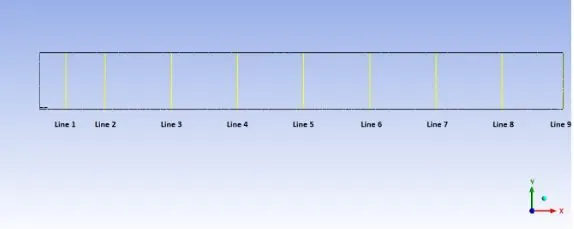
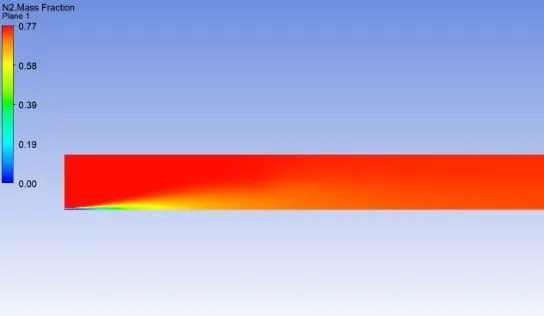
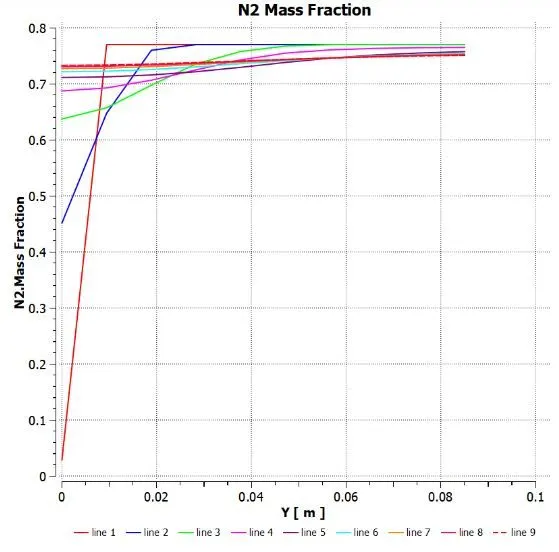
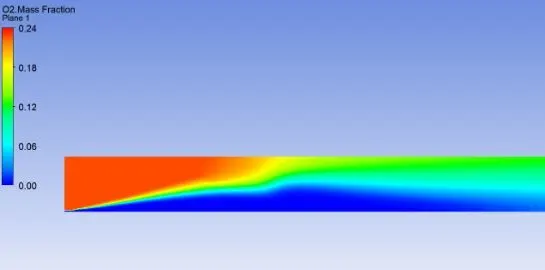
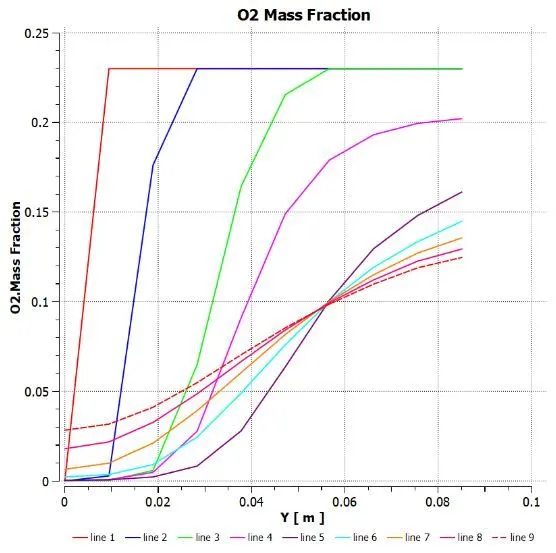
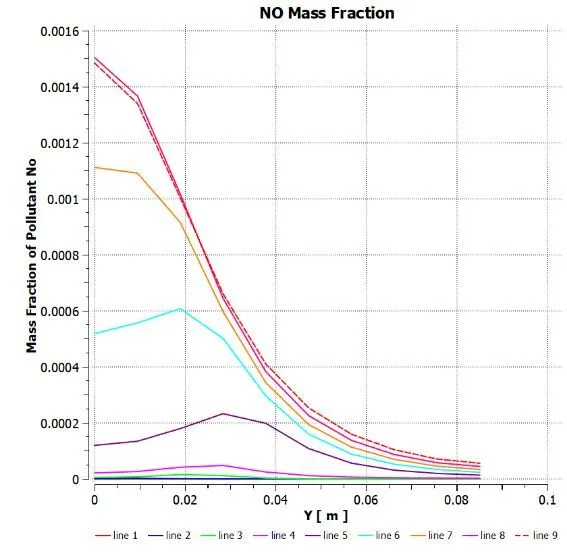
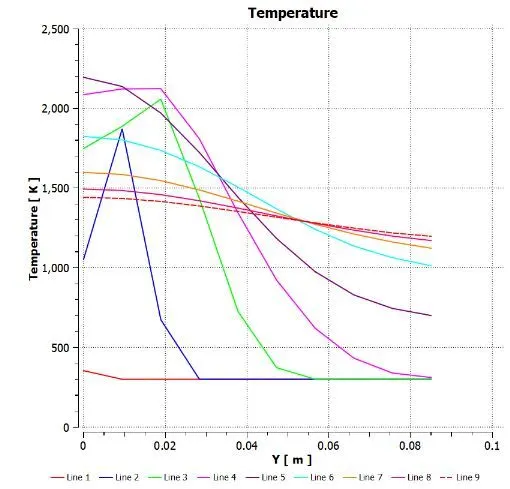
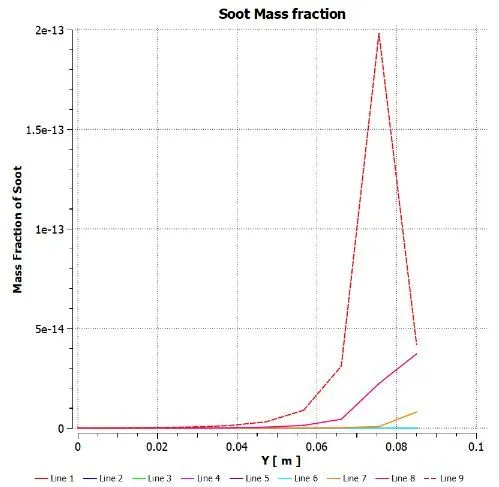
- Part I: To Perform a combustion simulation on the combustor model and plot the variation of the mass fraction of the different species in the simulation using line probes at different locations of the combustor as shown in Fig. You need to plot for CO2, H2O, CH4, N2, O2, NOx emissions & Soot formation.
- Part II: As you must have observed from the above simulation, the NOx and soot is getting formed at the outlet of the combustor. Such formation has harmful effects on the environment and humans. The stringent government norms also demand the least formation of NOx and soot and to satisfy those requirements, you need to check the effect of adding the water in the fuel. In this part, we need to add the water content in the fuel from 5% to 30% by mole and observe the effect of it on the results. It is necessary to provide line plots and contours to prove your claim. Use the parametric study approach if required.
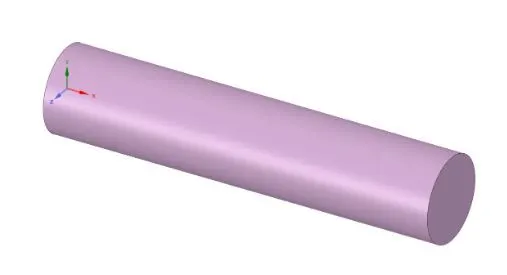
Geometry:
Meshing Details:
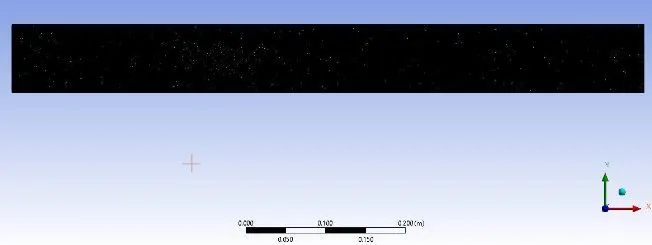
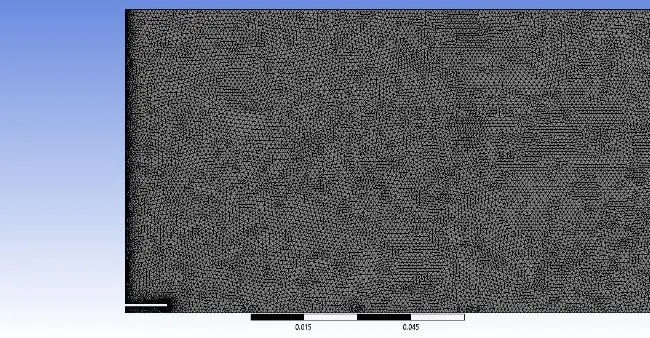
Element size: 0.001 m
Method: Triangular
Total Elements: 151893
Setup:
Viscous Model: K-Epsilon (standard)
Species model: Species Transport
Mixture material: Methane-air-2-step
Turbulence chemistry reaction: Eddy dissipation
NOX Pathways: Thermal NOx, Prompt NOx
Soot model: one-step model
Solution method: simple
Initialisation method: hybrid
Boundaries:
Air inlet:
- velocity: 0.5 m/s
- species: 02-0.23
- temperature: 300 K
Fuel Inlet:
- velocity: 80 m/s
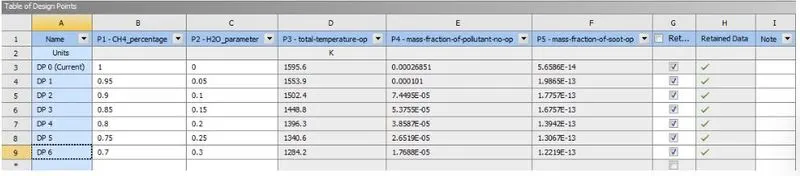
- species: Part 1- CH4 (100%) H2O (0%); Part 2: CH4 (70-95%) H2O (5-30%)
- temperature: 300 K
Parameters:
Part 1: Fuel without water content
Contour:
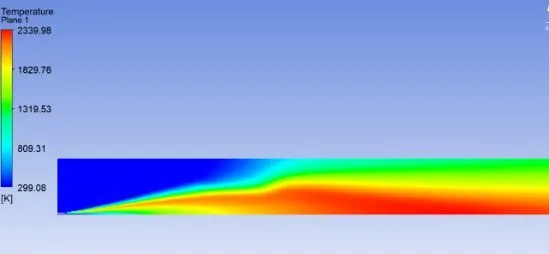
Temperature:
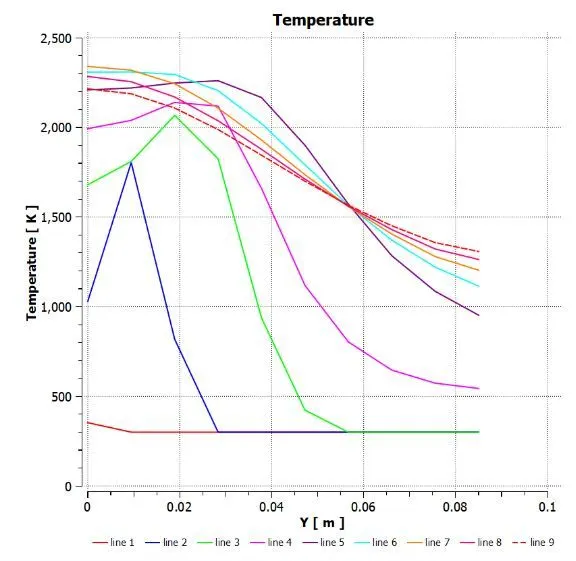
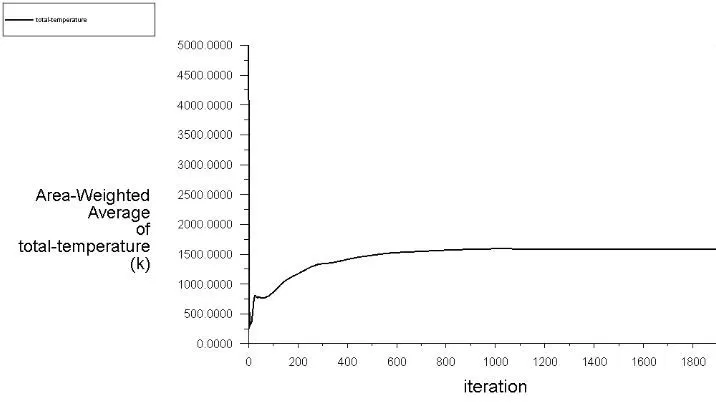
Average total temperature:
CH4 Mass fraction:
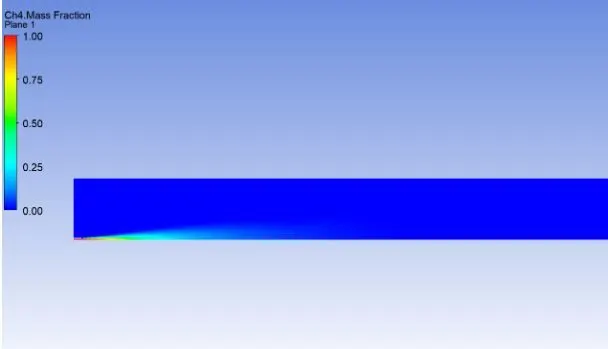
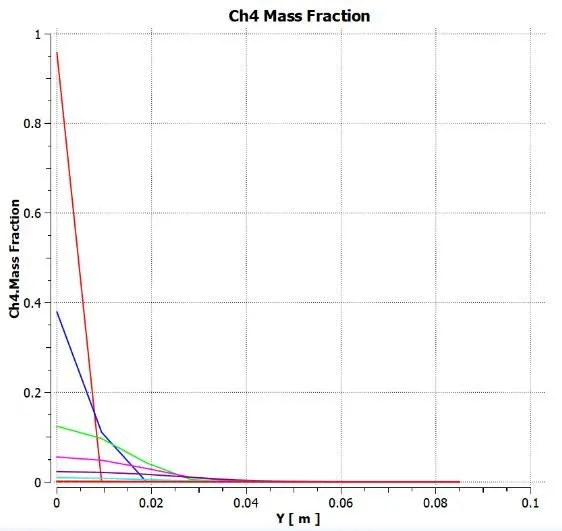
CO2 Mass fraction:
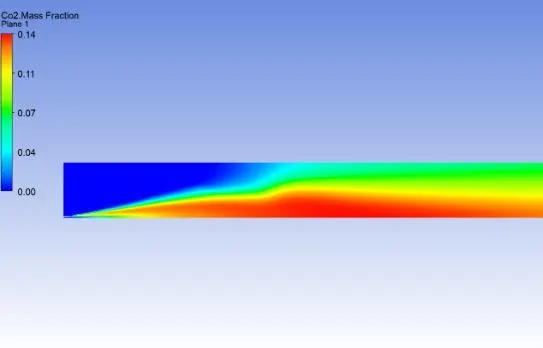
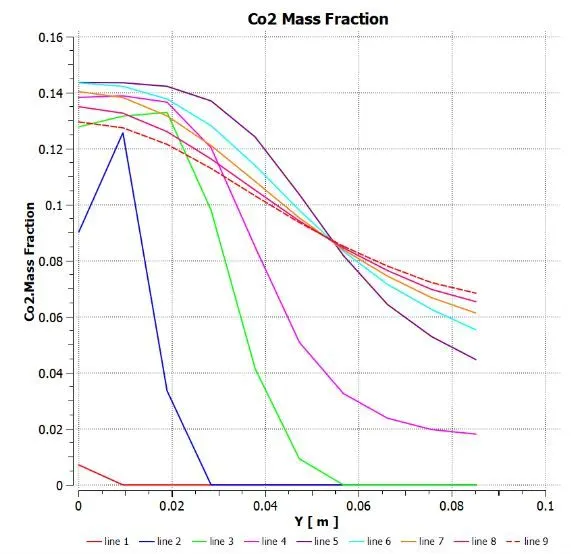
N2 Mass fraction:
O2 Mass fraction:
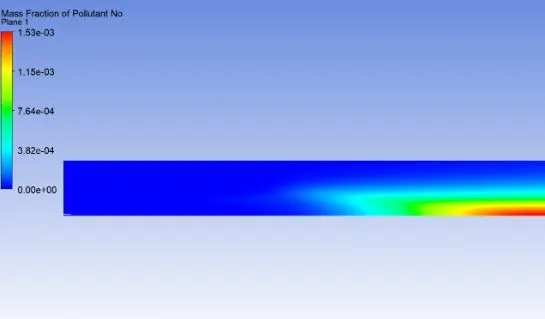
NO Mass fraction:
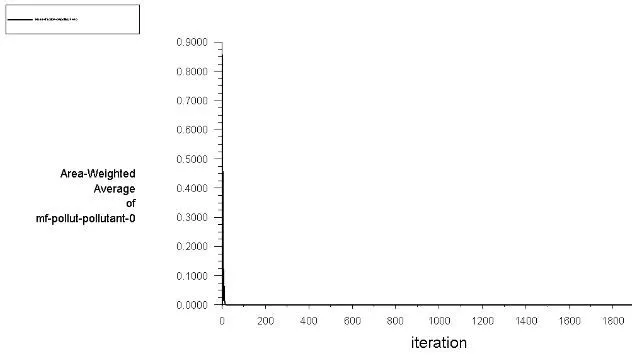
Average of pollutant no.:
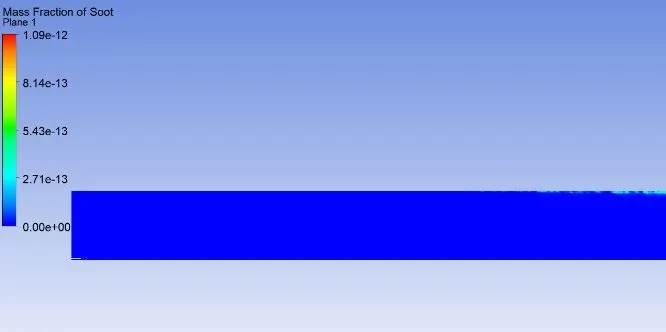
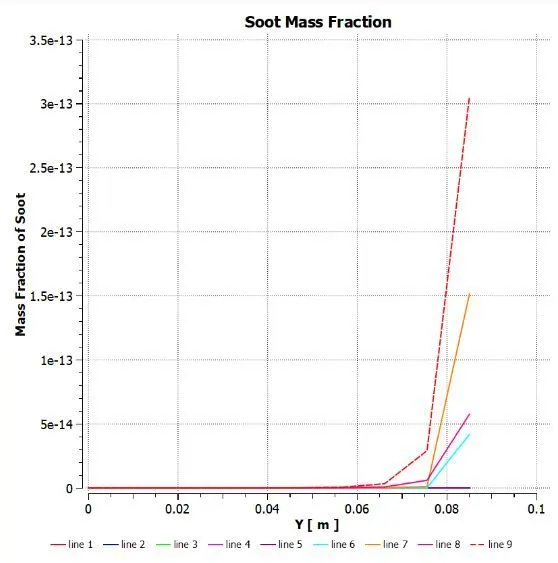
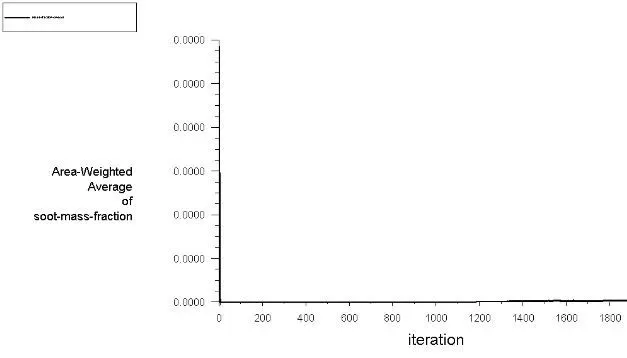
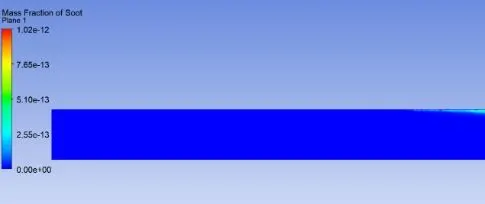
Soot mass fraction:
Part 2: Adding water content in fuel to obtain least emissions.
- To add water in fuel and increase from 5-30%.
a) 95% CH4 - 5% H2O
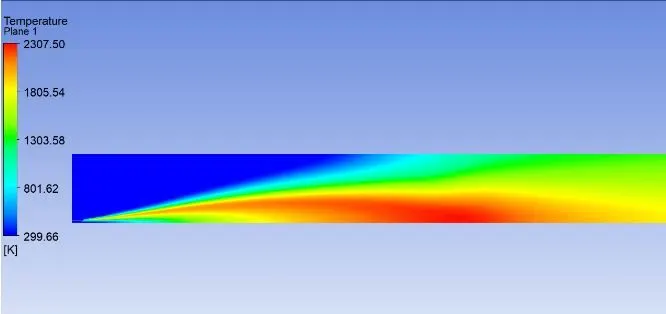
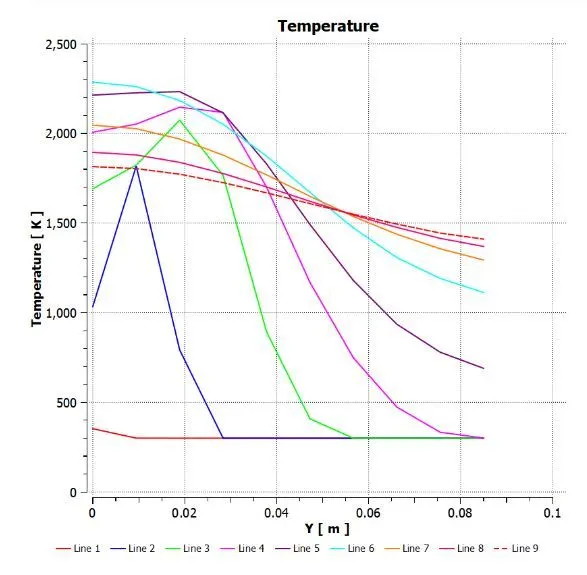
- Temperature
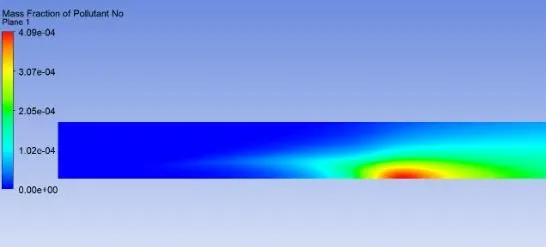
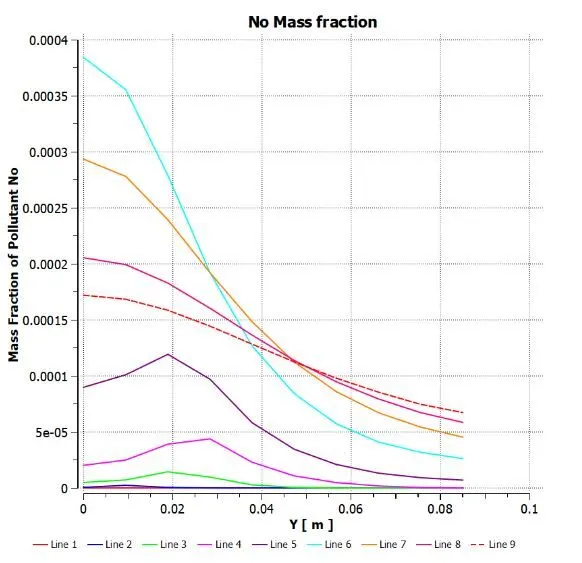
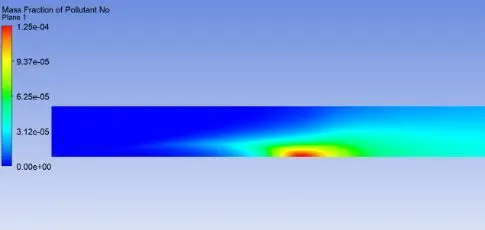
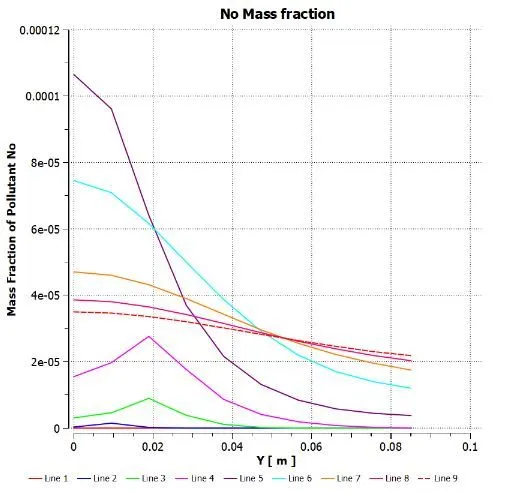
No pollutant:
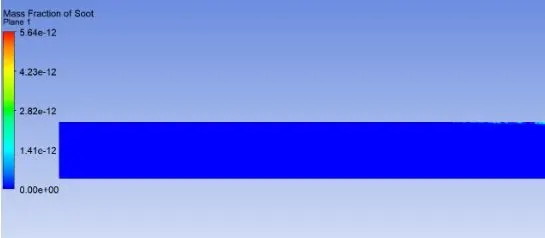
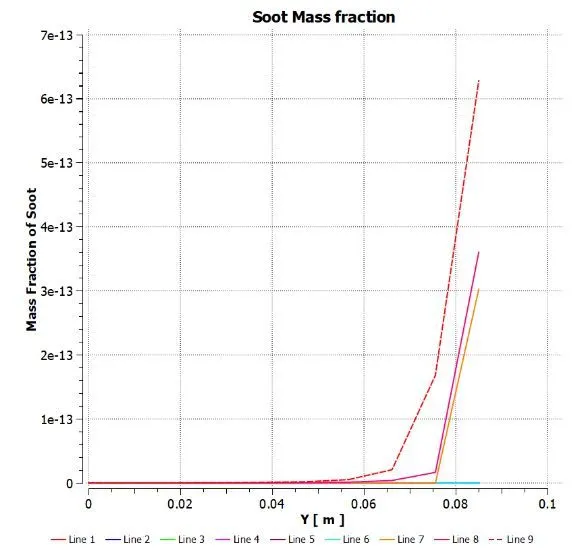
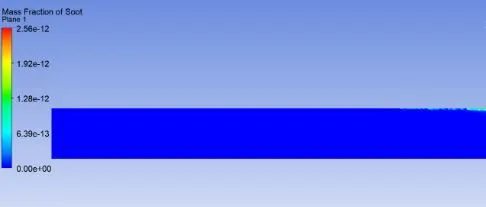
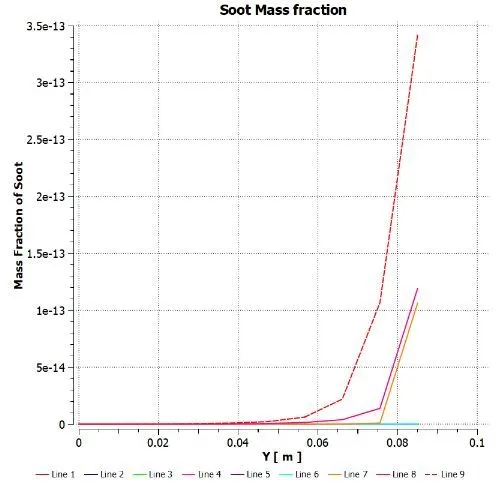
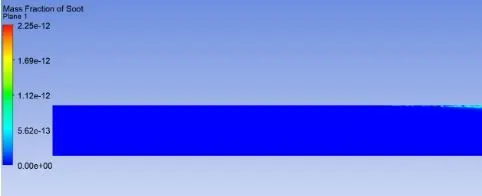
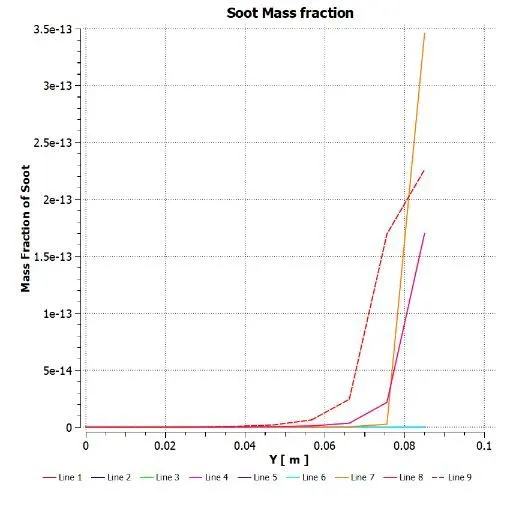
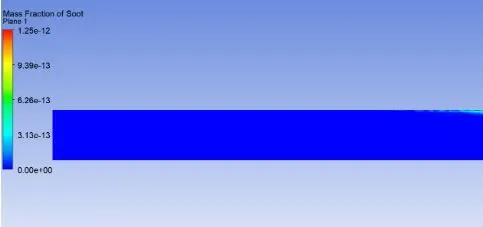
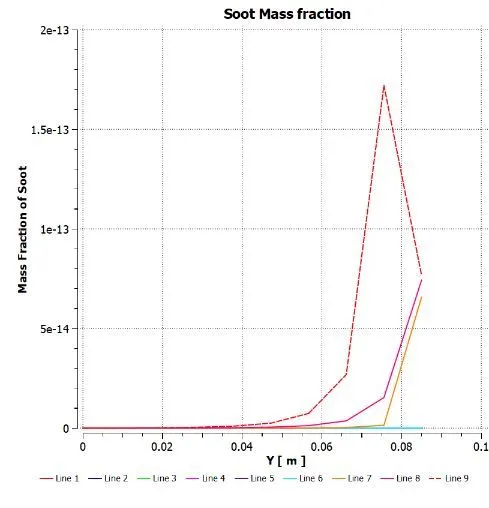
Soot:
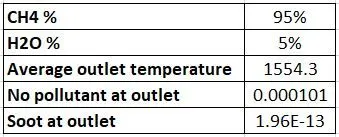
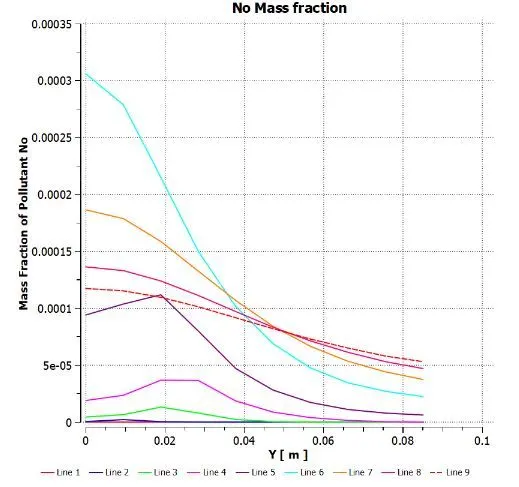
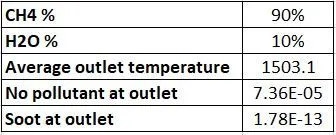
b) 95% CH4 - 10% H2O
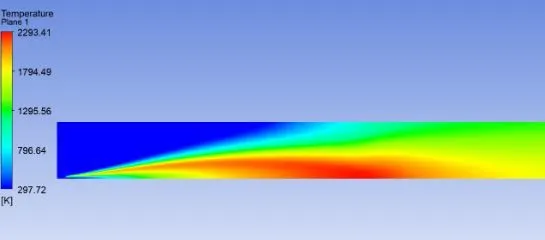
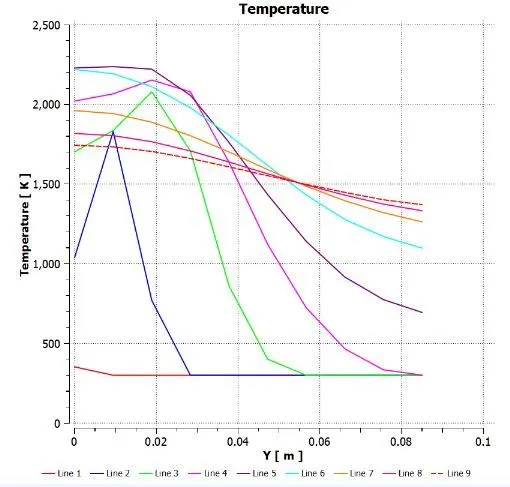
- No pollutant:
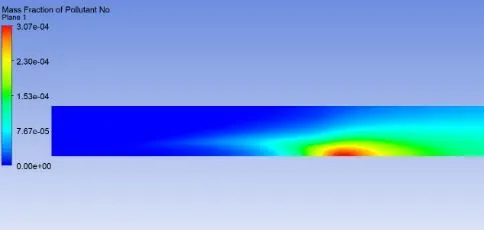
- Soot:
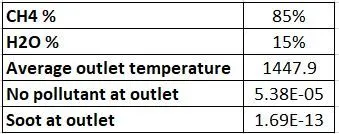
b) 85% CH4 - 15% H2O
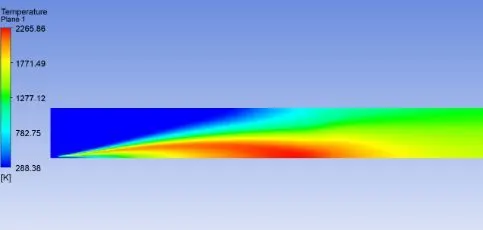
-Temperature:
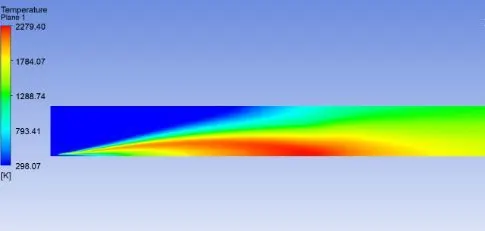
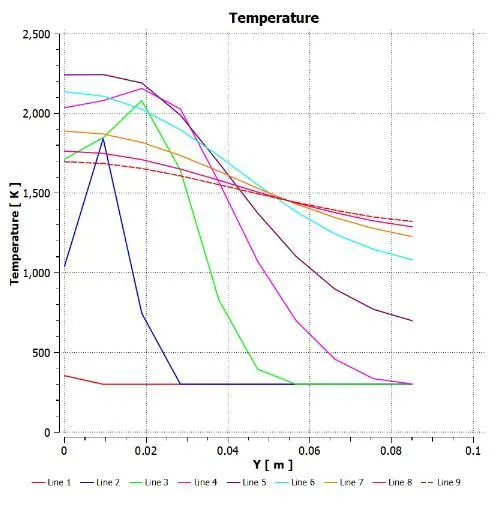
- No pollutant:
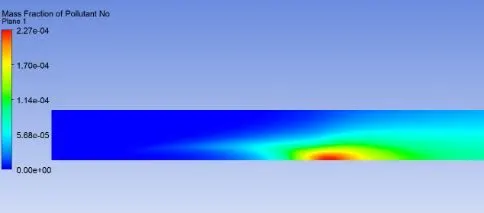
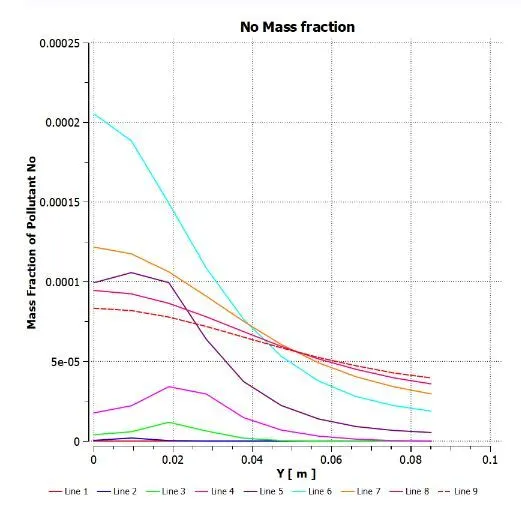
-Soot:
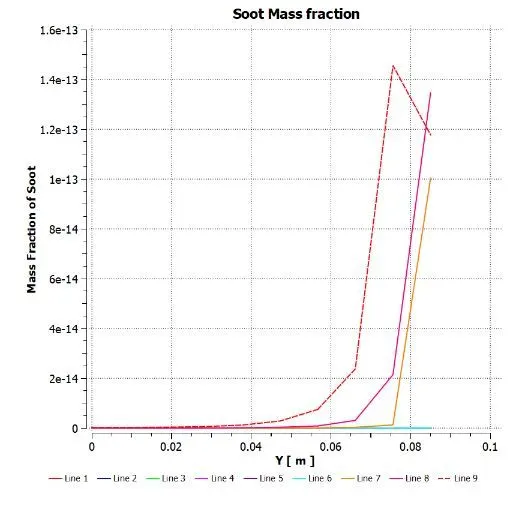
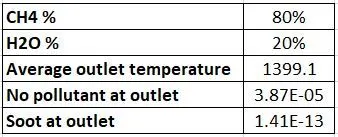
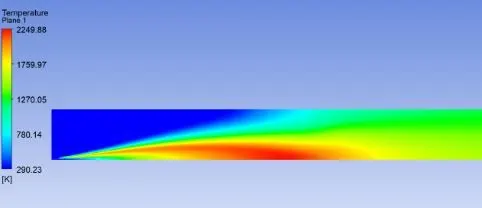
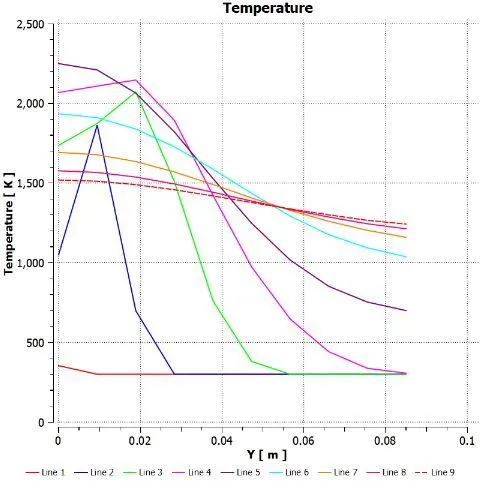
c) 80% CH4 - 20% H2O
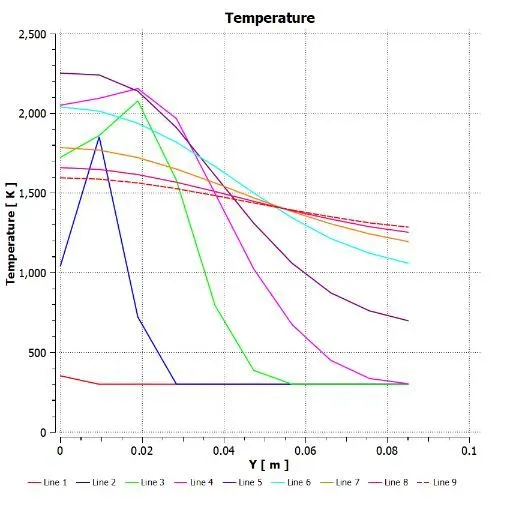
-Temperature:
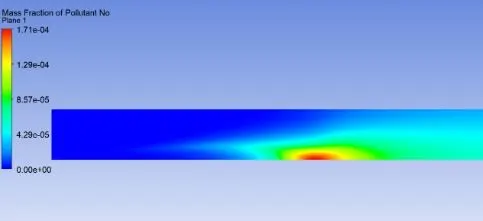
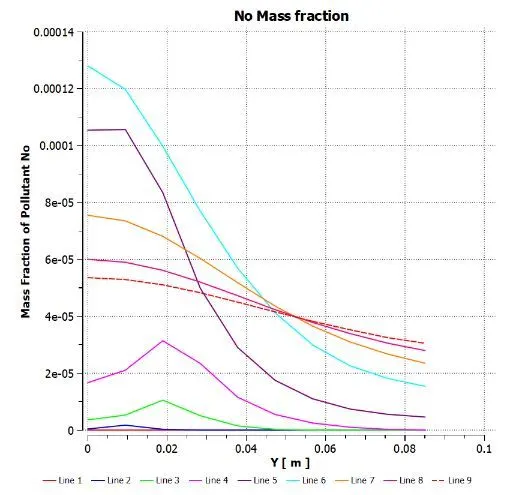
- No pollutant:
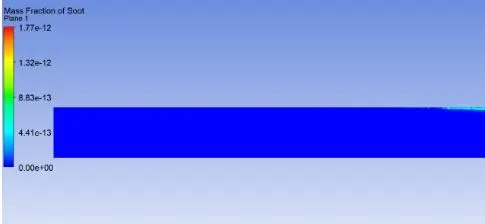
-Soot:
d) 75% CH4 - 25% H2O
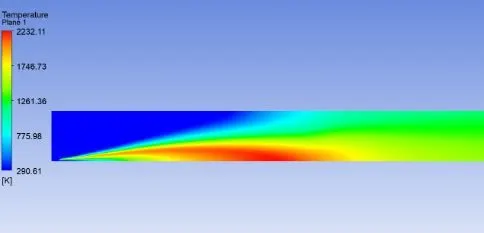
-Temperature
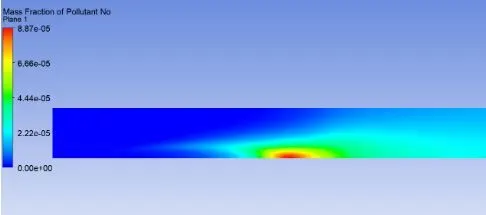
-No pollutant:
-Soot:
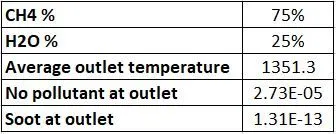
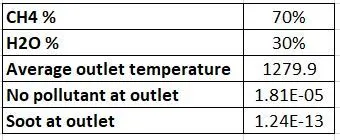
e) 70% CH4 - 30% H2O
-Temperature:
-No pollutant:
-Soot:
Inference:
- Based on the above iterations, we can notice that no pollutant at outlet decreases as the water content is increases, leading to less harmful emissions.
- Similarly temperature at outlet decreases as the water content is increases.
- Also soot formation is very less. As water content increases soot at outlet increases.