Week - 10 Hyperelastic Material Models
AIM:
To calculate the mooney rivlin and ogden material constants and compare the both using stress strain data for the material card induced dogbone specimen for 100 percent strain.
INTRODUCTION:
MOONEY RIVLIN:
The strain energy density function for an incompressible Mooney–Rivlin material is defined as Where Cij C i j are empirically determined material constants, I 1 I 1 and I 2 I 2 are the first and the second invariant. By varying the Index values of i i and j j we can change the constitutive equations and use it appropriately for our component.

where {\displaystyle C_{1}} and {\displaystyle C_{2}}
 are empirically determined material constants.
OGDEN MATERIAL:
The Ogden material model is a hyperelastic material model used to describe the non-linear stress - strain behaviour of complex materials such as rubbers, and biological tissue. The model was developed by Raymond Ogden in 1972.The Ogden model, like other hyperelastic material models, assumes that the material behaviour can be described by means of a strain energy density function, from which the stress–strain relationships can be derived.

In the Ogden material model, the strain energy density is expressed in terms of the principal stretches

PROCEDURE:
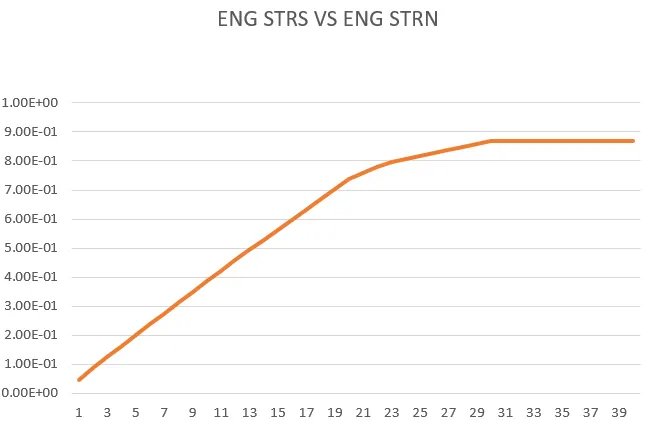
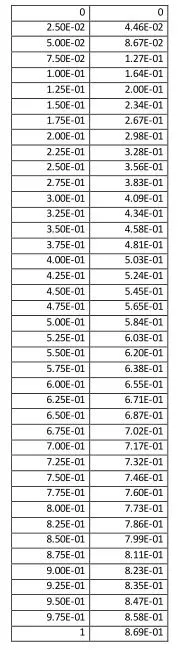
The below graph shows the behaviour of graph for the given engineering stress and strain values.
 .
.
MATERIAL VALIDATION:
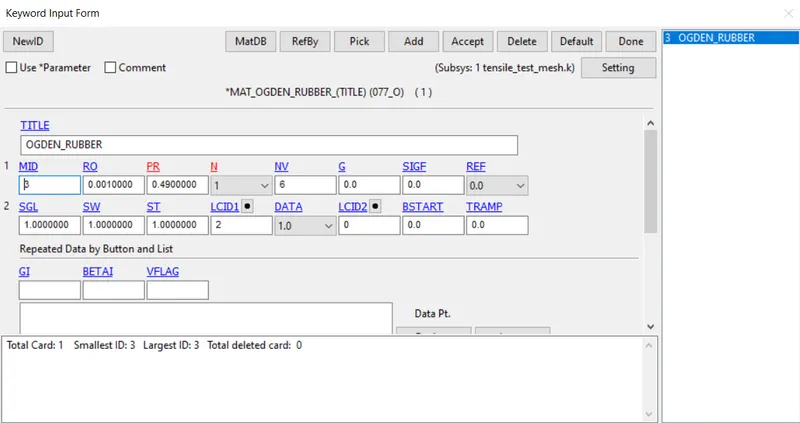
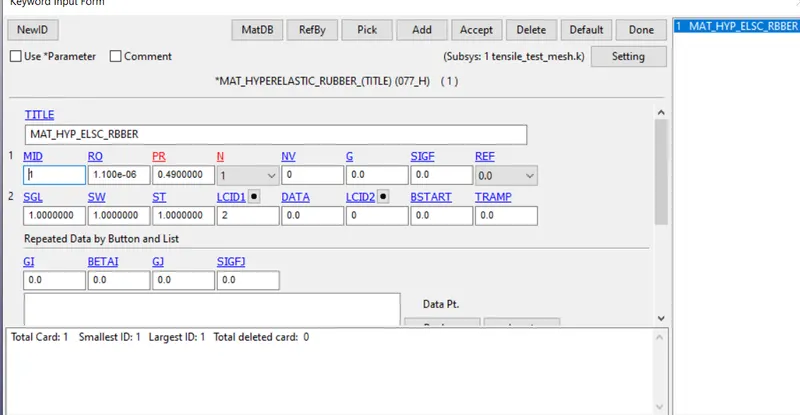
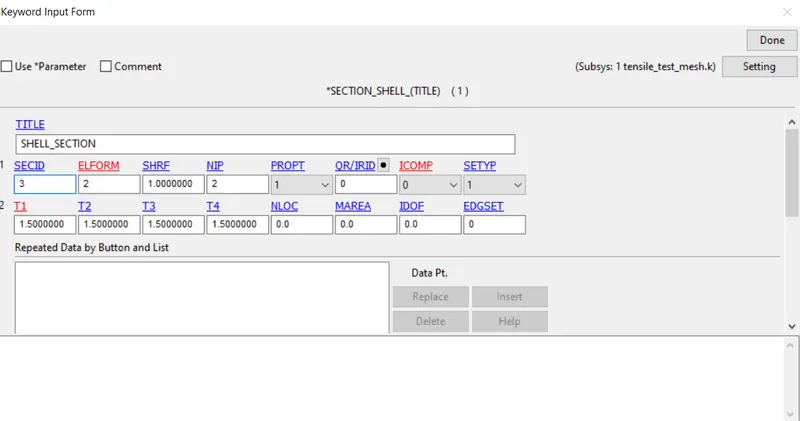
The section property the dogbone specimen is defined.
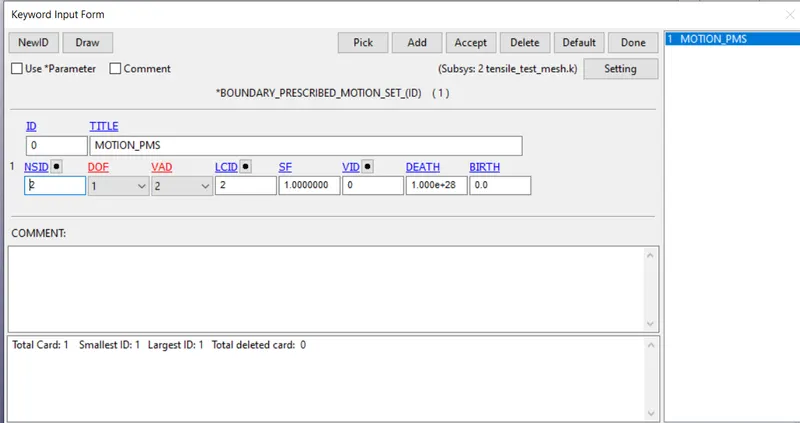
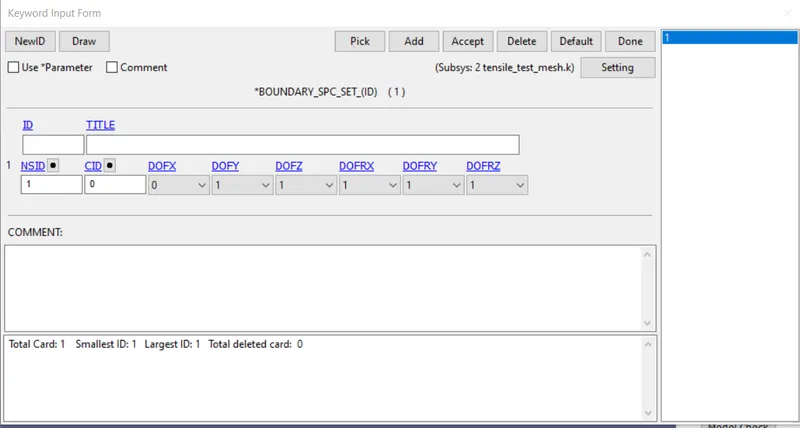
The following images shows the motions and constraints assigned inorder to perform a tensile test
Since this is a implicit solution the following are defined. CONTROL_IMPLICIT_GENERAL, CONTROL_IMPLICIT _SIMULATION, CONTROL_IMPLICIT_AUTO,CONTROL_IMPLICIT_SOLVER, the solver type and the time step info where defined using CONTROL_TERMINATION and D3PLOT.
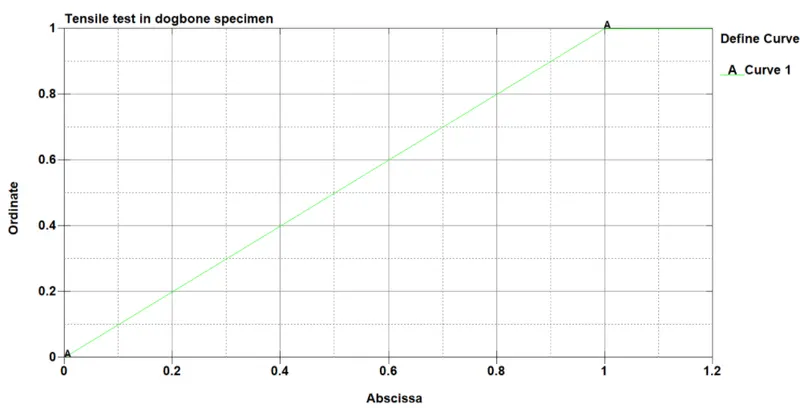
The displacement produced for the respective LCID and the behaviour is dipicted in the below graph.
RESULT:
The constants are obtained from D3hsp, by obtaining the extension file and strain values are derived by the following formula.
engineering strain= extension data-1
engineering stress = True stress/ (1+engineering strain)
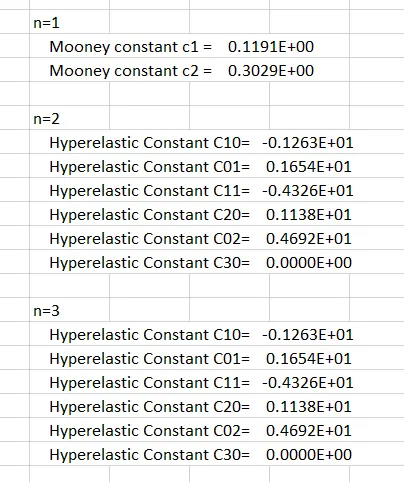
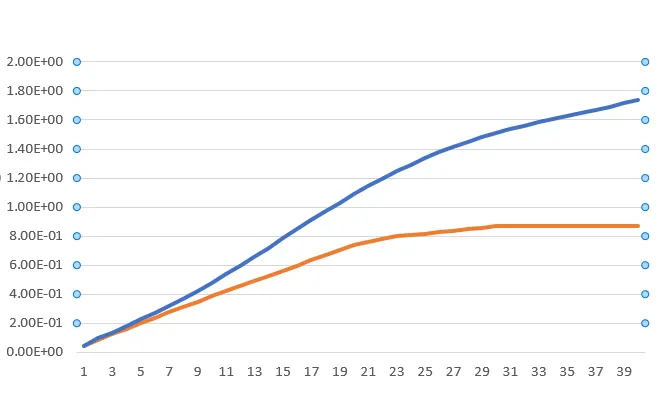
The curve fitting for the provided eng stress vs strain is compared with the hyperelastic materials behaviour. this shows that the hyperelastic material provides more strain for a lesser stress value.
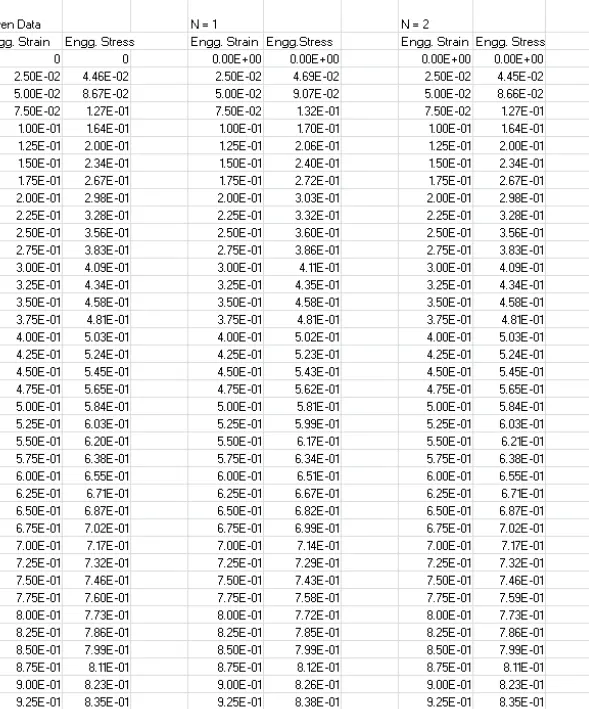
The following table shows the comparision between provided value and the obtained stress and strain values for constants with different values.
CONCLUSION:
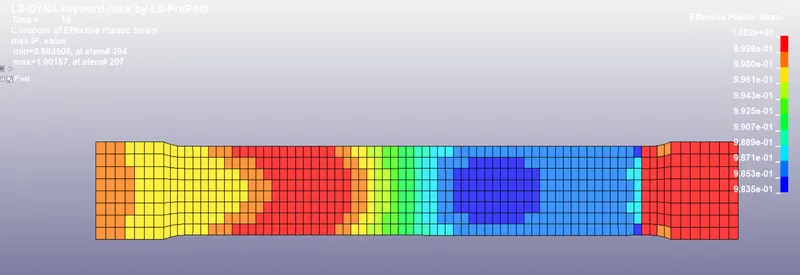
Thus the non-hyperelastic material is modeled by obtaining the engineering stress and strain data from the raw data provided. The mooney rivilin constants are calculated for the hyper elastic material and the curve is compared.