Hyper elastic Material Models
Week - 10 Hyperelastic Material Models
Aim
Using the given material data given model hyperelastic material model and find out Mooney Rivlin and Ogden material constants.
Compare the stress strain data from simulating the tensile test on a dog bone specimen.
Explanation
Hyper elasticity is the capability of a material to experience large elastic strain due to small forces. So a hyper elastic material is still an elastic material, but the linear elastic theory is not able to describe the material behavior. So Monney and Ogden models are used to define these types of materials like rubber , human skin.
Hyperelastic material for this case is modelled using MAT_HYPERELASTIC_RUBBER and MAT_OGDEN_RUBBER
The constants given below decribe the MAT_HYPERELASTIC_RUBBER model
when N= 1 ,C10 and C01
N= 2 ,C10, C01, C11, C20, and C02
N=3,C10, C01, C11, C20, C02, and C30
There similar constants for Ogden model.
From the given engineering stress and strain values the material is modelled and the constants are found out. These constants needs to validated and verified so that this constants can be later used to model complex geometries.
Procedure
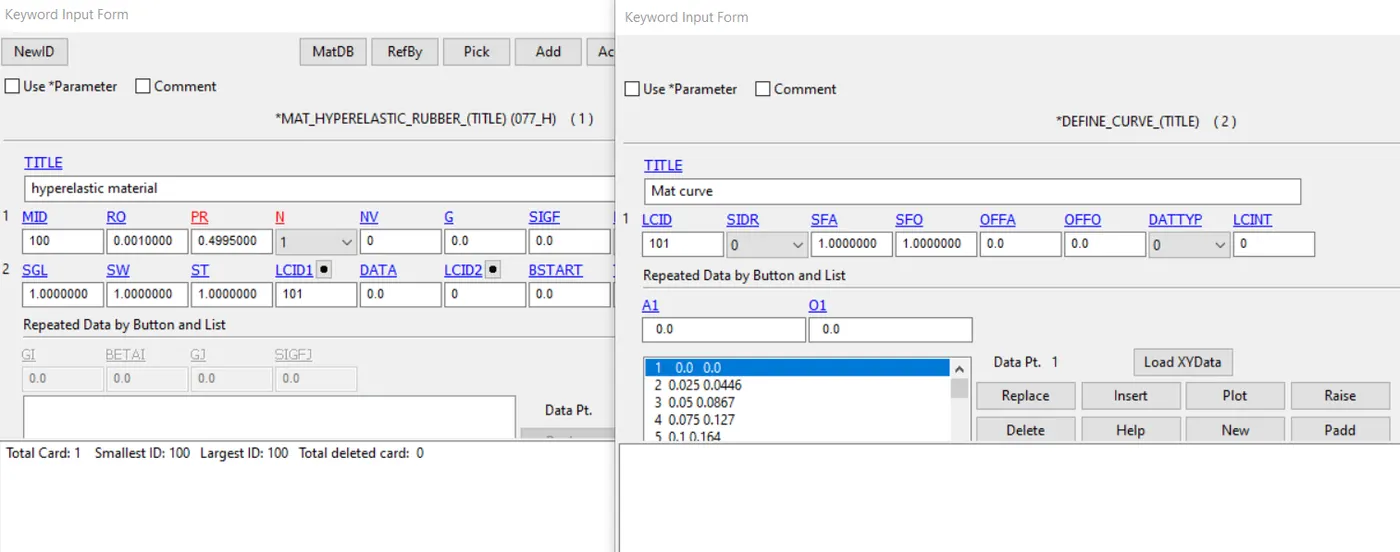
- The given data is inputted into the Material card and the number of constants to solve is set to N =1,2,3 to find out the fitting curve the material.
- The Engineering stress and strain curve is loaded into card. (MPa, mm/mm)
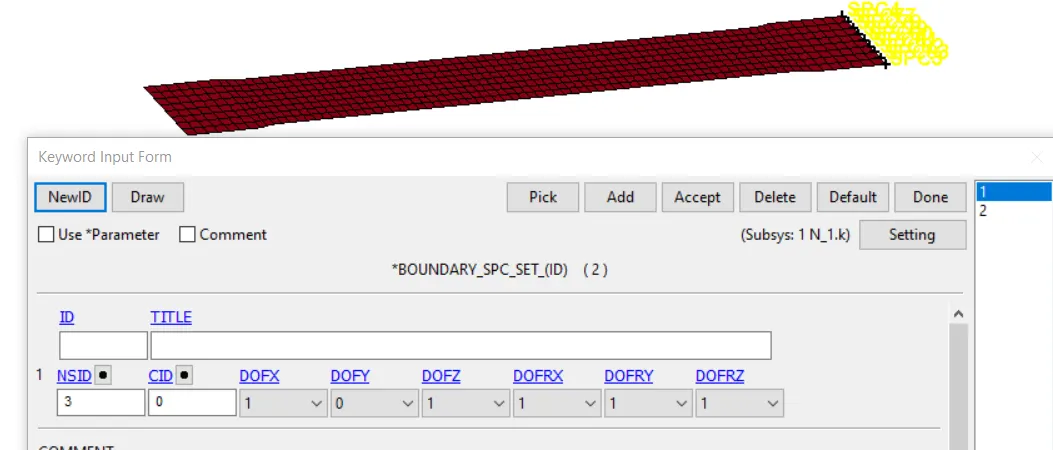
- The Boundary conditions - Model is fixed on side fixed with DOF allowed in lateral direction and pulled from the other end for a strain of 100%.
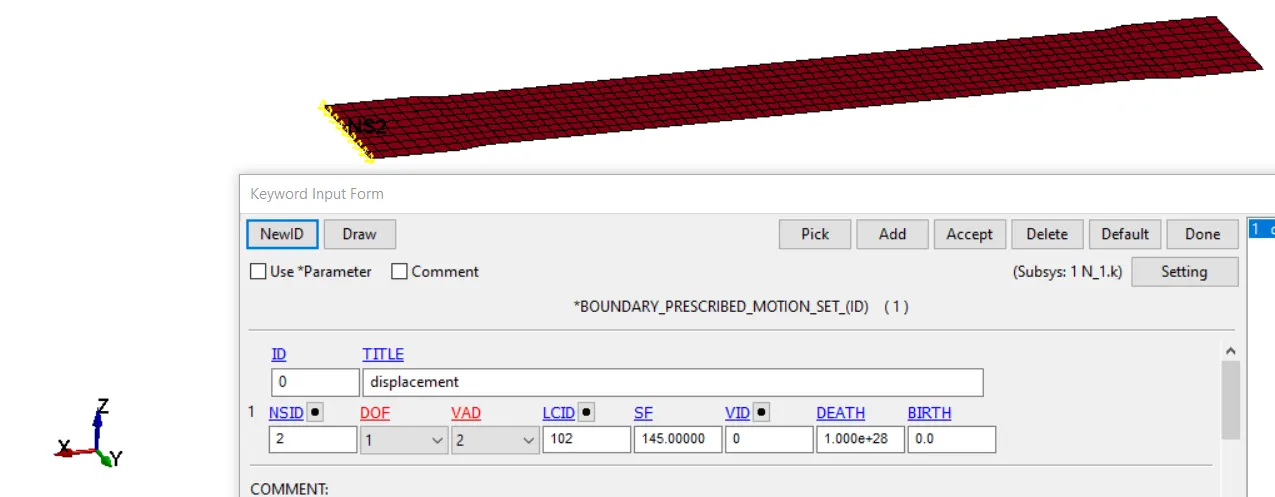
- A Prescribed motion is set for 145mm so that required strain is achieved.
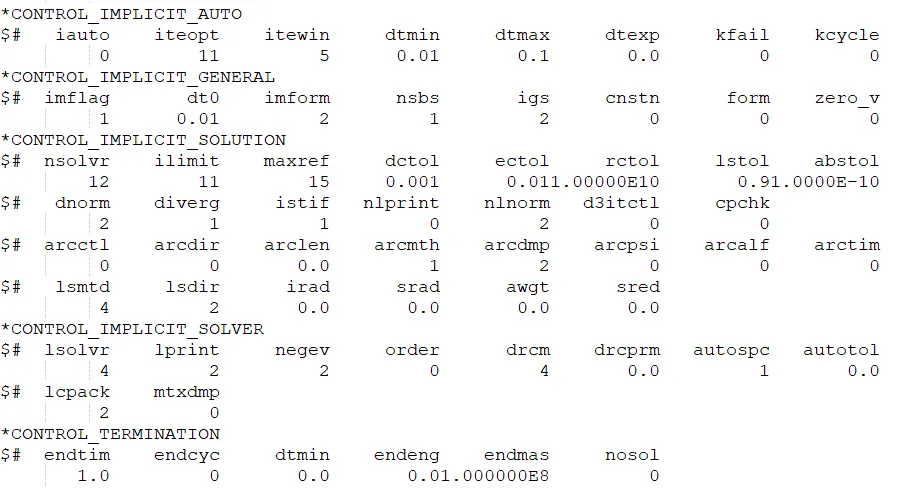
- Implicit cards Auto, General, Solution and solver the required paramters are set.
- Database Binary d3plot and ASCII cards - GLSTAT. Also extended binary cards is called for getting the strain history.
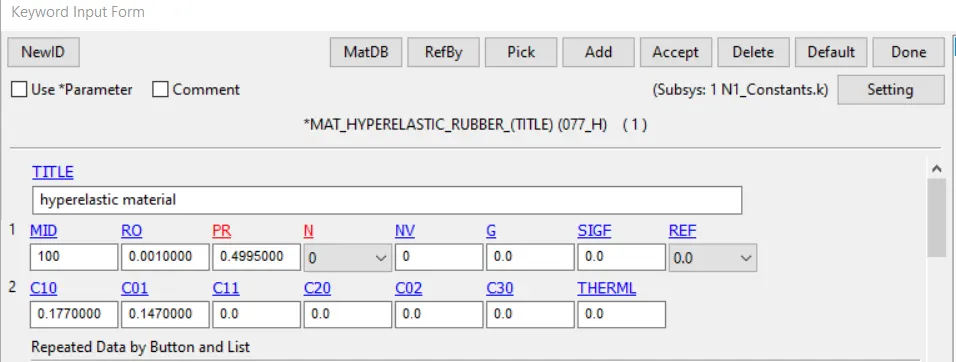
- The simulation with the load curve is run and the Mooney constants are obtained.
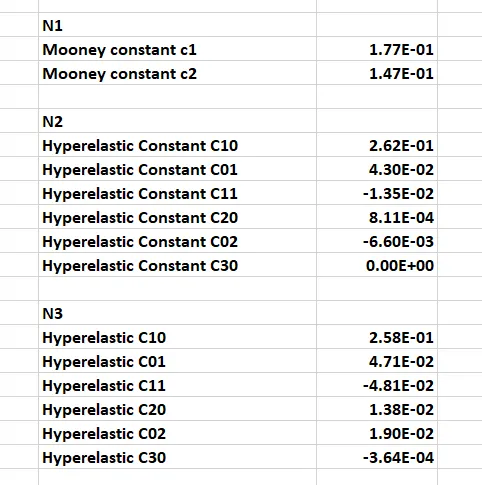
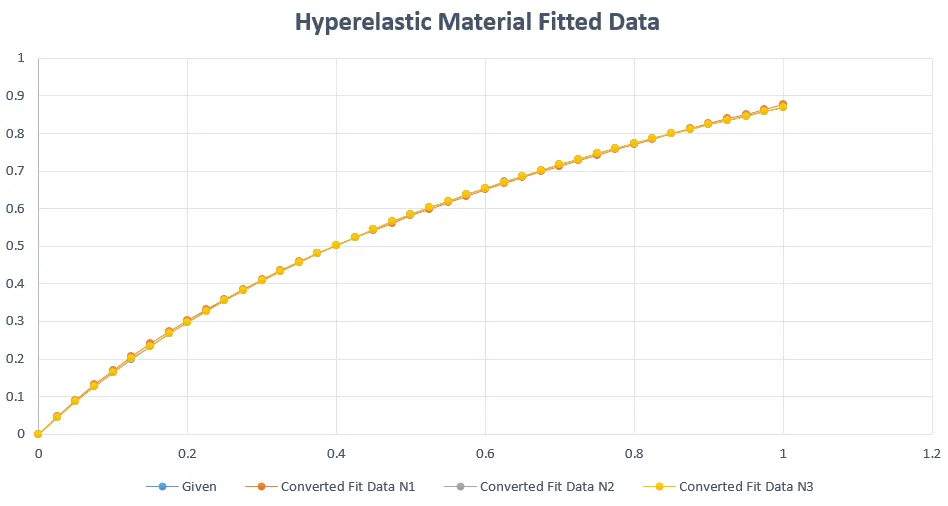
- The fitted curve is verified with the given the engineering stress strain.
- Stretch needs to converted to engineering strain ( Engg strain = 1- stretch)
- True stress is also converted to enginnering stress ( Engg stress = True Stress/ (1 + engg strain))
- From below graph the fitted data follows the given data.
- Using only the constants the tensile test is simulated for validation.
- The stress strain data after the simulation is cross plotted in post and the data is again converted to the enginnering values and compared to the given data.
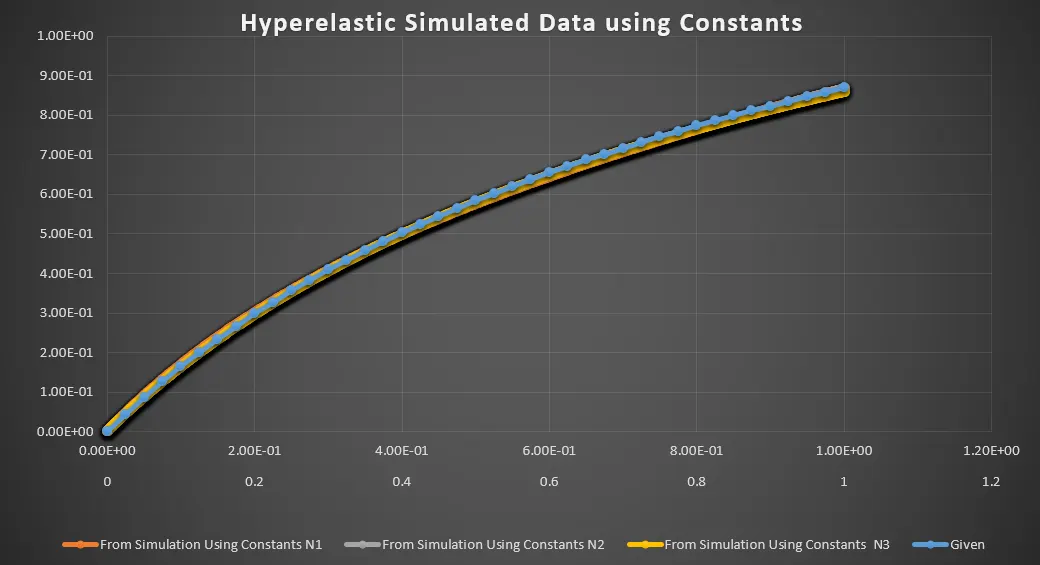
- Again the simulated data using the hyperelastic constants follows the given engineering stress and strain values.
- Using the odgen material similar activity is perfomed to validate the data.
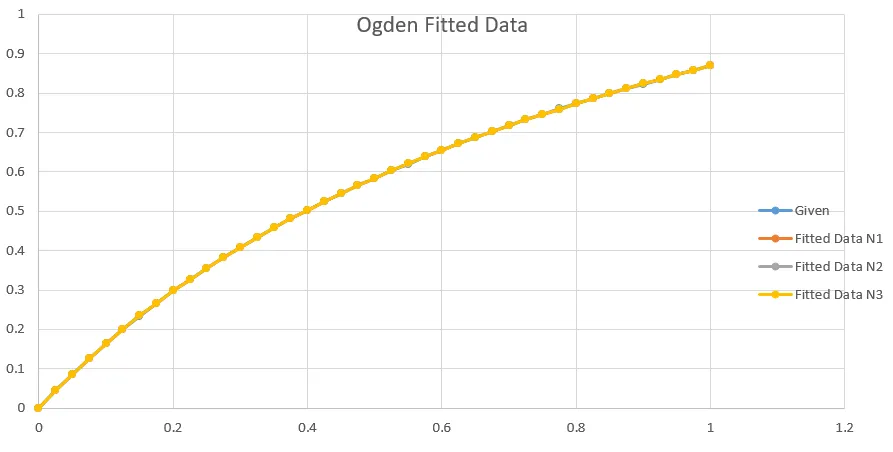
- The graph above is the fitted data by the solver for the given data.
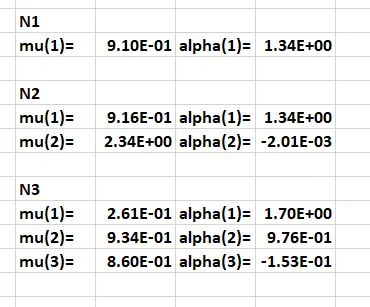
- The constants are noted down and the tensile test is perfomed on the model to validate the derived constants.
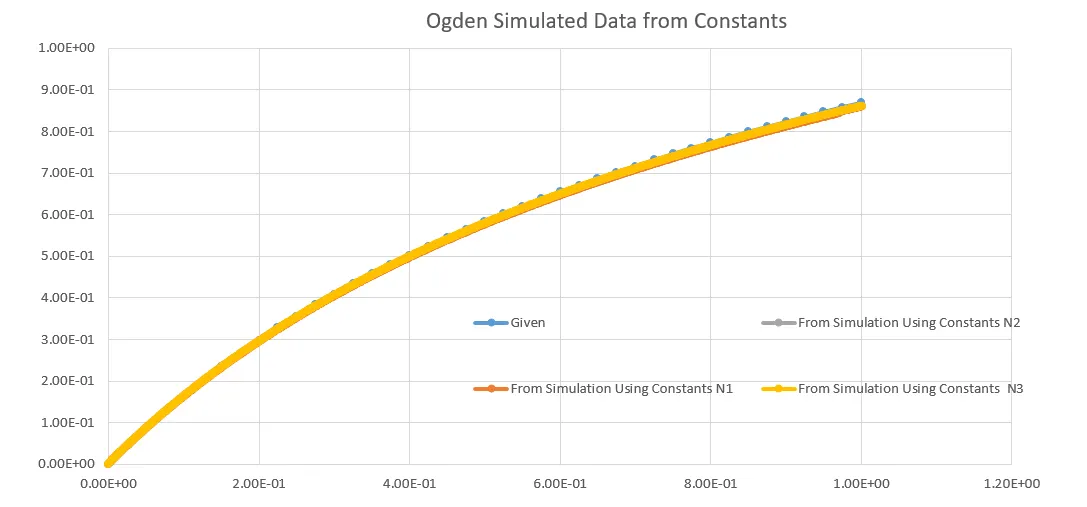
- Again the simulated data follows the given data. Hence validated.
Conclusion
- The Modelling of the hyperelastic model is performed and the data is validated.
- The constants found out the material curve is valid for the uniaxial stress data given. Other constants related to the other axes needs to be found out for using the constants for complex cases.