Week 10 - Challenge 3 - Door Trim Lower with Engineering Features
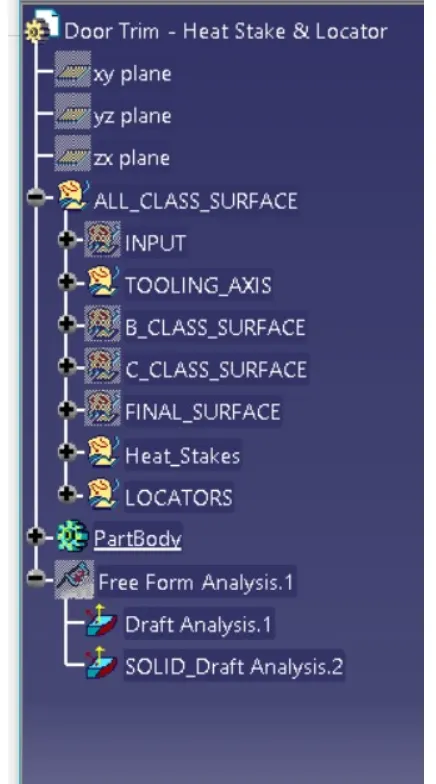
We have to first make the solid body from the class A surface. we should be start with the first with create with the tooling axis for creating the tooling axis we have select the edge which are to be create the issue for the draft or plastic mold. so, we have to do the draft analysis for the plastic mold we have to analyse the part for creating the dummy axis and then we have to create the bisecting line from this edge due to the complex surface we can direct take the side on which the part can be taken out.
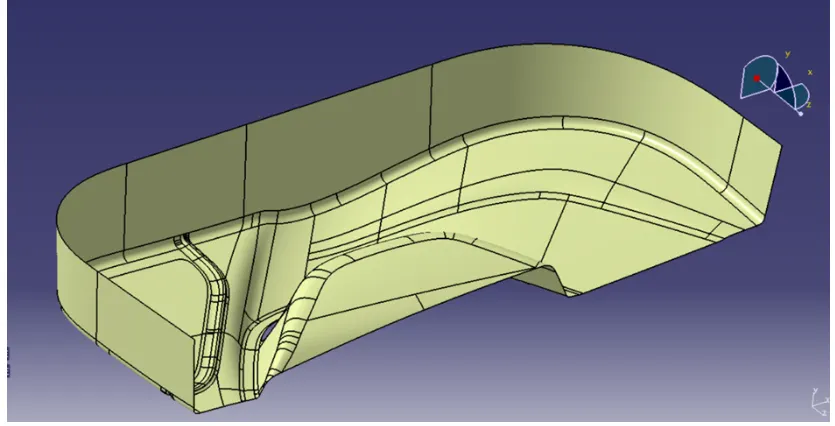
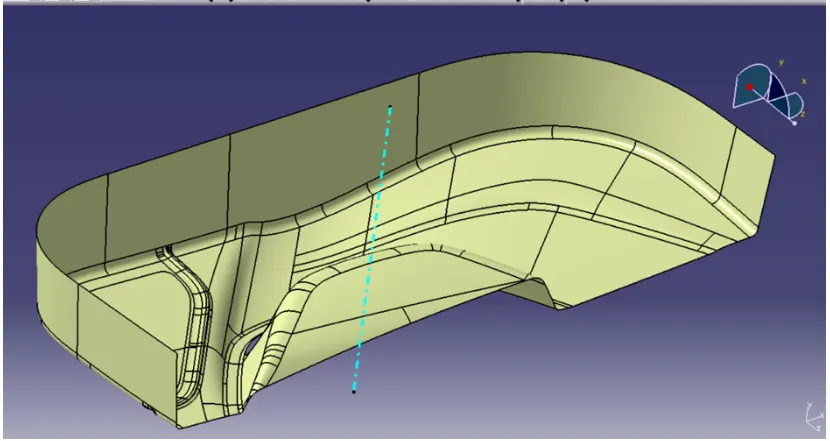
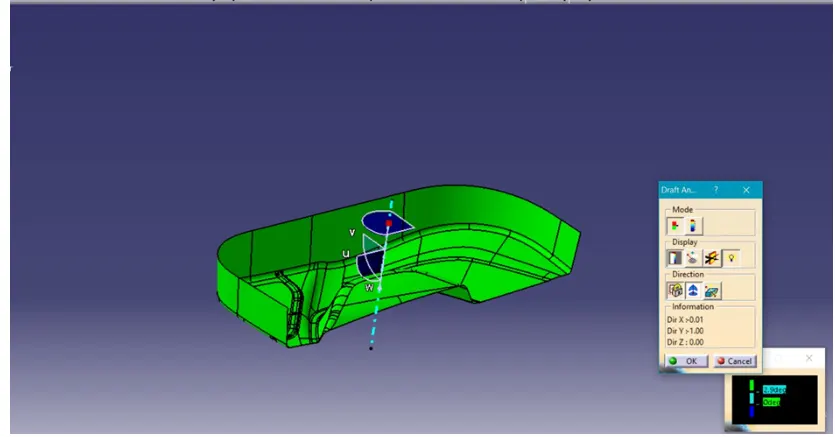
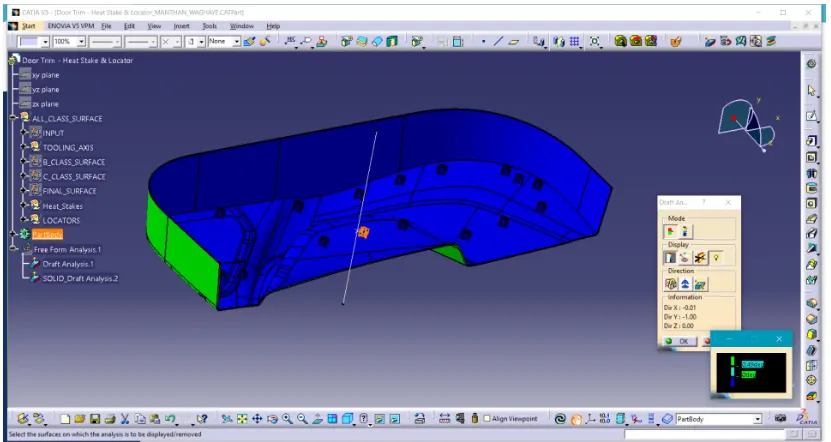
Here this tooling axis can be used to see the draft analysis
After creating the tooling axis we have to creating the B surface from the A surface so we extract the surface as wall and base surface for the fillet are not easy to make. for making the B surface we have to extract the plane surface and untrim and extrapolate them so that they can be intersect and then we can trim them as one surface and then we have to offset at thickness as here 3mm.
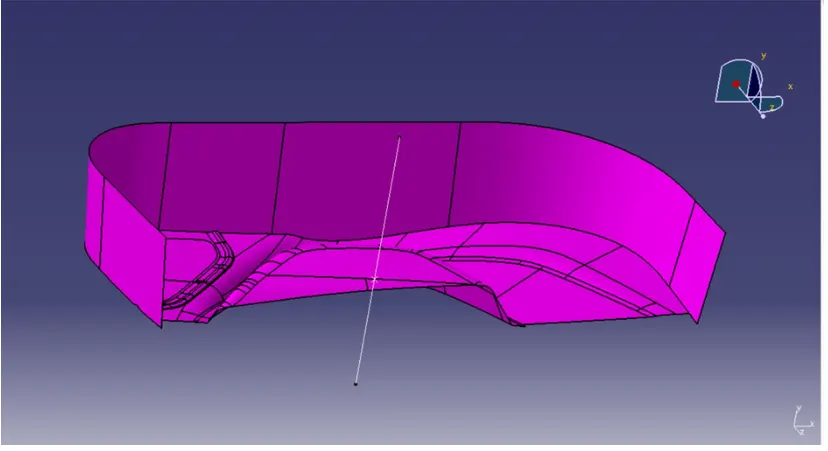
Then we have to fillet it but when we are giving the fillet radius, we have to consider this fillet value add ot subtract it by the part thickness or not.
After creating the B surface, we have to create the c surface from the edge which are closed or the surface and then we have to trim the B surface with C surface and then join the A surface and trim surface and then we get the final surface of base bracket for the creating the C surface we have to use the boundary and the multiple extract tool to get the edge to create the surface.
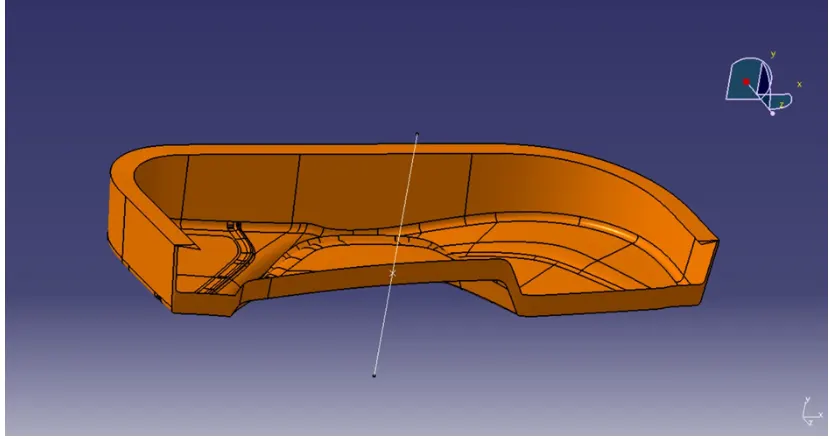
When we trim the surface with the class A surface with the C surface and then with the B surface and get the final surface
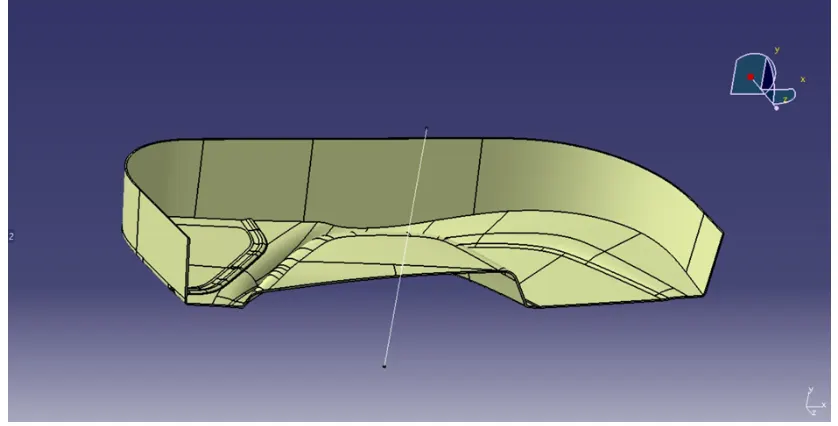
After that we have to create the thick surface in the part design workbench before that we have to check the surface is closed or not then we create the thick surface.
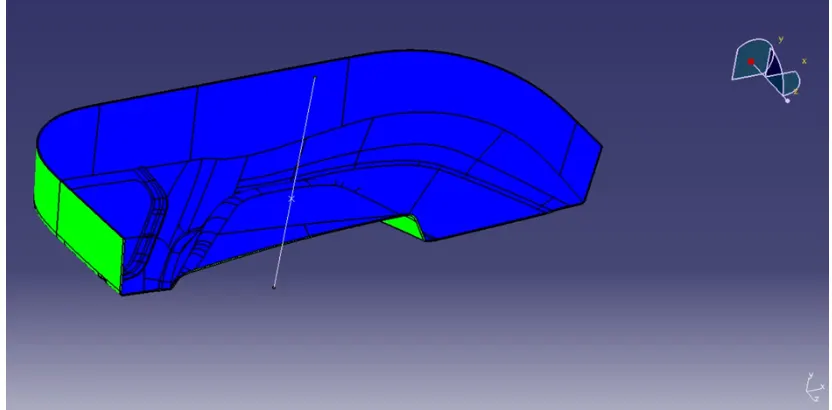
In draft analysis we can see the green and blue colour which so the green means draft more than the 3degree and blue for draft minus.
Heat staking
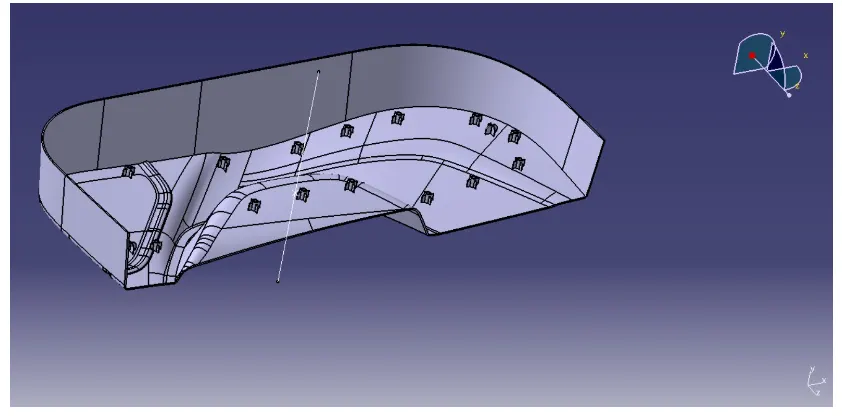
Then we have to create the heat stakes on the B surface which are not seen by customer or part. it is an engineering element used in the creation of plastic trim. Heat staking- In manufacturing products with thermoplastic components it is often necessary to join a thermoplastic to part of dissimilar plastic.
Conclusion:
The 4 way and 2 way locators, heat stakes has been created following all the plastic design guidelines.