Week 1 Understanding Different Battery Chemistry
1.Prepare a table which includes materials & chemical reactions occurring at the anode and cathode of LCO, LMO, NCA, NMC, LFP and LTO type of lithium ion cells.Give your detailed explanation on it
A lithium-ion battery or Li-ion battery is a type of rechargeable battery. Lithium-ion batteries are commonly used for portable electronics and electric vehicles and are growing in popularity for military and aerospace applications. A prototype Li-ion battery was developed by Akira Yoshino in 1985, based on earlier research by John Goodenough, M. Stanley Whittingham, Rachid Yazami and Koichi Mizushima during the 1970s–1980s, and then a commercial Li-ion battery was developed by a Sony and Asahi Kasei team led by Yoshio Nishi in 1991.
In the batteries, lithium ions move from the negative electrode through an electrolyte to the positive electrode during discharge, and back when charging. Li-ion batteries use an intercalated lithium compound as the material at the positive electrode and typically graphite at the negative electrode. The batteries have a high energy density, no memory effect (other than LFP cells) and low self-discharge. They can however be a safety hazard since they contain flammable electrolytes, and if damaged or incorrectly charged can lead to explosions and fires. Samsung was forced to recall Galaxy Note 7 handsets following lithium-ion fires,and there have been several incidents involving batteries on Boeing 787s.
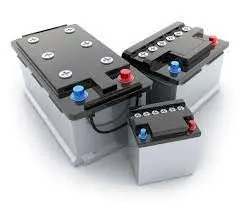
Lithium cobalt oxide
Lithium cobalt oxide, sometimes called lithium cobaltate or lithium cobaltite, is a chemical compound with formula LiCoO. The cobalt atoms are formally in the +3 oxidation state, hence the IUPAC name lithium cobalt(III) oxide.Lithium cobalt oxide is a dark blue or bluish-gray crystalline solid,and is commonly used in the positive electrodes of lithium-ion batteries.
The structure of LiCoO2
has been studied with numerous techniques including x-ray diffraction, electron microscopy, neutron powder diffraction, and EXAFS.The solid consists of layers of monovalent lithium cations
that lie between extended anionic sheets of cobalt and oxygen atoms, arranged as edge-sharing octahedra, with two faces parallel to the sheet plane. The cobalt atoms are formally in the trivalent oxidation state and are sandwiched between two layers of oxygen atoms
In each layer (cobalt, oxygen, or lithium), the atoms are arranged in a regular triangular lattice. The lattices are offset so that the lithium atoms are farthest from the cobalt atoms, and the structure repeats in the direction perpendicular to the planes every three cobalt (or lithium) layers. The point group symmetry is in Hermann-Mauguin notation, signifying a unit cell with threefold improper rotational symmetry and a mirror plane. The threefold rotational axis (which is normal to the layers) is termed improper because the triangles of oxygen (being on opposite sides of each octahedron) are anti-aligned.
Lithium manganese oxide
A lithium ion manganese oxide battery (LMO) is a lithium-ion cell that uses manganese dioxide, MnO
2, as the cathode material. They function through the same intercalation/de-intercalation mechanism as other commercialized secondary battery technologies, such as LiCoO
2. Cathodes based on manganese-oxide components are earth-abundant, inexpensive, non-toxic, and provide better thermal stability.
Nickel cobalt aluminium oxide
The lithium nickel cobalt aluminium oxides (NCA) are a group of substances comprising metal oxides. Some of them are important due to their application in lithium ion batteries. NCAs are used as active material on the positive pole (which is the cathode when the battery is discharged). NCAs are mixed oxides comprising the cations of the chemical elements lithium, nickel, cobalt and aluminium. The most important representatives have the general formula LiNixCoyAlzO2 with x + y + z = 1. In case of the NCA comprising batteries currently available on the market, which are also used in electric cars and electric appliances, x ≈ 0,8, and the voltage of those batteries is between 3.6 V and 4.0 V, at a nominal voltage of 3.6 V or 3.7 V. A version of the oxides currently in use in 2019 is LiNi0,84Co0,12Al0,04O2.
Nickel manganese cobalt oxide
Lithium nickel manganese cobalt oxides (abbreviated Li-NMC, LNMC, NMC or NCM) are mixed metal oxides of lithium, nickel, manganese and cobalt. They have the general formula LiNixMnyCozO2. The most important representatives have a composition with x + y + z that is near 1, with a small amount of lithium on the transition metal site. In commercial NMC samples, the composition typically has < 5% excess lithium.Structurally materials in this group are closely related to lithium cobalt(III) oxide (LiCoO2) and have a layered structure but possess an ideal charge distribution of Mn(IV), Co(III), and Ni(II) at the 1:1:1 stoichiometry. For more nickel-rich compositions, the nickel is in a more oxidized state for charge balance. NMCs are among the most important storage materials for lithium ions in lithium ion batteries. They are used on the positive side, which acts as the cathode during discharge.
Lithium ion phosphate
The lithium iron phosphate battery (LiFePO
4 battery) or LFP battery (lithium ferrophosphate), is a type of lithium-ion battery using lithium iron phosphate (LiFePO
4) as the cathode material, and a graphitic carbon electrode with a metallic backing as the anode. The energy density of LiFePO
4 is lower than that of lithium cobalt oxide (LiCoO
2), and also has a lower operating voltage. The main drawback of LiFePO
4 is its low electrical conductivity. Therefore, all the LiFePO
4 cathodes under consideration are actually LiFePO
4/C.Because of low cost, low toxicity, well-defined performance, long-term stability, etc. LiFePO
4 is finding a number of roles in vehicle use, utility scale stationary applications, and backup power.LFP batteries are cobalt-free.
Lithium titanate Oxide
The lithium-titanate-oxide (LTO) battery is a type of rechargeable battery which has the advantage of being faster to charge than other lithium-ion batteries, but the disadvantage of having a much lower energy density.
Table

2.Compare the differences between each type of Li+ion batteries based on their characteristics
|
Lithium-ion battery Types |
SP |
SE |
SF |
LS |
CS |
PF |
|
Lithium Cobalt Oxide |
L |
H |
L |
L |
L |
M |
|
Lithium Manganese Oxide |
M |
M |
M |
L |
L |
L |
|
Lithium Nickel Manganese Cobalt Oxide |
M |
H |
M |
M |
L |
M |
|
Lithium Iron Phosphate |
H |
L |
H |
H |
L |
M |
|
Lithium Nickel Cobalt Aluminum Oxide |
M |
H |
L |
M |
M |
M |
|
Lithium Titanate |
M |
L |
H |
H |
H |
H |
- SP stands for specific power
- SE stands for specific energy
- SF stands for safety
- LS stands for lifespan
- CS stands for cost
- PF stands for performance
- L stands for low
- M stands for moderate
- H stands for high
Summary of the Table
Lithium Cobalt Oxide has a high specific energy as compared to the other batteries which makes it the preferred choice for laptops and mobile phones. It also has a low cost and a moderate performance. However, it is highly unfavourable in all the other aspects when compared to the other lithium-ion batteries. It has a low specific power, low safety, and a low lifespan.
Lithium Manganese Oxide has a moderate specific power, moderate specific energy, and a moderate level of safety when compared to the other types of lithium-ion batteries. It has the added advantage of a low cost. The downsides are its low performance and low lifespan. It is usually used in medical devices and power tools.
Lithium Nickel Manganese Cobalt Oxide has two major advantages as compared to the other batteries. The first one is its high specific energy which makes it desirable in electric powertrains, electric vehicles and electric bikes. The other is its low cost. It is moderate in terms of specific power, safety, lifespan and performance when compared to the other lithium-ion batteries. It can be optimised to either have a high specific power or a high specific energy.
Lithium Iron Phosphate only has one major disadvantage when compared to other types of lithium-ion batteries and that is its low specific energy. Other than that, it has a moderate to high rating in all the other characteristics. It has high specific power, offers a high level of safety, has a high lifespan and comes at a low cost. The performance of this battery is also moderate. It is often employed in electric motorcycles and other applications that require a long lifespan and high level of safety.
Lithium Nickel Cobalt Aluminum Oxide only offers one strong advantage and that is a high specific energy. Apart from this, it doesn’t really offer much as compared to the five other batteries. It provides a low level of safety as compared to the other batteries. It is also pretty moderate in the rest of the characteristics like performance, cost, specific power and lifespan. Its high specific energy and moderate lifespan makes it a good candidate for electric powertrains.
Lithium Titanate offers high safety, high performance and a high lifespan which are very important features every battery should have. Its specific energy is low compared to the five other lithium-ion batteries but it compensates for this with a moderate specific power. The only major disadvantage of lithium titanate as compared to the other lithium-ion batteries is its extremely high cost. Another important feature of this battery worthy of mention is its remarkably fast recharge time. It can be used for storing solar energy and creating smart grids.