Week 1 Stress Concentration on a Plate with hole
OBJECTIVE- Perform a static structural analysis using Ansys workbench on two different models. The main objective is to measure stress, strain, and deformation-induced on the plate with the same dimension with a different number of holes and compare the deformation and maximum stress developed on both models, and also compare it for better design and manufacturing point of view.
STEPS FOR PERFORMING STRUCTURAL ANALYSIS-
1. Open Ansys Workbench.
2. Select static structural analysis.
3. Select proper Engineering data(material).
4. Create/Import a Geometry.
5. Open mechanical model.
6. Mesh the geometry.
7. Give the boundary Conditions.
8. Insert output request.
9. Apply the solver to solve.
10. Result Analysis.
PROCEDURE FOR BOTH CASE:-
- Open Ansys Workbench
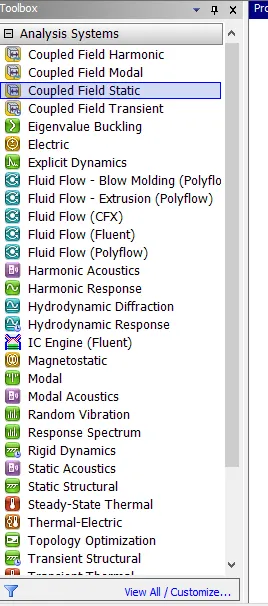
- Select Static Structural module
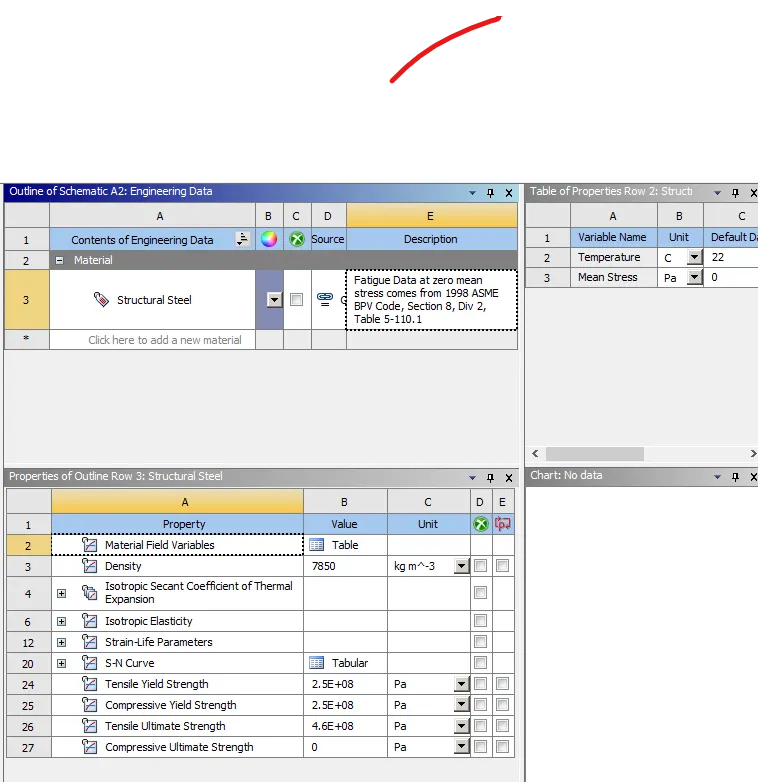
- Now select engineering data and assign material.
MATERIAL FOR BOTH CASES:
- Now select the geometry tab and create geometry as per the given dimension in the space claim.
CASE 1-
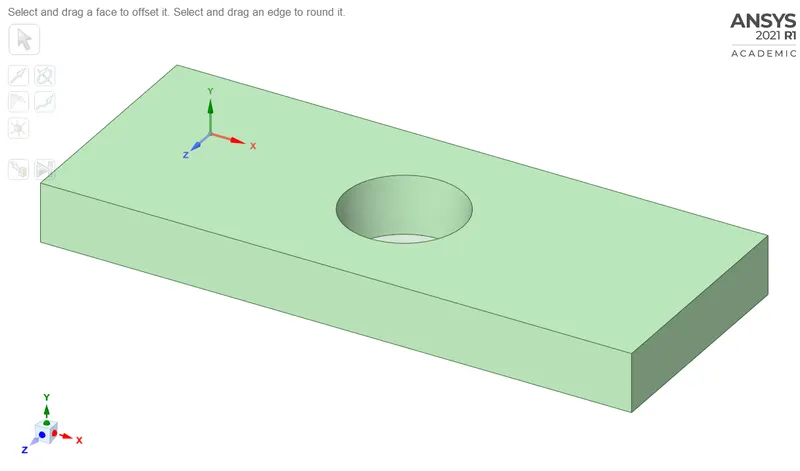
Plate with a single hole.
Plate dimensions:
Length=300mm
Height=120mm
Thickness=30mm
Circular Hole at the center
Diameter=60mm
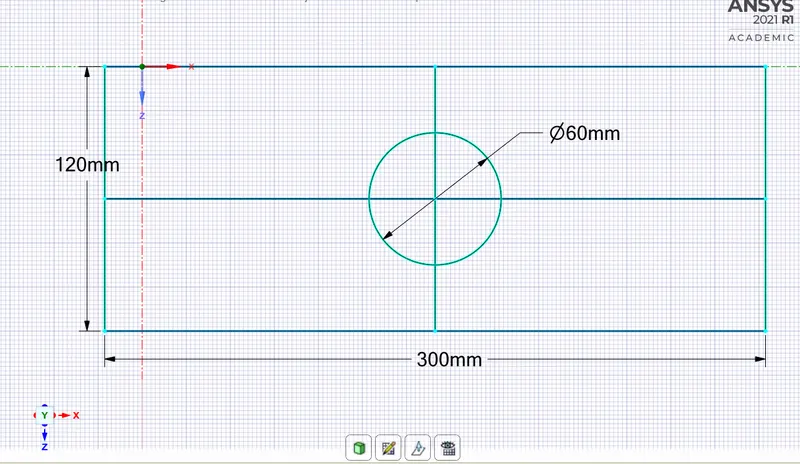
CAD MODEL:
CASE 2:
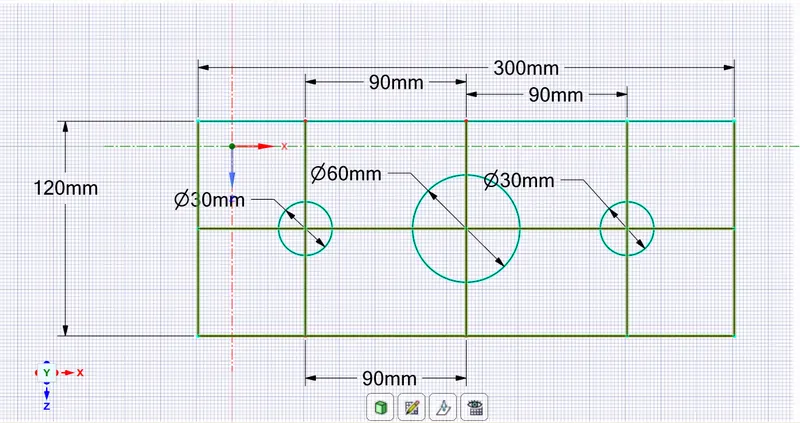
CAD MODEL:
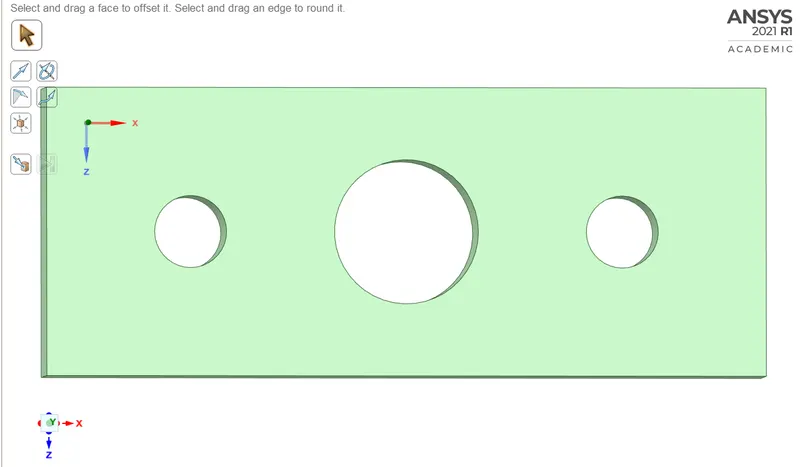
- After creating geometry, go back to the workbench, update, and open the Model Module.
- After that Mechanical tab opens, where we going to perform the analysis.
- Now assign material as per requirement.
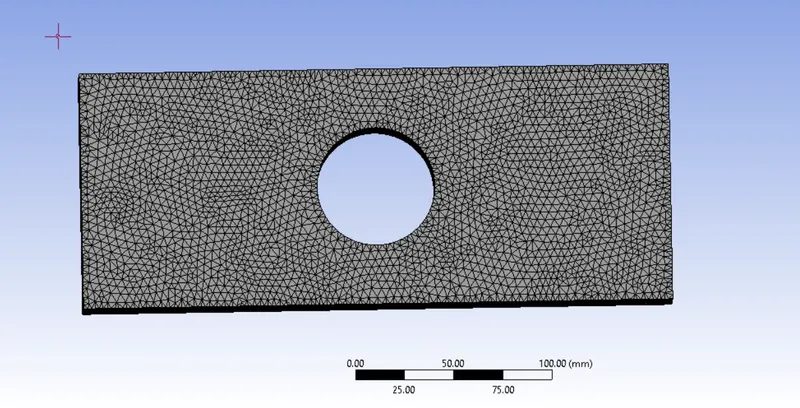
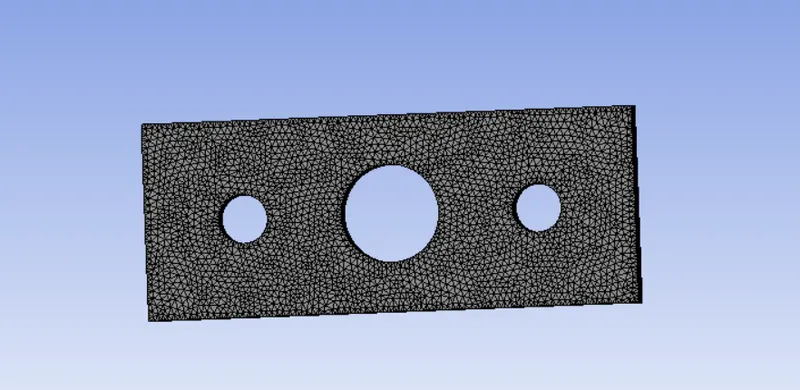
- Now Meshed the model as per requirement.
CASE 1- MESHED MODEL
CASE 2- MESHED MODEL
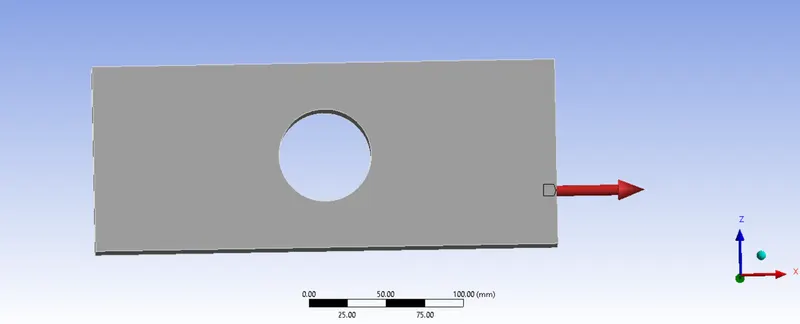
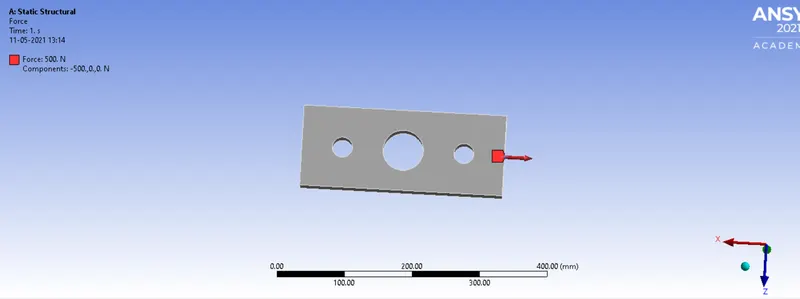
- After that assign, a boundary condition, fix the left side of the plate and apply tensile force on the right side of the plate.
CASE1- BOUNDARY CONDITION
CASE 2- BOUNDARY CONDITION
- After that, we need to assign an output request to the solver so we get the result that we want to analyze the model.
- Now after creating geometry, assign material and boundary we moved toward result and the comparison between both based on design and manufacturing.
RESULT:
The analysis is done on case 1 with structural steel and case 2 with the same material, the total deformation equivalent stress and equivalent strain are calculated on both plates.
1.TOTAL DEFORMATION:
CASE 1
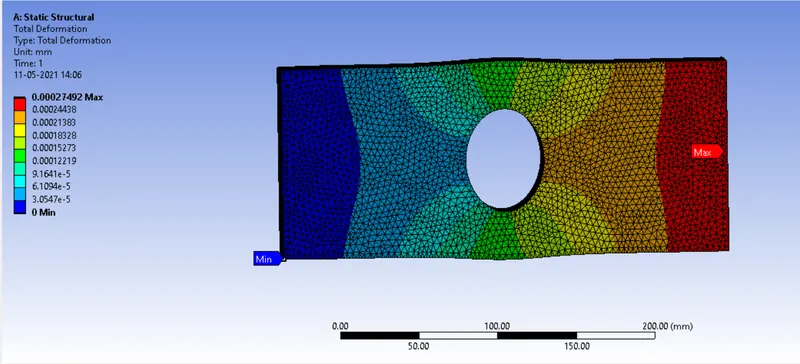
Max Deformation:0.00027492mm
CASE 2
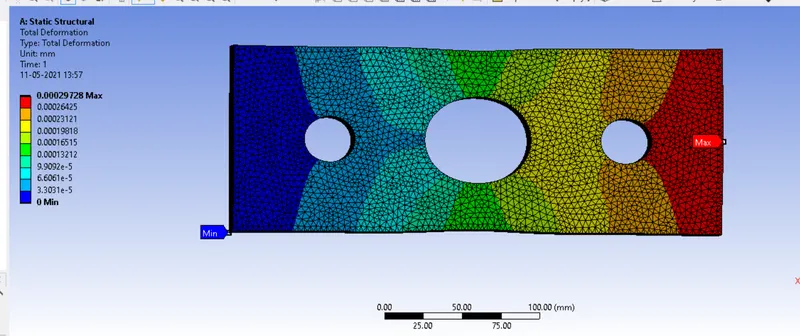
Max Deformation:0.00029728mm
By comparing both cases the total deformation is higher in case 2 as compare to case 1 due to the number of more holes is more in case 2.
2. EQUIVALENT STRESS:
CASE 1:
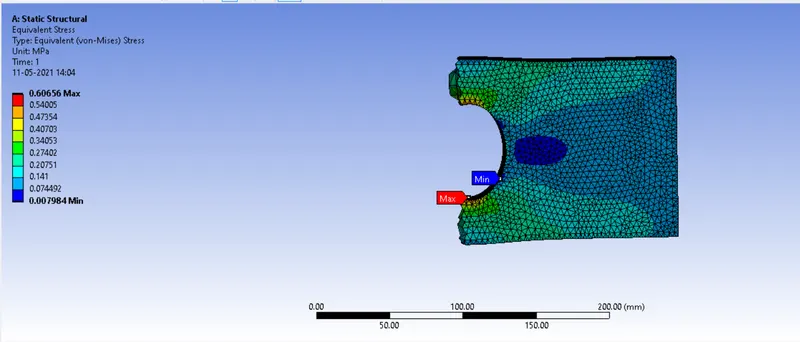
Max stress =0.60656Mpa
CASE 2:
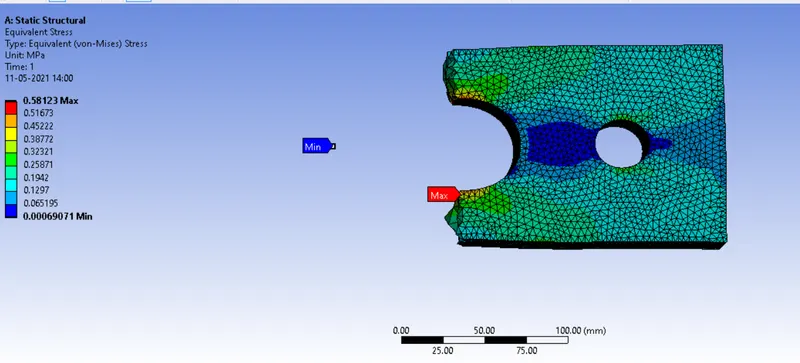
Max stress = 0.58123Mpa
By comparing both cases the Equivalent (von-misses) stress is slightly higher in case 1 as compared to case 2.
3. EQUIVALENT STRAIN:
CASE 1:
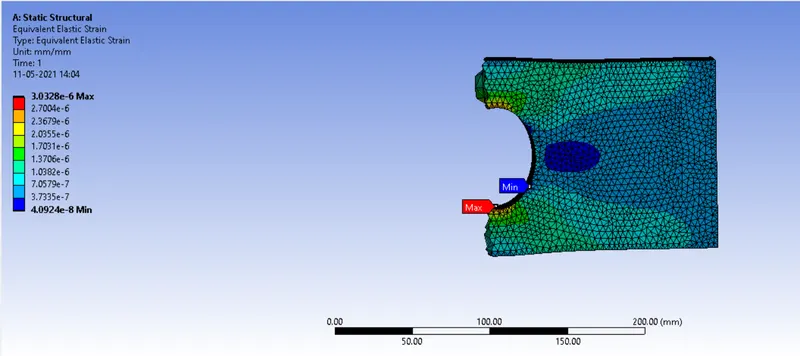
Max strain = 3.0328e-6
CASE 2 :
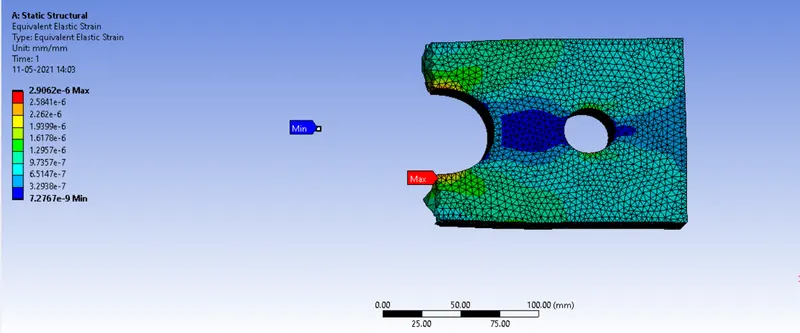
Max Strain = 2.9062e-6
By comparing both cases the Equivalent strain is slightly higher in case 1 as compared to case 2.
CONCLUSION:
Comparing the total deformation, stress, and strain developed in both cases.
- The deformation developed in case 2 is 0.00029728mm which is more than case 1 is 0.00027492mm because of the number of holes present in Case 2 deformations occur more.
- The Equivalent stress developed in case 1 is 0.60656mpa and case 2 is 0.58123mpa as the stress developed in case 1 is more as compared to case 2 due to the number of holes present in case 2 that acts as a stress reliever.
- The Equivalent strain developed in case 1 is 3.0328e-6 and case 2 is 2.9062e-6 as the strain developed in case 1 is more as compared to case 2 because strain developed at the center of case 1 is more and it is less in case 2 due to several holes.
1. Analysis point of view:
The maximum stress in case 2 is comparatively lower than in case 1. Due to the number of holes present in case 2, stress and strain distribution in an overall plate is lesser than stress and strain distributed in the center hole model. From an analysis point of view, case 2 is better than case 1.
2. Manufacturing point of view:
The production depends on many factors such as machinery, manpower, production cost, time, etc. While comparing both cases, case 2 is less preferable because it has three holes which increases the machine operating cost, production time, production cost and it also increases scrap whereas case 1 with a single hole is efficient to get production with lesser production time, production cost and scrap material.