Week 1 Spur Gear Challenge
Objective :- Objective:- To carry out static structural analysis for 2 mating spur gears by assigning 3 different materials to each of the 3 gear respectively,
and compare results to carryout meaningful connclusion by comparing the properties like Total deformation, Equivalent stress and stress intensity.
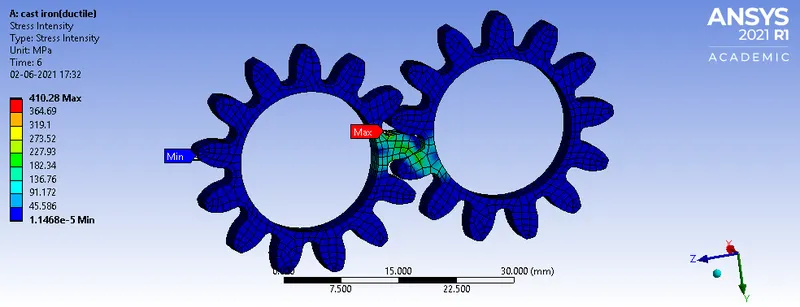
STRESS INTENSITY : The stress intensity factor, is used in fracture mechanics to predict the stress state known as "stress intensity" near the tip of a crack caused by a remote load or residual stresses.
PROCEDURE :-
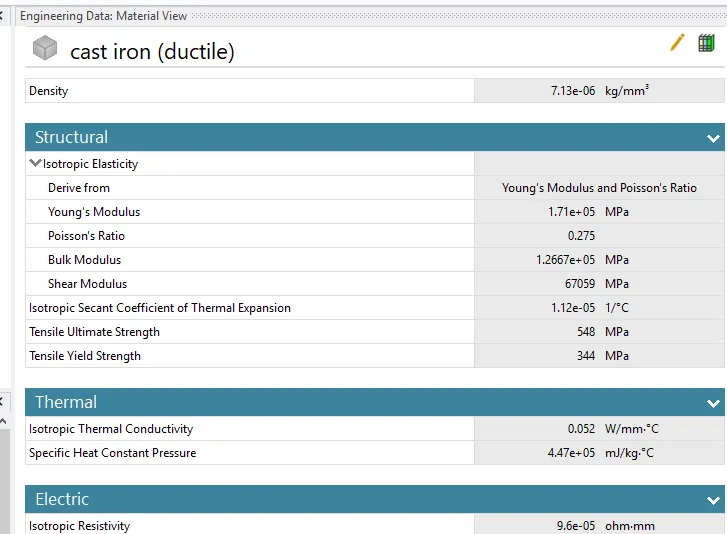
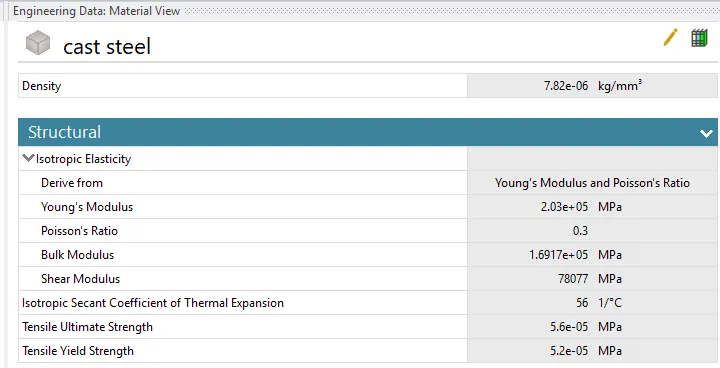
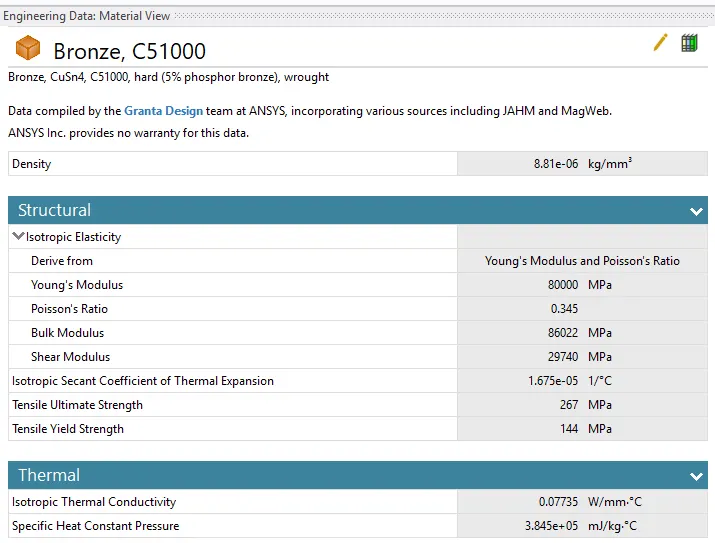
Step 1 :- Add the required materials ( Cast iron, Cast steel, Bronze cast) from the Engineering data.
Step 2 :- Import the geometry of the required part ( Spur gears).
Check if the geomtery is ok or not ( by opening in Spaceclaim), if not then do operations to make it ok.
Step 3 :- Specify the contact region on both geometries.
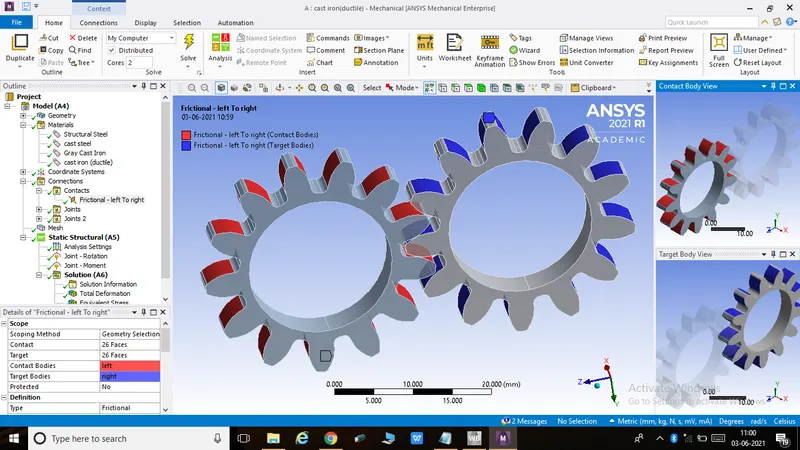
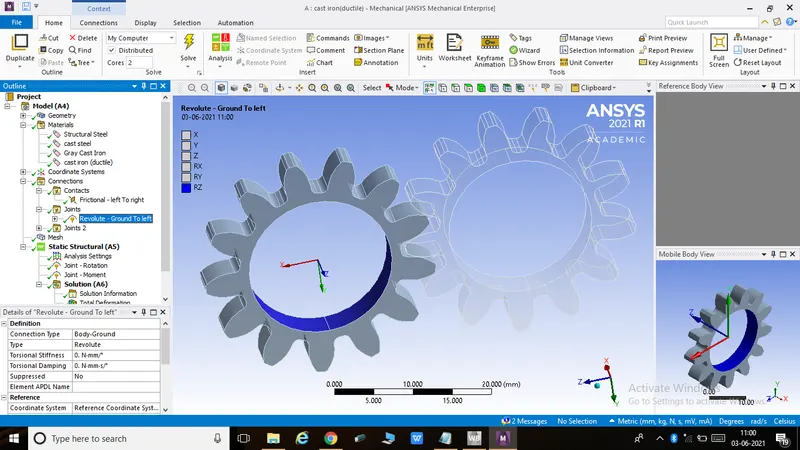 Step 4 :- Specify the joint ( Revolute ) on centre pint of both the gears.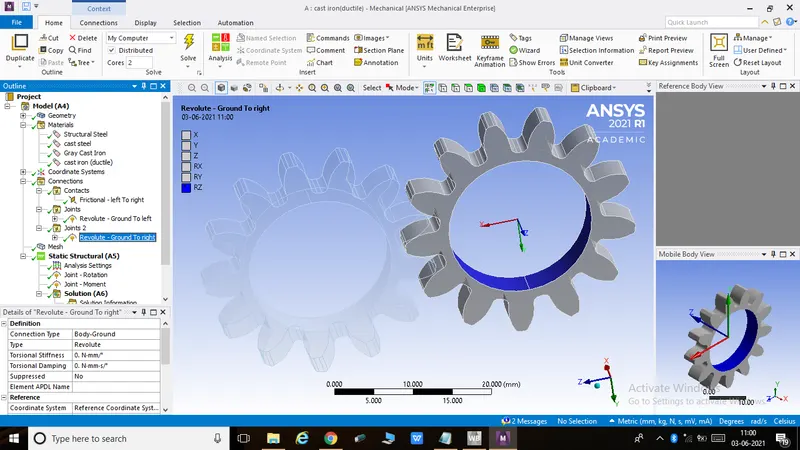
Specify various properties like friction value , formulation method etc.
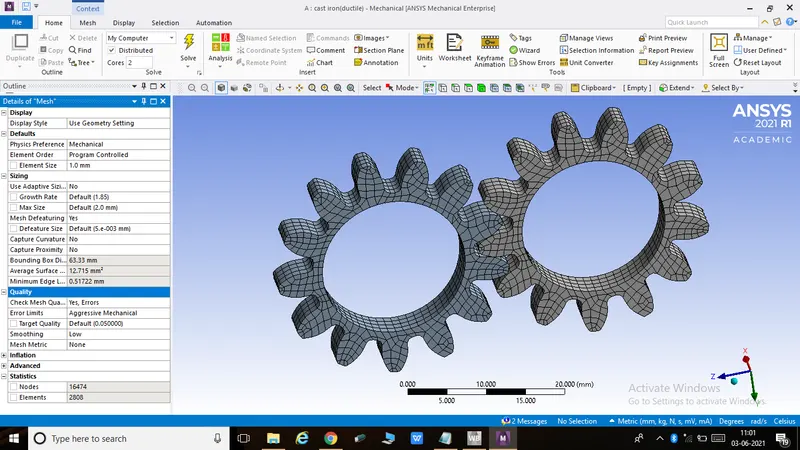
Step 5 :- Specify the mesh size (1mm) and its type (Hexahedral).
Step 6 :- Apply joint load on both of the gears.
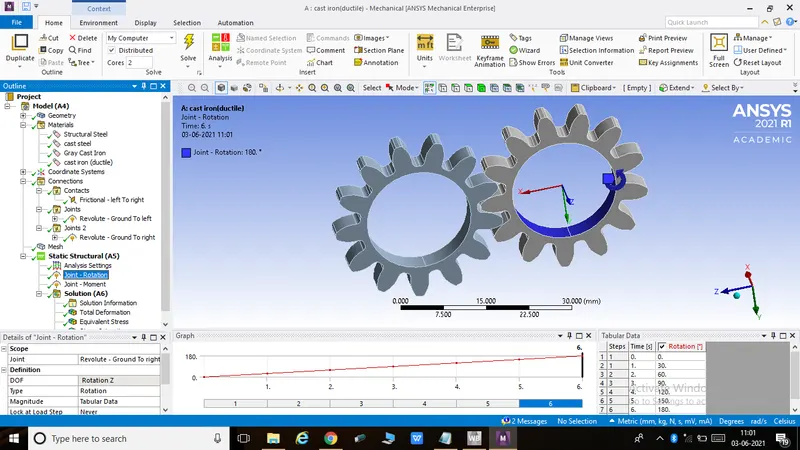 A A rotational motion is specified ( in degrees) on the left joint in the anticlockwise direction with a moment of 10N/mm at eact time step.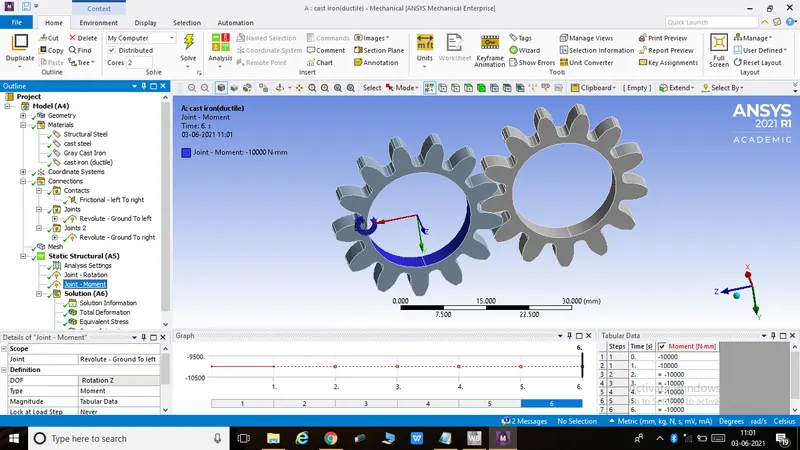
CAST IRON :
 CAST STEEL :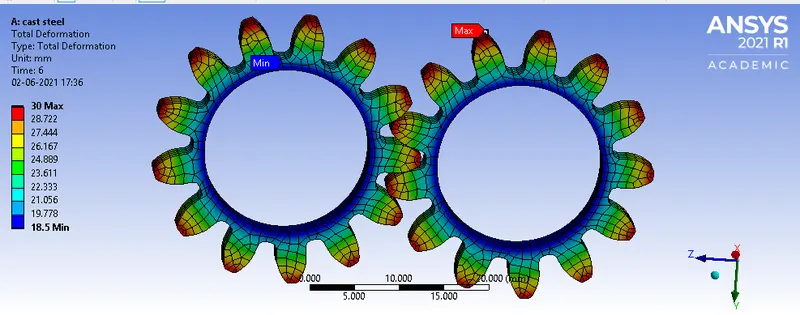
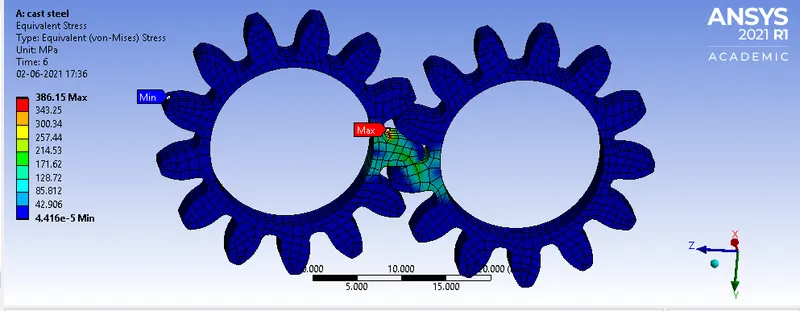
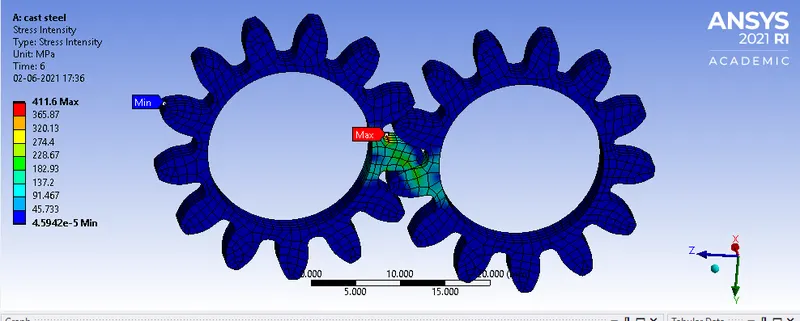 CAST BRONZE: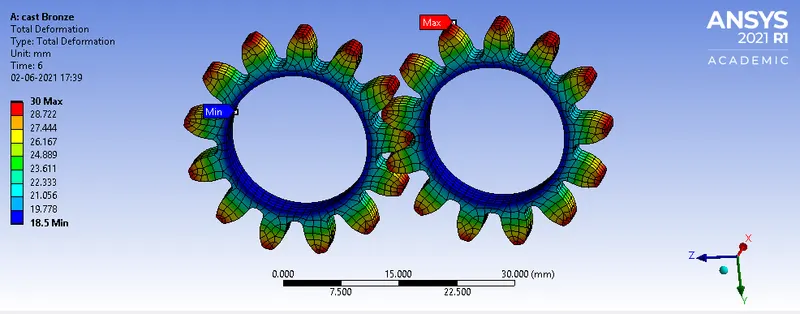
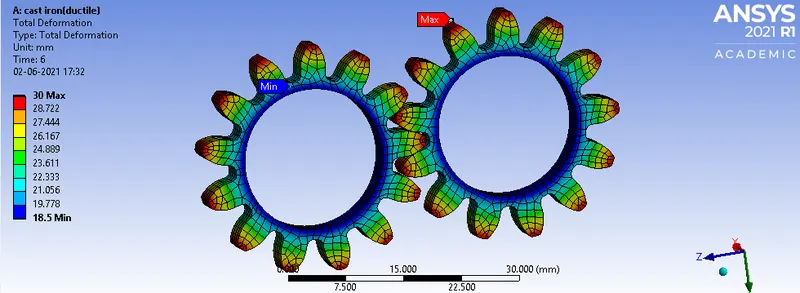
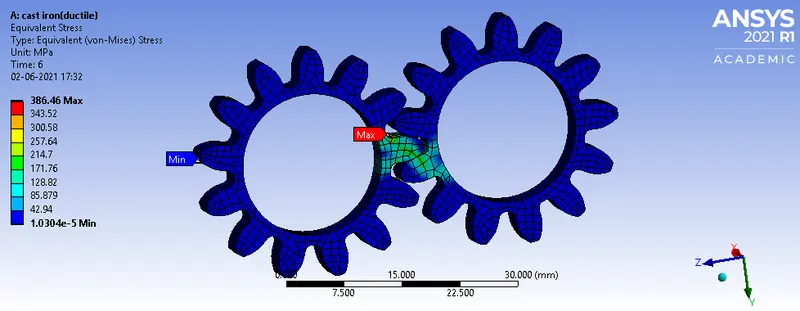
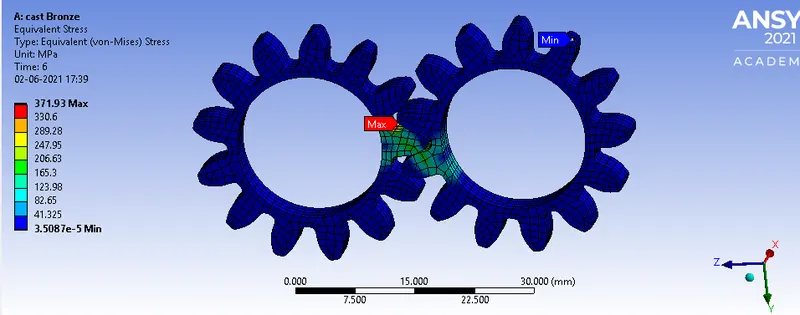 The fracture point in all three cases is at the starting point of tooth.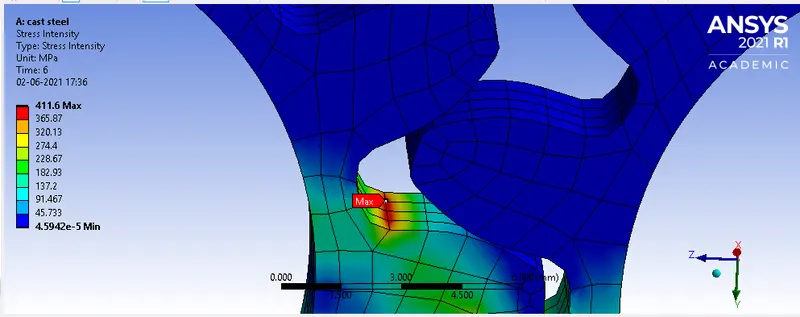
CONCLUSION:-
Maximum(of) Total deformation(mm) Equivalen Stress(Mpa) Stress Intensity(Mpa)
Cast Iron 30 386.46 410.28
Cast steel 30 386.15 411.6
Cast Bronze 30 371.95 399.11
From the above result we can conclude that,
- The stress generated is higher in the case of gear made up of Cast bronze than in the case of cast steel and cast iron(ductile).
- Second thing which can be concluded is that deformation is same in all the cases . Hence it is the Young's modulus of each material that affects the stress develped in the model.
- From the above data cast bronze has the highest equivalent stress and stress intensity out of the 3 materials , thus out of remaining 2 i.e. cast steel and cast iron( ductile) though having similar properties and generating almost equal stresses and deformation, cast steel can be chosen because it has higher stiffness value and ultimate tensile strength ( selection made on design considertion).