Week 1 Spur Gear Challenge
Objective :
- Case 1:Using Cast Iron(ductile) as a material, carry out a static structural analysis to find out Equivalent stress, Total deformation, and Stress intensity(Learn about what stress intensity is). Find a location for possible fracture
- Case 2: Using Cast Steel as material, perform the same analysis for the results as in Case 1.
- Case 3:Using Cast Bronze as material, perform the same analysis for the results as in Case 1.
INTRODUCTION :
The spur gear is one of the simplest gear and it looks cylindrical in shape. The main difference of spur gear that other gears, gear tooths are made up of parallel to the axis of the shaft. Mostly, by using Hobbing milling machine to which manufacture the external tooth's spur gear and also by using broaching machine to which manufacture an internal tooth spur gear.
Common Applications are used to speed reduction & torque multiplication such as ball mills, crushing equipment, and sliding mesh gearbox.
PROCEDURE FOR ATTAINING THE OBJECTIVES :
1) CAD Model :
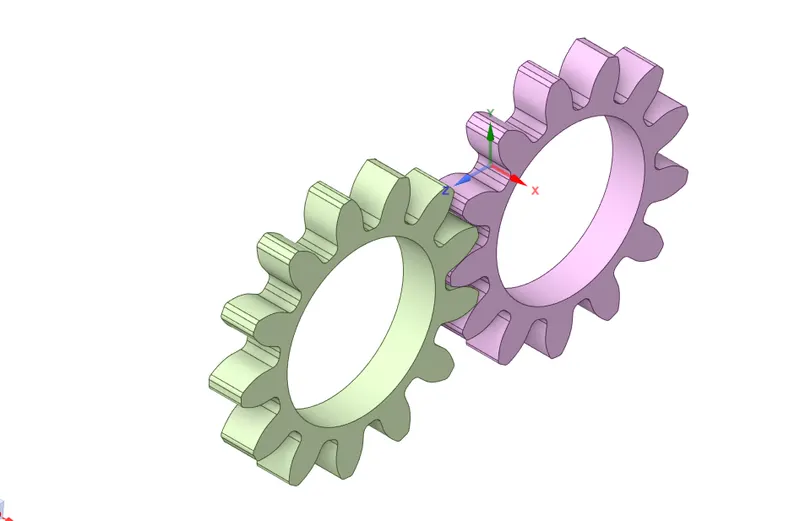
- Open the Spur Gear CAD Model. We have to import the model into our structural analysis case setup. In order to view the model, open a space claim or the Design modeler will show up like as below image.
2)Adding Required materials :
- Open an Engineering data, initially "Structural Steel " material has added by default. We have to manually add the new materials such as Cast Steel, Cast Bronze, and then Grey cast Iron.
- First of all, open an "Engineering data sources " and then followingly click the "General Materials ", from that we importing the one material which is "Grey Cast iron".
- Cast Steel & Cast Bronze are not available under the General Materials source. So, we add that two materials from the "ANSYS GRANTA Materials data sources for simulation ".
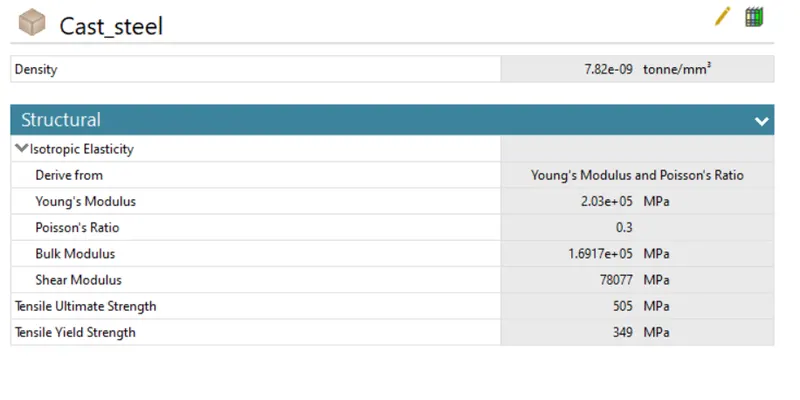
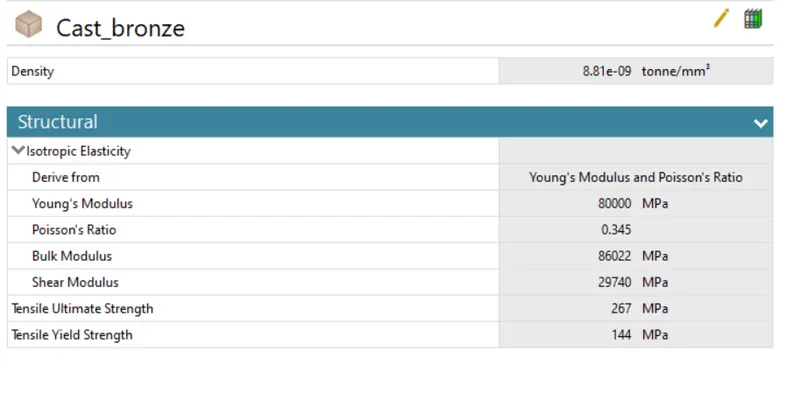
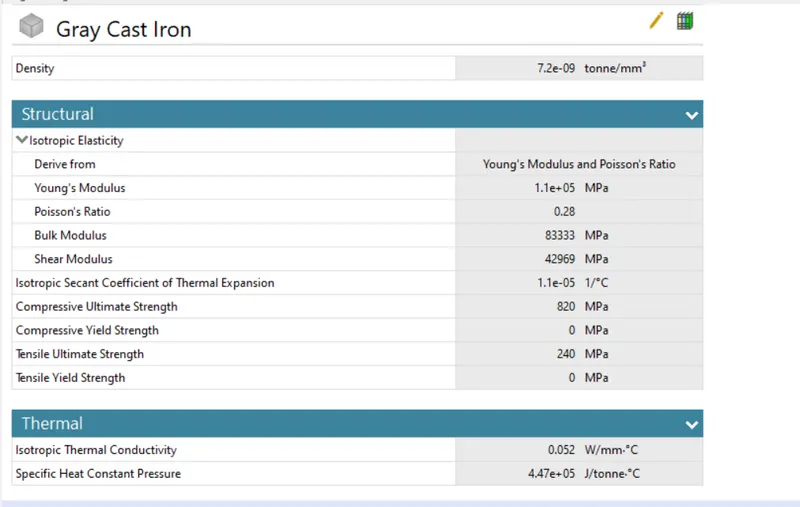
- Here below snaps are mentioned at properties for those corresponding materials.
Cast Steel Material :
Cast Bronze Material :
Grey Cast Iron Material :
3) Assigning Materials :
- Once open the Mechanical model, we have to assign the proper material to the respective model.
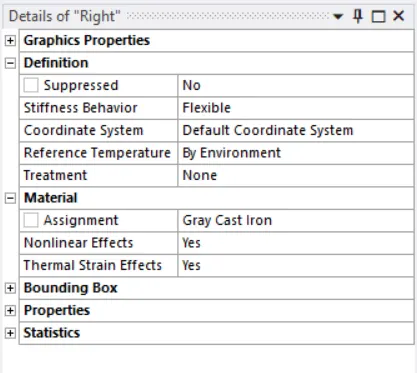
- Select both left & right gear, keep assignment as Cast Steel for case 1. Similarly, we have to change the different materials for the remaining two cases in the same manner.
4) Connections :
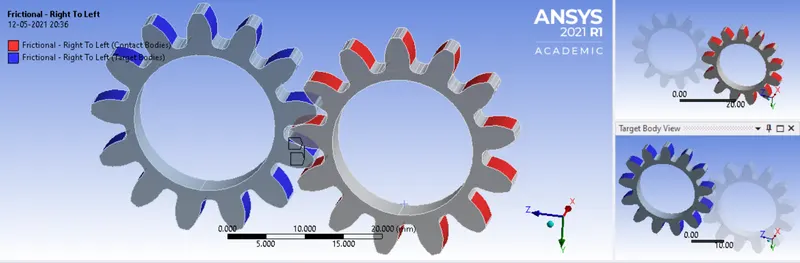
- Select the tooth faces for the right side gear as a contact body & click the apply and followingly select the tooth faces for a left-side gear as a Target Bodies.
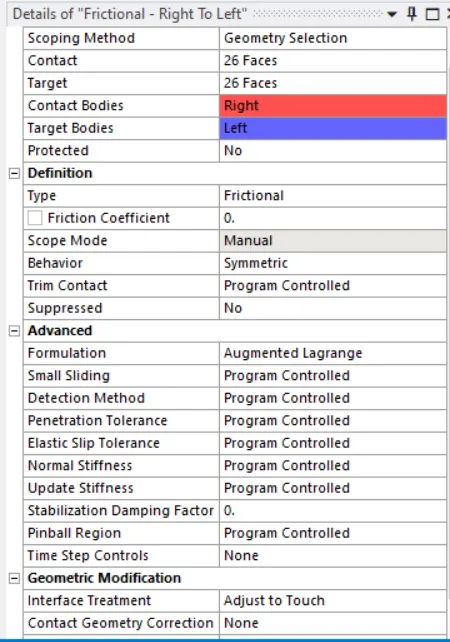
- Keep "Frictional" as a contact type, which maintains a frictional force between the contacted surface based on the Friction coefficient. In this case, we can also use the "Frictionless" type, because there's no friction coefficient between them.
- Keep "Symmetric" as a Behavior of the contact, which assumes contact & Target are the same. Also, it leads to quick convergence.
- Keep Formulation as "Augmented Lagrange" Algorithms which help to increase the stiffness of the contact and resists the penetration between them. This type of algorithm has used in any type of contact.
- Keep Interface Treatment as "Adjust to Touch", which makes touch to each other instead gaps between them and also avoid the penetration between them.
- Apart from those things, keep default settings as it is.
Joints :
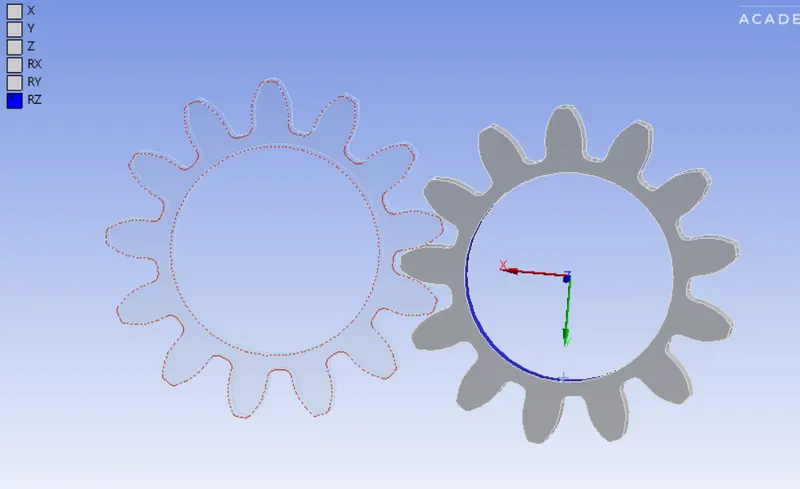
- Create new Joints under the connection tree outline. Select the inner face of the left side spur gear, it will automatically constraints the degree of freedom at RZ which means allow the rotation of about the Z-axis.
- Make sure to select the Body to Ground for Connection Type and the type of motion is Revolute.
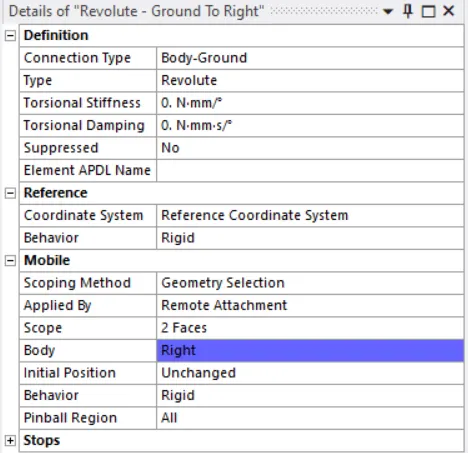
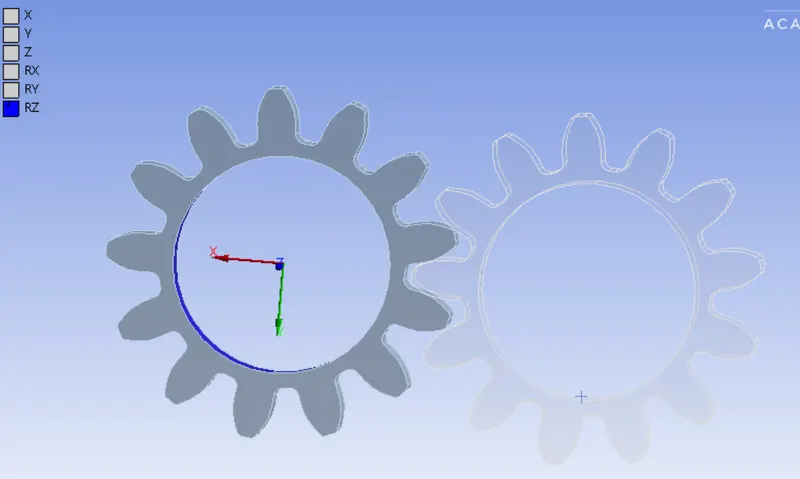
- Similarly, we follow the same procedure to do for Right Side spur gear.
5) Meshing :
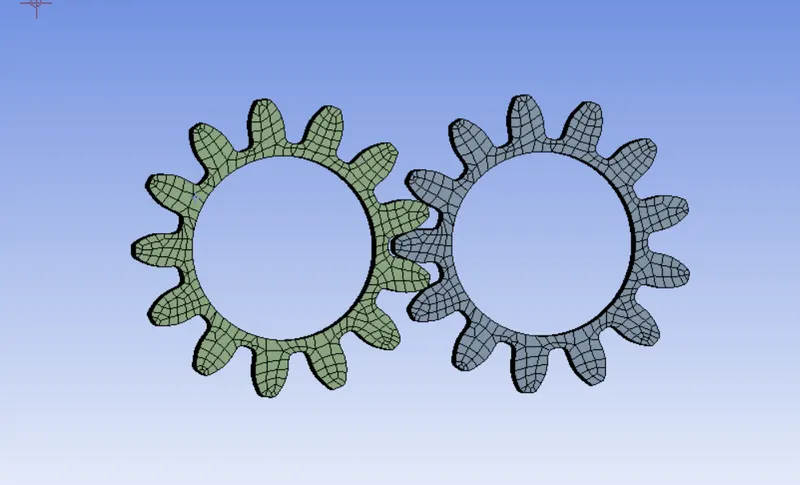
- Basically, To divide the entire model into infinitesimal control volume, that framework is called Meshing. This process is called Discretization. This FEM is widely used for solving partial differential equations in the different physical fields such as Structural problems, Heat transfer problems, Fluid flow problems, Electromagnetic Analysis & Acoustics Analysis.
Element Size = 1 mm
Element Type = Volumetric meshing with Hexahedrons or Hexahedrals element
No of Nodes = 16585
No of Elements = 2808
- We keep "Program Controlled" for Element Order, so Ansys takes second-order elements, each Hexa elements have 20 nodes itself. As result, it takes more time for solving as compared to First-order elements & increasing storage space also. But, results have been more accurate as compared then the first-order discretization.
6) Analysis Settings :
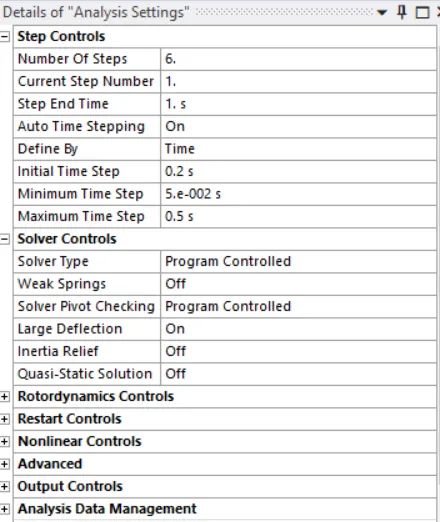
- Increase the number of time step = 6
- Auto Time Stepping = On
- Define By = Time
- Initial Time Step = 0.2 sec
- Minimum Time Step = 0.05 sec
- Maximum Time Step = 0.5 sec
- Large Deflection = On
Boundary Condition :
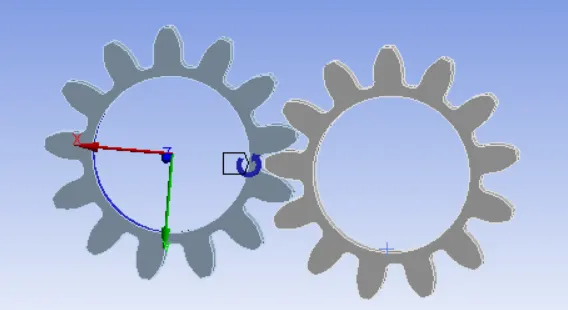
Joint - Rotation :
- Joint = Ground to Left ( Left Spur Gear)
- Type of Joint = Rotational
- Degree of Freedom = Rotation about Z-axis
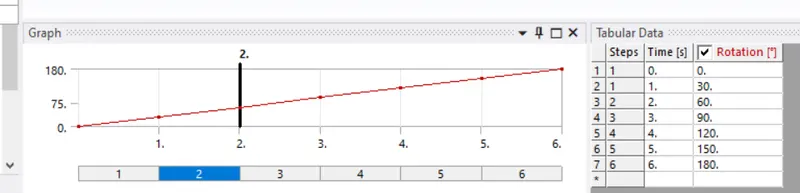
- Magnitude = Tabular data
- Tabular data = Rotation is 0 degree to 180 degrees with 30-degree interval or 6-time steps.
Joint - Moment :
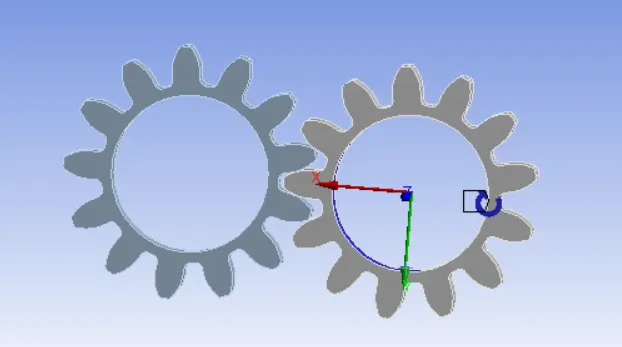
- Joint = Ground to Right (Right Spur Gear )
- Type of Joint = Moment
- Degree of Freedom = Rotation about the Z axis
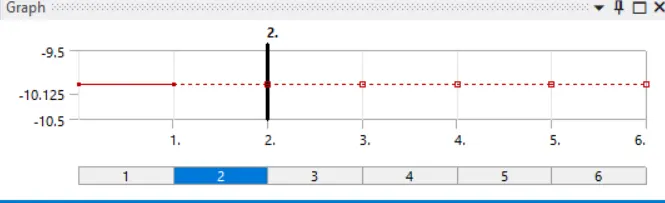
- Magnitude = Tabular data
- Tabular Data = 10 KN Constant Moment acting on each time step.
RESULTS :
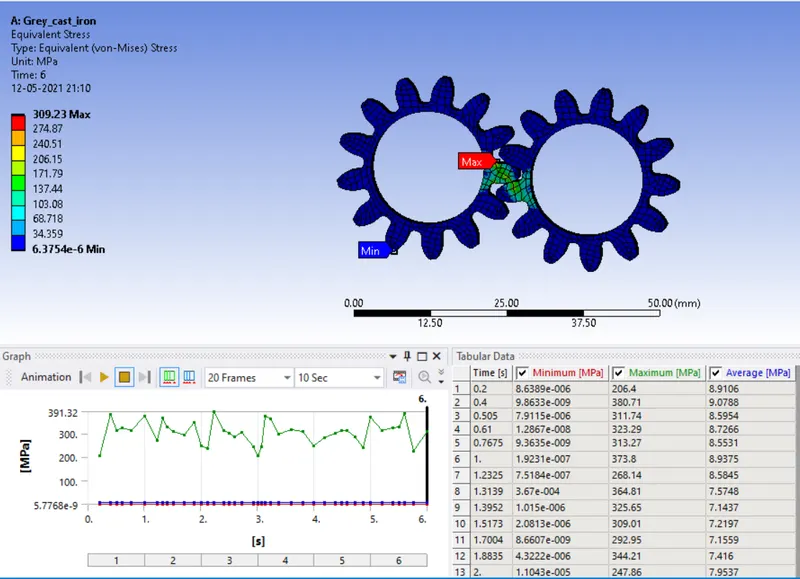
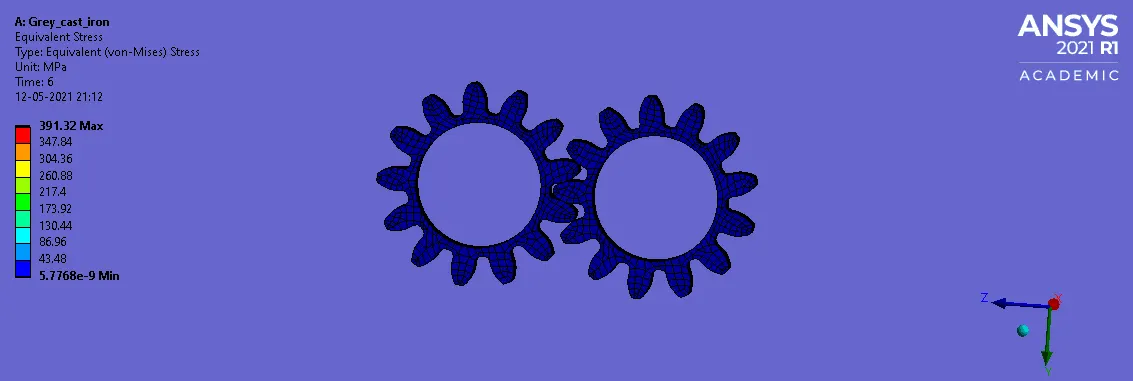
Equivalent Stress :
- Equivalent Von Mises stress is also called as Maximum Distortion Stress Theory. Each Material has a Yield Stress Value, based on that we can find out where the material has failed first.
- If the equivalent von Mises stress value is equal to or Less than the Yield stress of the material. Then, that type of material is recommended.
Equivalent Stress for Cast Steel :
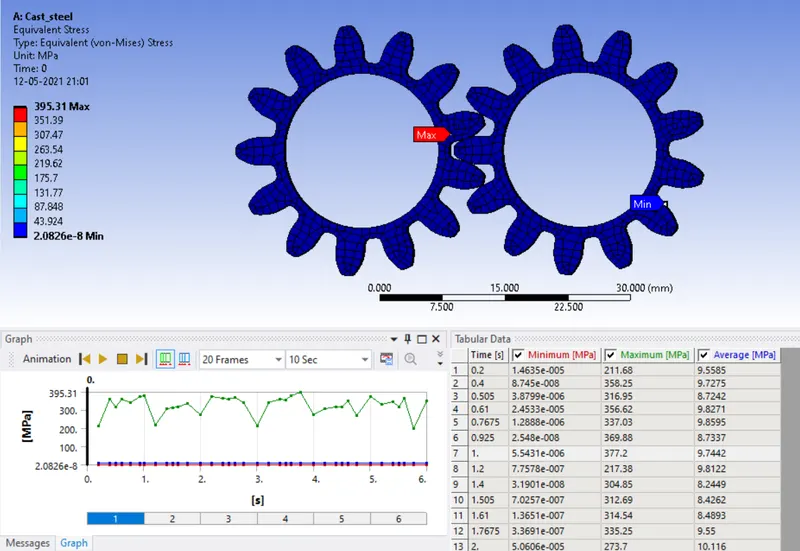
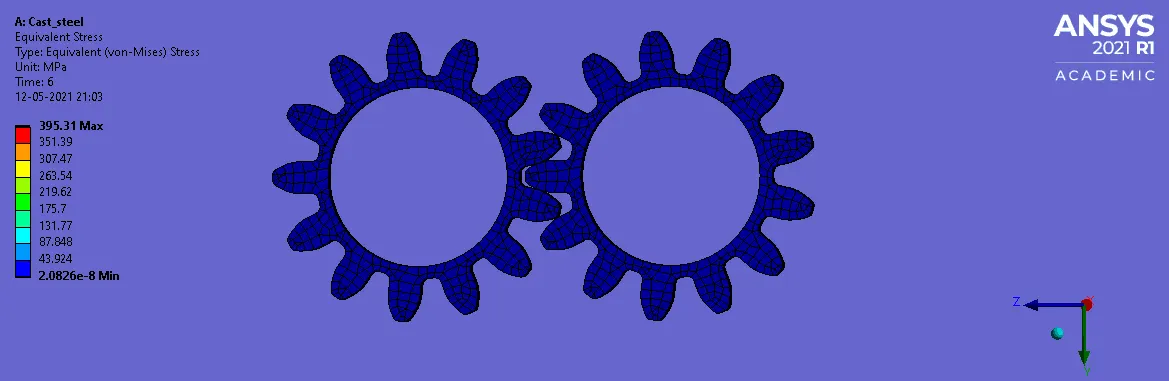
Equivalent Stress for Cast Bronze :
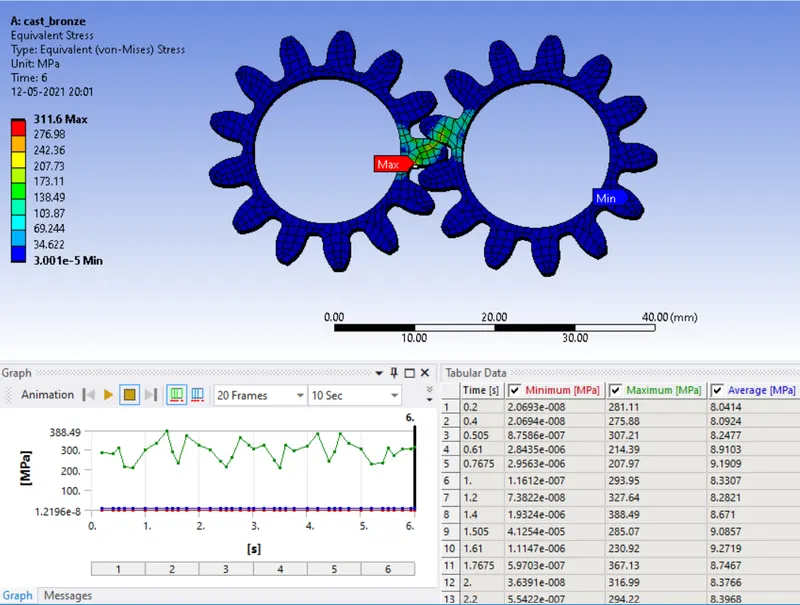
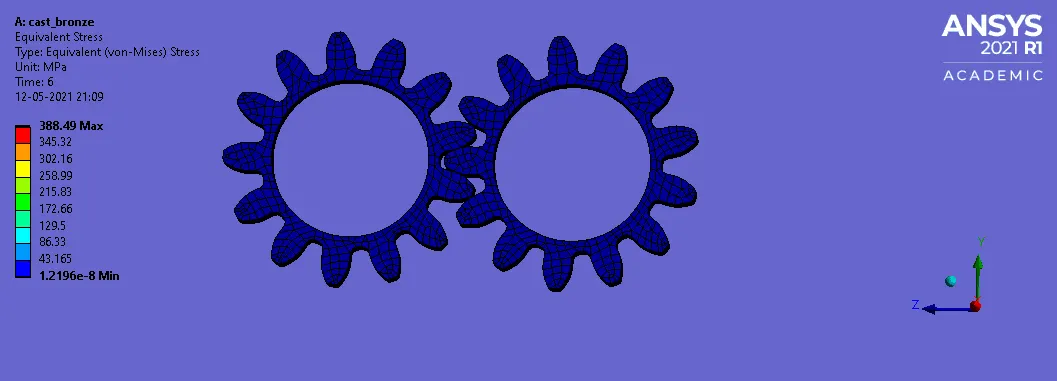
Equivalent Stress for Grey Cast Iron :
Stress Intensity :
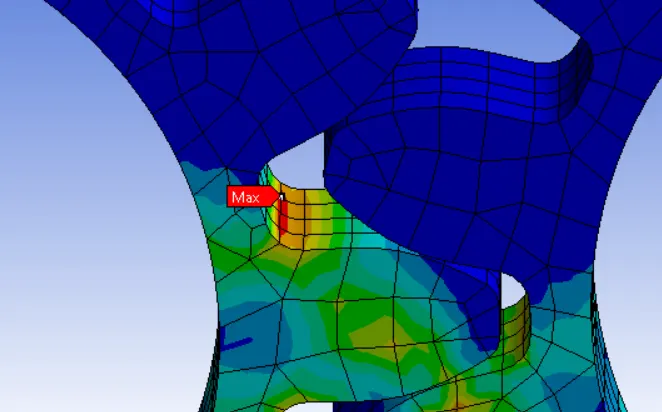
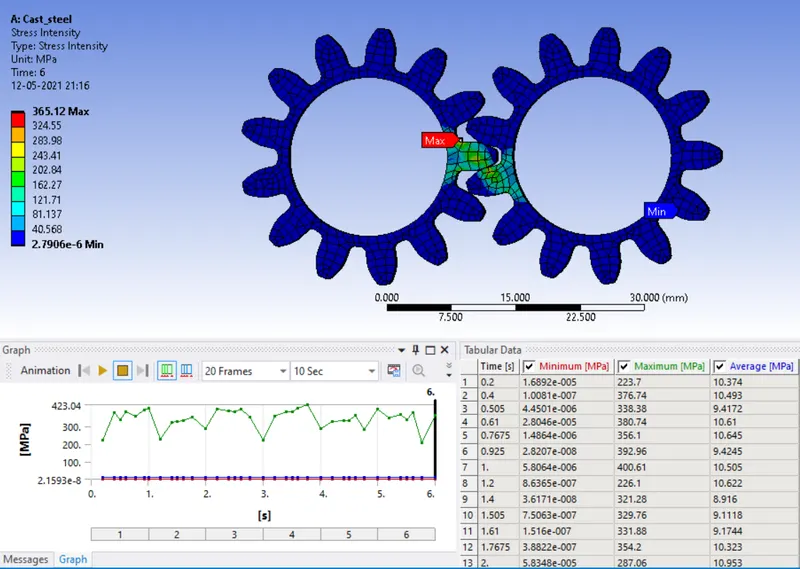
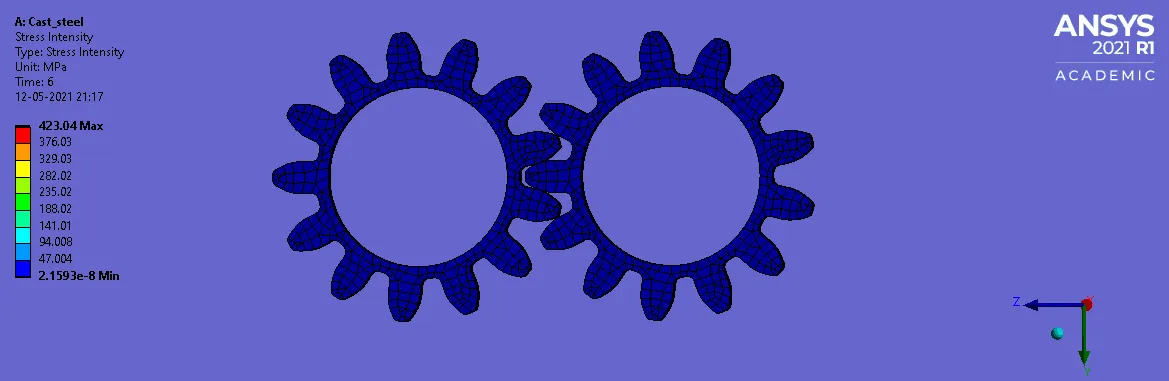
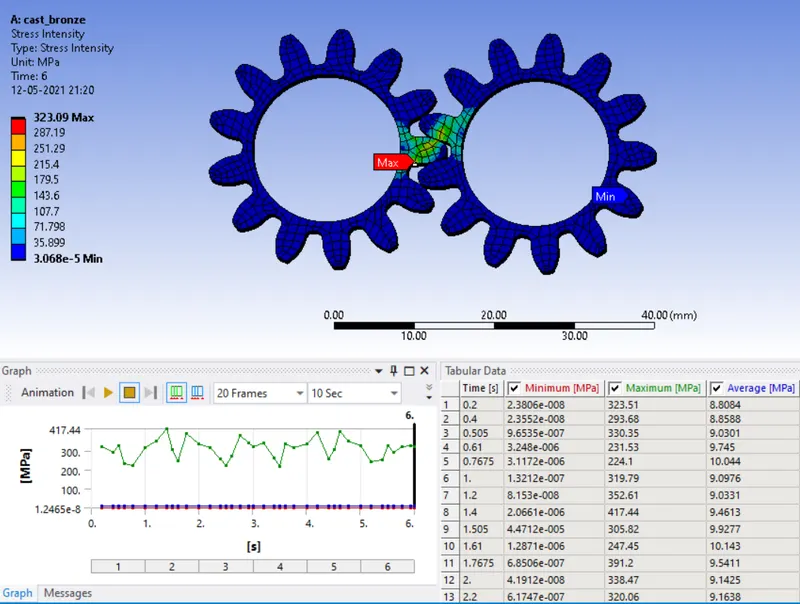
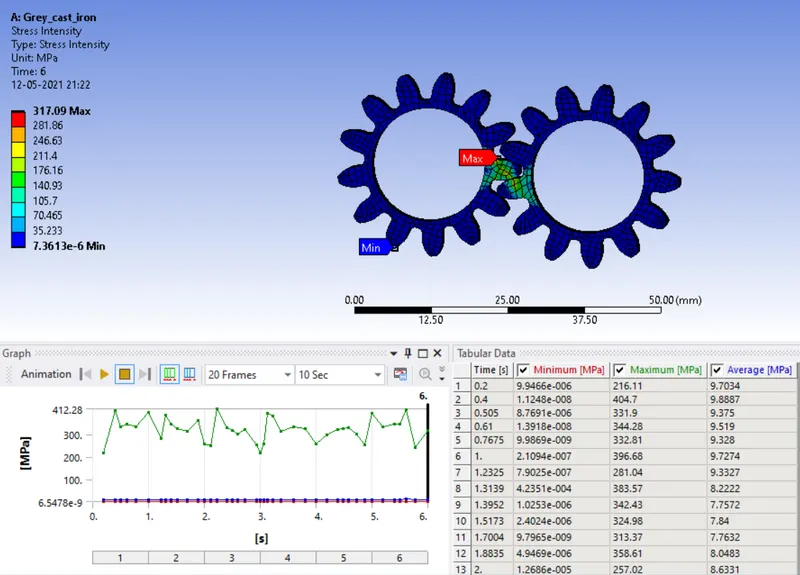
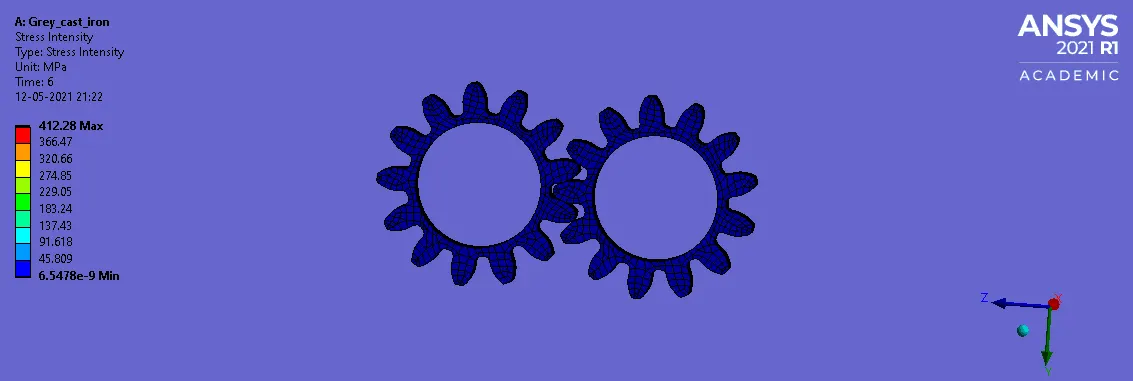
- A Stress Intensity is used to find out the stress concentration on the tooth tip. Here below, the probe point helps us to annotate the maximum stress occurred region and also fracture developing region.
- Due to the less cross-sectional area & momentum acting on that place, by results stress concentration is higher than the rest of the area.
Stress Intensity for Cast Steel :
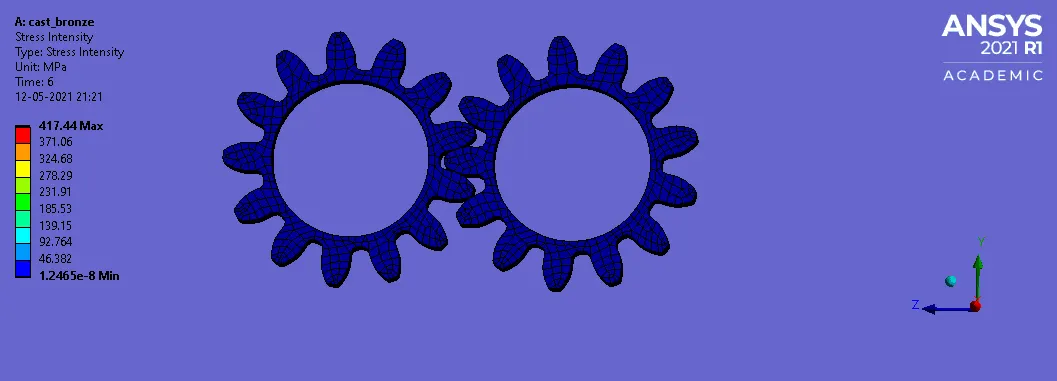
Stress Intensity for Cast Bronze :
Stress Intensity for Grey Cast Iron :
Total Deformation :
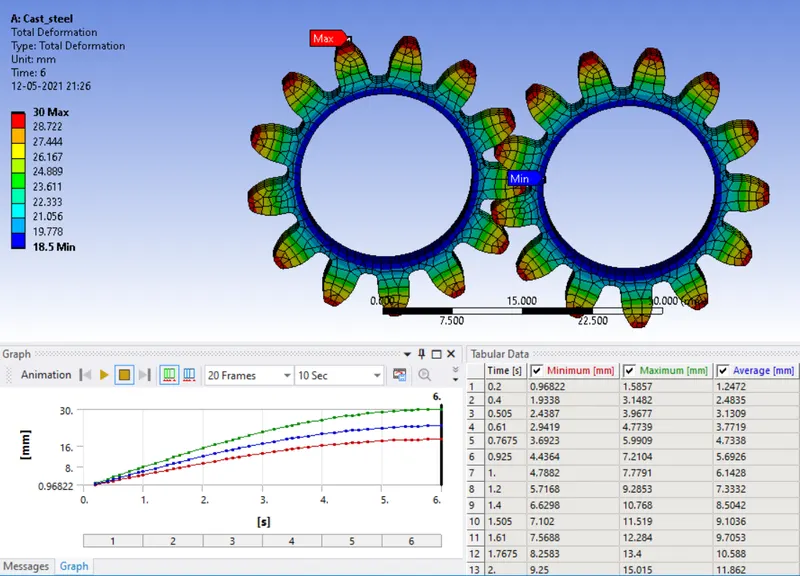
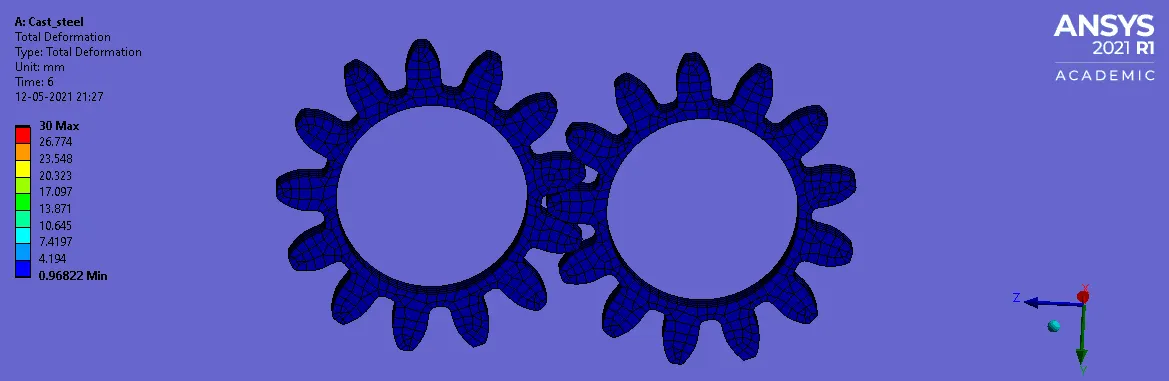
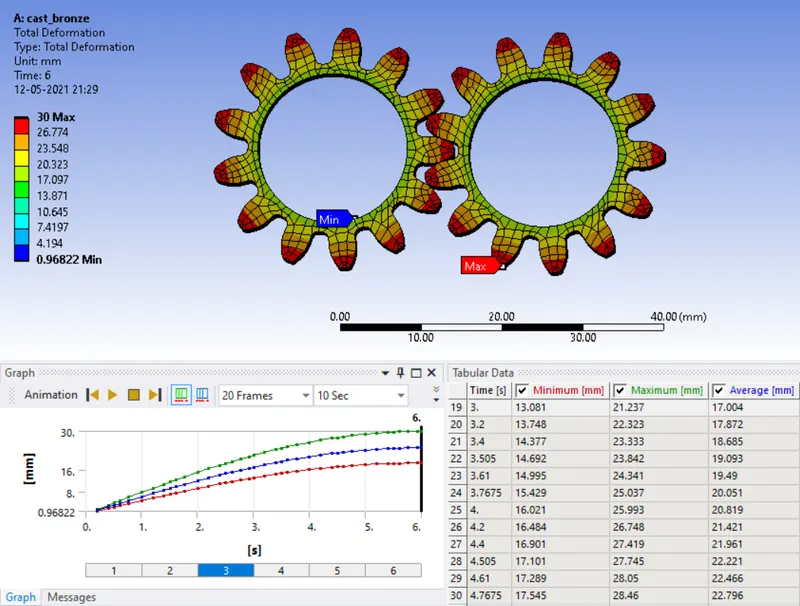
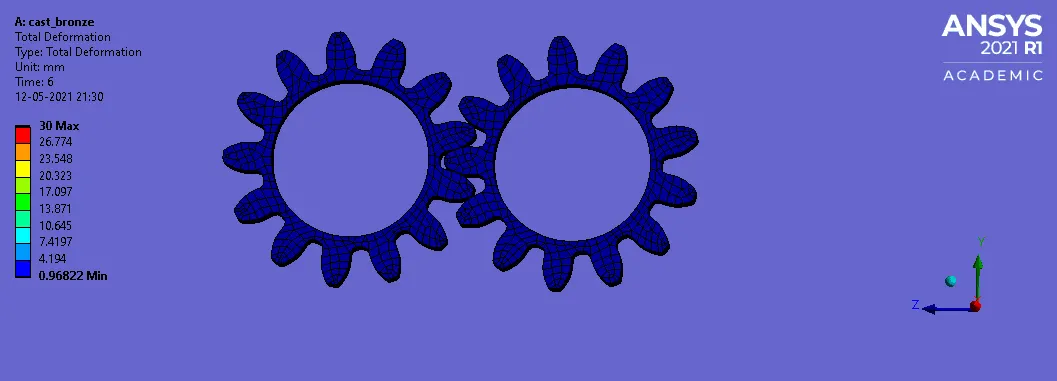
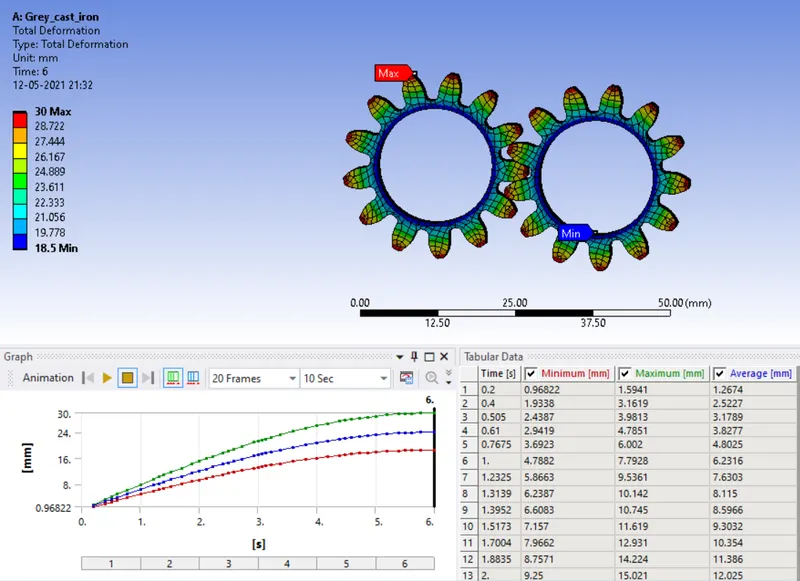
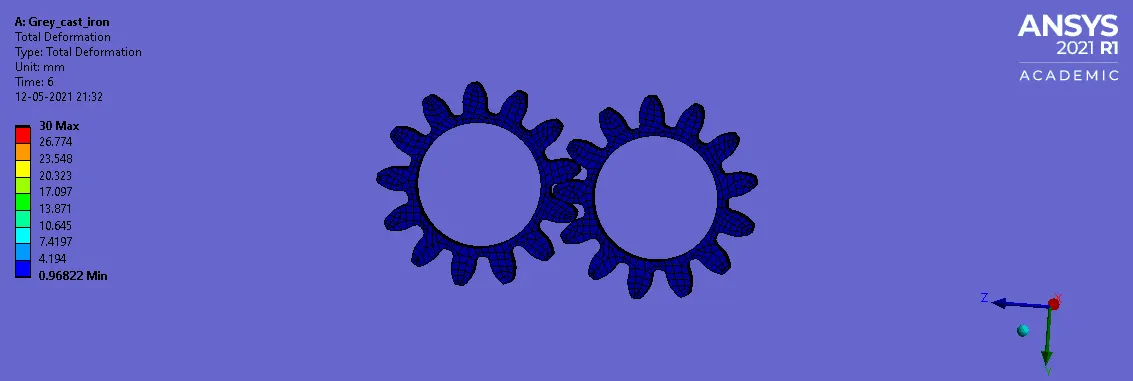
- Total Deformations are pretty the same for all cases. A Maximum deformation occurs at tip of the tooth for all the cases.
Total Deformation for Cast Steel :
Total Deformation for Cast Bronze :
Total Deformation for Grey Cast Iron :
CONCLUSION :
| Materials | Equivalent Von Mises Stress (Mpa) | Stress Intensity (Mpa) | Total Deformation in mm |
| Cast Steel | 395.31 | 423.04 | 30 |
| Cast Bronze | 388.49 | 417.44 | 30 |
| Grey Cast Iron | 391.352 | 412.28 | 30 |
- According to the simulation results for each case, we can conclude Cast Bronze is best because maximum stress & Stress Intensity development is less as compared to the remaining two cases. But, Stress values are exceeding the Yield stress of the material. So, we avoid this material for this moment.
- The recommended material is Grey Cast Iron because the Stresses are less than the cast steel material stress value.