Week 1- Mixing Tee
Aim:
To understand the effects of changing pipe length and coolant flow velocity on mixing effectiveness of two fluids in a T joint pipe system.
Theory and objective:
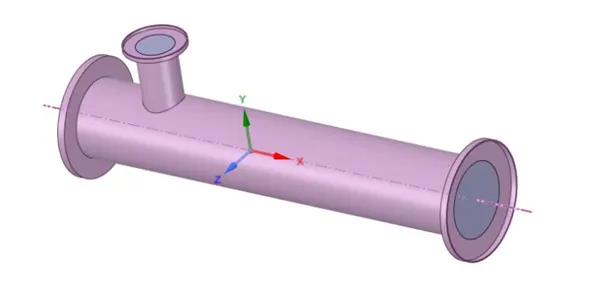
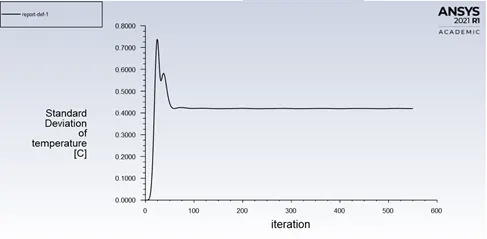
The hot fluid from left end along x axis mixes with cold fluid that flows through Tee pipe along y axis. The operation is carried out in HVAC industry to circulate cold air around the system. Problem is modelled in CFD. Effectiveness of mixing is best understood by evaluating std deviation of temperature at outlet. Effect of changing pipe length and coolant flow velocity on mixing effectiveness is studied. the analysis results can also be used to understand the thermal stress at Tee junction.
To understand this, two versions of the mixing tee are created. One of them is longer than the other.
A steady-state simulations is set up to compare the mixing effectiveness when hot inlet temperature is 360C & the Cold inlet is at 190C.
- Case 1
- Short mixing tee with a hot inlet velocity of 3m/s.
- Momentum ratio of 2, 4.
- Case 2
- Long mixing tee with a hot inlet velocity of 3m/s.
- Momentum ratio of 2, 4
Working steps:
- Prepare geometry (volume extraction)
- Mesh
- Set up physics
- Pick viscous model
- Set Material
- Apply BC
- Output def
- Solve
- Result validation
- Post process
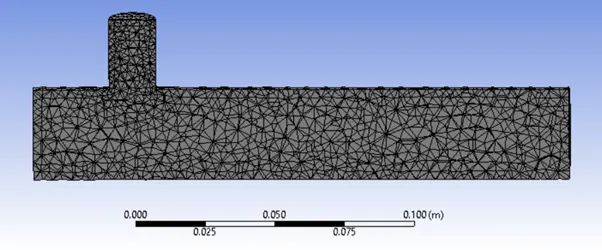
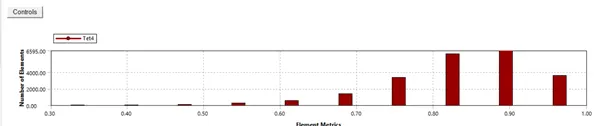
mesh size throughout the analysis = 0.004m.
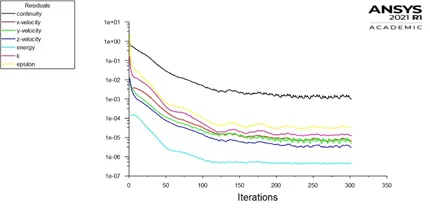
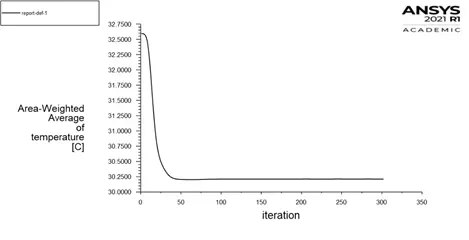
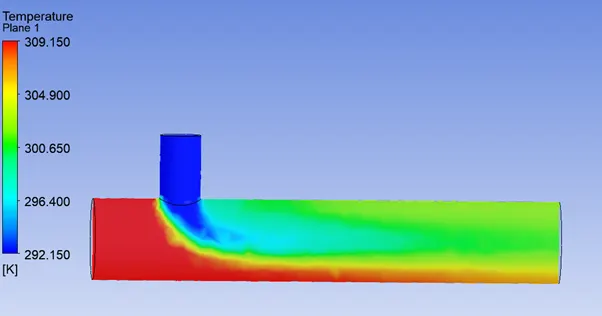
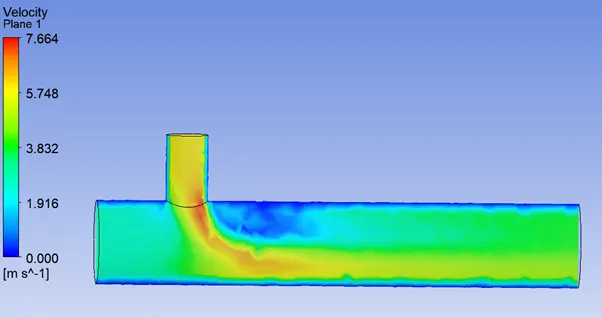
Case 1a : Vh=3m/s ; Vc=6m/s. Th=36°C and Tc=19°C. K-epsilon vs K-omega .
Graph comparison:
. K-epsilon
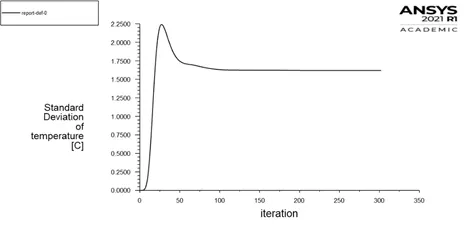
K-omega
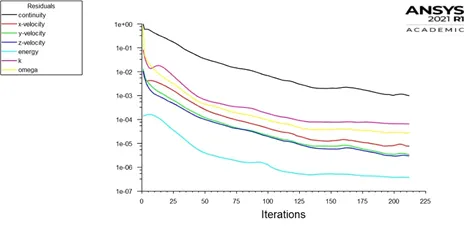
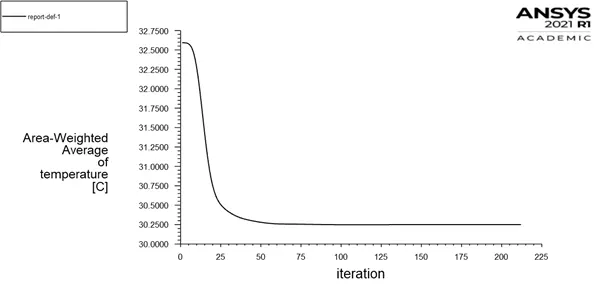
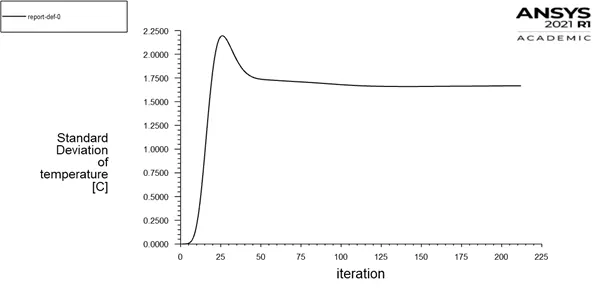
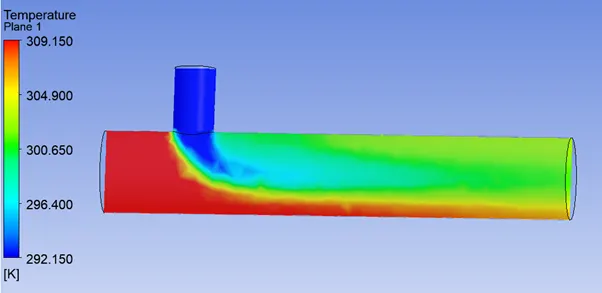
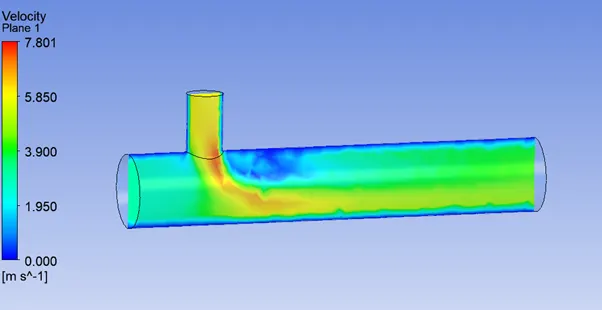
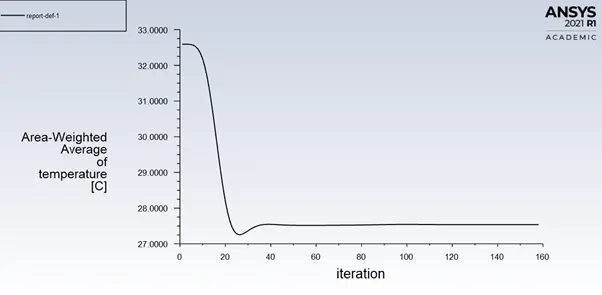
Case 1b : Vh=3m/s ; Vc=12m/s. Th=36°C and Tc=19°C. K-epsilon vs K-omega .
K-epsilon
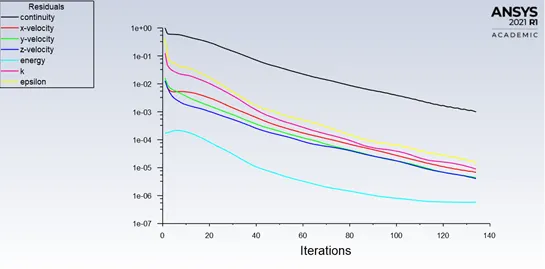
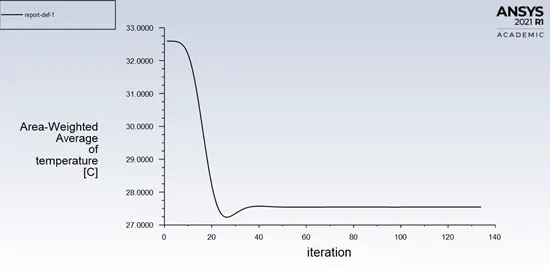
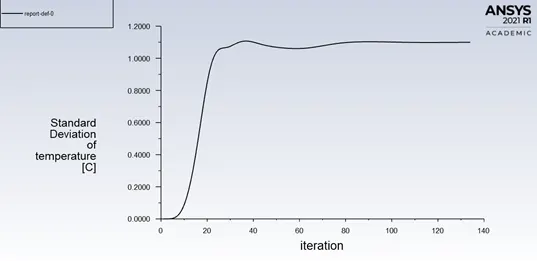
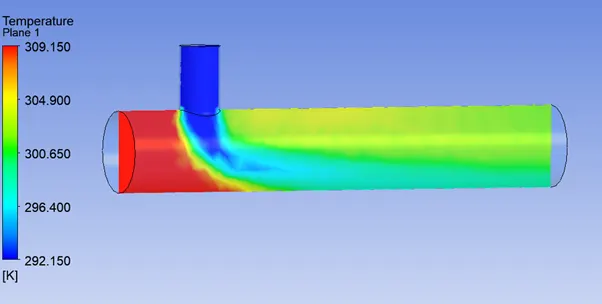
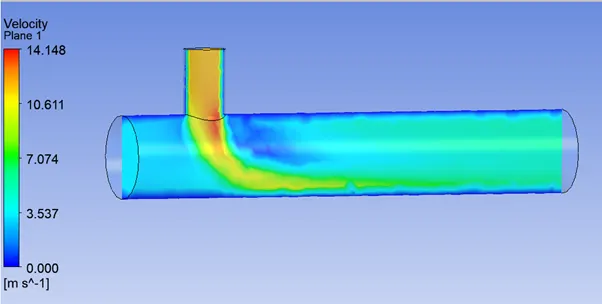
K-omega
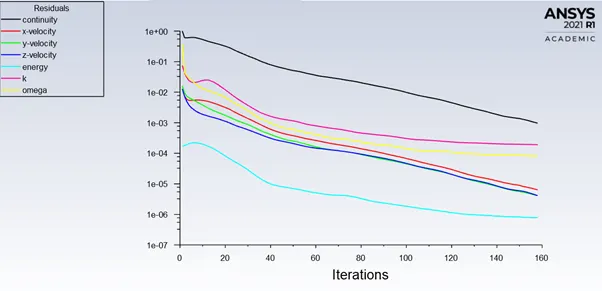
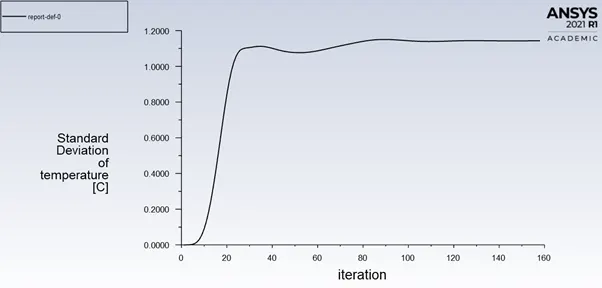
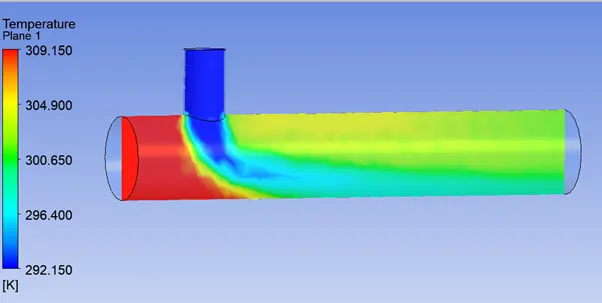
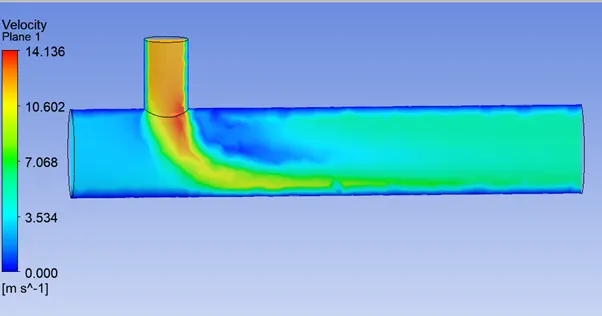
Long tee
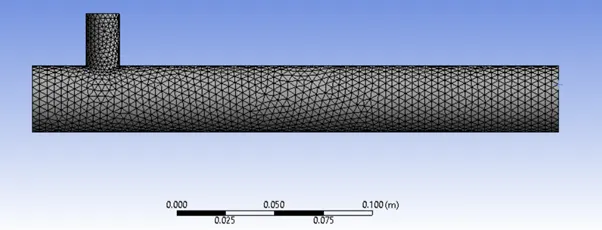

Node: 6211 ; Element: 28888
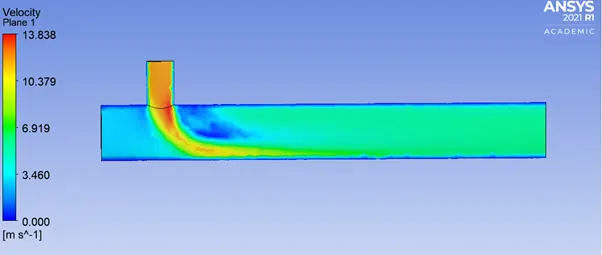
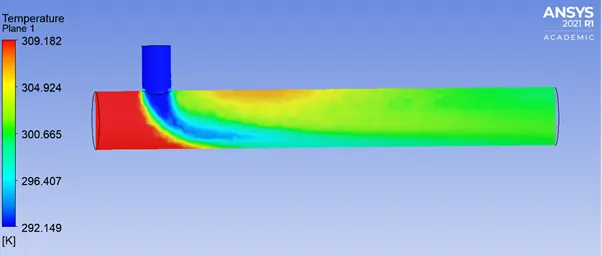
Case 2a : Vh=3m/s ; Vc=6m/s. Th=36°C and Tc=19°C. K-omega .
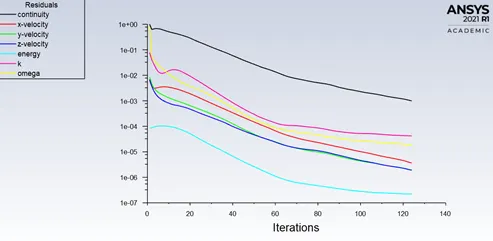
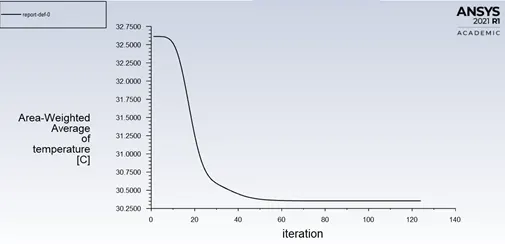
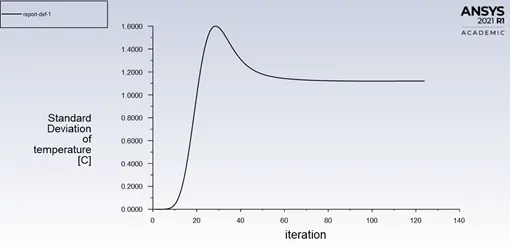
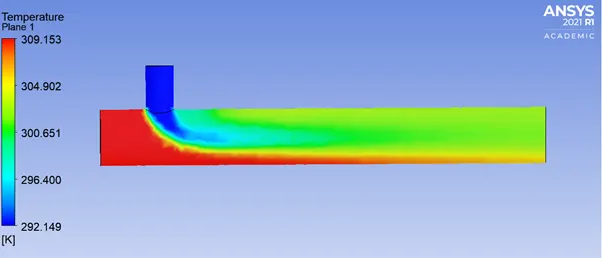
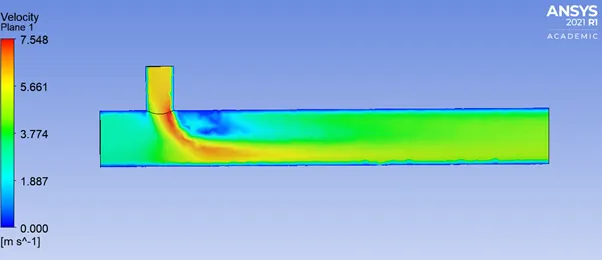
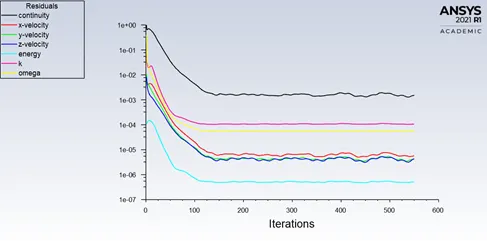
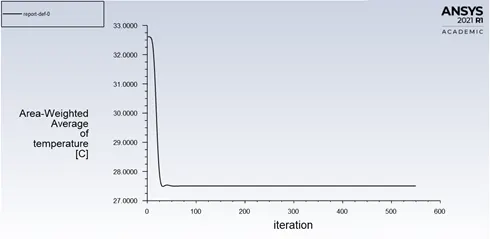
Case 2b : Vh=3m/s ; Vc=12m/s. Th=36°C and Tc=19°C. K-omega .
|
S.No |
Model |
Cell count |
Avg output temp (°C) |
No. of iter |
theoretical value at outlet (°C) |
|
1 |
Case1a |
21977 |
30.25 |
212 |
30.322 |
|
2 |
Case 1b |
21977 |
27.5 |
158 |
27.48 |
|
3 |
Case2a |
28888 |
30.3 |
124 |
30.322 |
|
4 |
Case2b |
28888 |
27.5 |
100-150 |
27.48 |
mesh independence
|
S.No |
Model |
mesh size | cell count | avg output temp |
|
1 |
Case1a |
0.010219 | 12760 | 30.25 |
|
2 |
Case 1a |
0.004 | 21977 | 30.25 |
Conclusion:
1.Mixing effectiveness: Most effective mixing has been achieved in long pipe with momentum ration 4 as it shows least std. deviation. Increasing length increases mixing effectiveness. Increasing mass flow of cold fluid, increases the effectiveness and decreases outlet temp. it is recommended to increase pipe length to improve effectiveness, as increasing fluid mass flow rate requires more energy.
2.Turbulence model: both models show close results. Still K omega model is used for case2 as it converges faster.