Week 1- Mixing Tee
Aims:
- To compare the mixing effectiveness of a short mixing tee and a long mixing tee using steady-state simulations.
- To determine the most suitable turbulence model for the simulation based on the results obtained.
Objectives:
- Set up steady-state simulations using the k-epsilon and k-omega SST model for the first case (short mixing tee with a hot inlet velocity of 3m/s and momentum ratio of 2 and 4).
- Evaluate the results of the simulation and determine the most suitable turbulence model for the second case (long mixing tee with a hot inlet velocity of 3m/s and momentum ratio of 2 and 4).
- Provide a reason for choosing the most suitable turbulence model for the simulation.
- Compare the mixing effectiveness of the short mixing tee and the long mixing tee when the hot inlet temperature is 36C and the cold inlet is at 19C.
Case 1 : Short Tee
- Geometry
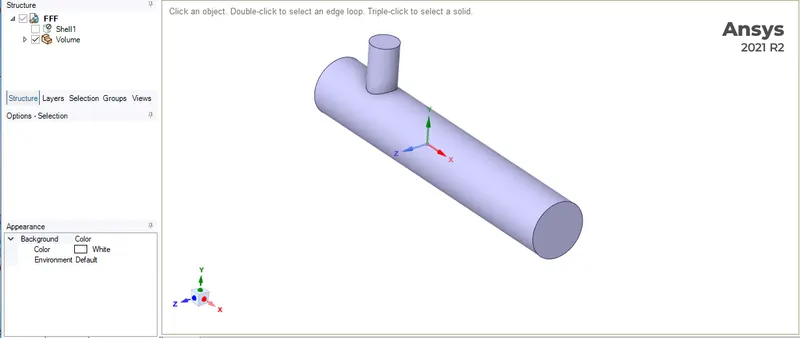
- The provided computational model is added to the geometry in ANSYS, and the fluid volume is extracted for the physics portion of the analysis. The outer body is then unlinked from analysis, for clearer results.
- Mesh
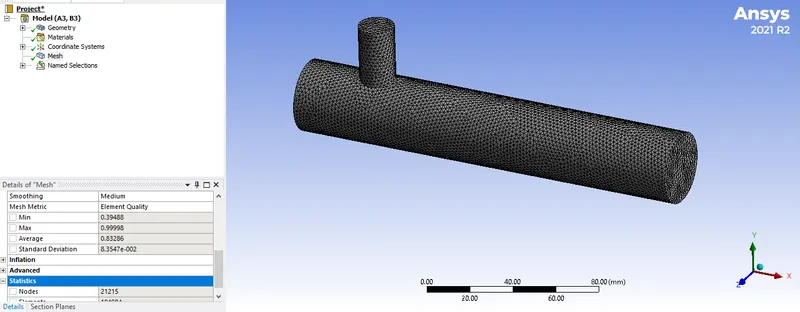
- For perticularly fluent analysis the mesh is generated automatically, with keeping element size at . This provided a mesh model which can be seen as in the figure given below, keeping in mind to keep the same mesh settings throughout all of the analysis to compare the results with each other.
-
- The quality of generated mesh is checked using mesh metric where mesh is generated with lowest quality of 0.39, which is over the acceptable limit which is 0.05 with 104984 elements.
Processing for CFD conditions
Short Tee CASE 1:
- Short mixing Tee with a hot inlet velocity of 3m/s
- Momentum ratio of 2,4
Short Tee CASE 2:
- Short mixing Tee with a hot inlet velocity of 3m/s
- Momentum ratio of 2
For, Short Mixing Tee : Hot inlet Velocity 3 m/s and momentum ratio of 4 we will conduct analysis for 2 methods of viscous flow K epsilon for standard model and K omega for SST model; Other parameters for the setup is as follows :
| K-Epsilon | K-Omega | |
| Viscous model | K-epsilon with standard wall function | K-Omega SST model |
| Material | Air | Air |
| Cell zones |
Velocity inlet 1: Velocity magnitude - 3m/s ; Temperature 36 deg. Celcius Velocity inlet 2: Velocity magnitude - 6m/s ; Temperature 19 deg. Celcius Outlet - default (Gauge pressure 0 pa) |
Velocity inlet 1: Velocity magnitude - 3m/s ; Temperature 36 deg. Celcius Velocity inlet 2: Velocity magnitude - 6m/s ; Temperature 19 deg. Celcius Outlet - default (Gauge pressure 0 pa) |
- Running the Analysis :
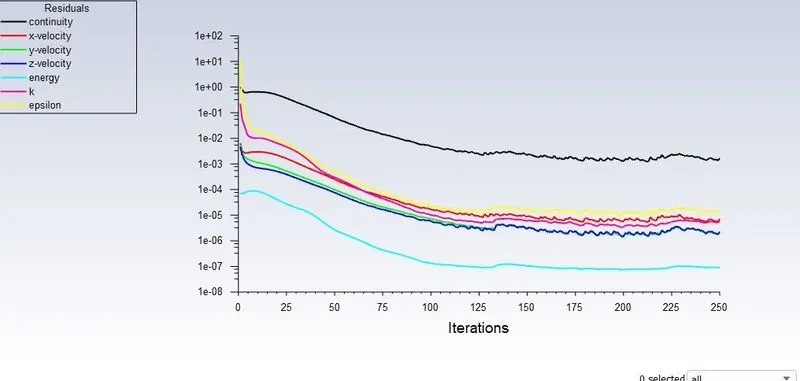
For running the analysis hybrid type of initialization is used. Then the analysis is run till the convergence is achieved.
- Results and summary :
- Case 1 : K epsilon model for MR 2;
- Residual Plot
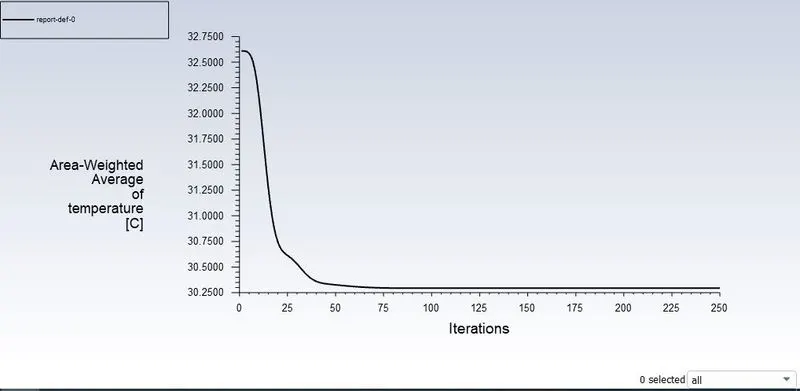
- Area weighted average temperature plot
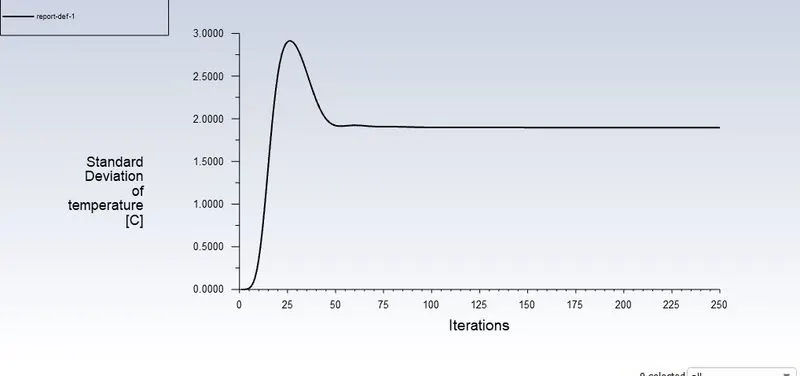
- Standard deviation of temperature plot
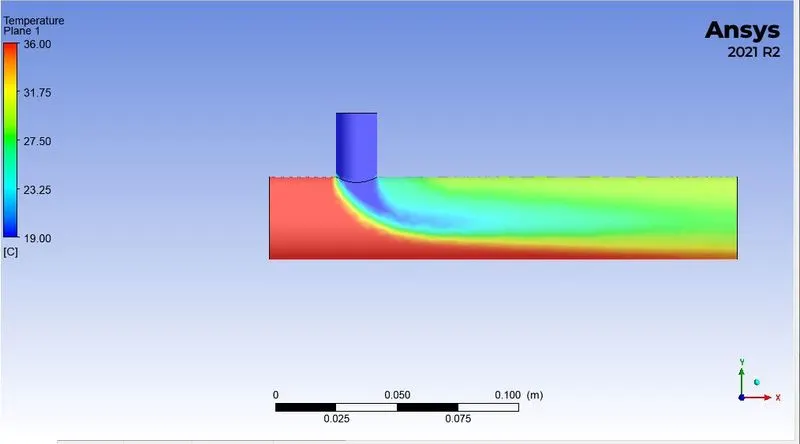
- Temperature Plot
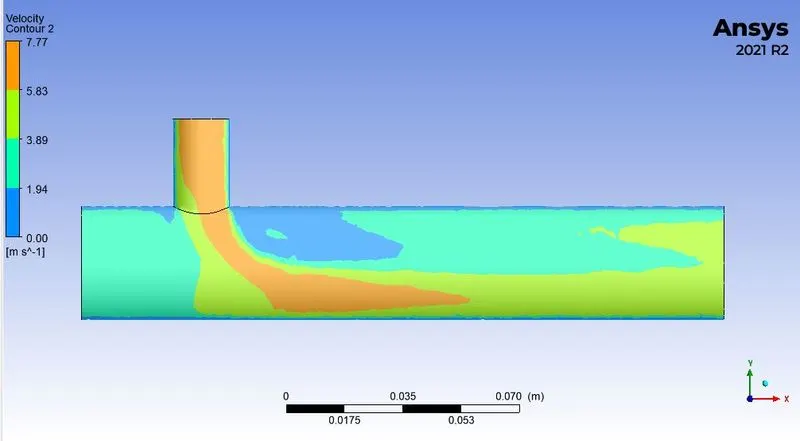
- Velocity Plot
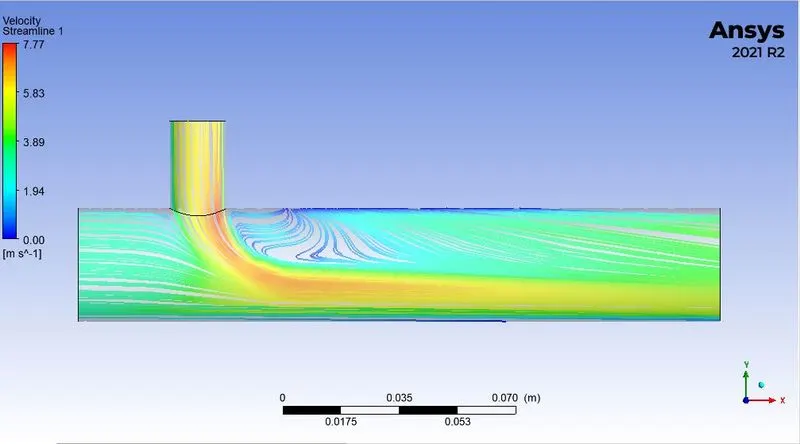
- Velocity Streamline plot
- Residual Plot
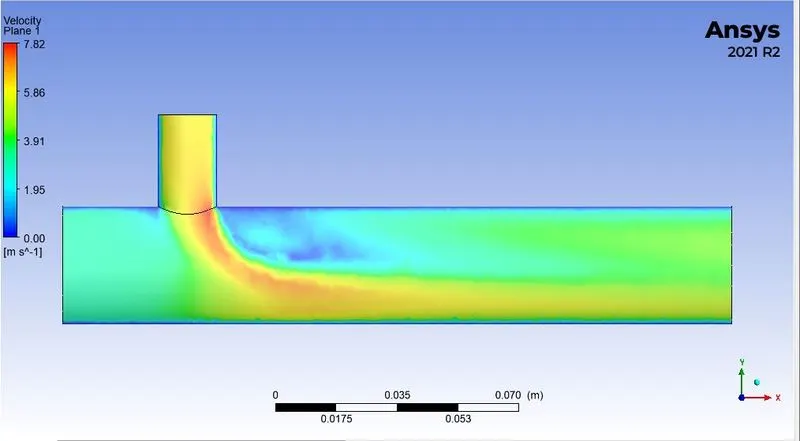
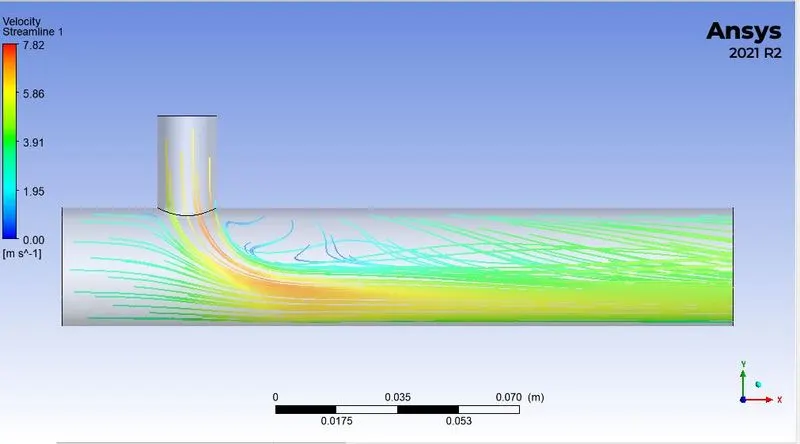
- Case 1 : K Omega model for MR 2;
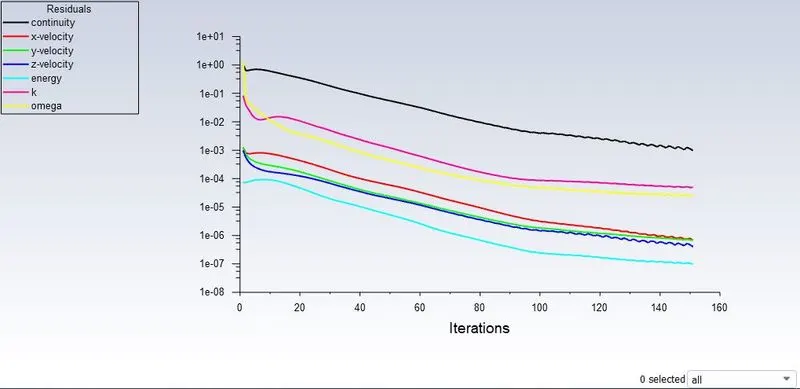
- Residual Plot
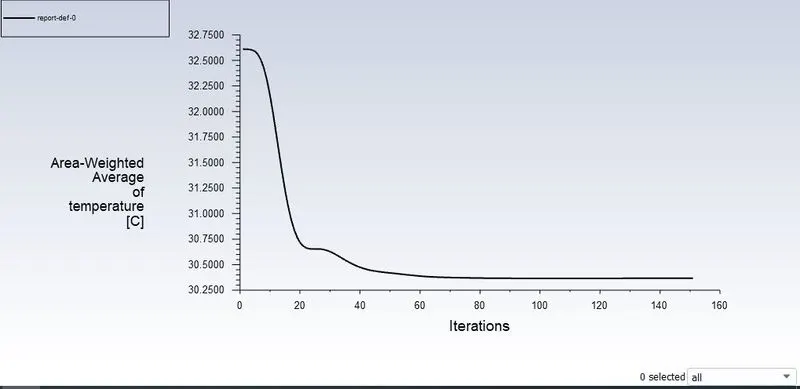
- Area weighted average temperature plot
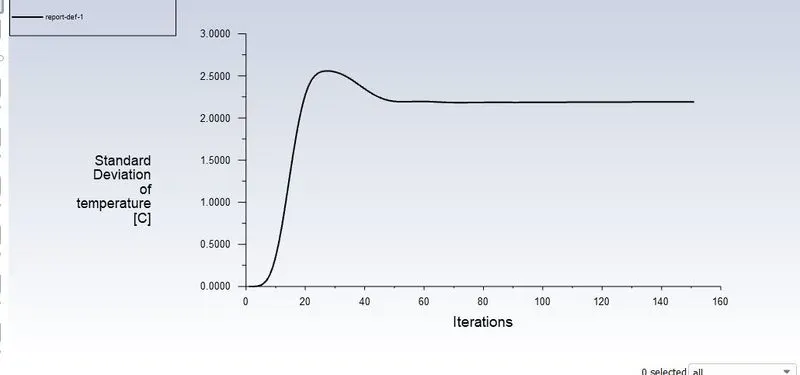
- Standard deviation of temperature plot
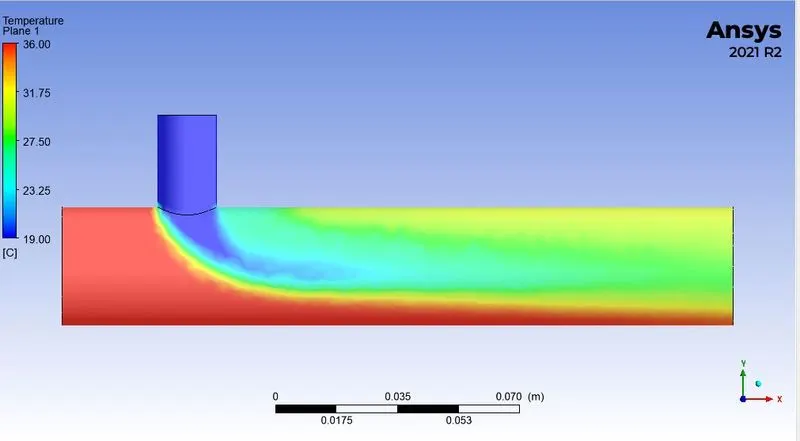
- Temperature Plot
- Velocity Plot
- Velocity Streamline Plot
- Residual Plot
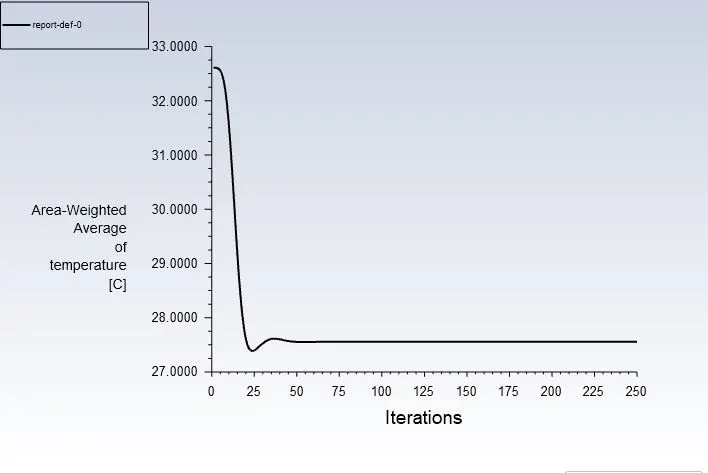
- Case 2 : K Epsilon model for MR 4;
- Residual Plot
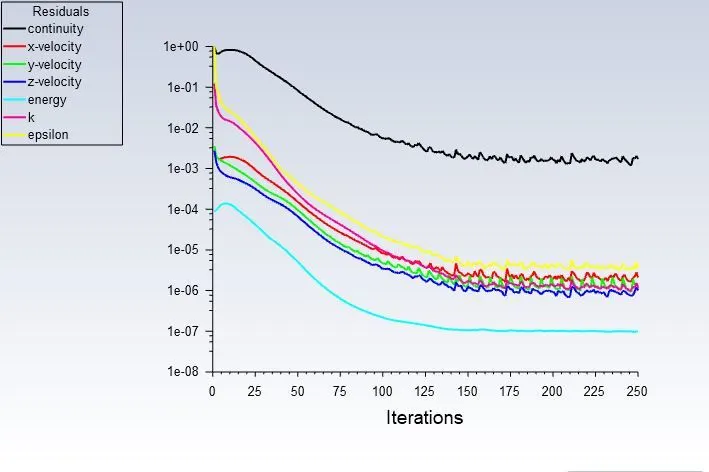
- Area weighted average temperature plot
- Standard deviation of temperature plot
- Temperature Plot
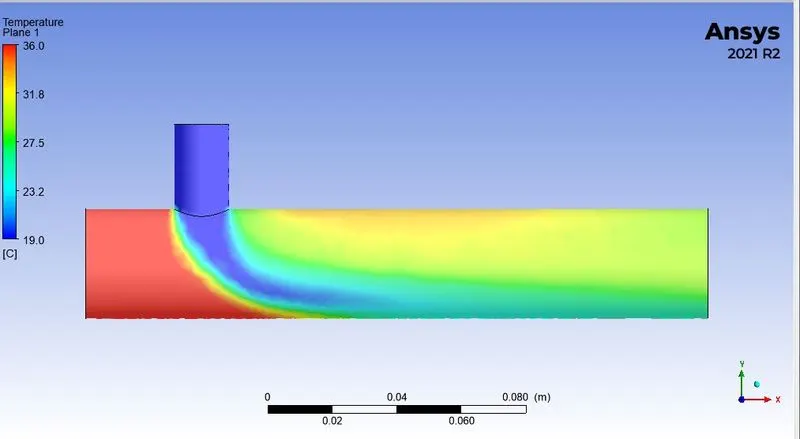
- Velocity Plot
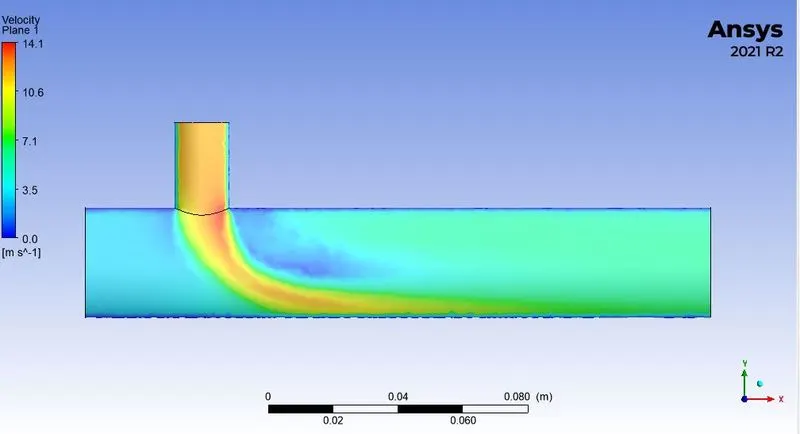
- Velocity Streamline Plot
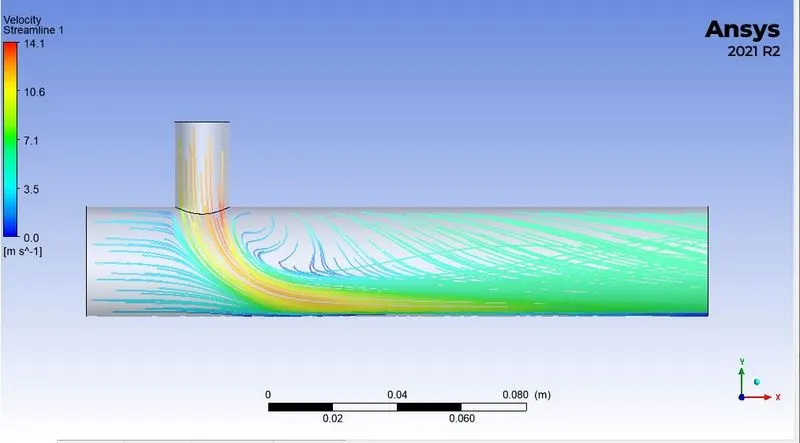
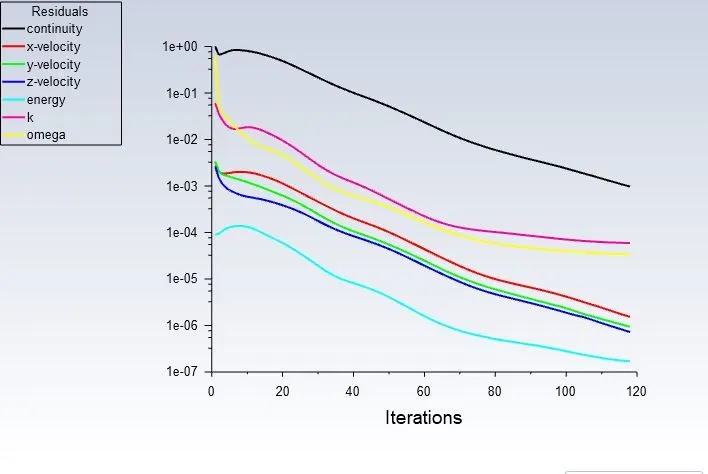
- Residual Plot
- Case 2 : K Omega model for MR 4;
- Residual Plot
- Area weighted average temperature plot
- Standard deviation of temperature plot
- Temperature Plot
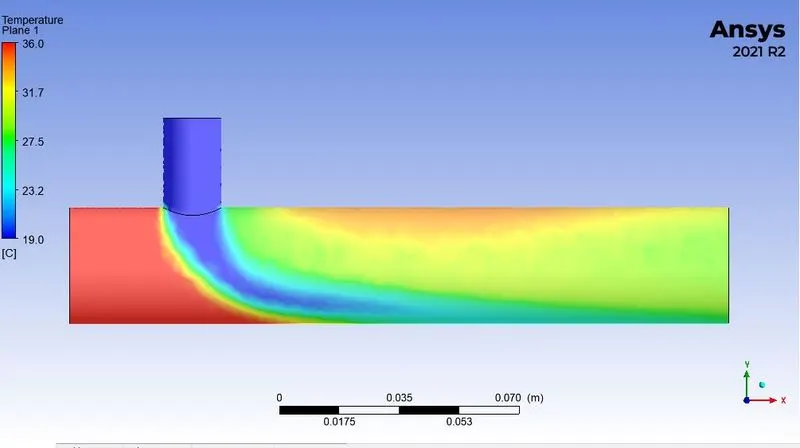
- Velocity Plot
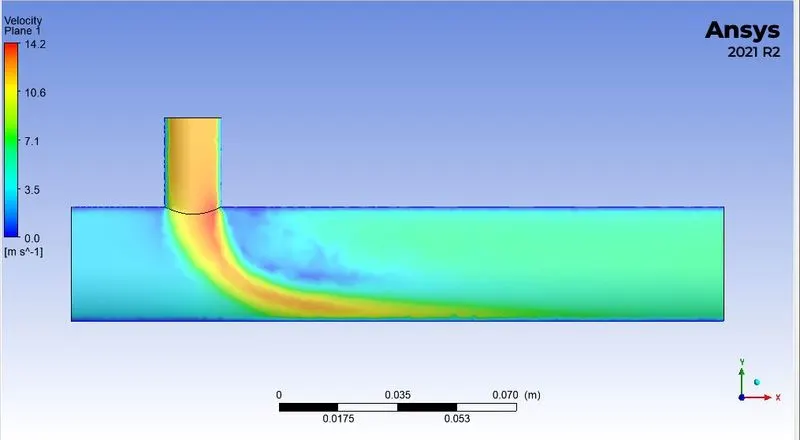
- Velocity Streamline Plot
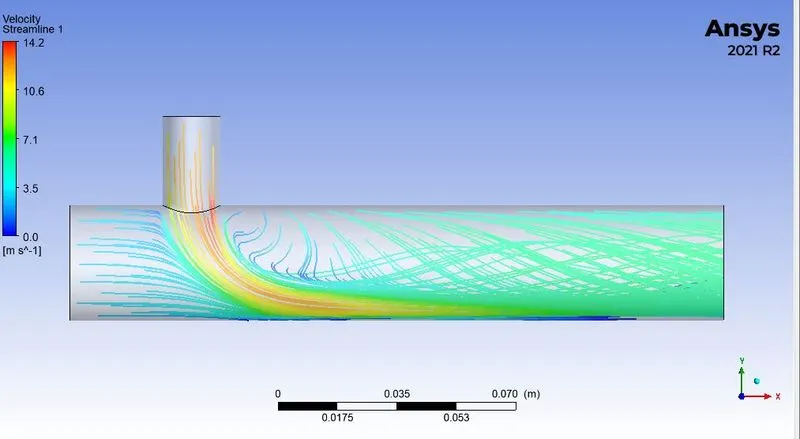
- Residual Plot
- Case 1 : K epsilon model for MR 2;
- Comparing K-Epsilon and K Omega solver model results for reference
| Short Tee Simulation | Max. Velocity (m/s) | Max. Temperature(deg. C) |
| K- Epsilon for M.R. 2 | 7.77 | 36 |
| K-Omega for M.R. 2 | 7.82 | 36 |
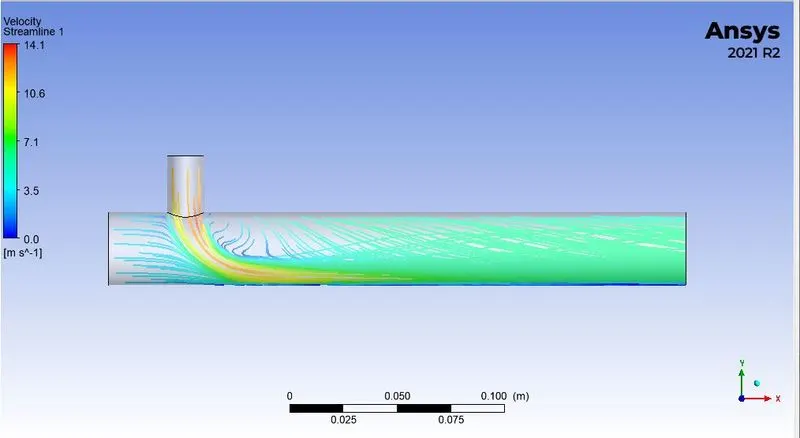
| K-Epsilon for M.R.4 | 14.1 | 36 |
| K-Omega for M.R.4 | 14.2 | 36 |
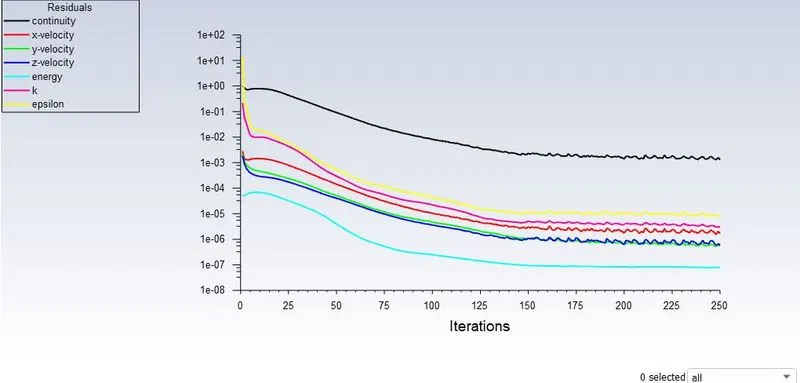
Moreover, as can be seen from the average temperature plot that it takes fewer iterations for the plot to get converged solution. So, it can be concluded that for the current situation K-epsilon model of solver is better for further solution.
Now, for Long Mixing Tee : Hot inlet Velocity 3 m/s and momentum ratio of 4 we will conduct analysis for 2 methods of viscous flow K epsilon for standard model ; Other parameters for the setup is as follows :
| K-Epsilon | |
| Viscous model | K-epsilon with standard wall function |
| Material | Air |
| Cell zones |
Velocity inlet 1: Velocity magnitude - 3m/s ; Temperature 36 deg. Celcius Velocity inlet 2: Velocity magnitude - 6m/s ; Temperature 19 deg. Celcius Outlet - default (Gauge pressure 0 pa) |
- Running the Analysis :
- Long Tee Case 1 : K Epsilon model for MR 2;
- Residual Plot
- Area weighted average temperature plot
- Standard deviation of temperature plot
- Temperature Plot
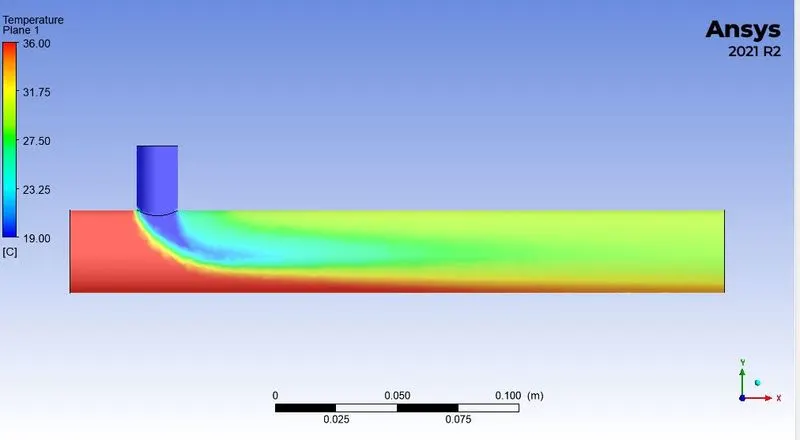
- Velocity Plot
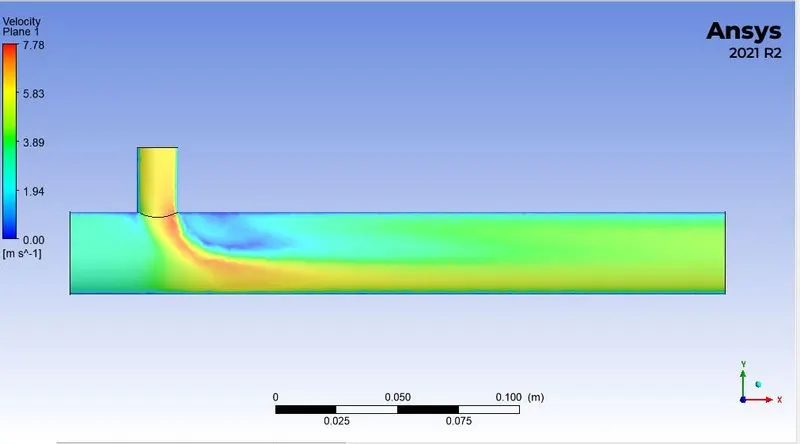
- Streamline Velocity Plot
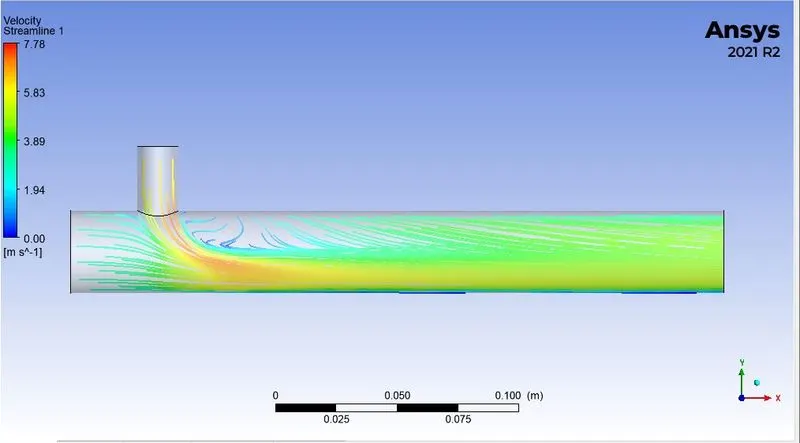
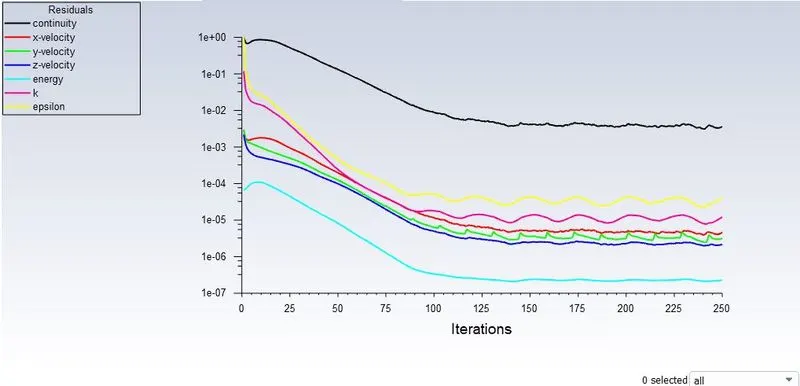
- Residual Plot
- Long Tee Case 2 : K Epsilon model for MR 4;
- Residual Plot
- Area weighted average temperature plot
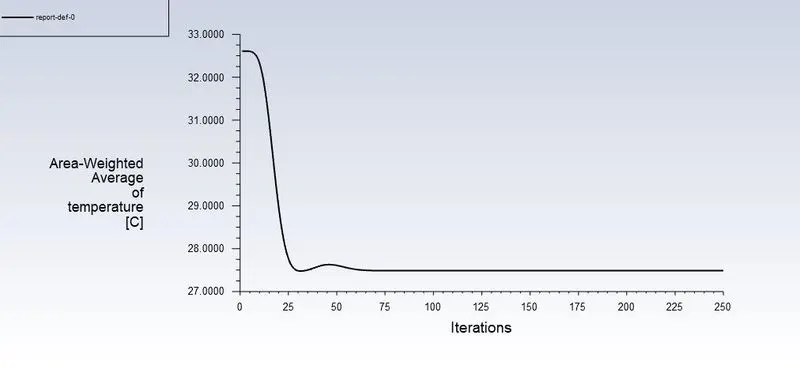
- Standard deviation of temperature plot
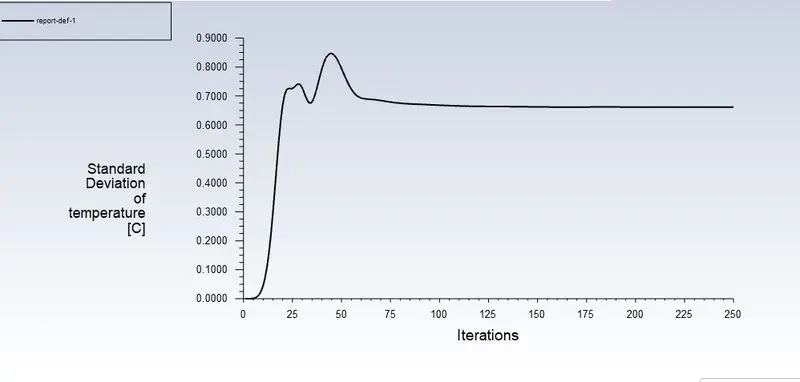
- Temperature Plot
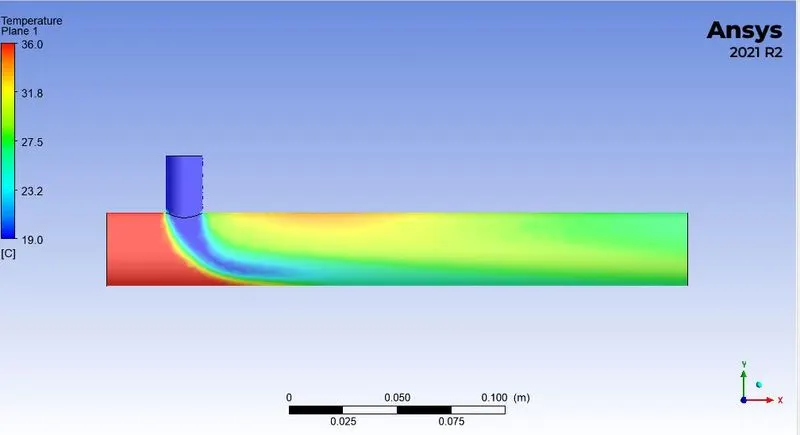
- Velocity Plot
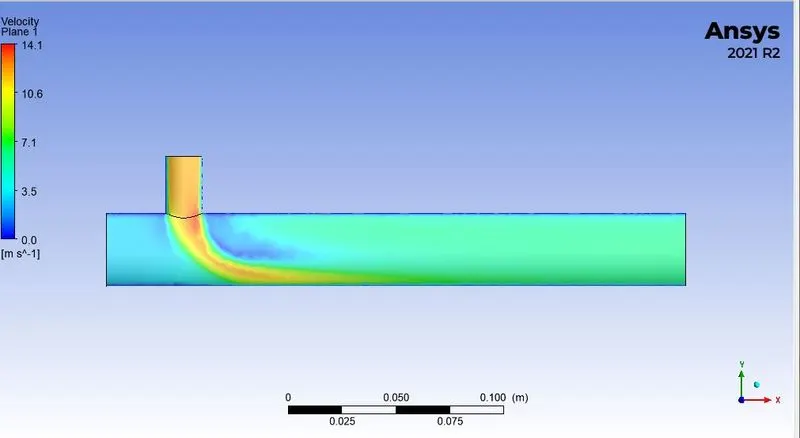
- Streamline Velocity Plot
- Residual Plot
| Long Tee Simulation solver | Max. Velocity (m/s) | Max. Temperature(deg. C) |
| K- Epsilon for M.R. 2 | 7.78 | 36 |
| K-Epsilon for M.R. 4 | 14.1 | 36 |
Analytical Calculation :
For Momentum Ratio of 2; Hot fluid velocity (Vhot) 3m/s and cold fluid velocity(Vcold)6 m/s:
- Hot fluid Mass (mhot) = rho*a*Vhot = 997*0.0009*3 = 2.69 kg/s
- Cold fluid Mass (mcold) = rho*a*Vcold = 997*0.0009*6 = 1.35 kg/s
- Mixture Temperature (Tmixture) = (mhot*Thot + mcold*Tcold)/(mhot + mcold) = 30.320c
For Momentum Ratio of 4; Hot fluid velocity(Vhot) 3m/s and cold fluid velocity(Vcold)6 m/s:
- Hot fluid Mass (mhot) = rho*a*Vhot = 997*0.0009*3 = 2.69 kg/s
- Cold fluid Mass (mcold) = rho*a*Vcold = 997*0.0009*12 = 2.39 kg/s
- Mixture Temperature (Tmixture) = (mhot*Thot + mcold*Tcold)/(mhot + mcold) = 27.990c
Conclusion:
- The long Tee takes more time(iterations) to solve and yet as per the results which can be seen in the plots the temperature and velocity values does not vary much. So instead of using long tee for mixture short Tee can be used.
- Cold and hot fluid gets mixed quickly with high momentum ratio, which can be observed when we compare the velocity plots of each case and compare them with each other.