Week 1- Mixing Tee
AIM
compare the mixing effectiveness when hot inlet temperature is 360C & the Cold inlet is at 190C.
Objectives:
- Velocity and temperature contour plots on the cut planes along and across the pipe.
- Velocity and temperature line plots along and across the length of the pipe.
- Perform Mesh independent study for any one case.
- Discuss the effect of length and momentum ratio on results.
Given solution:
- Case 1
- Short mixing tee with a hot inlet velocity of 3m/s.
- Momentum ratio of 2, 4.
- Case 2
- Long mixing tee with a hot inlet velocity of 3m/s.
- Momentum ratio of 2, 4.
Momentum ratio = velocity at cold inlet / velocity at hot inlet
Explanation:
In both cases we fixing the hot inlet velocity by varying the cold inlet velocity we can get the desired temperature at the outlet.
Short tee:
In this case we have to solve for momentun ratio 2 and 4 which means we are going to adjust the onlet velocity.
and also we use k-omega and k-epsilon models at each case.
ANSYS Workflow:
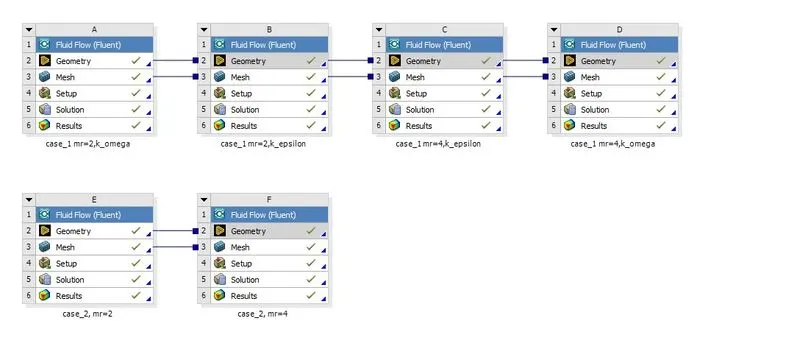
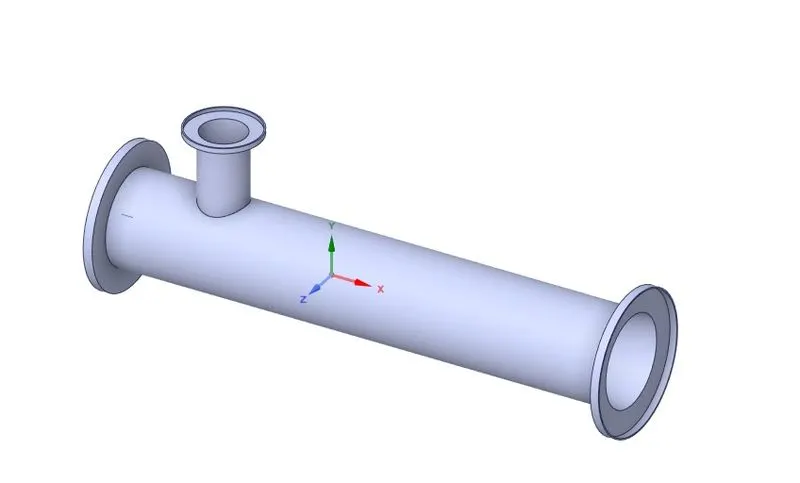
After launching the fluent, now import the geometry in spaceclaim, where we can makeup the geometry and now we extract the volume for the further process because we going todo internal flow analysis.
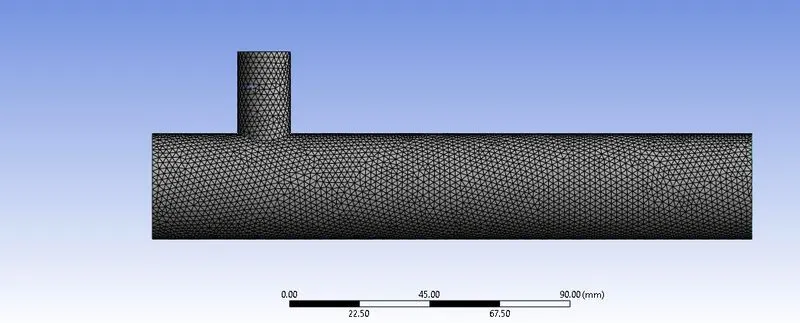
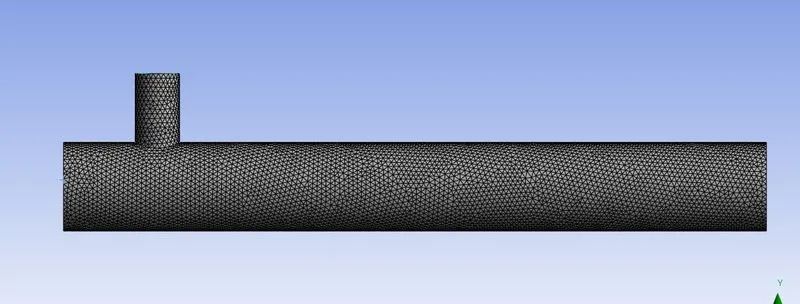
Then we go mesh for the extracted volume by 2mm of element size.
No. of mesh elements= 106253
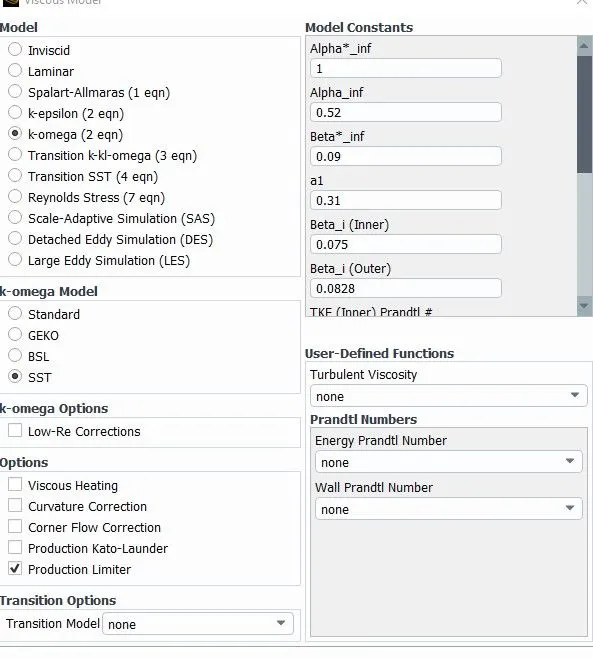
first We have taken the K-omega model later we going to take k-epsilon model then we compare the both model as per the challenge requirement.
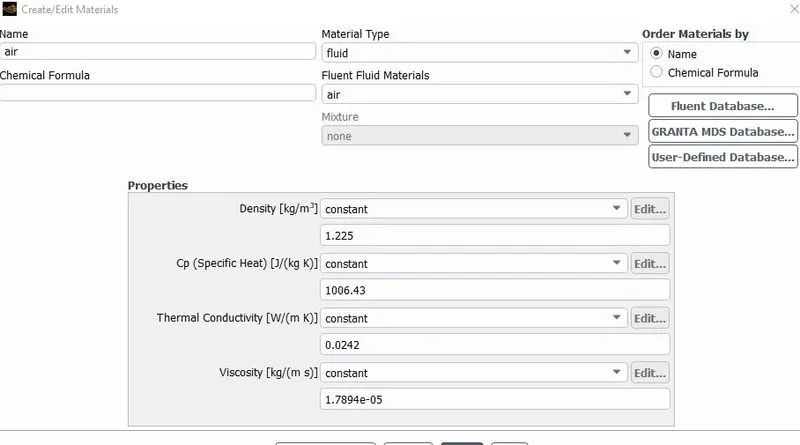
Selecting the fluid as material type
Now we have to set the boundary conditions, here we set the inlet/outlet temperature and velocity
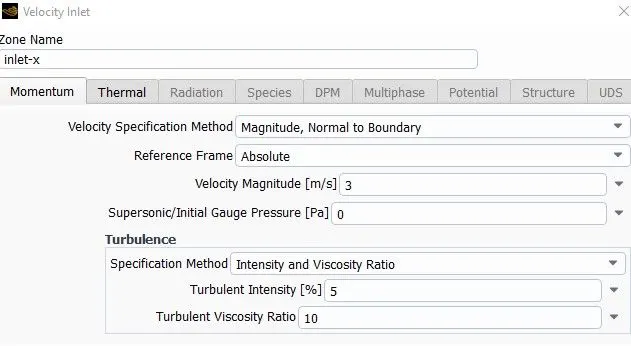
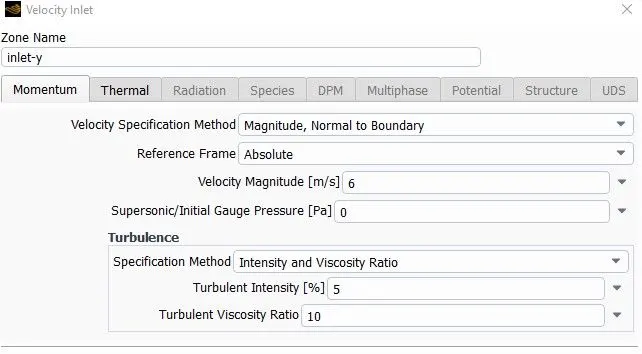
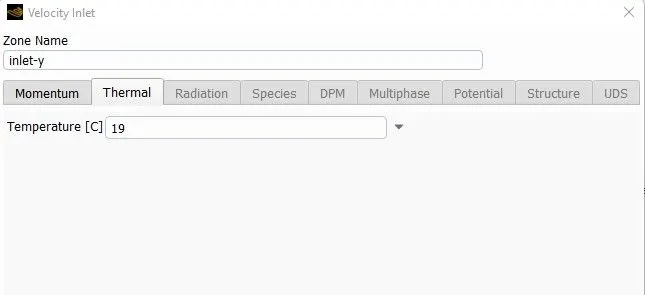
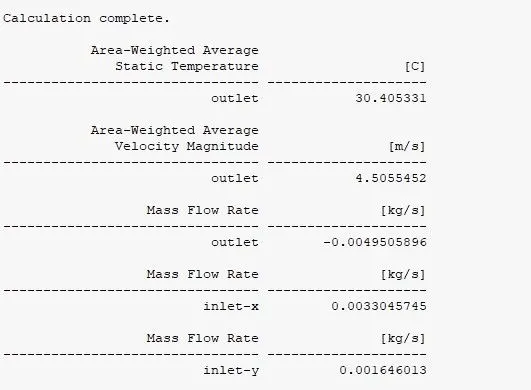
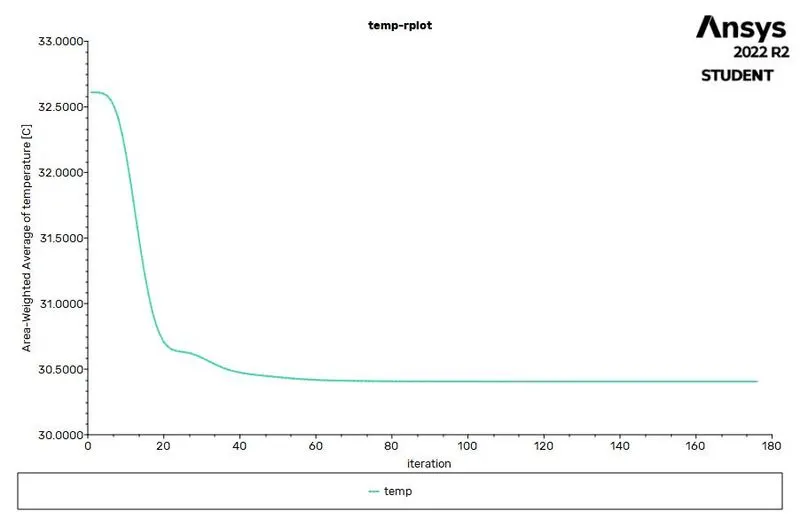
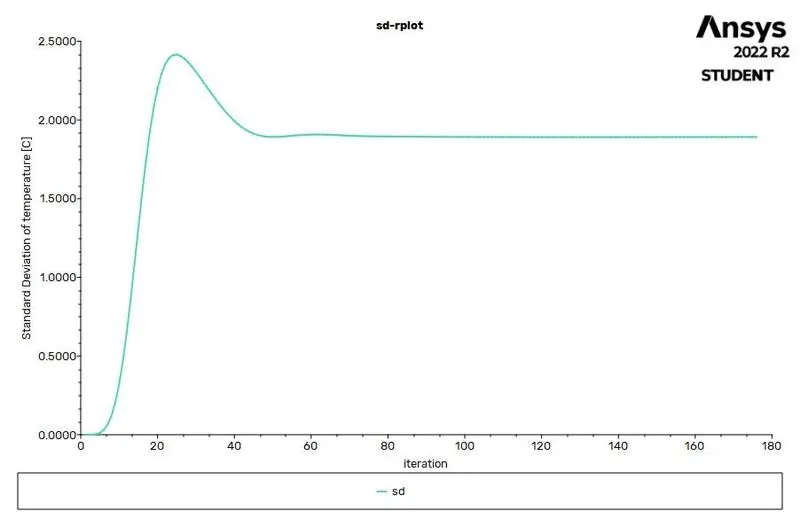
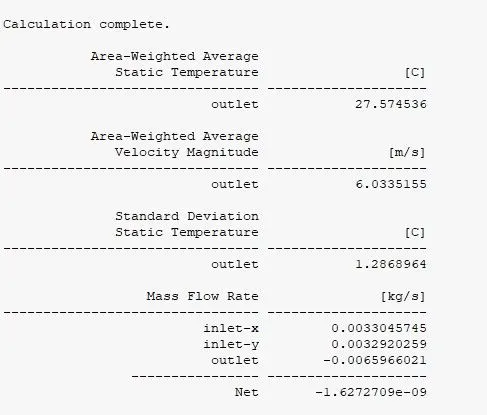
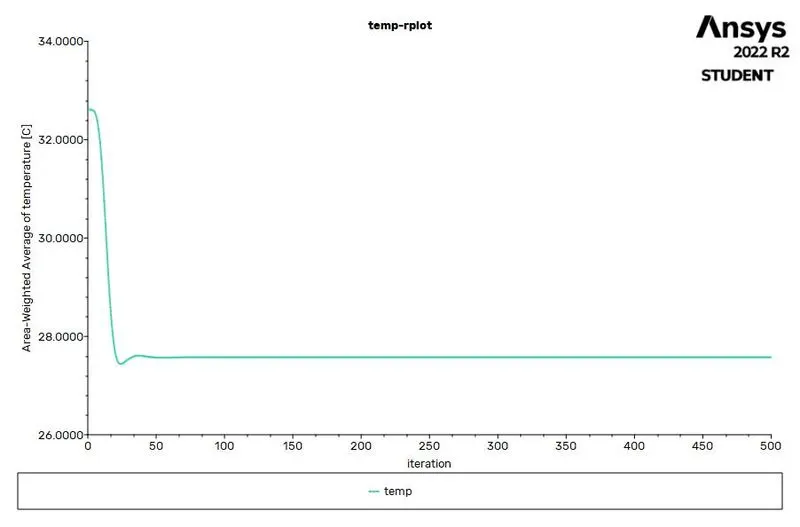
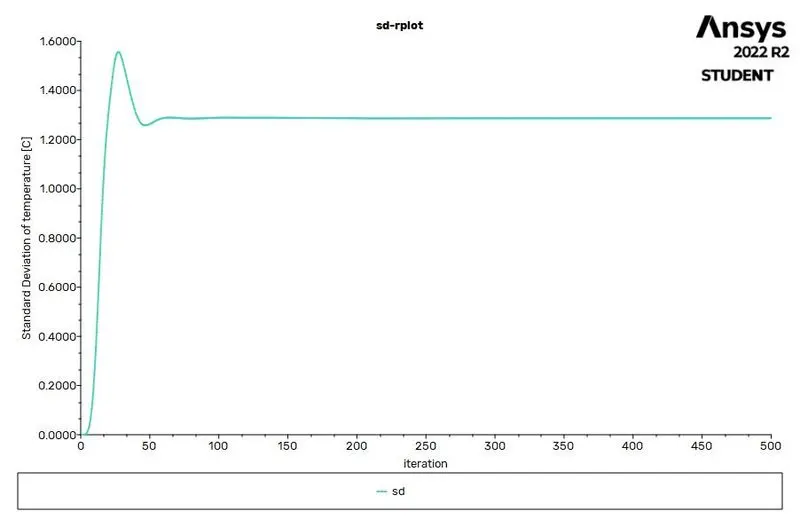
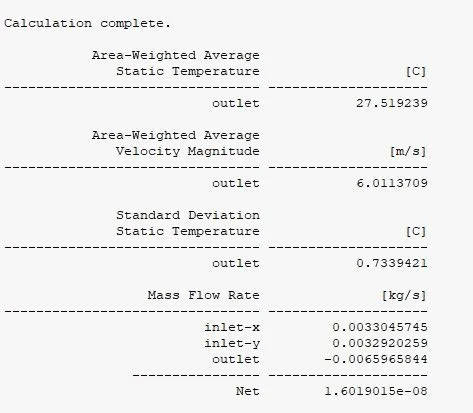
define the surface rreport for standard deviation and area weighted average at outlet, so that we can generate average temperature , average velocity and sd for temperature.
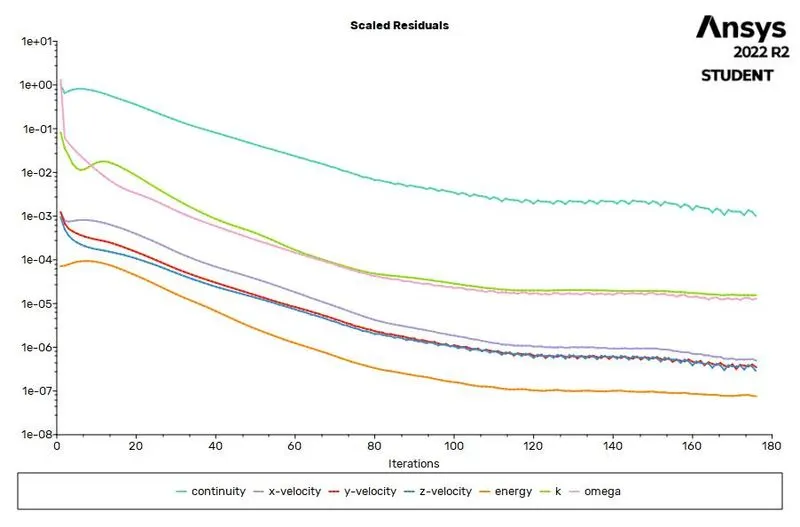
with this viscous model(k-omega) it takes 176 iterations to converge all the equations but here our main focus is temperature and velocity.
Repeat the same proces for cold inlet velocity=12m/s
Contour plots
Temperature contour
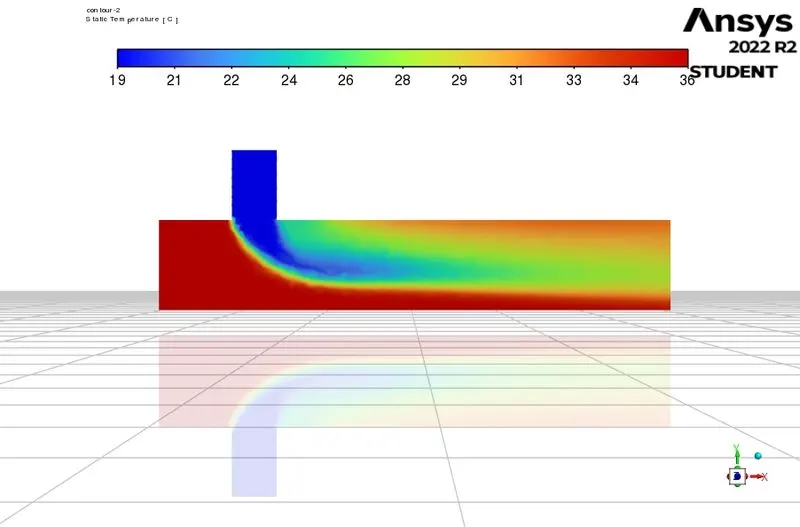
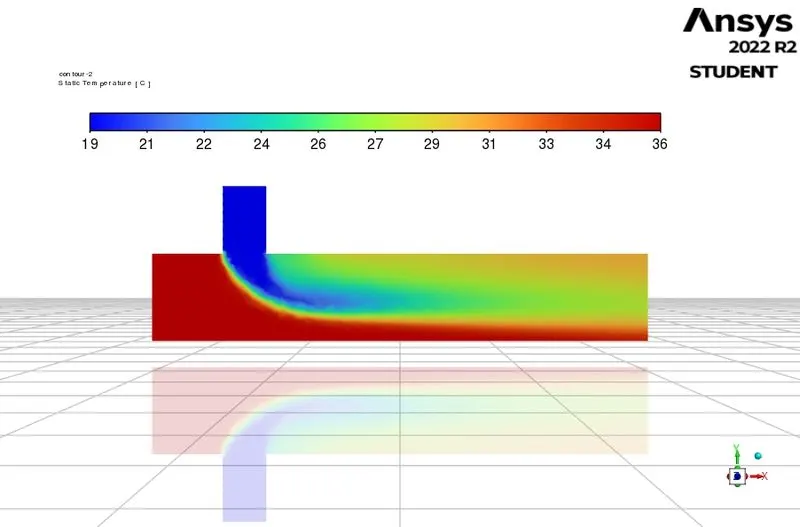
we can see that temperature diffusion is not clear near the surface of the pipe because of low cold inlet velocity 6m/s
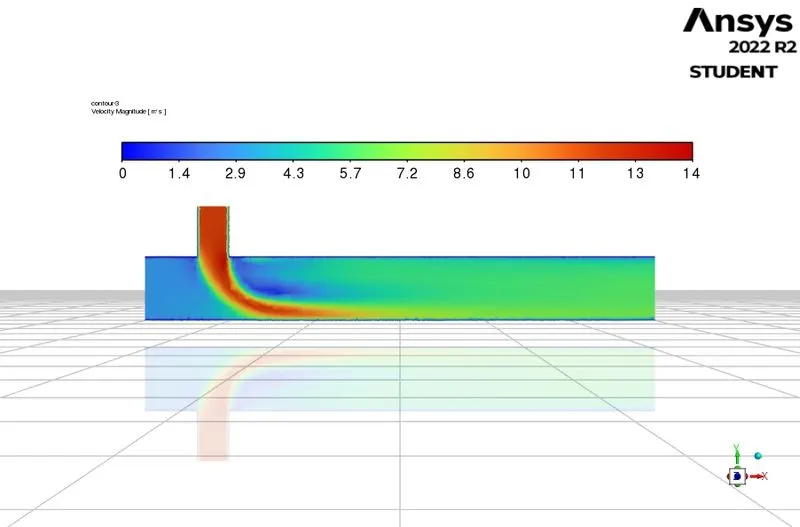
at velocity contour plot velocity is nearly zero at the wall surface due to shear force.
Velocity contour
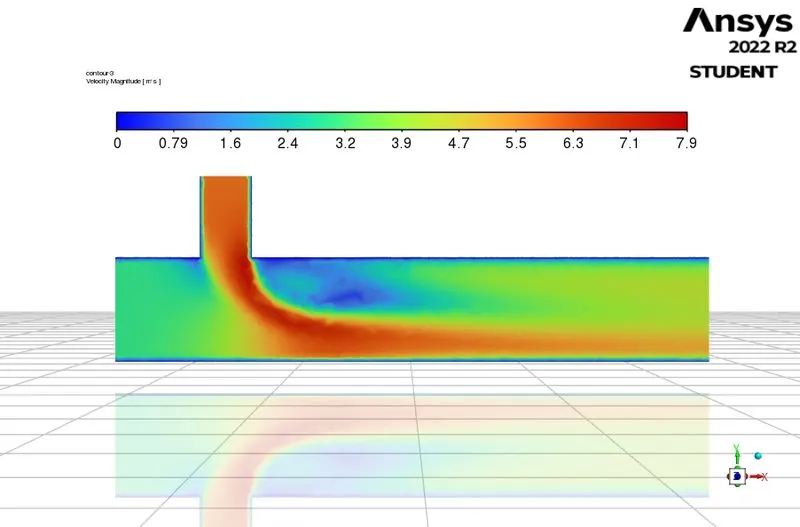
K-epsilon for mr=2
Total iterations to converge= 168
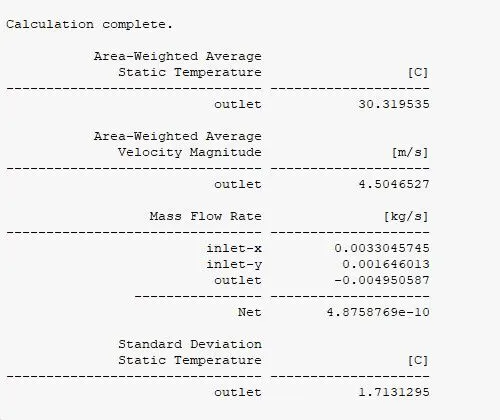
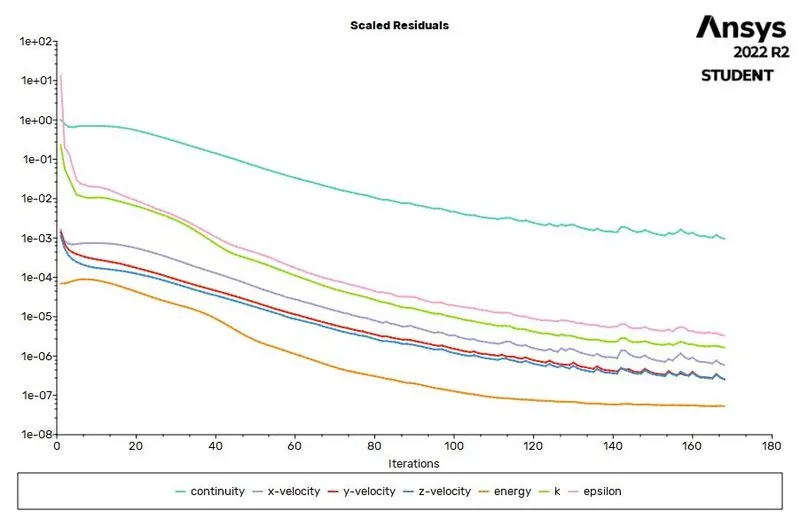
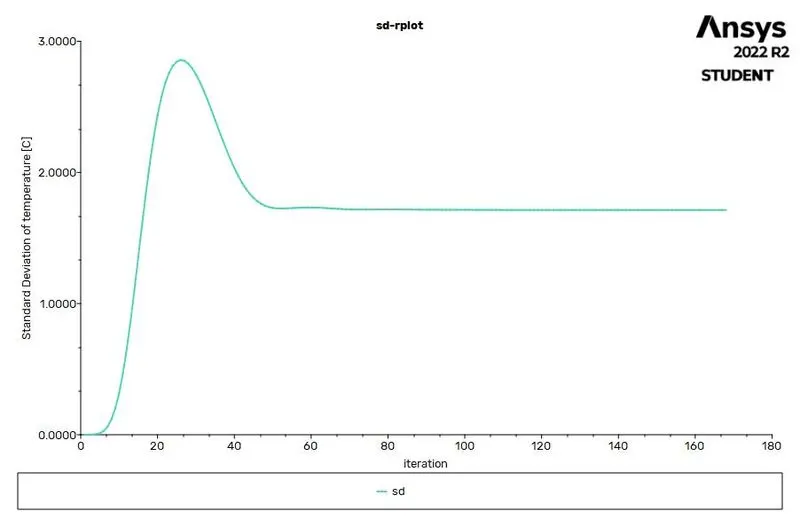
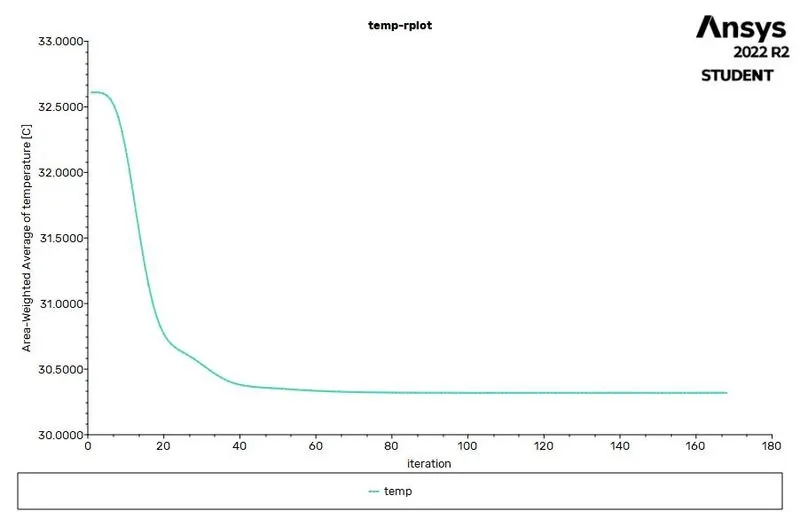
Temperature contour
Velocity contour
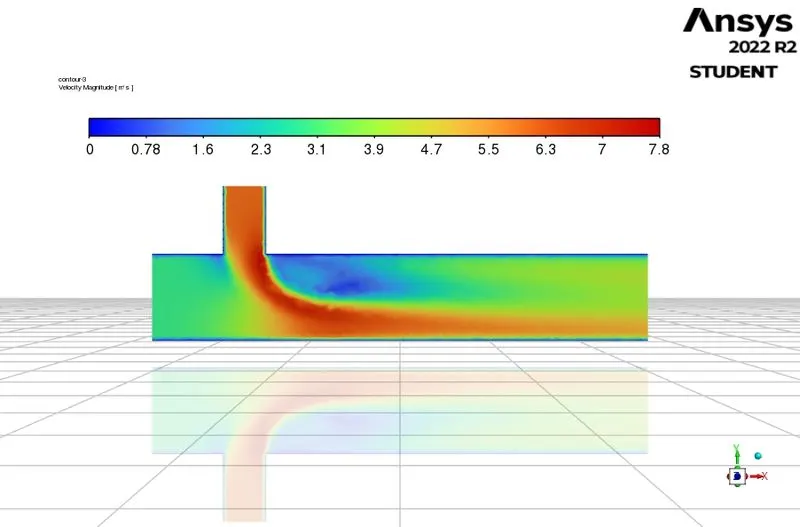
for MR=2
| Viscous model | iterations to converge |
| K-omega | 176 |
| k-epsilon | 168 |
K epsilon is best suited for flow away from the wall, say free surface flow region, whereas k-omega model is best suited for near the wall flow region, where adverse pressure gradient is developed. in our case convergence limit of k-epsilon is lower than k-omega.
so that for further case we can use k-epsilon model.
Short tee for MR=4
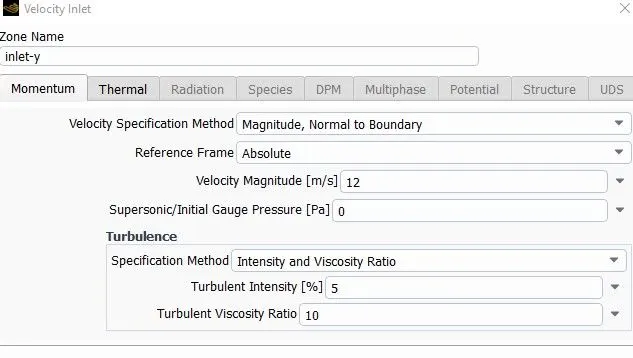
we can repeat the same process as we did in previous, here we vary the cold inlet velocity into 12m/s. in boundaries.
we solve the equations for 500 iterations
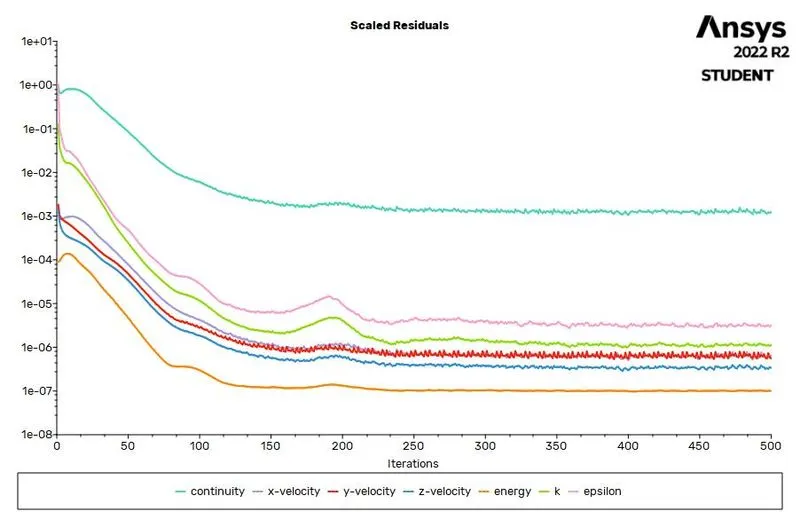
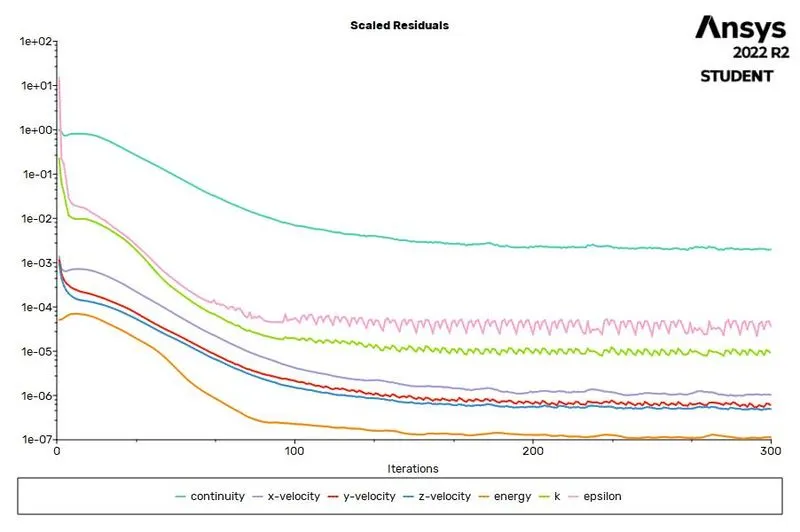
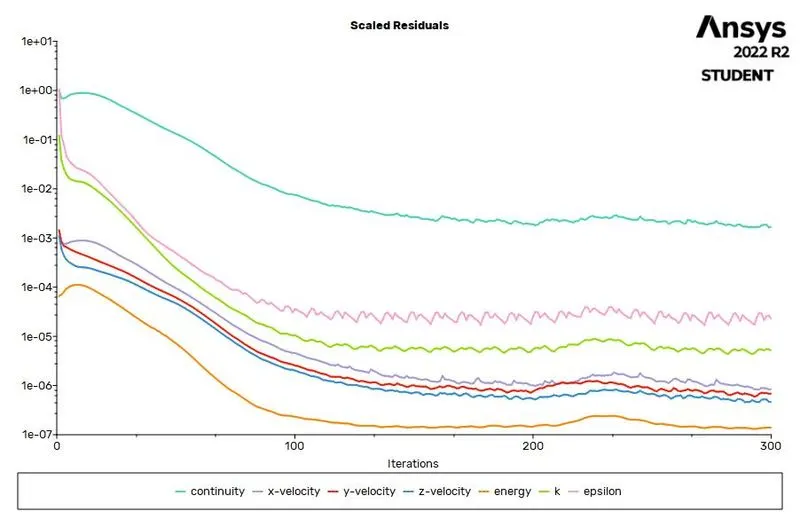
The momentum and energy equations are converged within the 200 iterations but there is an imbalance within the contonuity equation and it still fluctuates but here we consider velocity and temperature plots.
Temperature contour
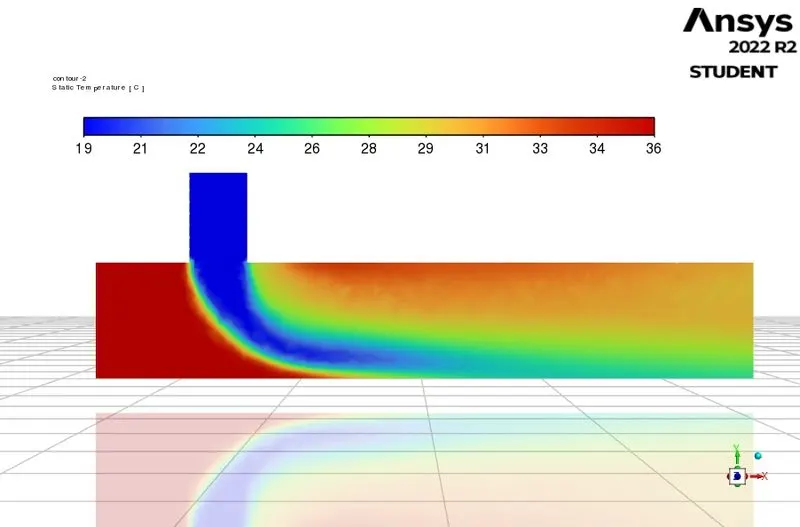
Here the heat transfers from hot fluid to cold fluid, so that the diffusion is better than previous case because here the flow rate of cold fluid increases.
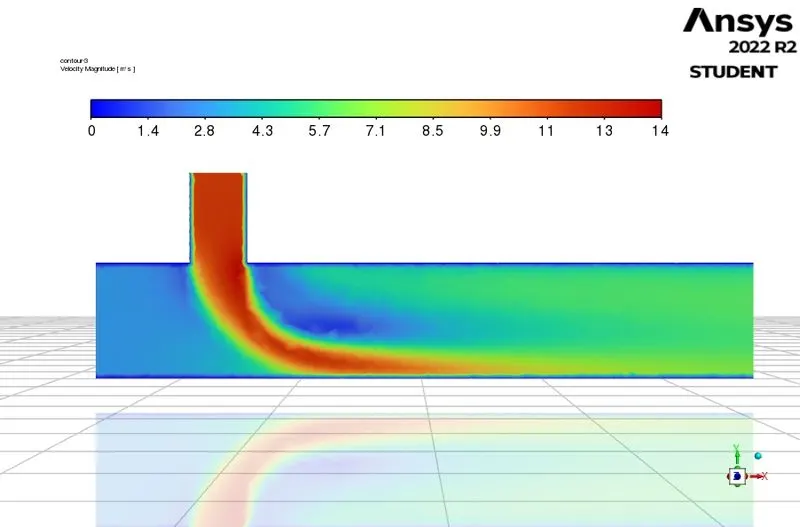
Velocity contour
cold fluid enters into the hot fluid chamber with high velocity there is a high pressure vaccum creates at the right side of cold fluid entrance so the velocity will be lower.
Long mixing tee
mr=2
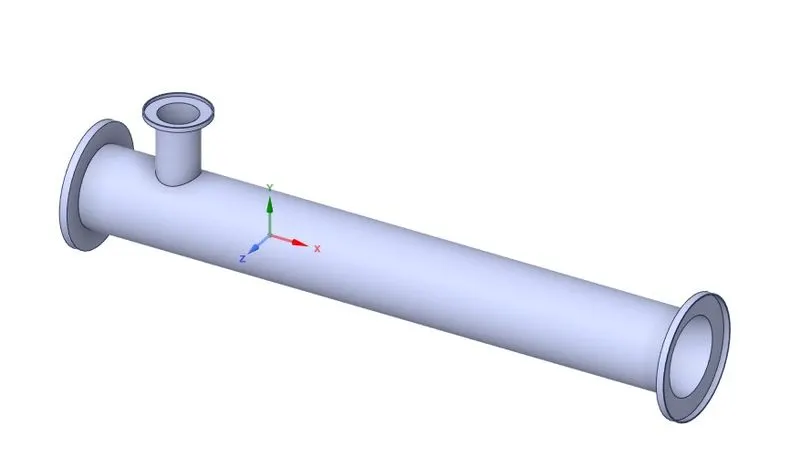
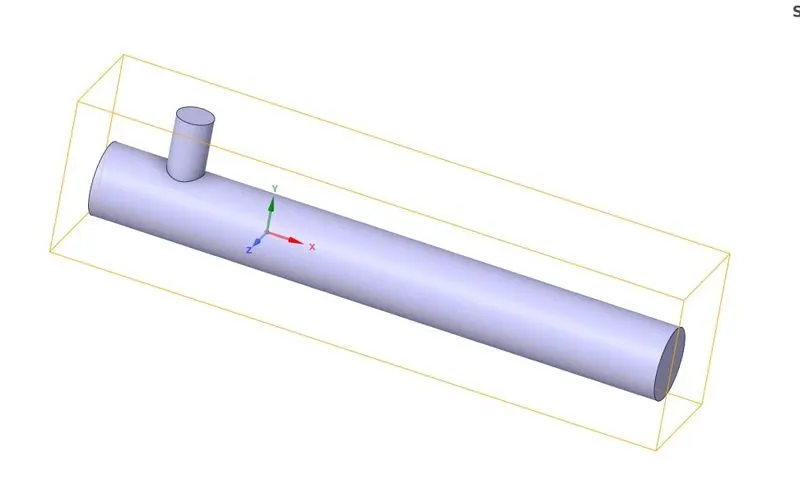
this is an another geometry called long mixing tee imported in spaceclaim and extract the volume
meshing for 2mm of element size
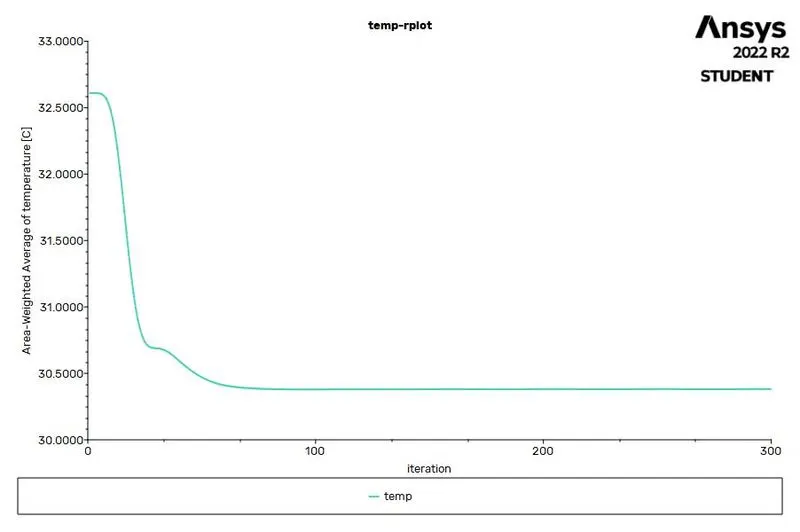
Residuals
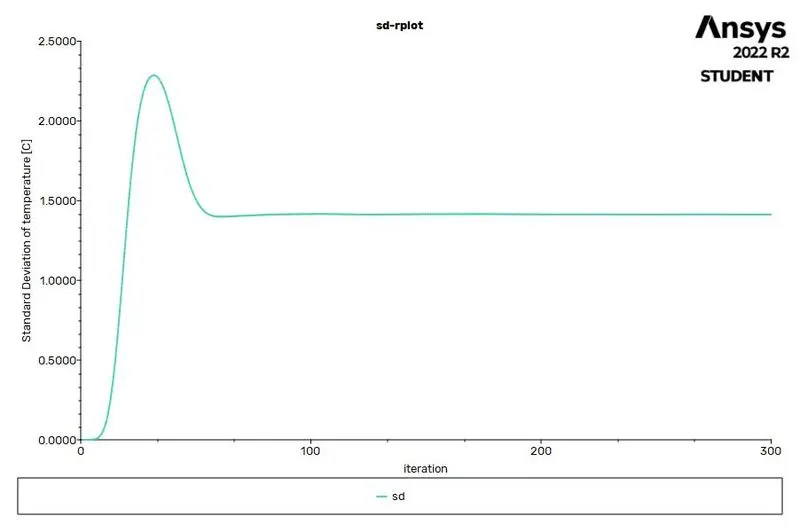
Temperature contour
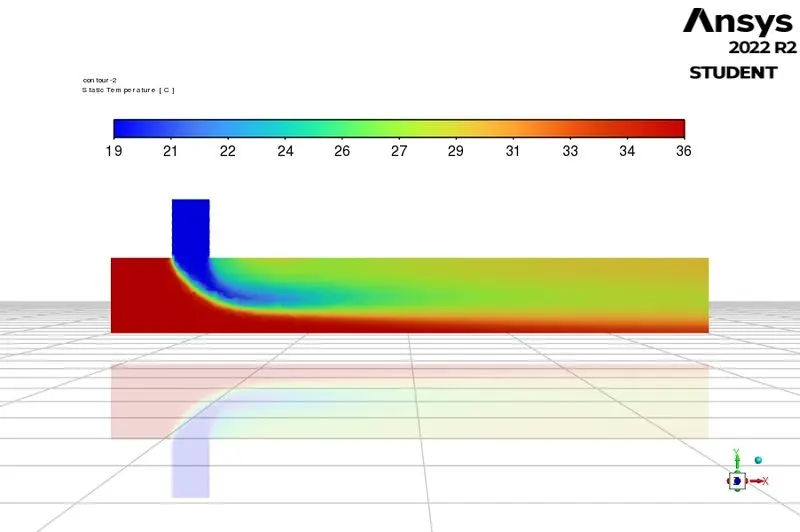
compare to short mixing tee effect of diffusion is somewhat okay in this case because of pipe length.lets see for higher velocity case.
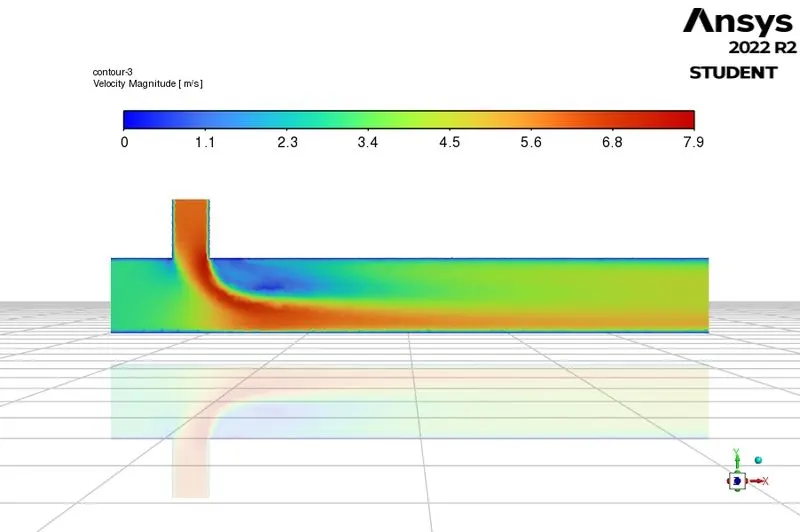
Velocity contour
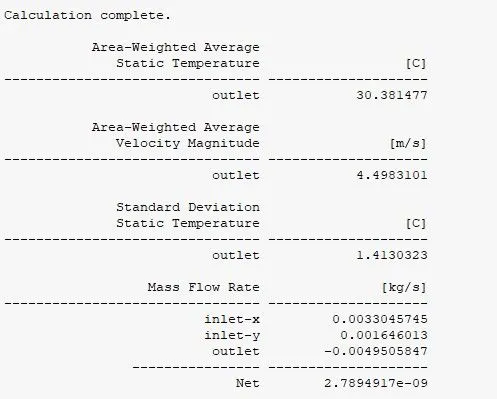
Case-2, mr=4
Residuals
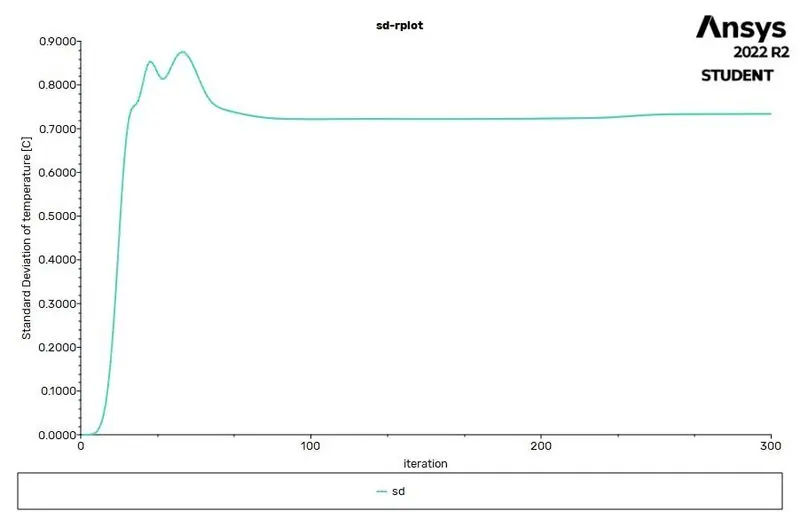
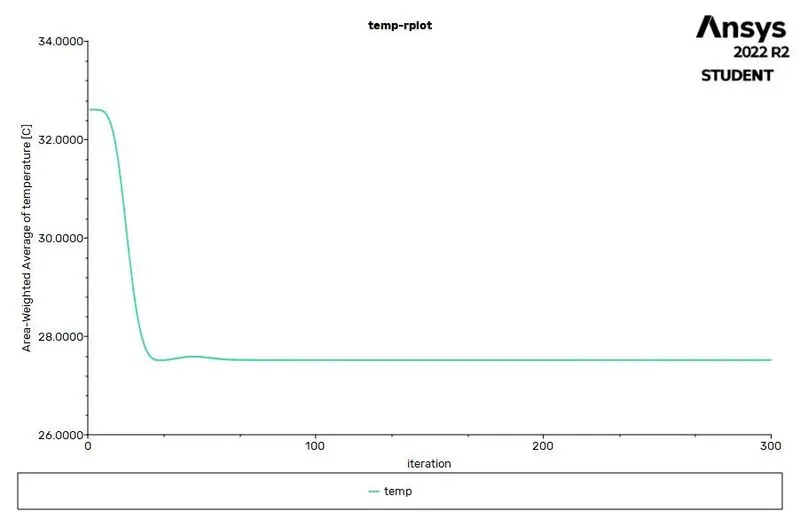
Temperature contour
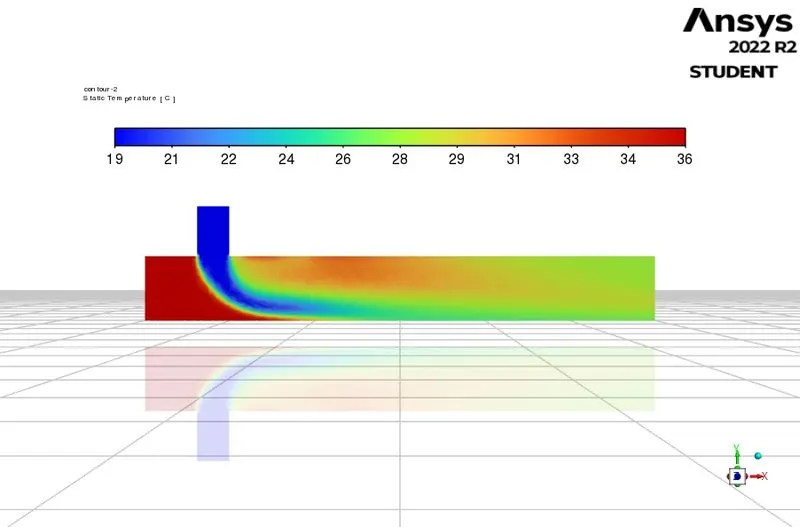
Velocity contour
case-1 short mixing tee
mr=2
| cell count | Avg outlet temperature | no. of iterations |
| 106253 | 30.4 | 168 |
mr=4
| cell count | Avg outlet temperature | no. of iterations |
| 106253 | 27.5 | <200 |
Case-2 Long mixng tee
mr=2
| cell count | Avg outlet temperature | no. of iterations |
| 140942 | 30.3c | <200 |
mr=4
| cell count | Avg outlet temperature | no. of iterations |
| 140942 | 27.5 | <200 |