Week 1- Mixing Tee
Aim: set-up steady-state simulation to compare the mixing effectiveness when hot inlet temperature in 36 °C and the cold inlet is at 19°C
Objective
To simulate the flow of air through mixing tee and understand the effect of length pipe and momentum ratio of velocity for mixing of air by using two different types of pipe i.e. short pipe and along the pipe.
About
In industrial process engineering, mixing is a unit operation that involves the manipulation of a heterogeneous physical system with the intent to make it more homogenous.
Mixing is performed to allow heat and/or mass transfer to occur between one or more streams, components, or phases, modern industrial processing almost involves some form of mixing. A mixing tee is a type of mixing mechanism, mixing tees utilizes a specialty engineered internal geometry to efficiently mix two fluid streams into one combined streams. mixing tees are widely used in the petrochemical, HVAC industries, automobile. in which two fluid streams with different physical or chemical properties mix together
Methodology
- Calculate required inlet velocities for boundary condition
- Extract the volume area from the tee section
- Mesh inappropriate method
- Give a name to parts as input and output
- Assign boundary condition
- Assign specific material
- Create study points
- Set initial condition to boundaries as per problem statement
- Make study definition to observe the parameters of airflow
- Initialize the solver
- Set iteration no.
- Start the calculation
- Post-processing result
Case setup
Case 1
- Short length mixing tee with a hot inlet velocity of 3 m/s
- Momentum ratio 2 and 4
Case 2
- Long length mixing tee with a hot inlet velocity of 3m/s
- Momentum ration 2 and 4
Momentum ratio= cold inlet velocity / hot inlet velocity
case 1:- baseline short tee setup
- space claim
the cad model is imported into space claim and extracted flow volume field from the model and suppressed for further process
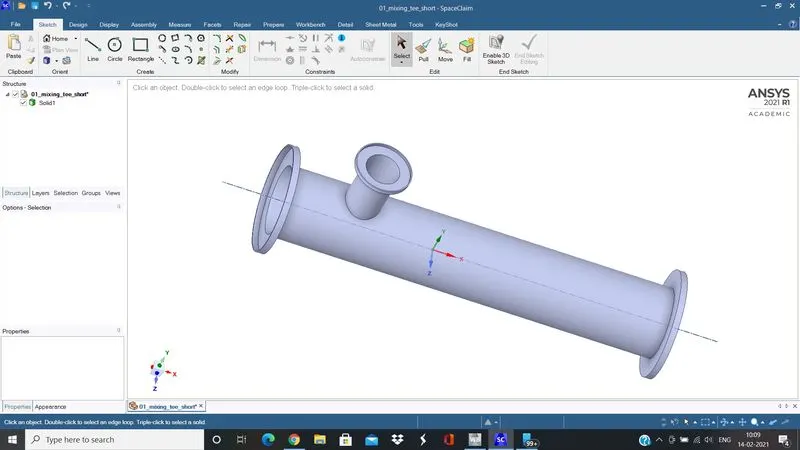
2.volume extract for meshing
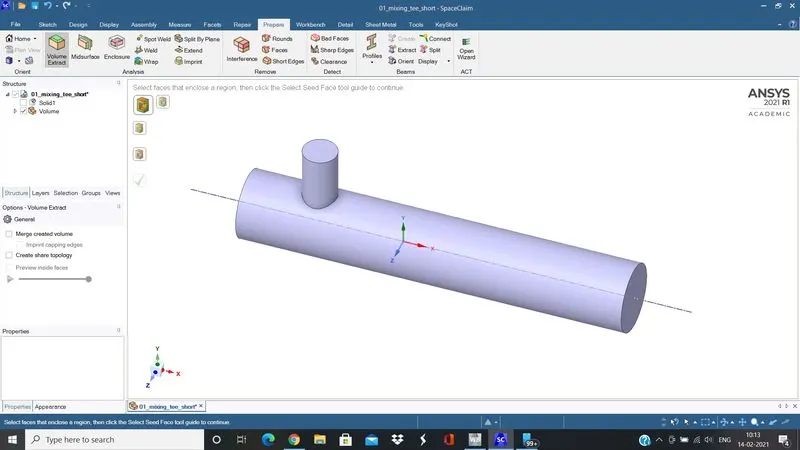
3.mesh
In the mesh section applying boundary name. generating mesh in element quality mesh with default element size
4. Naming
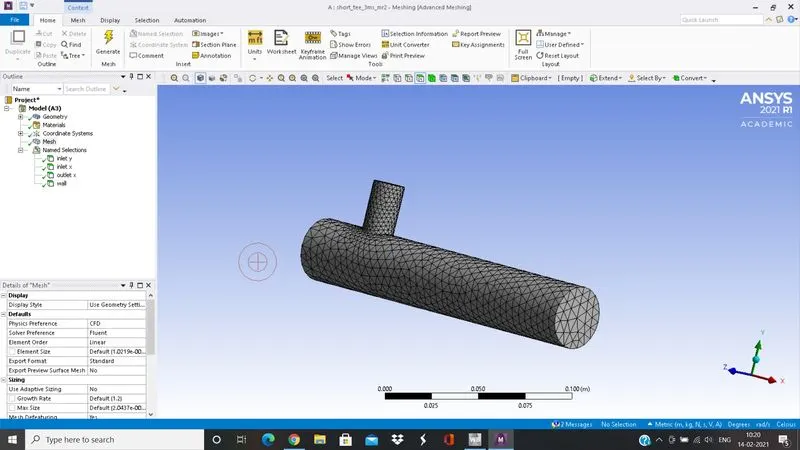
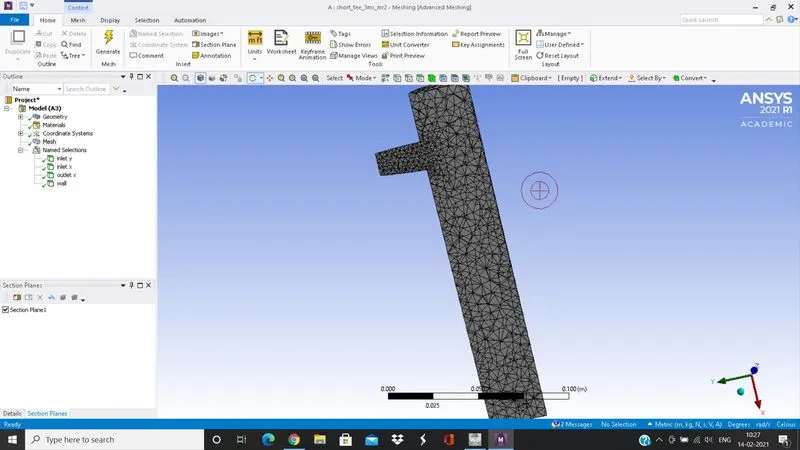
5. cut section of mixing tee geometry
6. initial fluent setup
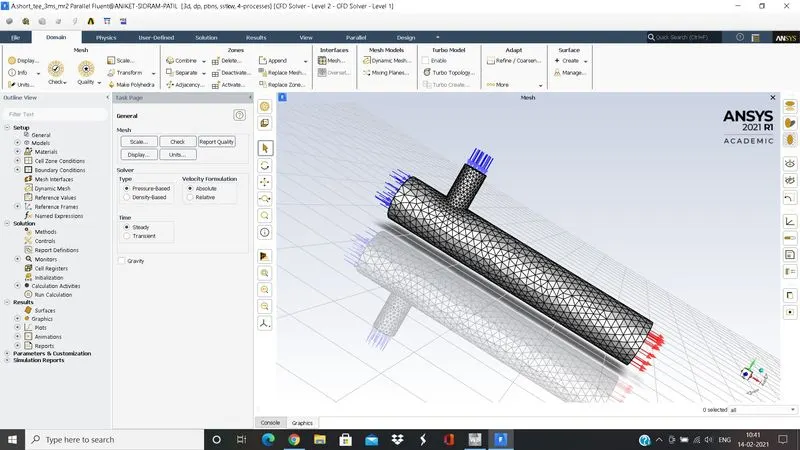
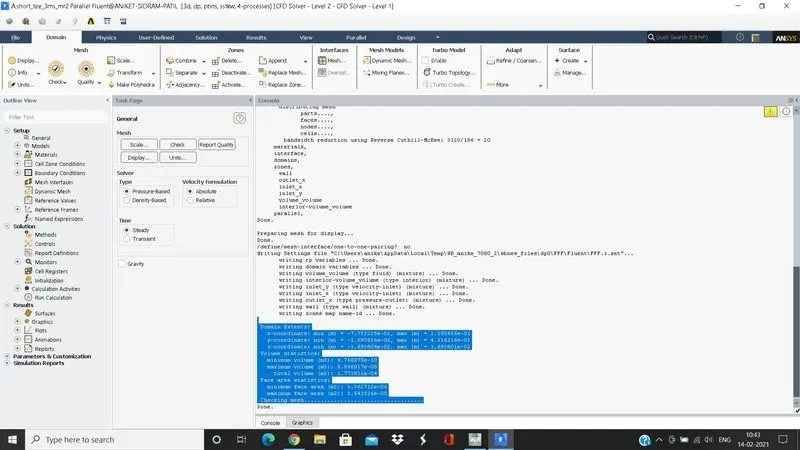
7.checking mesh
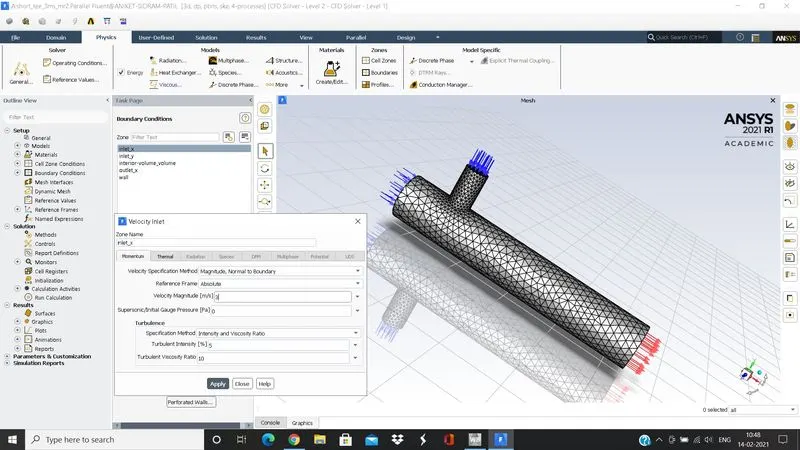
8. setting up physics

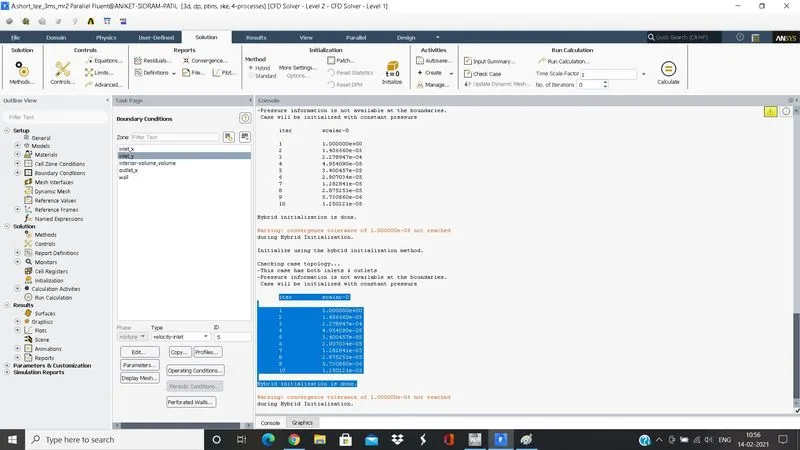
9. hybrid meshing initialization
10.fine meshing for better results
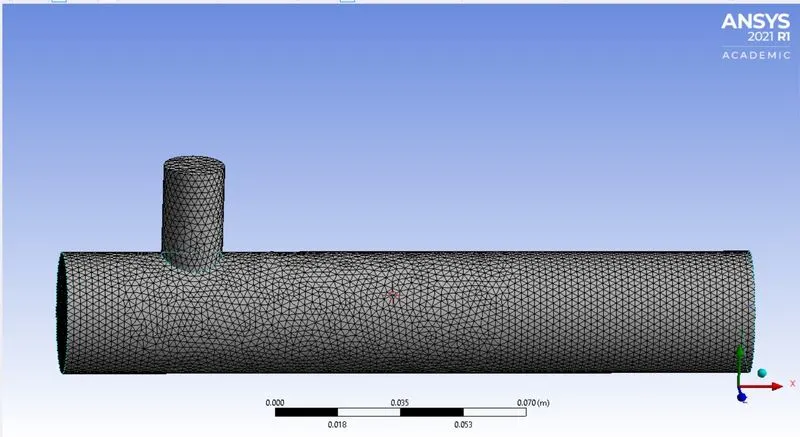
nodes count

RESULTS
Case: general short tee
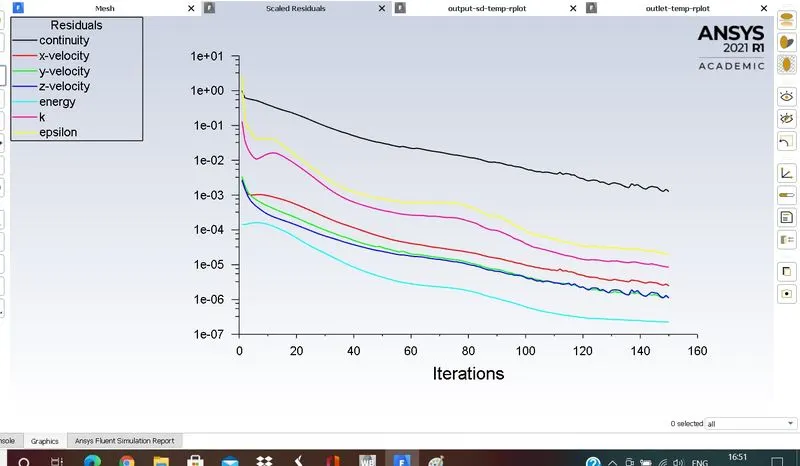
1. scaled residual
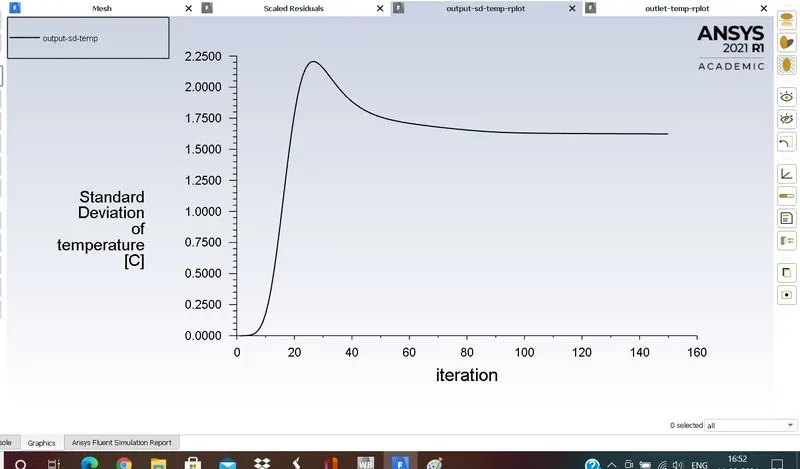
2.standard deviation of temp
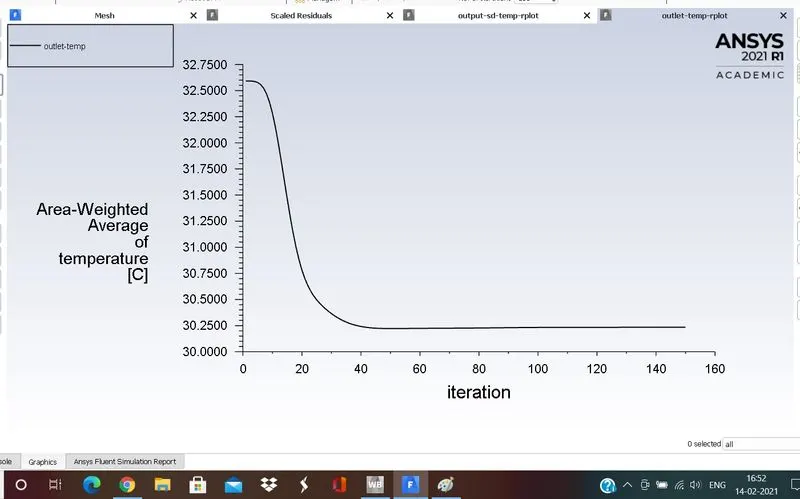
3. average temperature.
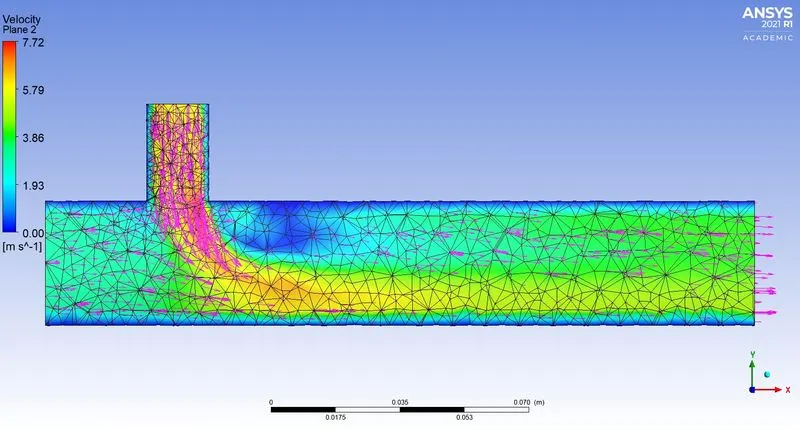
4. velocity contour
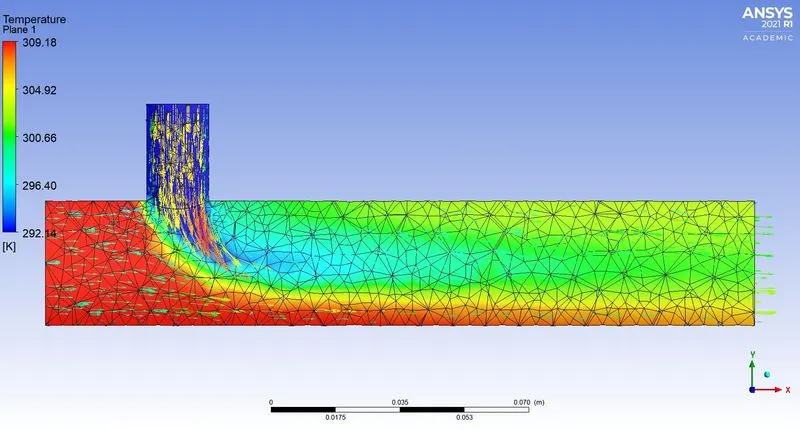
5. temperature contour.
case 1:- short tee setup
- space claim
the cad model is imported into space claim and extracted flow volume field from the model and suppressed for further process
- mesh
In the mesh section applying boundary name. generating mesh in element quality mesh with element size 0.002 m
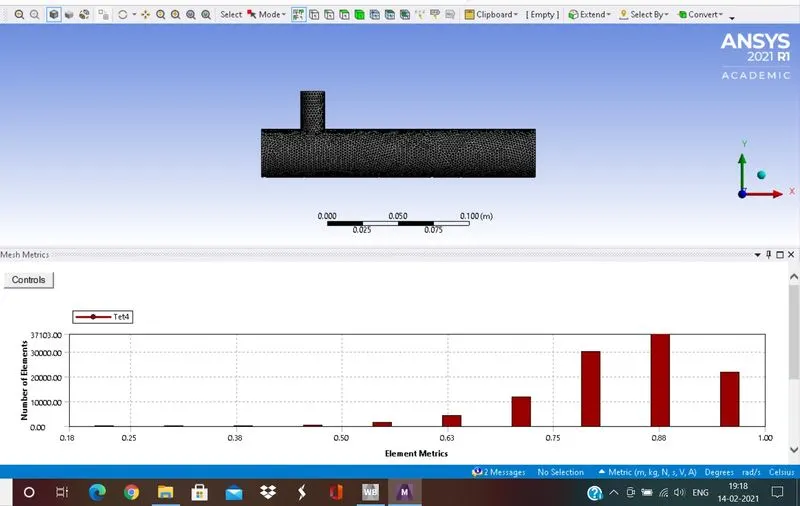
nodes count

- setup
Applying boundary condition, to both inlet and outlet named as
- Inlet y
- Inlet x
- Outlet x
- Wall
The boundary condition for momentum ratio 2
- Inlet y
Velocity 6 m/s and temperature 19°C
- Inlet X
Velocity 3 m/s and temperature 36°C
- Outlet
Assigning pressure gauge pressure 0 ( atmospheric pressure )
- Wall
Acting as wall left as default
RESULTS
Case: momentum ratio 2 short tee
1. scaled residual
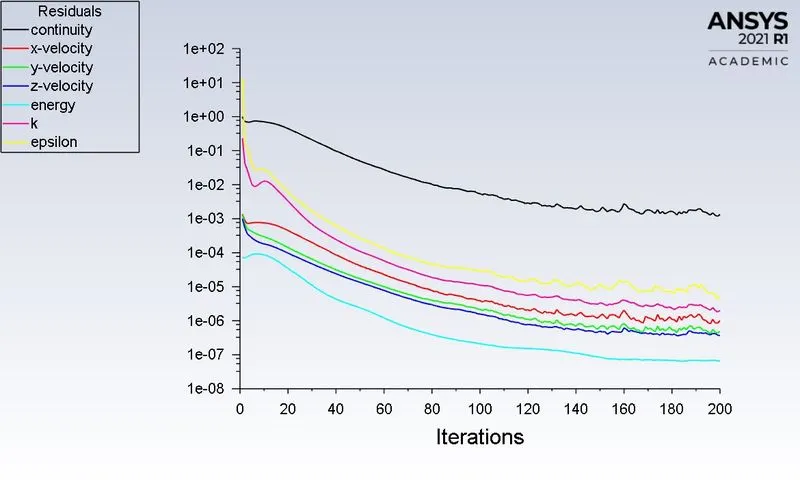
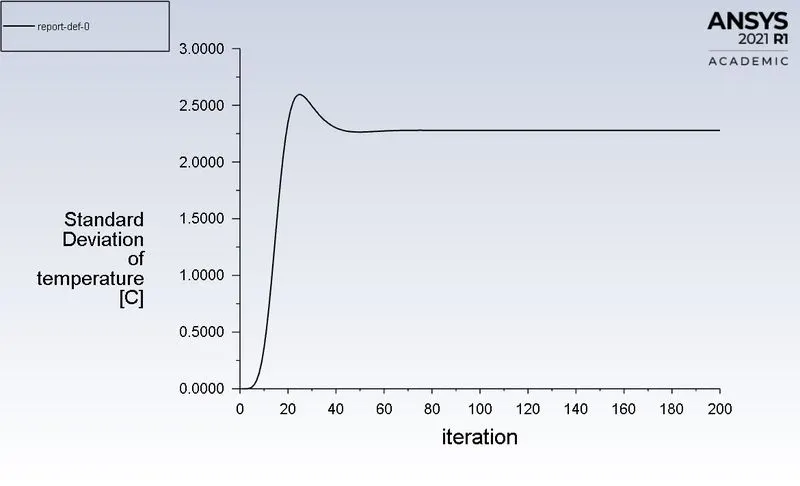
2.standard deviation of temp
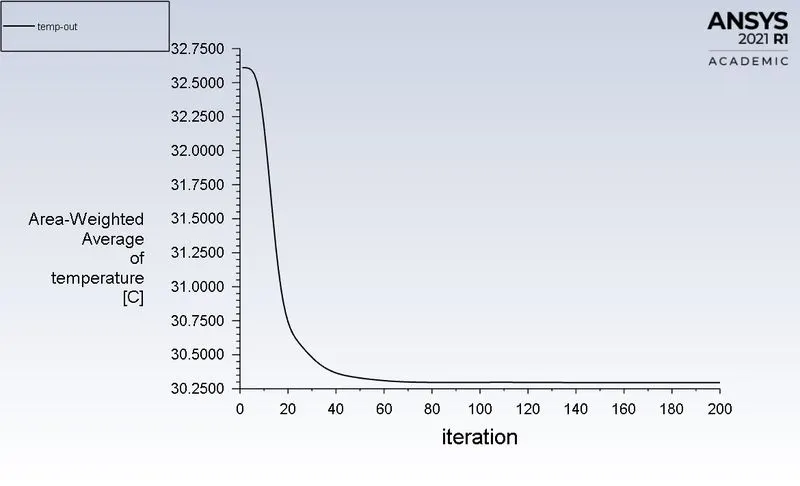
3. average temperature.
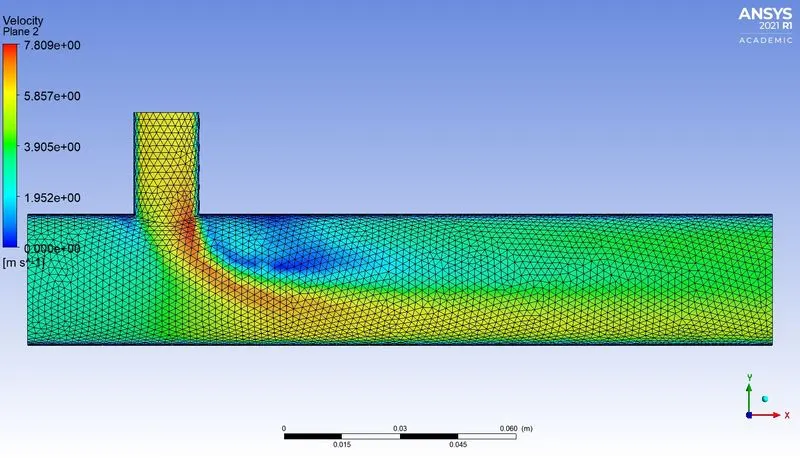
4. velocity contour
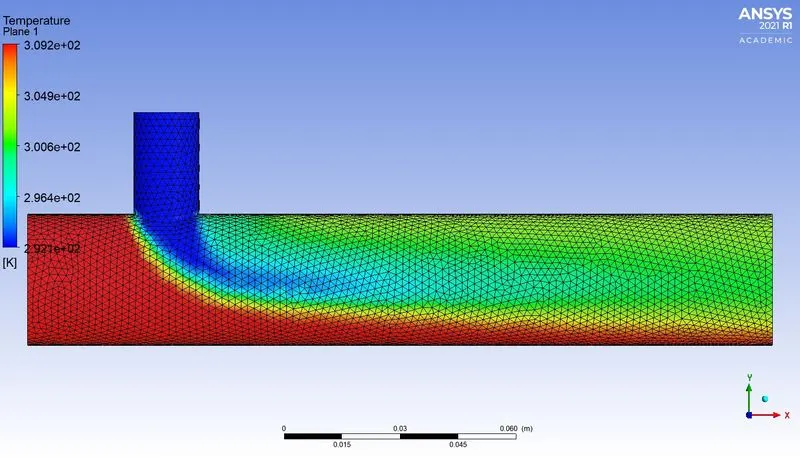
5. temperature contour.
case2 :
The boundary condition for momentum ratio 4
- Inlet y
Velocity 12 m/s and temperature 19°C
- Inlet X
Velocity 3 m/s and temperature 36°C
- Outlet
Assigning pressure gauge pressure 0 ( atmospheric pressure )
- Wall
Acting as wall left as default
RESULTS
Case: momentum ratio 4 short tee
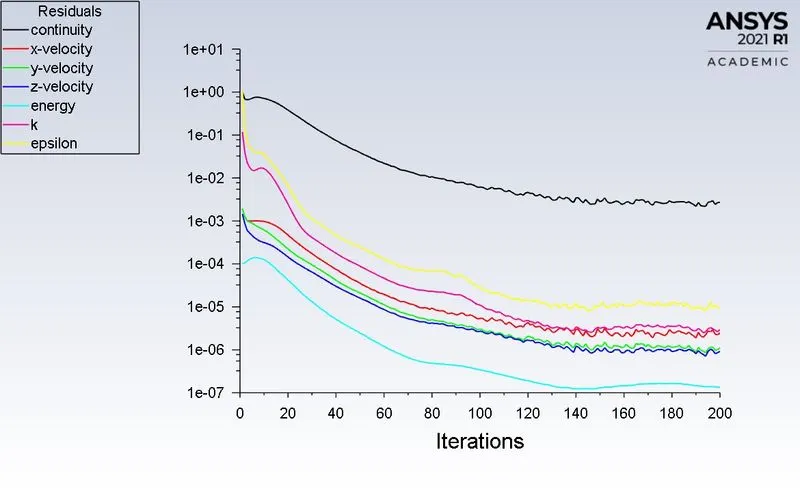
1. scaled residual
2.standard deviation of temp
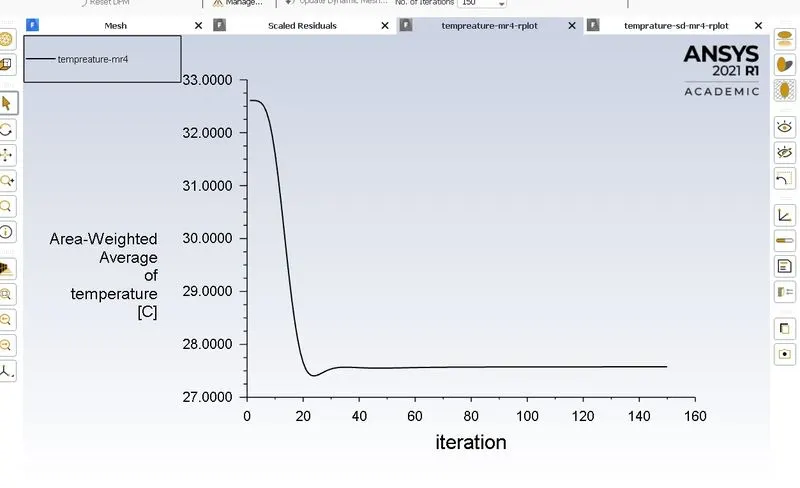
3. average temperature.
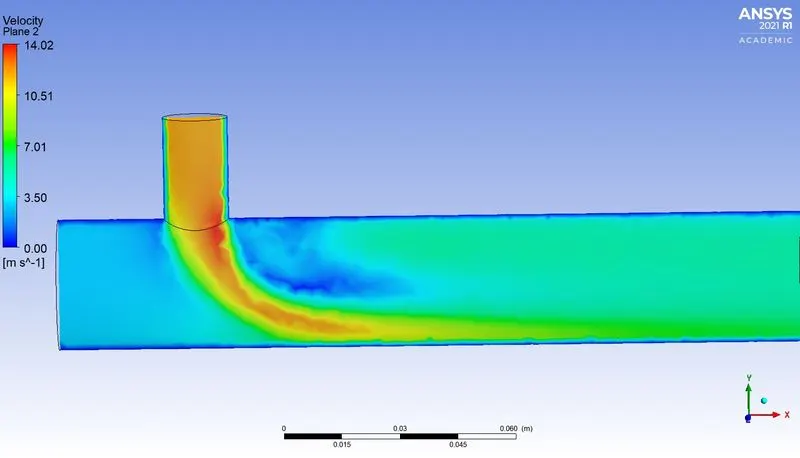
4. velocity contour
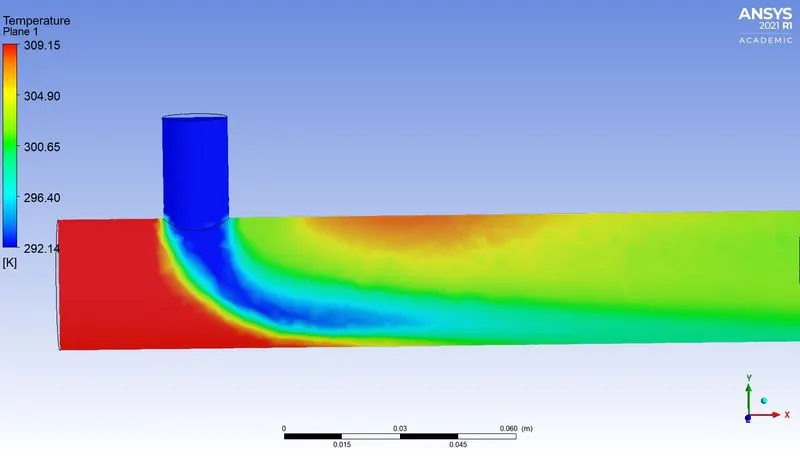
5. temperature contour.
case 2:- LONG TEE setup
- space claim
the cad model is imported into space claim and extracted flow volume field from the model and suppressed for further process
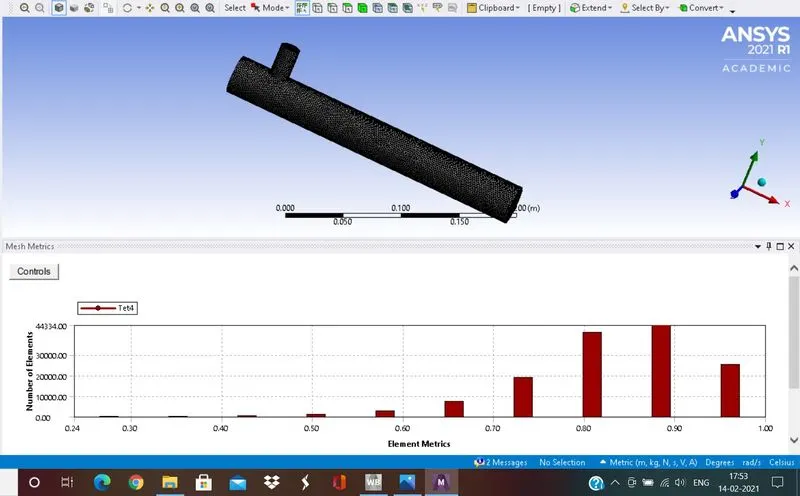
- mesh
In the mesh section applying boundary name. generating mesh in element quality mesh with element size 0.002 m

- setup
Applying boundary condition , to both inlet and outlet named as
Inlet y
- Inlet x
- Outlet x
- Wall
The boundary condition for momentum ratio 2
- Inlet y
Velocity 6 m/s and temperature 19°C
- Inlet X
Velocity 3 m/s and temperature 36°C
- Outlet
Assigning pressure gauge pressure 0 ( atmospheric pressure )
- Wall
Acting as wall left as default
RESULTS
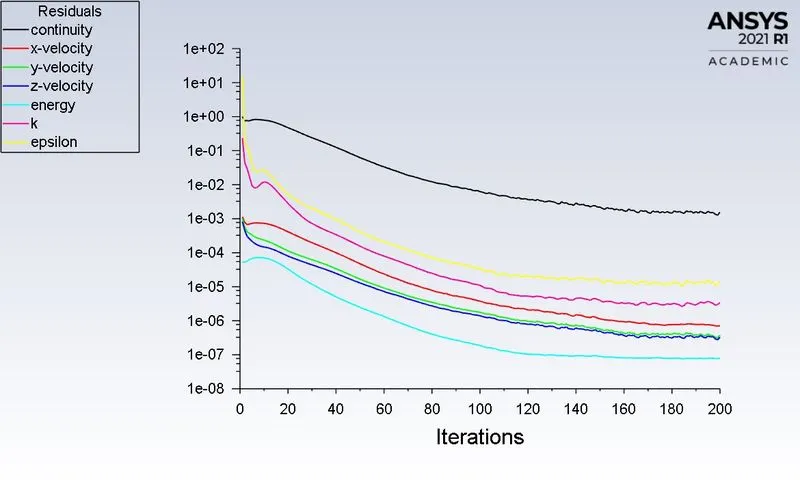
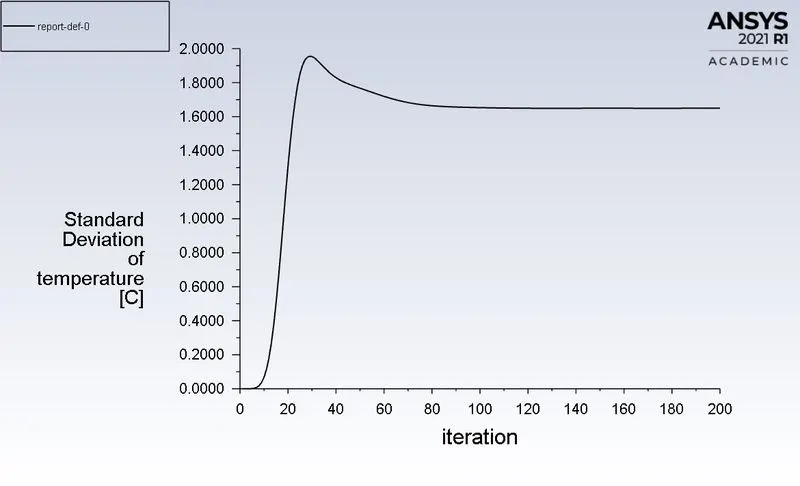
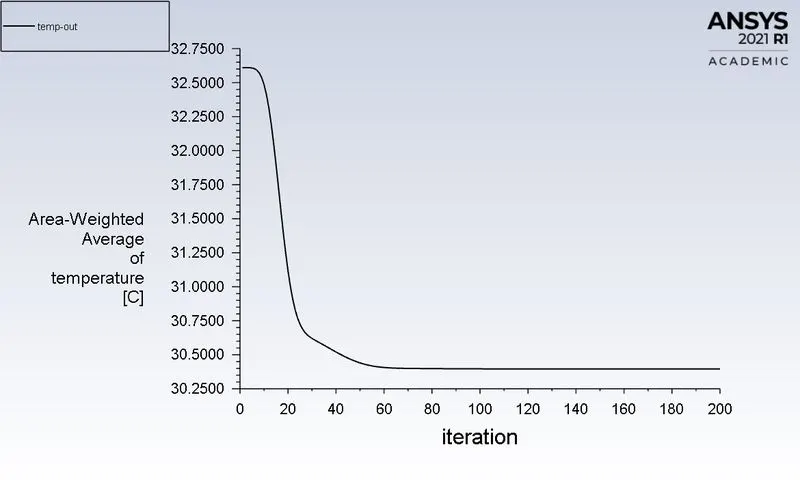
Case: momentum ratio 2 long tee
1. scaled residual
2.standard deviation of temp
3. average temperature.
4. velocity contour
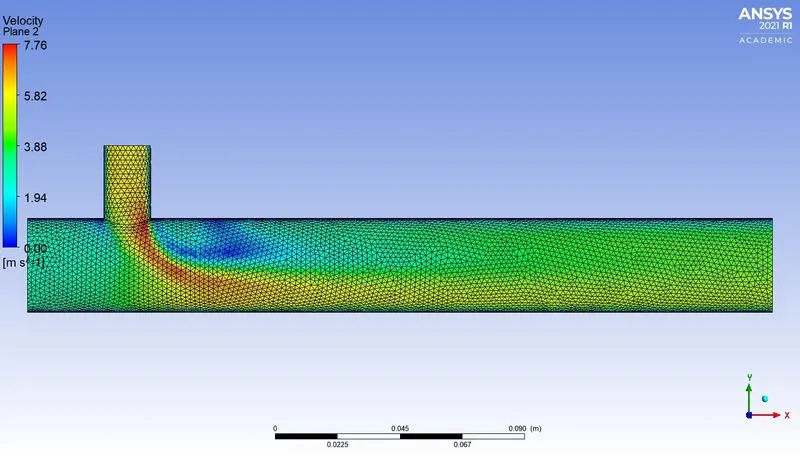
5. temperature contour.
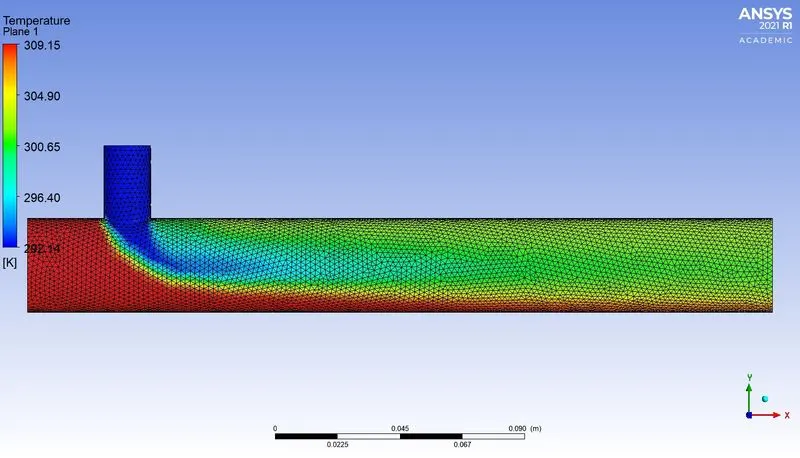
Case: momentum ratio 4 long tee
The boundary condition for momentum ratio 4
- Inlet y
Velocity 12 m/s and temperature 19°C
- Inlet X
Velocity 3 m/s and temperature 36°C
- Outlet
Assigning pressure gauge pressure 0 ( atmospheric pressure )
- Wall
Acting as wall left as default
RESULTS
Case: momentum ratio 4 long tee
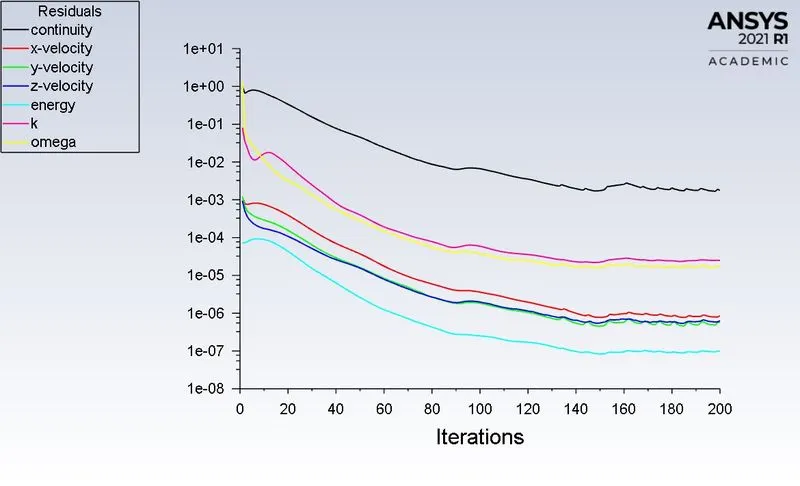
1. scaled residual
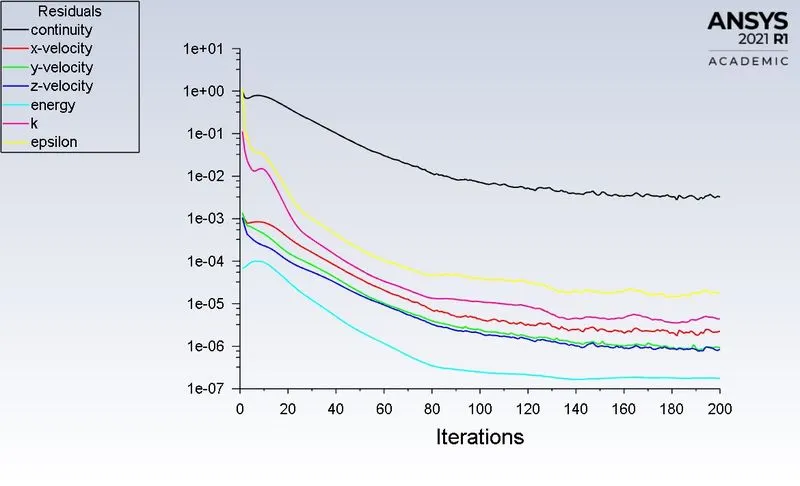
2.standard deviation of temp
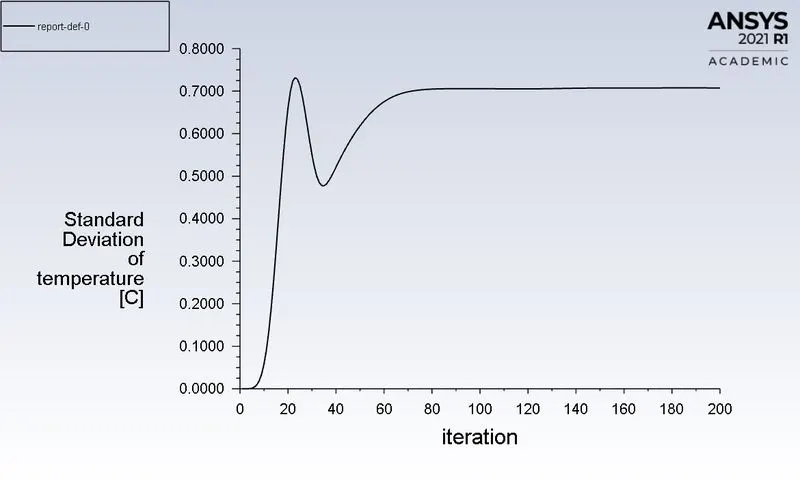
3. average temperature.
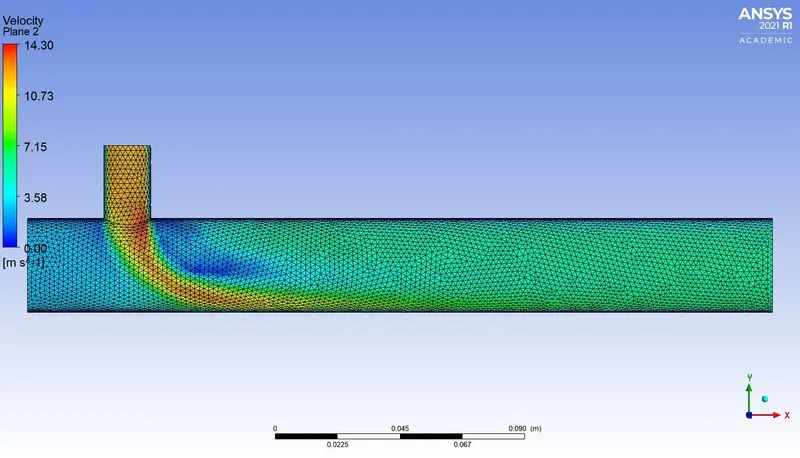
4. velocity contour
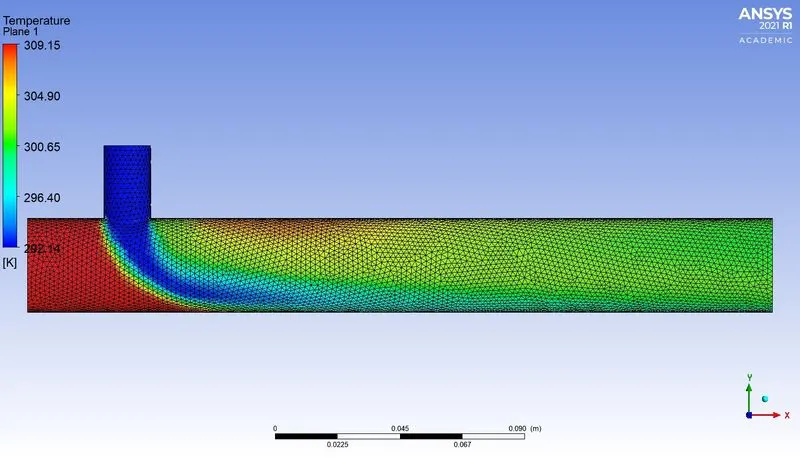
5. temperature contour.
case:- K-omega solving method setup
- space claim
the cad model is imported into space claim and extracted flow volume field from the model and suppressed for further process
- mesh
In the mesh section applying boundary name. generating mesh in element quality mesh with default element size
- setup
Applying boundary condition, to both inlet and outlet named as
- Inlet y
- Inlet x
- Outlet x
- Wall
The boundary condition for momentum ratio 2
- Inlet y
Velocity 6 m/s and temperature 19°C
- Inlet X
Velocity 3 m/s and temperature 36°C
- Outlet
Assigning pressure gauge pressure 0 ( atmospheric pressure )
- Wall
Acting as wall left as default
RESULTS
Case: K-omega solving method setup
1. scaled residual
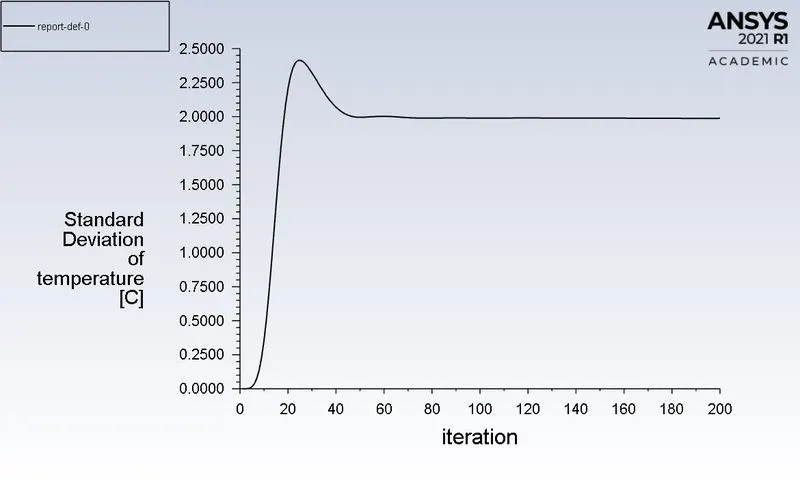
2.standard deviation of temp
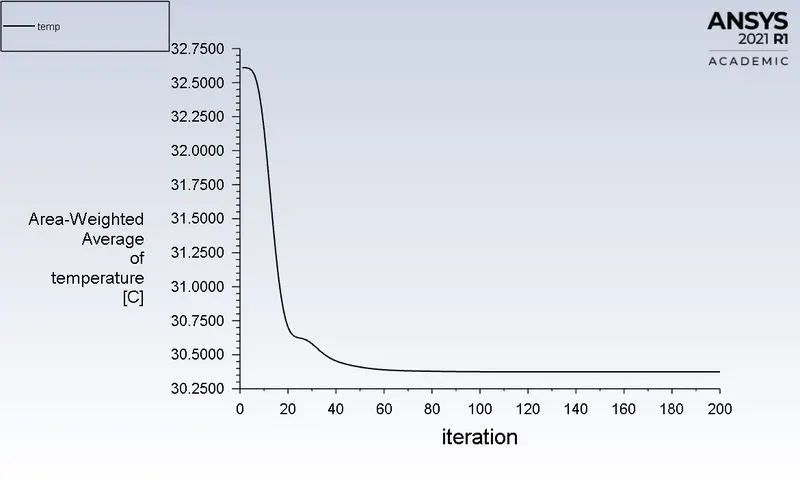
3. average temperature.
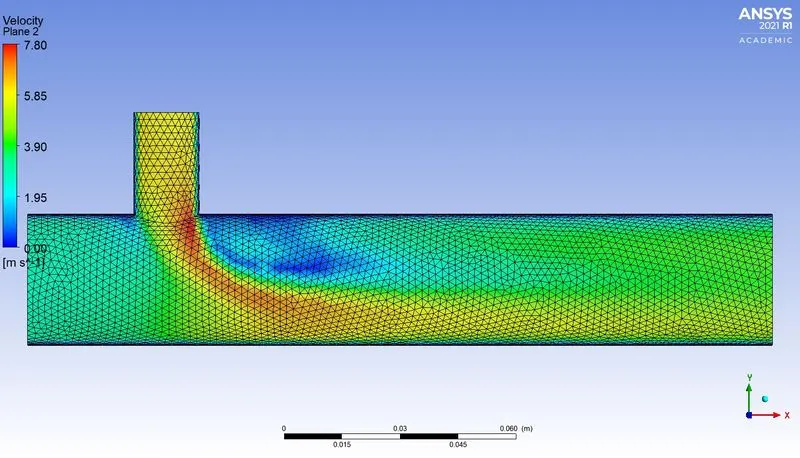
4. velocity contour
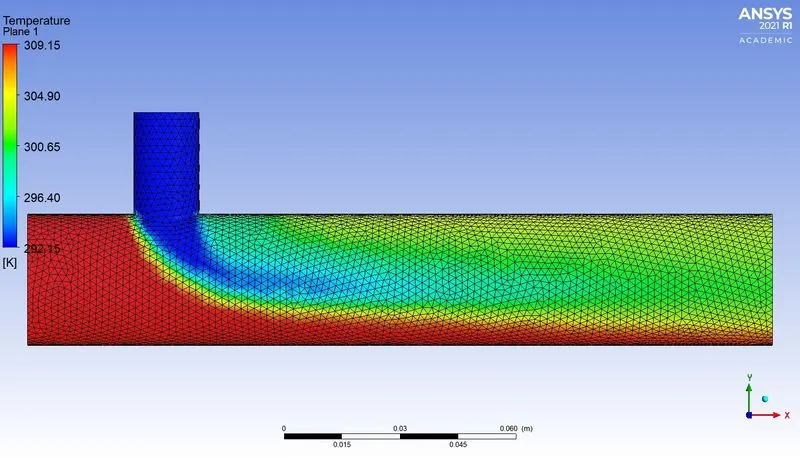
5. temperature contour.
- Observation :
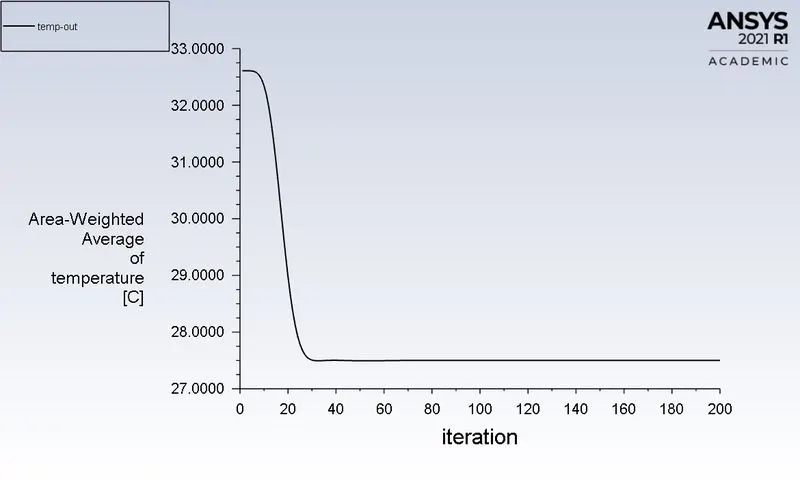
1. In Short Tee with momentum ratio 2 the outlet temperature is constantly dropping stabilize near to 30.25deg c in and with momentum ratio 4 outlet temperature near to 27.33 deg c
2. In Short Tee with momentum ratio 2 the outlet temperature is constantly dropping and roughly stabilize near to 30.28 deg c in and with momentum ratio 4 outlet temperature near to 27.50 deg c and slightly rises
3. compare to momentum ratio 2 and 4, momentum ratio 4 shows the cold air rapidly shows the effect to outer temperature and faster to achieve room temperature of 25-27 deg c
4.comparing short length tee and long tee mixing valve, short length tee will show the good effect of cooling effect, cause shorter length tee will give lower temperature with increased cool air velocity, But in long tee, the missing of cold and hot air mix well but the colder air temperature after short period absorbs heat, outlet temperature will rise slightly compared to short tee outlet temperature.
5. in the k-epsilon model the result is good away from the wall and the k-omega model shows good results near to the wall. as per the requirement of the solution and the problem, both models show different results.
6. in this problem the k-epsilon model help more to understand the outlet temprature
- conclusion :
1. rising the cold air velocity will help to lower the temperature and helps to achieve 25-27deg c temp.
2. short length tee gives a lower outlet temperature than a long tee
3. in long tee, cold and hot air mixture is good but outlet temperature will affect
4. k epsilon model shows the best result away from the wall
5. k omega model shows the result near to the wall