Week 1- Mixing Tee
Objective:
To simulate the flow of air with different temperatures through mixing tee and understand the effect of length of pipe and momentum ratio of velocity for mixing of air by using two different types of pipe i.e. short pipe and long pipe.
Theory:
Mixing Tees utilizes a specifically engineered internal geometry to efficiently mix two fluid streams into one combined stream. Mixing tees are widely used in the petrochemical, HVAC industry etc. in which two fluid streams with different physical and/or chemical properties mix together.
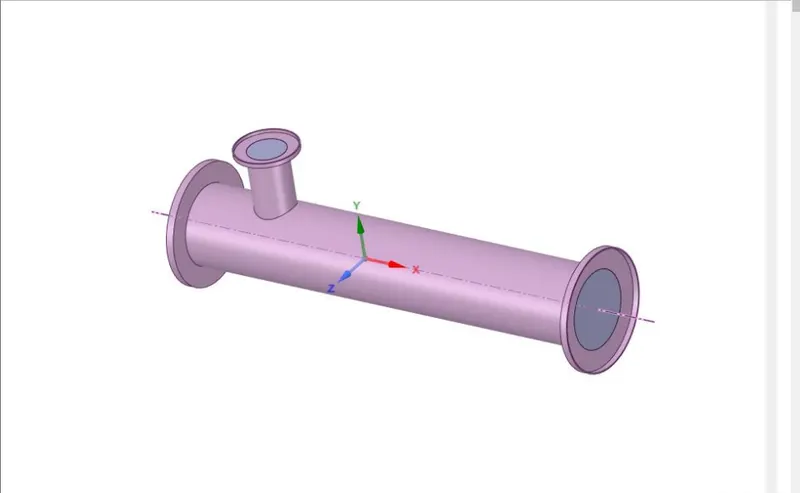
This is a basic geometry to be imported into Ansys workbench and from this geometry, we redefine and get required entities, which means removing unwanted surfaces and edges and finally we have the required volume to be solved CFD
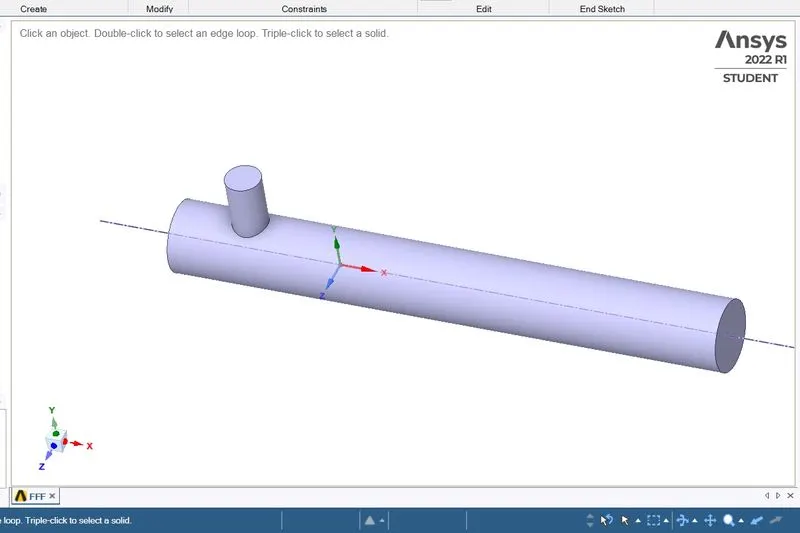
This is a final volume that we are going to solve
It is set up as steady-state simulations to compare the mixing effectiveness when the hot inlet temperature is 36 C & the Cold inlet is 19 C.
Set up condition:
1. Take the geometry file and import into the Ansys workbench and edit it through Spaceclime and get the required volume.
2. Mesh the geometry until the quality parameters reach out
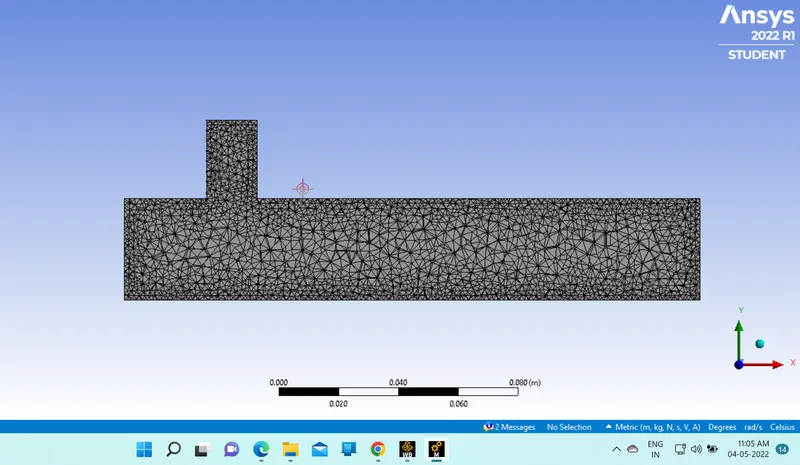
3. After the mesh go to the set up for initializing the condition like boundary condition, initial conditions, material properties
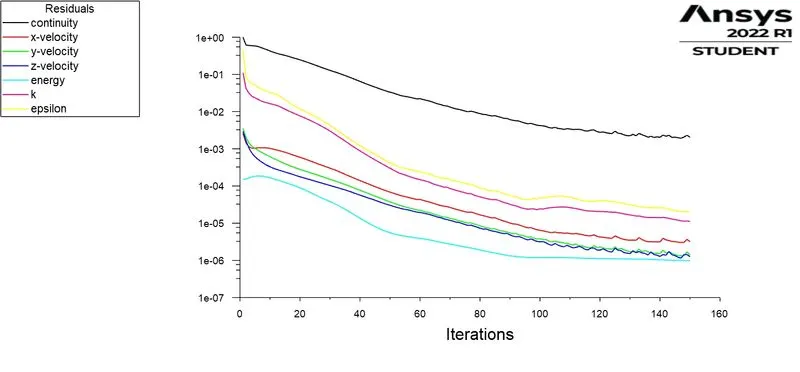
and run the calculations until the equations are converged
4. And post-process the simulations and check the results and compare which are suitable for better experiments.
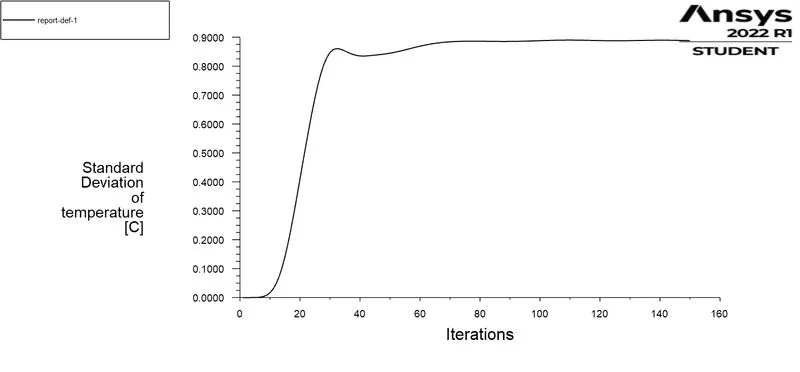
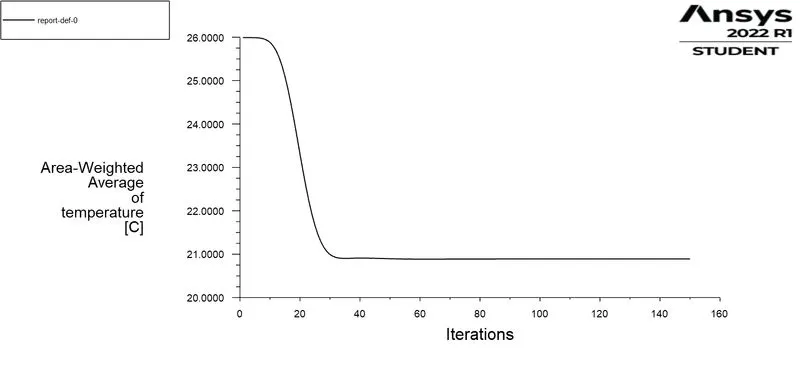
1. Case 1
Short mixing tee with a hot inlet velocity of 3m/s.
Momentum ratios of 2 and 4.
Meshing information:
106544 cells, 1 cell zone ...
106544 tetrahedral cells, zone id: 2
220181 faces, 5 face zones ...
205995 triangular interior faces, zone id: 1
489 triangular velocity-inlet faces, zone id: 5
123 triangular velocity-inlet faces, zone id: 6
481 triangular pressure-outlet faces, zone id: 7
13093 triangular wall faces, zone id: 8
21441 nodes, 1 node zone ...
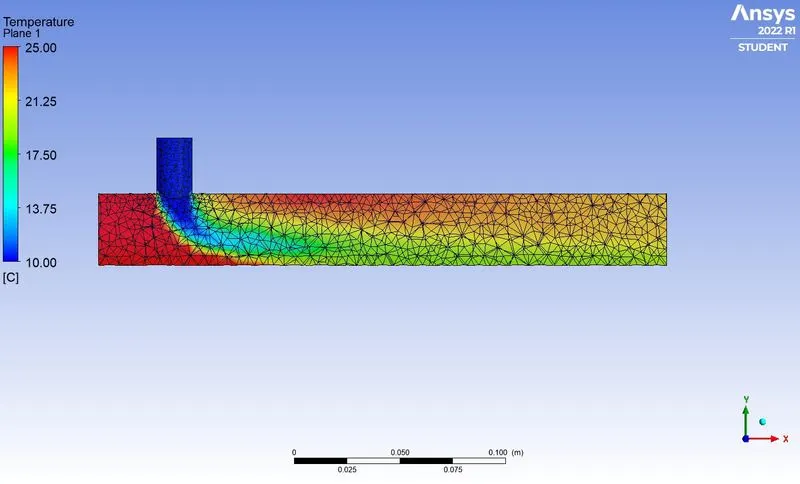
Graphical representations after the simulation is done according to the classical procedure of Ansys Fluent
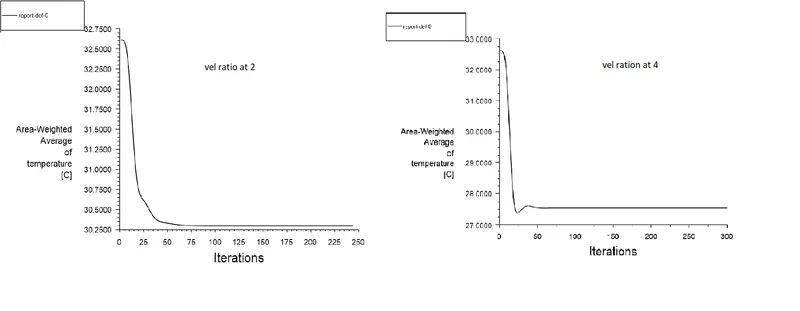
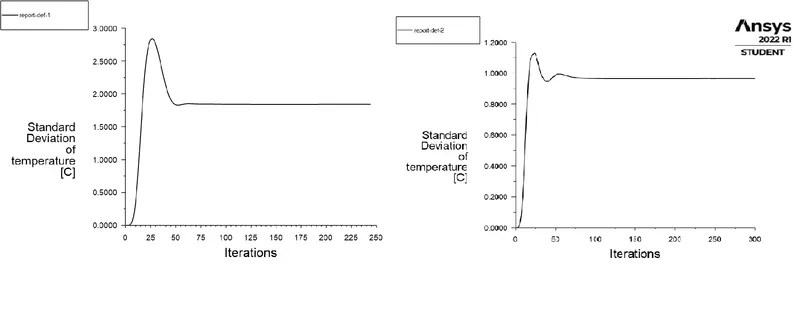
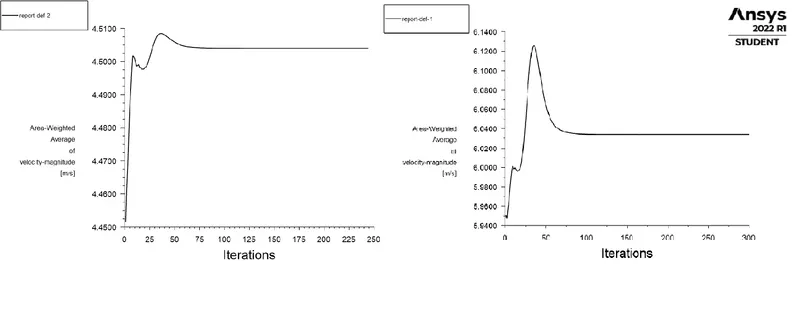
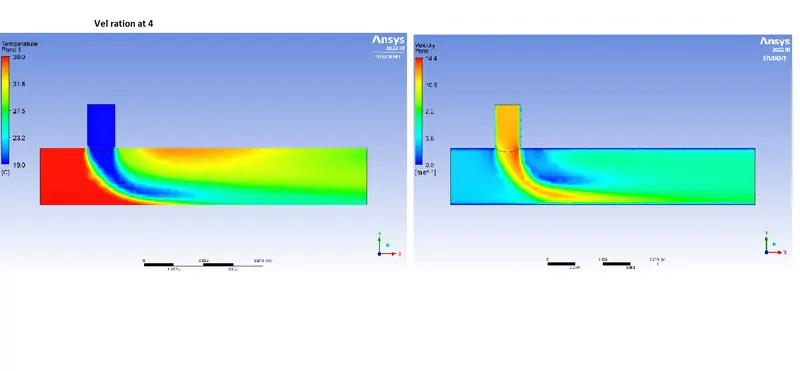
Velocity and temperature contours at Momentum ration 2
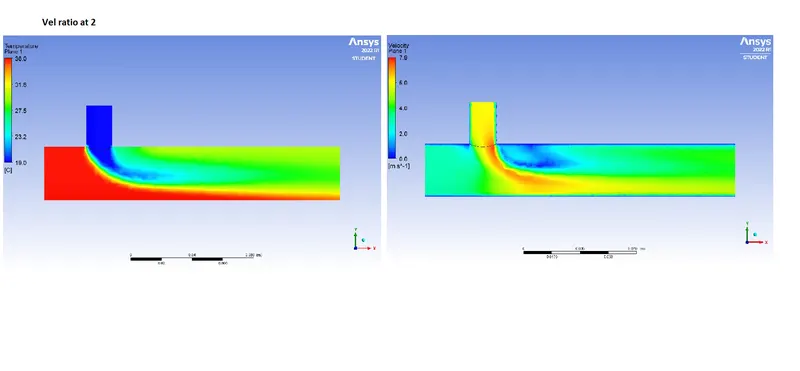
Velocity and temperature contours at Momentum ration 4
Observations:
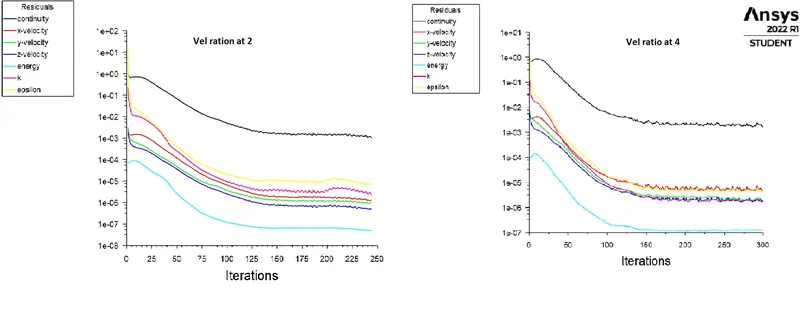
In this case, momentum ratios are different and geometry length is short. After 180 iterations the solutions are mostly converged for vel ratio 2 and for vel ratio 4, solutions are converged about 200-250 iterations.
2. Case 2
Long mixing tee with a hot inlet velocity of 3m/s.
Momentum ratio of 2, 4.
Meshing details
141195 cells, 1 cell zone ...
141195 tetrahedral cells, zone id: 2
291920 faces, 5 face zones ...
272860 triangular interior faces, zone id: 1
489 triangular velocity-inlet faces, zone id: 5
137 triangular velocity-inlet faces, zone id: 6
485 triangular pressure-outlet faces, zone id: 7
17949 triangular wall faces, zone id: 8
28470 nodes, 1 node zone ...
Graphical representations after the simulation is done according to the classical procedure of Ansys Fluent
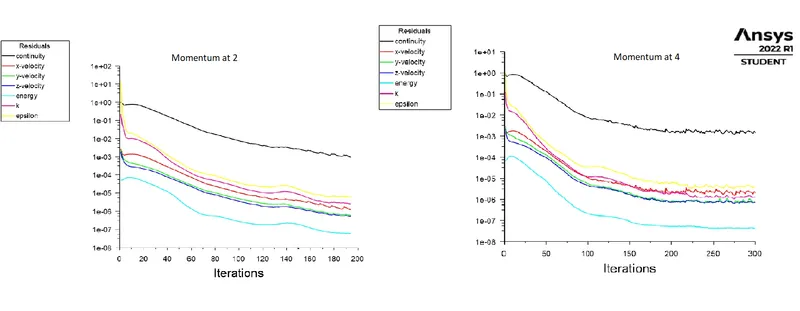
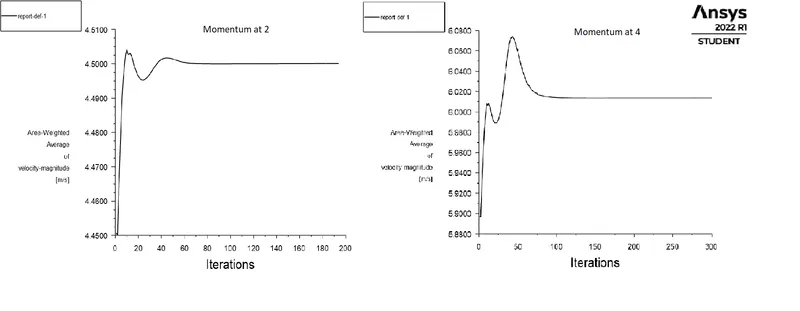
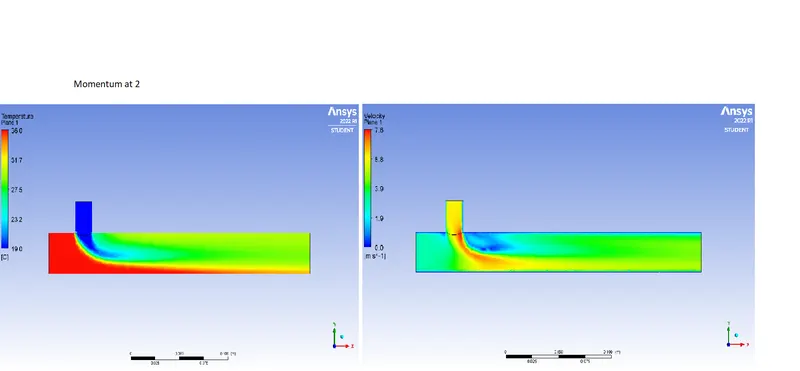
Velocity and temperature contours at Momentum ration 2
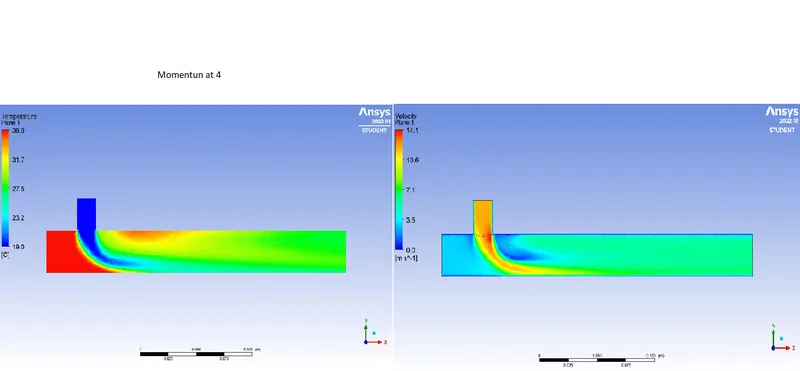
Velocity and temperature contours at Momentum ration 4
Observations:
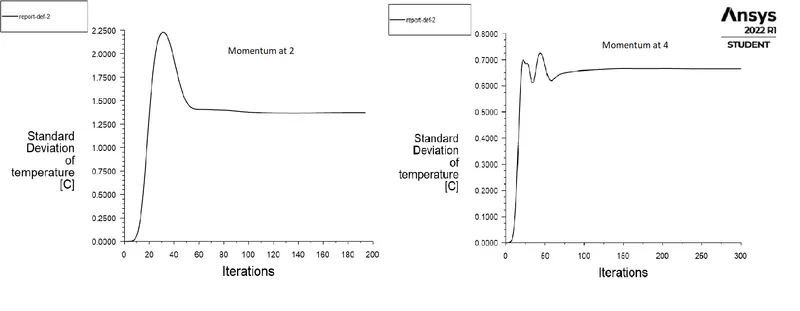
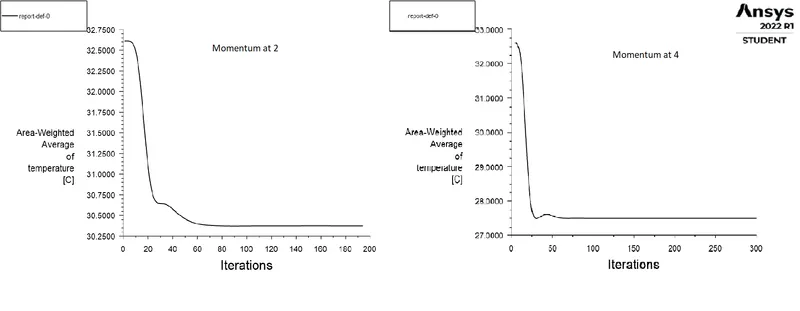
In this case, momentum ratios are different and geometry length is long. After 200 iterations the solutions are mostly converged for vel ratio 2 and for vel ratio 4, solutions are converged about 200-250 iterations.
comparisons:
| Case | Geometry type | Cell counts | Average outlet temp in degrees |
No of iterations |
| Mom ratio at 2 | short | 106544 | 30.3 | 180 |
| Mom ratio at 4 | short | 106544 | 27.6 | 200-250 |
| Mom ratio at 2 | Long | 141195 | 30.35 | 200 |
| Mom ratio at 4 | Long | 141195 | 27.6 | 200-250 |
impressions:
1. The temperature at the outlet falls down significantly due to the high velocity of cold air from the inlet because of the turbulent mixing of hot and cold air at the tee joint
2. Mixing of hot and cold air at the outlet is not proper in short length case when compared to long length case, so Long Tee joint is suitable for this kind of operations
3. Therefore, we may recommend using the long tee and high-velocity inlet for application. This is because we have a low standard
deviation in the case of a long tee compared to the short tee for both momentum ratios.