Week 1:- Introduction to BiW and Fixtures Challenge
BIW(BODY IN WHITE):
- Body In White[BIW] Refers to the weldness ofsheetmetal components which from the vehicles structure to which teh other components will bwe married.(E.g)-Engine,Chasssis,Exterior & Interior trim.
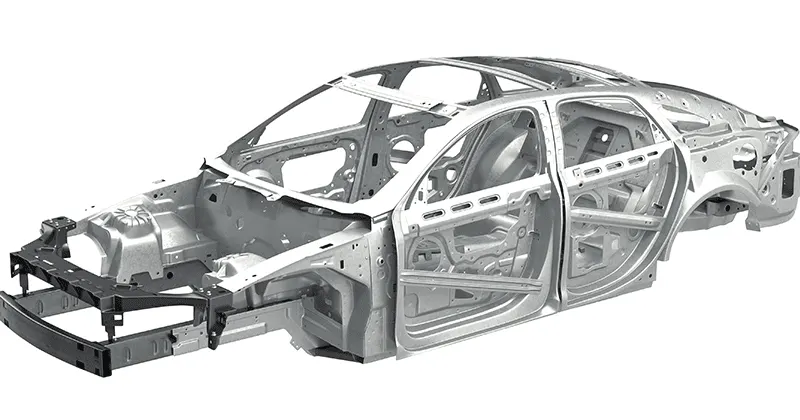
- BIW refers to stage of automotive manufacturing in which the car body sheett metal includes door,hood,deck lies has been assembled or designed .but before components charging,motor and trim windshield,seat,upholstery,electronics have been added.
- The stage in Automobile manufacturing in which acr body sheet metal components are been assembled by welding and by other joining process.
Car BIW Parts:
1.Body side
- Body side outer(RH,LH)
- Body side inner(RH,LH)
2.Under body
- Front End under frame{Engine compartment}
- Main floor
- Rear End under frameRear compartment}
3.Closur
- Font door
- Rear door
- Hood
- Deck lid
4.Roof
- Roof Inner
- Roof Outer
5.Fender
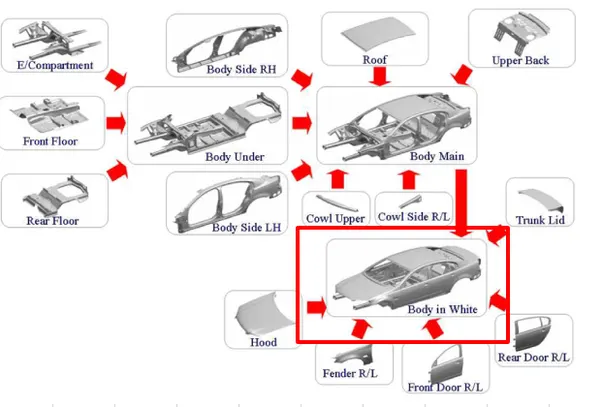
BODY SIDE-desfines the outer body of the car which is one complete frame big frame called as body side which consists of A pillar, sill, B pillar, if c pillar etc. pnly frame with out any parts attached.
UNDER BODY- the floor of the car body is divided in to three sections. like engine compartmen,passenger compartment,& storage compartment.
CLOSURES. as the name itself answers which covers the open area like 4 doors,for the passenger compartment,hood for engine compartment,& rear door for storage compartments which can be opened frequently when ever id required. called as closured which are movable components of te car.
ROOF- the top most area of the car called as roof which protects from the wing ,heat etc, which is jpined with the body side,A pillar B pillar, C pillar Etc. the roof itself has the two saparete pats hile designing & are joined with the hemming operation both inner & outer pabel the inner panel as additional strength features like reinforcemets & outer panel is the stlyng surface.
FENDER- Fender has a single panelwhich is fixed in the top of the wheel which acts as the covering the engine compartment. & this is the part comes under the pedestrain safety criteria also, the main purpose of the fenderis to not to allow thw small partcles stones while the vehicle is in moving condition. & acts as stlying of engine compartment. which is joined with all the body side parts.
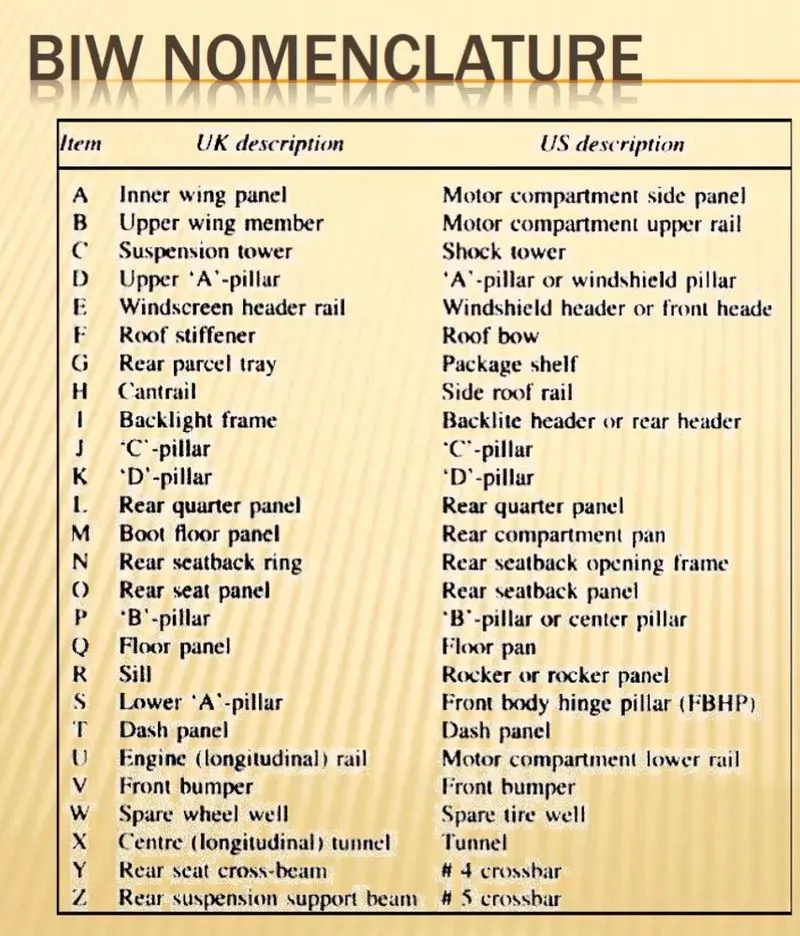
BIW Nomencluture
The biw nomenclature means the way of pronouncing the body prts of the car in different countries as in their standards, like.
US STANDARDS & EUROPEAN STANDARDS.
alomost all the automotive components as the same part stlying but the differance in the way of naming 7 pronouncing.as explained in the chart .The differance of namesare attched below the nomenclature is nothing but the part we name it. as per the own standards countries.
BIW FIXTURES
FIXTURES- A fixture is a device which holdss the work piece to be processes (welded) .by using 3-2- principle, the fixture is nothing but when a saperate parts are seems to be joined we arrange that parts totheir respective position to get a desired shape from all the parts .& that arrange may be some height or an angled . so as an human being can not be holded that prticular shape for a long time so that a machine or a equipment holding device called as fixture it holdes the parts in the arrange shpe for a certain time tillthe parts are welded to geather to obtain the desired shape. as shown in the picture.the fixture sholud have the capability to withstand the all the effect caused with the operation like when a welding operation is going on there will be lot of disturbing wiil be held like vibration,movements etc the fixtures should stable all the distorations created while the various operations.
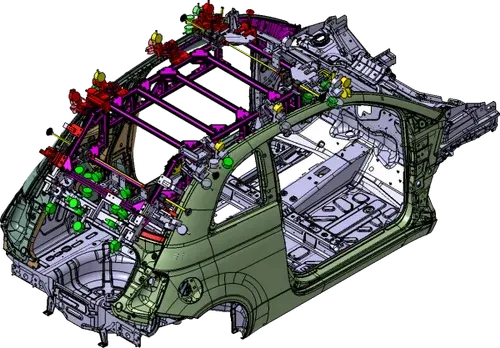
in general fixture are normally desiged to hold & support the various components (work pieces) to be welded .it is necessary to support them in a proper location which is capable of preventing distorations in the work piecs during welding .for this the locating elements need to be placed carefyully. clampin hsas to be light but firm. placement of clamping elements hasto be clear of the welding area the fixture hasto be quite stable & rigid to withstand the welding stresses.
THE TYPES OF FIXTURES.
- PRODUCTION FIXTURES
- PRE PRODUCTION OPERATION FIXTURES (PPO)
- CHECKING FIXTURES.
1.PRODUCTION FIXTURE-
Production fixture is used in mass production of the car bodies. this fixture used to hold the car body assemblies till the end part. used to fix the various parts. the fixtures used here hould have the capacity of good quality. it should have the good tolerances,rigidity, & also good in maintanance.after certain amount of time. the production fixture can be easily assembled & dis assembled through out the required time
2.PRE PRODUCTION OPERATION FIXTURES-
For initial batch production to study the feasibility.it is base fixture in production that is used to check the feasibility, inspection purpose to rectify the errors of the body . in this pre production stage there will be a lot of manual inspection willbe done so that there can be some distoration in b/w so that this type of fixtures should with stand & stable. in this stage the engineers & quality members will work on the biw body to inspect & to verify the errors issues i there on the body. this stage as larger time consumption process base fittures. for designing the production fxture. the fixtures which are designed should be less cost.
3.CHECKING FIXTURES-
For car panel geometric inspection purpose.
after completion of all the operations related to joining, than next cmes to this checking fixtures stage here with the help of gauges will be insected the designing ,stlying, assembling positions etc.checking fixture as same geo fixture except there no operation done like welding,gluing, orhemming. instead of that we use different in built gauges or external gauges to check various dimensions,gap,relative dimensions,tolerances these data is compared with data provided by designer or design team of that particular. the geometry of welded part also checked in thsi stage fixture to ensure part maintains the required dimension & geomentry.
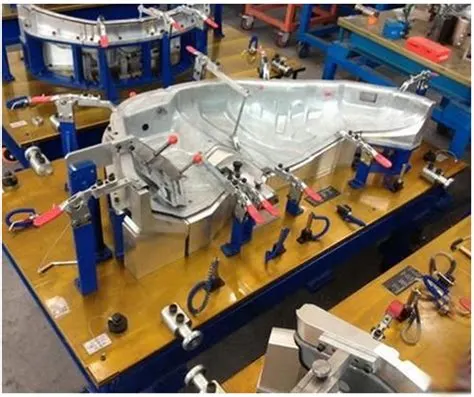
BASIC PRINCIPLE OF FIXTURE DESIGN
The main requirement of fixture design is to hold the work piece stable for a fixture design, the major portion of design time is spent deciding how to locate the work piece in the fixture.the work piece shoul not move & should not effects when various ioperation done on the work piece.
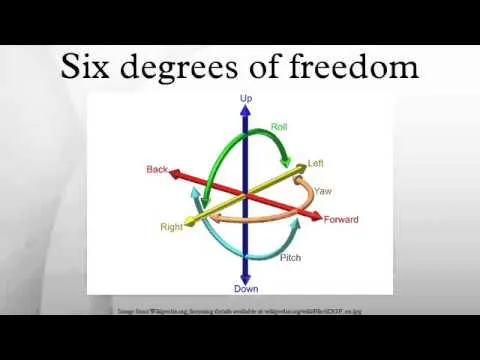
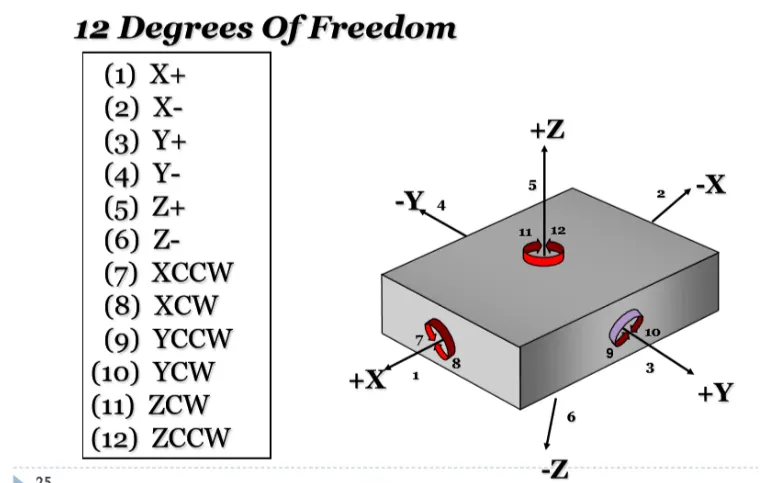
for any free body there ae total twelve degrees of freedom as below
6translational degree of freedom:+x,x+y,-y,+z-z.
& 6 rotational degrees of freedom.
-clock wise around x axis
-anticloockwise around x axs
-clock wise aound y axis
-anticlockwise around y axis
-clock wise around z axis
-anticlockwise around z axis.
the main motive of fixture design is to arrest the work piece all directions fixed it shoud not move even in rotational & in translational. motiveyou must fix the 12 degrees of freedom in order tolocate the work piece in the fixture .so 12 degrees of freedom of the work piece need to be fixed 7 thus we can achieve zero degree of freedom for the work piece. even when an external force applied on the work piece it should not loose its stability. in any situation.
BIW STATION
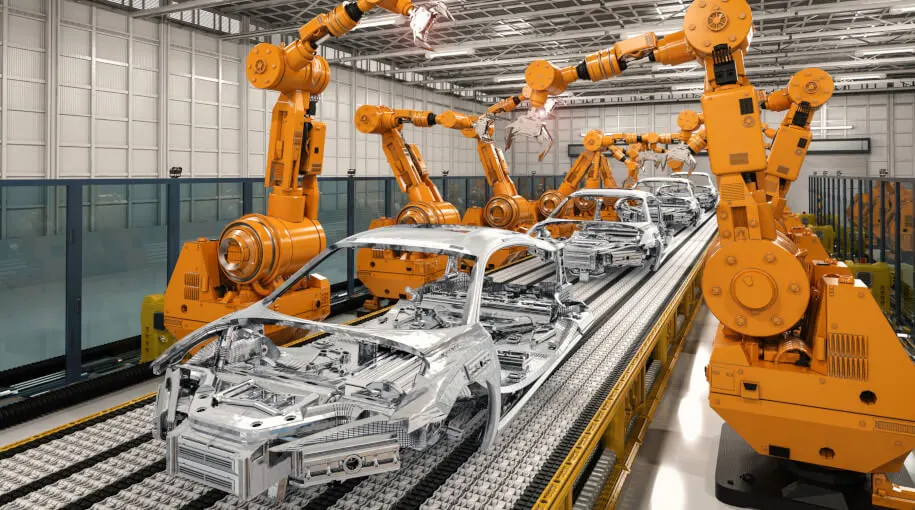
In this assembly one the different types of panels parts are joined togeather in each speciies zones. each particular parts were joined in saperates zones timelines to avoid difficulties while process to be familiar with the work process the wrk to be gone easily. every comodities has be diveded into stations. in BIW the zone are sub divided in to stations like tools grippers,stands, miscellanious & these are again sub divided.as shown in the picture. in auomotive industry almost all the operation will be done by the robots maximum process.
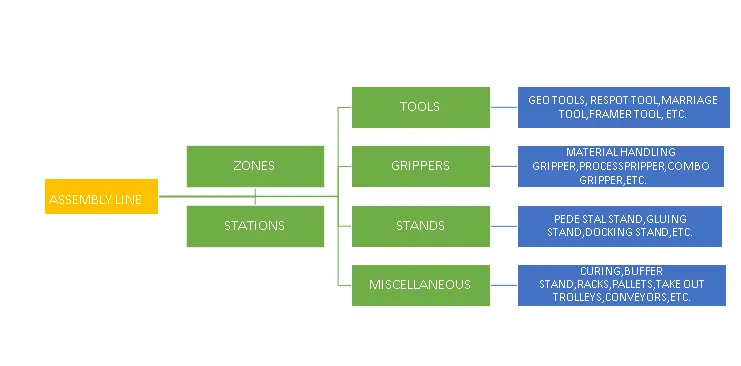
ASSEMBLY LINE
An assembly line is a process in which car panel/car body parts are joined as the semi finished assembly moves from one station to another station until the final product is produced.
In the process of joining in assembly line , panels are moved from one section to another sections.Those sections are called Station.
In BIW fixture designing we have various stations which are used to locate the panels so that joining processes can be done.
- TOOL STATION
- GRIPPER STATION
- STANDS STATION
- MISCELLANEOUS STATION
1.TOOL STATION:
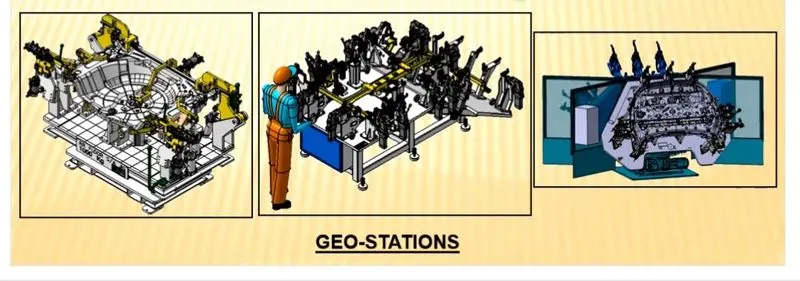
Geo station: geo tool is where a geometric of an assembly is defined in such a way that it should not deform its position when a clamping is opend & welding stresses.
In this station geometry of two parts are fixed. it can be either using welding or riveting . In this station precision and geomatry of the finished product is defined Locating pins have closer tolerence of 0/-0.15.
Suppose the hole dia of panel is 16mm then the pin dia minimum can be 15.85.
Diameter of locating pins should be lesser than the panel hole dia. So Tolrence in locating pin is given in negative value.
RE-SPOT STATION
Once product comes out of the Geo Station and there are left out spots where spot welding or riveting is to be done. then it is moved to another station , that station is called Re-spot station.
These left out spots may be the due to clamp plan, cycle time,robot reach ability or any other various reasons.
In this station pins ahve tolrence upto 0/-0.28.
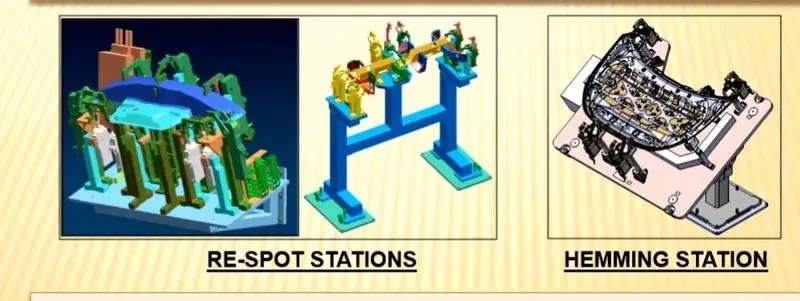
HEMMING STATION: A hemming station is a fixture in which the inner panel assembly & outer panel assembly are joined togeather. these are done by welding or hemming in case of closure panels.
Marraige Station
In this Station inner and outer panels are joined. In this station to avoid the imprssion on the outer panel(A class surface), copper strips are used in betweenn the weld tip and A-class surface.
CHECKING STATION
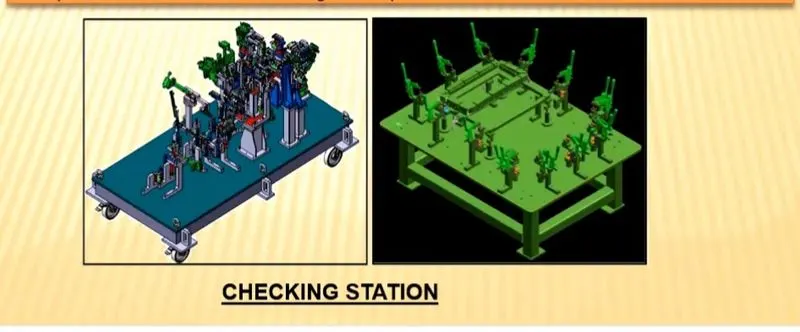
All Checking station area design for accuracy, repeatability, and reliableness with a powerful specialize in operator applied science. We tend to offers assembly and a half checking fixtures for plastic components, sheet components, vehicle frames and body sub-assemblies etc.
The fixtures offered by us are widely used by the clients to check the assembly of automotive seats like the positions of the mounting and locating holes. Moreover, it also assists in checking the orientation of the mounting legs of seat frames. We understand the market need and provide a superior variety of Checking Fixture which is largely supplied for various essential requirements. These unmatched products are well shaped and devised by expert professionals using high tech mechanism. We ensure quality assured products which are largely supplied at the best profitable market price range.
2.GRIPPER STATIONS:
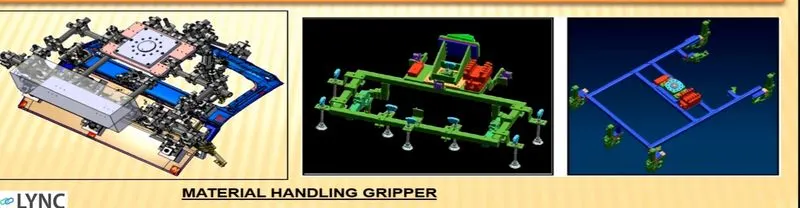
A gripper station is a device which hlds the car panel & is fixed to the manipulating end o robot or end effector ,.also known as the end of arm tooling)
PEDESTAL STAND:
In this station , Pedestal gun is mounted on a tool and panel is manipulated manually or by robot to weld the panels.
Pedestal station is generally a Re spot station.
Re spot station and Pedestal station, both perform same kind of operation . but to decide whether to go for pedestal or a re-spot station some parameters needs to consider like cycle time, floor space, no. of welds, clamp plan, or size of the panel.
BUFFER STAND:
This station is used to make the balance between the process.
Some stations carry out procees in lesser time as compared to their respective stations.In that case panels can be stored in one sation so that assembly line process remains smooth.
CURING STAND
In this Station product recieved after sealing application, is kept idle at ambient temperature, which allows sealent to get dry with better bonding between the panel.
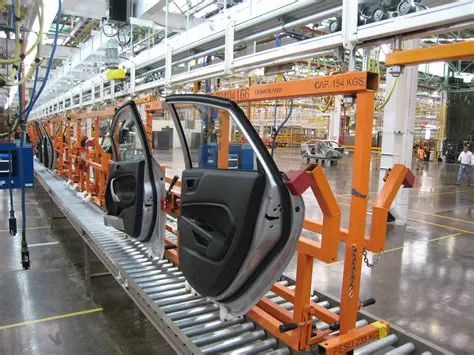
CONVEYORS
A conveyor system is a common piece of mechanical handling equipment that moves materials from one location to another. Conveyors are especially useful in applications involving the transport of heavy or bulky materials. Conveyor systems allow quick and efficient transport for a wide variety of materials, which make them very popular in the material handling and packaging industries. They also have popular consumer applications, as they are often found in supermarkets and airports, constituting the final leg of item/ bag delivery to customers. Many kinds of conveying systems are available and are used according to the various needs of different industries. There are chain conveyors (floor and overhead) as well. Chain conveyors consist of enclosed tracks, I-Beam, towline, power & free, and hand pushed
BASICS TERMINOLOGIES USED IN BIW FIXTURE
MYLAR :
MYLAR is one kind of block that touches the panel and holds or clamps the panel. Mylars are always designed in CAR LINE. Mylar is also called NC(Numerically Controlled)Block. Mylars are mounted on any block or plate with Shimming, So that height of mylar can be adjusted accordingly at the assembly level. For ‘A’ class surfaces Nylon mylars are used. So that surface can be saved from scratches.
Shimming can be 1 directional, 2 directional, or 3 directional as per the NC cut.
PIN:
Pins are used to locking the rotational movement of the panel. Generally there two types of Pins, one is Round Pin and another one is a Diamond pin. We use two and three-directional shimming for pins as per the angle of the pin w.r.t. the carline. In some cases, we use a collared pin, when the pin is supposed to support the panel as well. For this kind of pin, we provide 3 way shimming irrespective of pin angle to the carline.
BLADE :
The plate which connects Riser to the Clamp cylinder is named Blade. This plate plays an important role in building the unit. The plate can be of any shape. But we need to keep in mind that the plate should be as compact as possible.
L BLOCK :
A plate shaped as L is called an L block. This part is used as a connection between mylar and Blade. Generally, L blocks are used to provide shimming. It is not necessary that L blocks are only used for shimming, its uses changes as per the requirements, At some places, it is used just to connect one part to another. Similar to the L block one more block is used which is in the shape of T. So this block is called a T Block.
PIN BLOCK :
Pin Block is also called Pin Retainer. This block holds the pin and restricts the rotational motion of the pin. Pin Block can be either manufactured one or Standard.
RISER :
The part which is mounted on the base plate and holds a clamp or pin cylinder on it, is called Riser. Riser can be Standard Part or manufactured part, it varies from project to project. A riser can be a Single part or welded part. Standard risers also have various shapes and sizes.
WELDMENT :
Weldment is the assembly of two or more parts that are joined by welding. To make a weldment it is the thumb rule to have a 5 mm overlay on each other plates so that space can be provided for welding. A weldment can be of any size and any number of plates.