Week 1 Challenge
1.
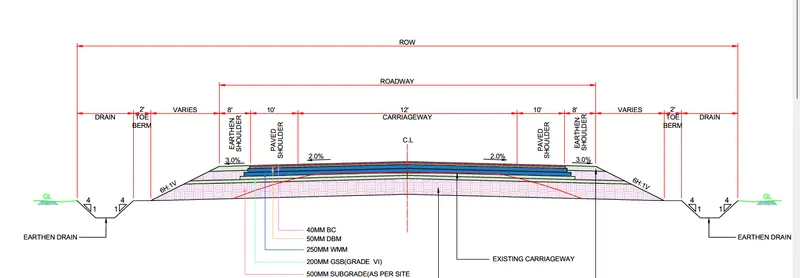
- NH-965G_Baramati-Indapur
- At various locations, various design speed depending upon curves. But majorly designed for 80 & 100Kmph
- Plain Terrain
- Four-Lane Project with 7m travel lane width.
- 5%
- Radius varies depending upon the design speed, majorly radius varies between 500-5000m.
2.



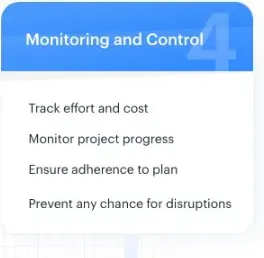
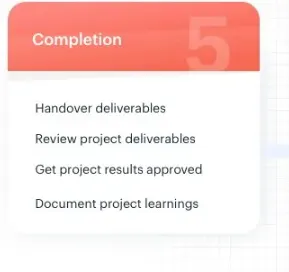
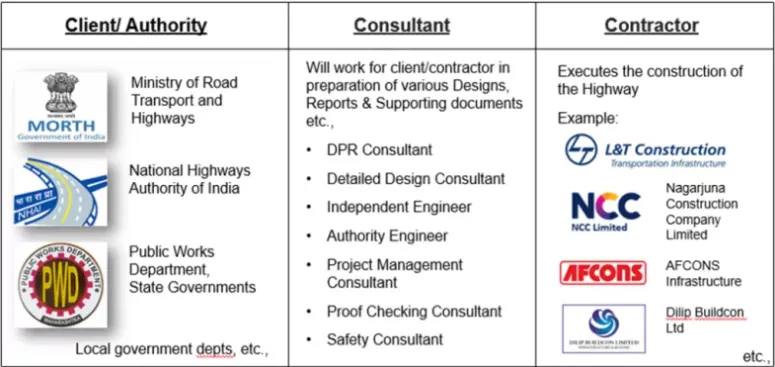
Experts involved in a roadway projects are
3.
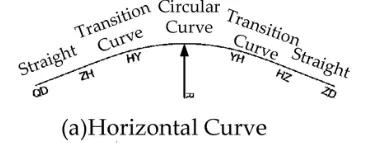
The center line layout or position on the ground surface is called Alignment. There
are two types of Alignments horizontal Alignment and Vertical Alignment.
Horizontal Alignment includes the straight path, curves or deviation in horizontal
direction.
Vertical Alignment includes vertical curves and gradient on the ground.
But it is difficult to change the alignment once the road is constructed, so care has
to be taken in finalizing the alignment.
Basic Requirement of an Ideal Alignment
1. It should have a shortest path.
2. The alignment must be easy to construct and maintain and also it should be
easy for vehicle operation.
3. It should be safe in case of designing the horizontal and vertical curves.
4. The alignment should be selected in such a way that it is economical during
construction.
Vertical Alignment
•Specifies the elevations of points along a roadway.
•Elevations are determined by need to provide proper drainage and driver safety.
•A primary concern of vertical alignment is to establish a transition between two
roadway grades by means of a vertical curve.
Types of Vertical Alignment
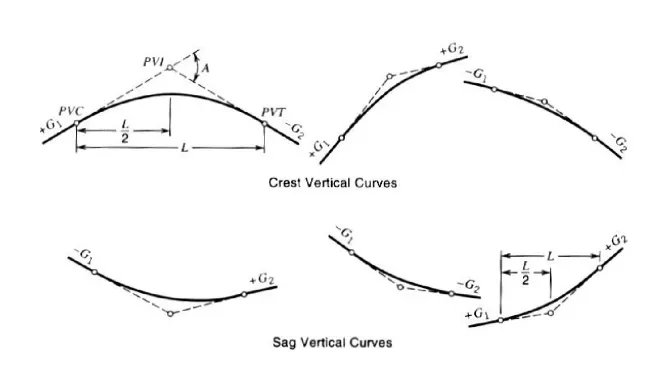
•Two types of Vertical Curves:
1. Crest Vertical Curves
2. Sag Vertical Curves.
Vertical Curve Properties
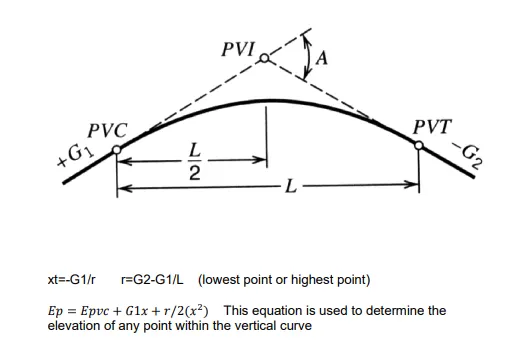
•The initial road grade is called G1 the final road grade is called G2and is typically
given in percent.
•PVC is the point of the vertical curve.
•The point of intersection of the initial tangent grade and the final tangent grade
is the point of vertical intersection (PVI).
•The point of intersection of the vertical curve with the final tangent grade is
called the PVT .
•The length (L) of the vertical curve is the horizontal distance between PVC and
PVT.
•Equal Tangent, if PVC to PVI is L/2.
Vertical Curve Design
•Vertical Curves maximum grades depend on:
–Design Speed
–Type of Terrain
–Length of Grade
•Grades also affect:
–fuel consumption
–speed
–accidents (speed differential)
4.
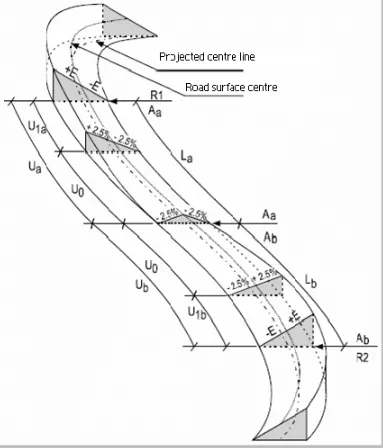
When a vehicle travels on a curved path, it experiences an outward force known as centrifugal force. To mitigate the effects of centrifugal force, super elevation is provided. It aids in maintaining a constant speed while remaining comfortable on a curve path.
Purpose Of Providing Superelevation:
1. To counteract the effect of centrifugal force acting on the moving vehicle to pull out the same outward on a horizontal curve.
2. To help a fast-moving vehicle to negotiate a curved path without overturning and skidding.
3. To ensure safety to the fast-moving traffic.
4. To prevent damaging effects on the road surface due to improper distribution of load.
Design Of Superelevation:
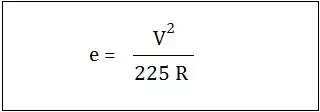
To design superelevation for the mixed type of traffic is a complex problem. The Indian Roads Congress has recommended providing superelevation to counteract the centrifugal forcefully due to 75% of the design speed and limiting the maximum superelevation to 1 in 15 or 7%.
V = 75%(V) = 0.75 V
We know that, e+f = V²/127R
e + 0 = (0.75 V)²/127R
Step 2:
If the calculated value ‘e’ is less than 7% or 0.07, then provide the obtained value. If it exceeds 0.07 then provide the limiting value of superelevation emax = 0.07 and proceed to the next step.
Check the coefficient of friction developed for the maximum value of e = 0.07 at the full value of design speed,
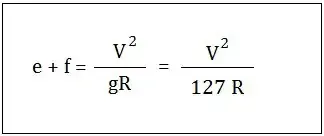
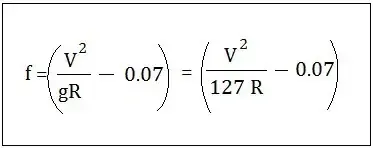
If the value of ‘f’ thus calculated is less than 0.15, the superelevation of 0.07 is safe for the design speed. If not, calculate the restricted speed as given in step 4.
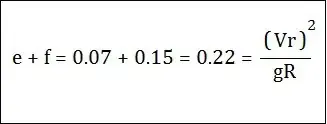
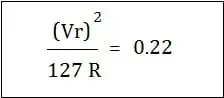
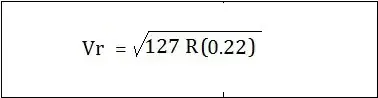
If the calculated value of ‘f’ exceeds 0.15, then the speed of the vehicles is restricted to the value Vr m/sec or Vr km/hr as calculated after allowing the limiting values of e and f in the following equation: