Week 1 Challenge
Aim:-
Transport makes up 20 percent of the World’s energy use; in OECD countries this has exceeded 30 percent. The International Energy Agency (IEA) estimates that the global energy consumption will increase by 2.1 percent annually, a growth rate that is higher than for any other sector. The high energy consumption means that transportation accounts for nearly 30 percent of CO2 emission in OECD countries and is also one of the main sources of regional and local air pollution. In this study, we research on energy chain analysis. In addition to energy chain analysis, we will discuss some viewpoints on overall efficiency of electric vehicle as well as do comparison between electric vehicle and IC engines.
Introduction:-
In this study, the most important possibilities for increasing energy efficiency of electric vehicles would be considered, regarding energy savings accumulated in the vehicle itself and increasing the range of performances of the cars with given initial resources. Some of the possibilities that should provide such a progress nowadays are:
-
Using energy under braking
-
Using waste heat energy
-
Additional supply by solar cells
-
Improved mechanical energy transmission system
-
Improved cars shell design
-
Increasing of efficiency of power convertors
-
Special design of electric engines
-
Using supercapacitors, fuel cells and new generation batteries
-
Route selection on the criterion of minimum consumption in real time
-
Parameter monitoring inside and outside of the vehicle and computerized system control with optimization of energy consumption
Electric vehicles are a win-win. In comparison to vehicles with an internal combustion engine, EVs offer drivers financial savings in fuel costs and they do less damage to the environment because they produce fewer tailpipe emissions. If you are considering investing in an EV, there are a couple things about them that make driving and owning them unique, efficient and different.
Concept:-
Today, the problem of energy becomes so important that an entire industry is turning towards clean, renewable energy (solar energy, wind energy, etc.). Prototypes of hybrid vehicles with the announcement of mass production scheduled for the near future have become everyday occurrence. In addition, many cars are designed to use only electricity as motive power, which reduces emissions to zero.
Photo cells in a glass roof generate electricity, even at lower intensity of solar radiation; this current operates using a fan in a vehicle. In this way the vehicle interior has a constant supply of fresh air and pleasant temperatures (up to 50% lower), although the motor vehicle is turned off so that fuel economy is evident. The solar roof is only the beginning, while the development of city cars is going toward solar vehicles prototype.
A solar vehicle is an electric vehicle powered completely or significantly by direct solar energy. Usually, photovoltaic (PV) cells contained in solar panels convert the sun's energy directly into electric energy. The term "solar vehicle" usually implies that solar energy is used to power all or part of a vehicle's propulsion. Solar power may be also used to provide power for communications or controls or other auxiliary functions.
Another concept that has been developing over the years is a kinetic energy recovery system, often known simply as KERS. KERS is an automotive system for recovering a moving vehicle's kinetic energy under braking. The recovered energy is stored in a reservoir (for example a flyeheel or a batterry or supercapacitor) for later use under acceleration. Electrical systems use a motor-generator incorporated in the car’s transmission which converts mechanical energy into electrical energy and vice versa. Once the energy has been harnessed, it is stored in a battery and released when required. The mechanical KERS system utilizes flywheel technology to recover and store a moving vehicle’s kinetic energy which is otherwise wasted when the vehicle is decelerated. Compared to the alternative of electrical-battery systems, the mechanical KERS system provides a significantly more compact, efficient, lighter and environmentally-friendly solution. There is one other option available - hydraulic KERS, where braking energy is used to accumulate hydraulic pressure which is then sent to the wheels when required.
Development of new components, improved connections and electric engine control algorithms allow increase of efficiency of power convertors, therefore electric engine itself, to the maximum theoretical limits. New generation improvements of electric engine system has an impact on price, however investment quickly pays off during operating.
Major efforts are invested in the development of high energy density batteries with minimum ESR. Also, current research show that fuel cells have reached needed performances for commercial use in electric vehicles. Supercapacitors that provide high power density increase the acceleration of vehicle as well as collecting all the energy from instant braking, therefore improvements of the characteristics of power supply are made.
Modern electric vehicles have full information system that has constant modifications and does monitoring of inside and outside parameters in order to achieve maximum energy savings. Except for smart sensors, it is highly important to process GPS signals and route selection on the criterion of minimum energy consumption.
By combining these technologies, concepts and their improvements, we are slowly going towards energy-efficient vehicles which will greatly simplify our lives in the future.
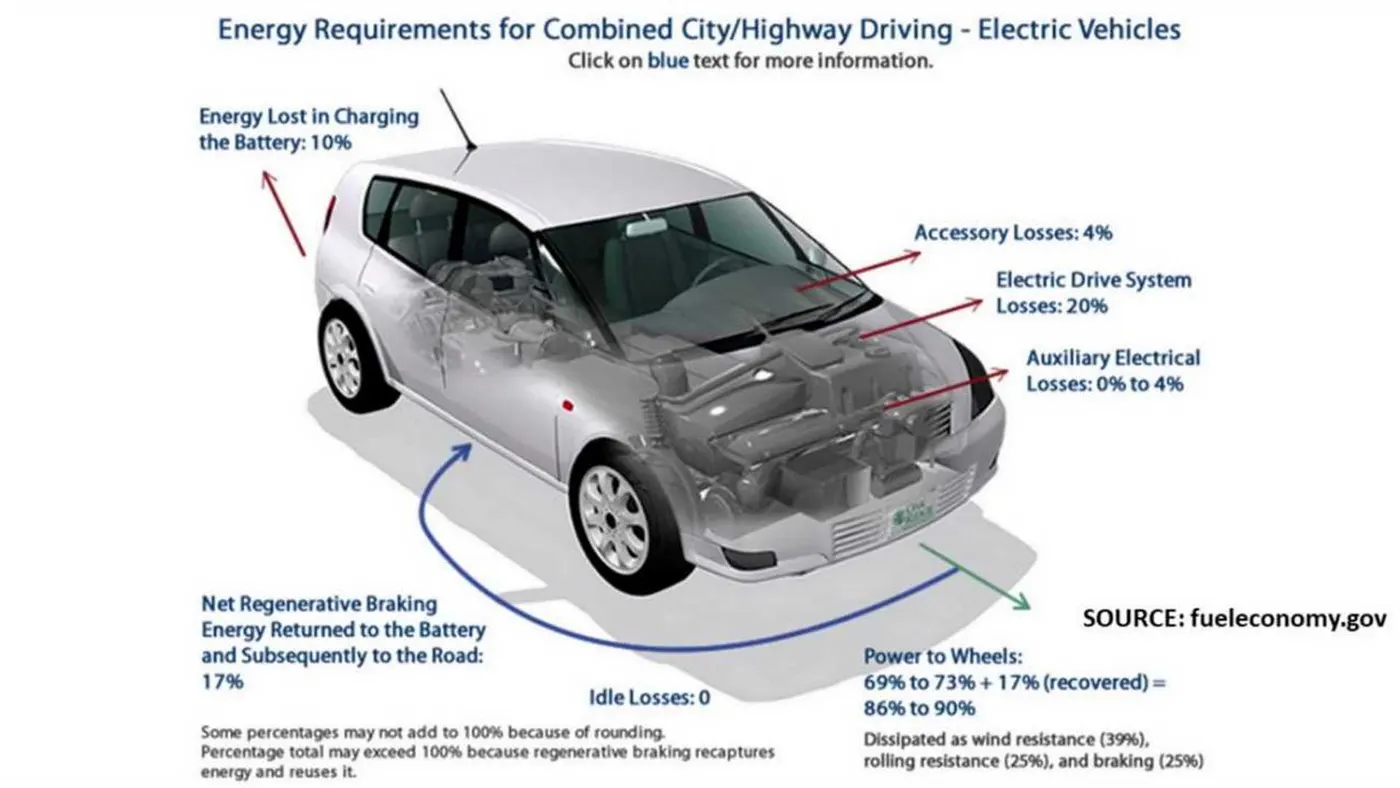
Differences Between Electric Vehicles and Internal Combustion Engines:-
Benefit from Less Maintenance Costs
EVs are actually a win-win-win! In addition to the environmental benefits and savings in fuel costs, owners can expect savings in maintenance costs in comparison to vehicles with internal combustion engines. First, there’s the money savings in usual brake maintenance. EVs have regenerative braking systems, which recycles the energy used to slow or stop the vehicle into energy that recharges the vehicle’s battery, and that results in less wear and tear on the vehicle’s brakes, so they actually last LONGER than regular brakes.
Oh, and oil changes and other engine maintenance, forget about it! Yeah, EV owners never spend the $20-30 on an oil change every 3,000-5,000 miles (which is an average of four oil changes a year for the average driver). Electric vehicles don’t have an internal combustion engine, which is what requires routine maintenance like oil changes, fluid fill ups, and or the maintenance that results from malfunctioning engine parts like spark plugs and belts.
New Driving Techniques
There are slight differences in the actual driving experience of an EV versus a vehicle with an internal combustion engine. The driving differences aren’t significantly different, but drivers tend to actually drive more energy efficiently when they have an EV.
First, the Chevy Bolt EV and many other EVs have a one-pedal driving system. According too GreenCarReports.com, “One-pedal driving combines conventional acceleration, using the right-hand pedal, with a much higher degree of deceleration than in a conventional car.That means that when a driver lifts off the pedal, the car slows down more quickly than an internal-combustion-powered car would.”
Second, many EVs and PHEVs are available with tech systems that provide drivers with tips and guidance on how they can drive more efficiently and maintain battery life longer. The systems are not forceful or requirements to drive differently, just ways to improve the EV experience.
New Look
EVs also look different than traditional vehicles and there are a few reasons for that. First of all, EVs don’t need an exhaust because they don’t emit any tailpipe emissions! Pretty weird, huh? Second of all, designers go to great lengths to maximize the vehicle’s energy efficiency, so EVs have a very aerodynamic exterior, which to some people looks “funny” and “futuristic,” but like it or not, that’s the direction all vehicle design is going in. There is a huge push for more fuel efficient vehicles, and improved aerodynamics are an easy and cost-efficient way to improve the fuel economy of any vehicle. Third, instead of a fuel filler, EVs have an outlet! The outlet is usually covered just like the opening of a fuel filler, but it is a different look.
Efficiency
Conclusion:-
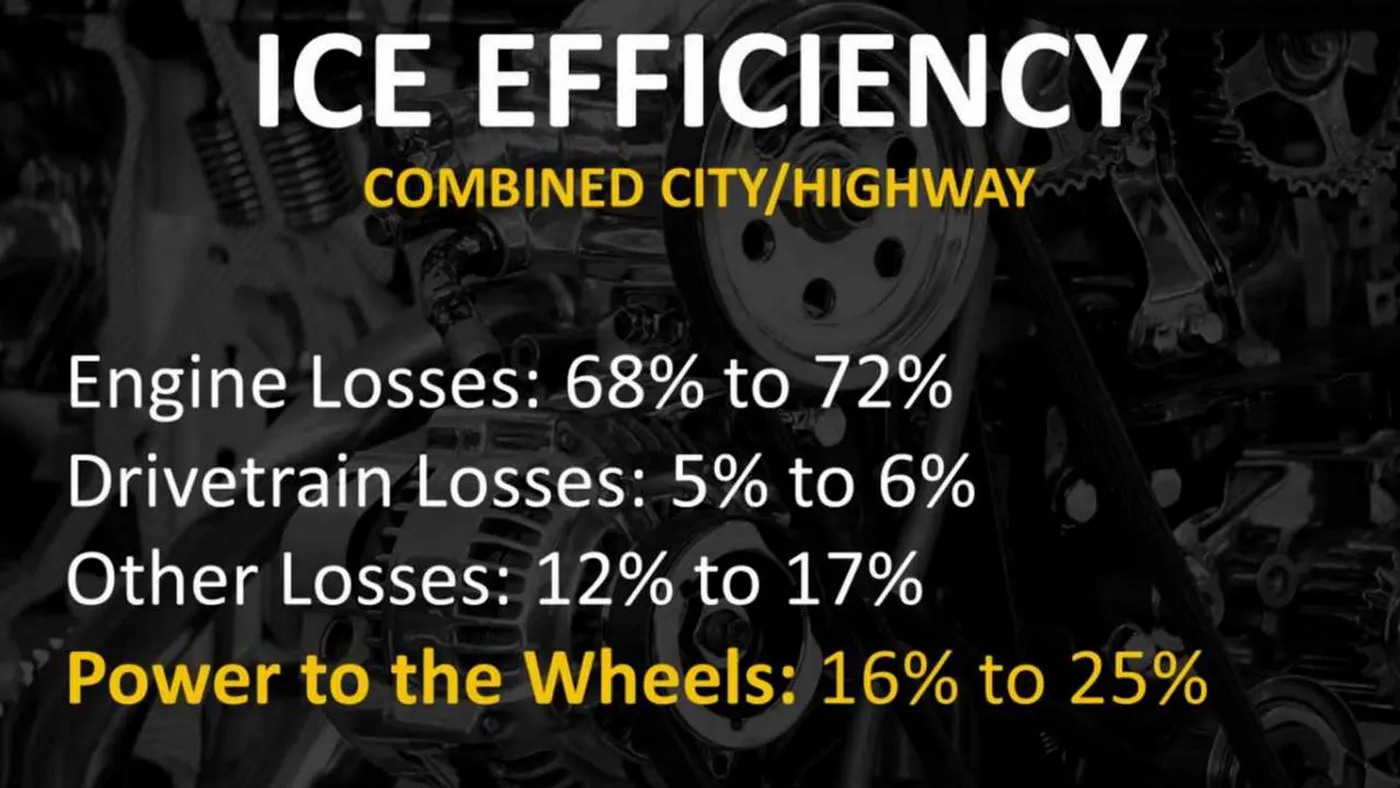
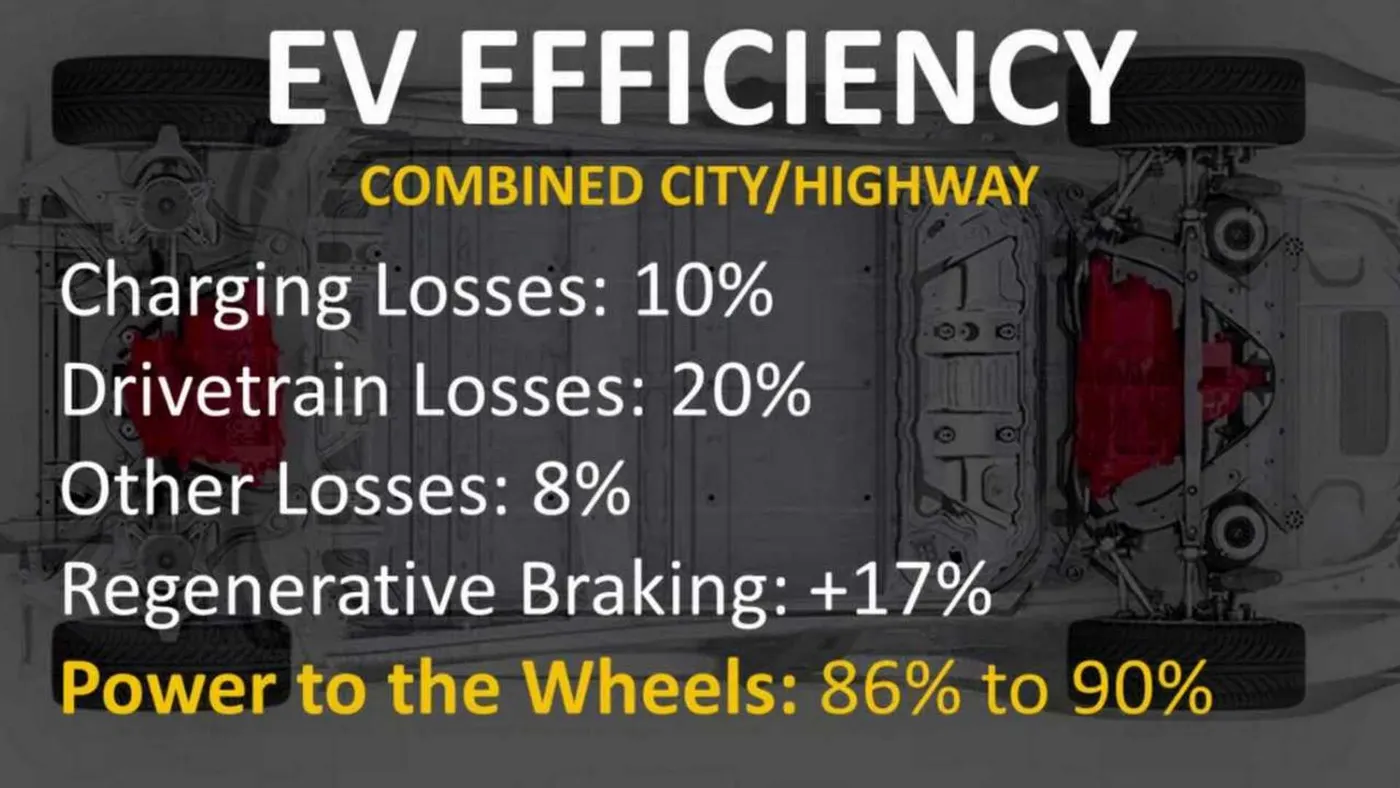
from this study we can conclude that Electric vehicle is far more better than conventional IC engine in terms of efficiency as well as electric vehicles are not producing green house gases or we can say any harmful material through its exhaust so we can say electric vehicles are also eco friendly.
References:-
1) Morten simonsen, Hans Jakob Walnem, Energy Chain Analysis of Passenger Car Transport, Energies 2011.[1]
2) Zoran Stevic, Ilija Radovanovic, Energy Efficiency of Electric Vehicles, 2012.[2]
3) Differences Between Electric Vehicles and Internal Combustion Engines, 2018.[3]
4) ICE Vs. EV - Do You Know How Inefficient Combustion Engines Are?, 2020. [4]