Week 1 : Basic About Electric Vehicle and Hybrid ? (DHEV)
1. The hybrid/electrified vehicular transportation situation in India ?
Introduction :
The electric vehicle industry in India is a growing industry. The central and state governments have launched schemes and incentives to promote electric mobility in the country and some regulations and standards are also in place. While the country stands to benefit in a large way by switching its transport from IC engines to electric motor-powered, there are challenges like lack of charging infrastructure, high initial cost and lack of electricity produced from renewable energy. Still, e-commerce companies, car manufacturers, app-based transportation network companies and mobility solution providers have entered the sector and are slowly building up electric car capacity and visibility.
Government policies :
Union Road Transport Minister Nitin Gadkari stated today that, he believes; "India will be a manufacturing hub for electric vehicles within the next five years, adding that several countries do not want to deal with China after the COVID-19 crisis, which can be an opportunity for India." The minister asked Indian automotive companies to boost their electric vehicle technology and also to focus on finding alternatives to lithium-ion battery tech to help make India the next global manufacturing hub for electric vehicles. “I am confident that in five years, India will become the number one hub for manufacturing electric buses, cars and two-wheelers. There is also a blessing in disguise that a majority of countries are not interested in dealing with China anymore. So, now there is a huge potential for India,” Gadkari said. Gadkari made the statement during a webinar titled ‘India’s Electric Vehicle Roadmap Post COVID-19’. The minister’s push in the EV sector comes as relations between India and China are currently tense following the border standoff on 15–16 June that left 20 Indian soldiers dead.
China has so far been on top in terms of electric vehicle production in the world with it producing over 80 percent of all EV’s globally. The country has the fourth largest reserves of lithium in the world hence giving it a monopoly in the lithium-ion cell market. Lithium-ion battery packs are currently used the most for powering from small electric two-wheelers to electric commercial vehicles.
India unveiled the 'National Electric Mobility Mission Plan 2020' in 2013 to address the issues of National energy security, vehicular pollution and growth of domestic manufacturing capabilities. Reiterating its commitment to the Paris Agreement, the Government of India has plans to make a major shift to electric vehicles by 2030.
Central government
The Government released a two-pronged strategy aimed at both buyers and manufacturers, in which it offers $1.4 billion in subsidies to buyers, while imposing a hike on import tariffs to increase manufacturing of these vehicles by domestic companies. The Government is mainly focusing to electrify public transportation as the subsidies, mainly available for two-wheelers, three-wheelers, and buses. This policy also earmarks $140 million to develop charging infrastructure which should further help the development of the EV industry in India. On 14 December 2018, the government also released a document which outlines the standard and guidelines for EV Charging infrastructure. Beyond the specifications of the charging infrastructure, the guidelines also required a charging station to be present every 25 km along a road/highway.
Energy Efficiency Services Limited (EESL) is procuring 10,000 number of Electric Vehicles from reputed manufacturers for distribution to Government Departments on rental model and upfront sale model. EESL's tender of 10,000 number of EV's has reduced the cost of EV's substantially.
National Electric Mobility Mission Plan, 2020
The National Electric Mobility Mission Plan, 2020 was launched by the Government of India in year 2012 with the aim of improving the national fuel security through the promotion of hybrid and electric vehicles. Auto industry contributes 22% to the manufacturing GDP. From the help of new Manufacturing Policy, contribution of manufacturing in overall economy will increase to 25% by year 2022. The National Electric Mobility Mission Plan targets 30% of EV penetration in India by 2030.
Faster Adoption and Manufacturing of Hybrid and Electric vehicles (FAME)
The Government started Faster Adoption and Manufacturing of Hybrid and Electric vehicles (FAME) scheme which provides incentives for purchasing electric vehicles. Phase I of the scheme lasted from 2015 to 2019, while Phase II began in 2019 and is planned to be completed in 2022.
Government is releasing tenders to increase charging infrastructure in the country. The scheme offers incentives to the electric and hybrid vehicles ranging from Rs.1,800 to Rs.29,000 for scooters and motorcycles and Rs.1.38 Lac for cars. FAME is a part of National Electric Mobility Mission Plan by Government of India.
Go Electric campaign
The government launched the Go Electric campaign in the start of 2021 to encourage the adoption of electric mobility vehicles and electric cooking appliances and to ensure energy security in the country. Road Transport and Highways Minister Nitin Gadkari launched the campaign, saying Go Electric is a future for India that will promote low-cost, environmentally friendly and indigenous electrical products. He expressed concern about the huge cost of importing fossil fuels and said CO2 emissions from transportation vehicles are a major challenge. The country must encourage the use of vehicles that run on alternative fuels such as electric batteries, CNG and biofuels.
Production-linked incentive schemes
In May 2021, the government rolled out a Production-Linked Incentive Scheme (PLI) for ACC Battery Storage Manufacturing, which will incentivize the domestic production of such batteries and reduce the dependence on imports. This will support the EV industry with the requisite infrastructure and will significantly cause a reduction in cost of EVs.
On September 15, 2021, the government approved a PLI Scheme for the automobile and drone industry, which intends to incentivize high value advanced automotive technology vehicles and products, including ‘green automotive manufacturing’ (see Cabinet press release here).
The PLI Scheme for the auto sector is open to existing automotive companies as well as new investors who are currently not in the automobile or auto component manufacturing business. The scheme has two components:
i) Champion OEM Incentive Scheme: This is a ‘sales value linked’ scheme, applicable on battery electric vehicles, and hydrogen fuel cell vehicles of all segments.
ii) Component Champion Incentive Scheme: This is a ‘sales value linked’ scheme, applicable on advanced automotive technology components of vehicles, completely knocked down (CKD)/ semi knocked down (SKD) kits, vehicle aggregates of 2-wheelers, 3-wheelers, passenger vehicles, commercial vehicles, and tractors etc.
Policy measures
Federal policy
Several fiscal and non-fiscal measures have been put in place to facilitate the adoption of electric mobility. They are as follows:
- National Electric Mobility Mission Plan 2020 (NEMMP): It was launched in 2013 by the Department of Heavy Industry (DHI) as a roadmap for the faster manufacture and adoption of EVs in India.
- FAME Phase I: As part of the NEMMP 2020, the Faster Adoption and Manufacturing of Hybrid and Electric Vehicles in India (FAME India) Scheme was notified in April 2015, to promote the manufacture of electric and hybrid vehicle technology. It has mainly focused on four aspects – demand creation, technology platform, pilot projects, and charging infrastructure. For demand creation, incentives have mainly been disbursed in the form of reduced purchase prices.
- FAME Phase II: Launched in 2019 for a period of three years, this scheme has an outlay of US$1.36 billion to be used for upfront incentives on the purchase of EVs as well as supporting the development of charging infrastructure. FICCI has asked for continuation of FAME II till 2025, along with short-term booster incentives to enhance demand. This second phase focuses on supporting electrification of public and shared transportation and aims to support, through subsidies, about 7,000 e-buses, 5,00,000 e-three wheelers, 55,000 e-four wheeler passenger cars and one million e-two wheelers. In addition, creation of charging infrastructure is also supported.
- Amendments to FAME Phase II: On June 11, 2021, the Ministry of Heavy Industry announced further amendments to the FAME II scheme to give a boost to EV demand among consumers. Under the revised policy, the subsidy per electric two-wheeler (Indian-made), which is linked to the battery size, has been increased to INR 15,000 (US$204.60) per Kilowatt-hour (KWh) from INR 10,000 (US$136.40) KWh. Furthermore, electric two-wheeler manufacturers can now give discounts of up to 40 percent to consumers, which is a significant raise from the previous cap of 20 percent. The eligibility criteria for these electric two-wheelers to qualify for subsidy under the FAME II scheme include a minimum range of 80 km on single charge and a minimum top speed of 40 km per hour. These incentives are expected to significantly lower the purchase price and lift buyer sentiment, creating a spur in market demand. The amendments in the policy have been hailed by industry stakeholders who are now expecting the EV two-wheeler industry to clock sales of over six million units by 2025. Yet, according to a recent CRISIL report, 95 percent of the e-scooters in India are not eligible for the FAME II incentive scheme, as they fail to meet the eligibility criteria.
- Ministry of Power: It has clarified that charging EVs is considered a service, which means that operating EV charging stations will not require a license. It has also issued a policy on charging infrastructure to enable faster adoption of EVs. The revised consolidated Guidelines & Standards for Charging Infrastructure for Electric Vehicles was promulgated on January 14, 2022. Exhaustive in scope, these guidelines include provisions for a) individual owners of EVs and b) for public charging stations (PCS) infrastructure. It covers land use and access, power tariffs, state and central government roles, timelines for providing connectivity for installation of PCS, among other concerns.
- Ministry of Road Transport and Highways: It has announced that both commercial as well as private battery-operated vehicles will be issued green license plates. It has also notified that all battery operated, ethanol-powered, and methanol-powered transport vehicles will be exempted from the commercial permit requirement.
- Department of Science and Technology: It has launched a grand challenge for developing the Indian Standards for Electric Vehicle Charging Infrastructure.
- Niti Aayog: The National Mission on Transformative Mobility and Battery Storage has been approved by the cabinet, and the inter-ministerial steering committee of the Mission will be chaired by the CEO of Niti Aayog. The Mission aims to create a Phased Manufacturing Program (PMP) for five years till 2024, to support setting up large-scale, export-competitive integrated batteries and cell-manufacturing giga plants in India, as well as localising production across the entire electric vehicle value chain.
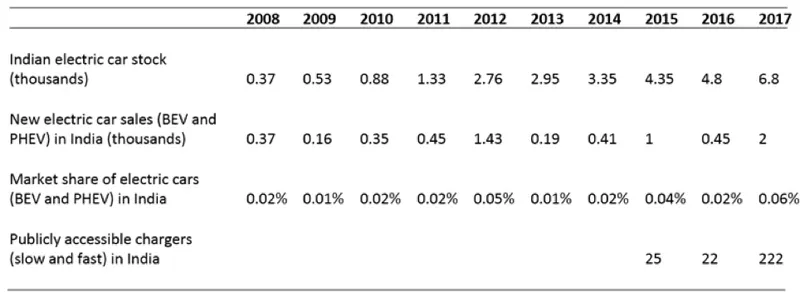
India’s current electric vehicle status
States/union territories policy
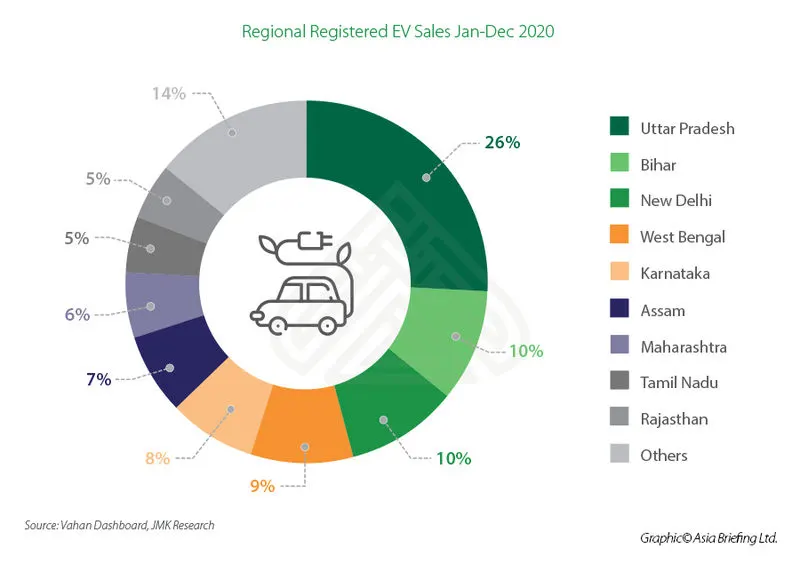
Over 27 states and UTs have formulated strategy plans for transforming mobility to provide their citizens with safe, inclusive, economic, and clean transport options. While some states like Karnataka and Tamil Nadu have had a head start due to preplanned public policies, targeted investor incentives, as well as support infrastructure, other states too have drafted policies to stimulate market demand and create infrastructure.
Most recently, in September, Assam announced its Electric Vehicle Policy, 2021 and plans to phase out fuel-based vehicles by 2030. As a first step, the Assam government shall convert all government vehicles and its public bus fleet to EV alternatives. The state also aims to deploy 200,000 electric vehicles in the next five years. Assam’s Industries, Commerce and Public Enterprises Department said the new EV Policy incentivize people to switch to EVs. Assam also offers several incentives for EV manufacturing in the state (under the North East Industrial Development Scheme, 2017 and the Industrial and Investment Policy of Assam, 2019).
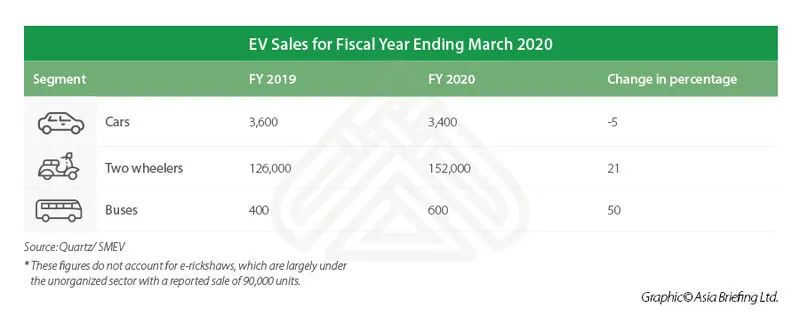
The Government to suspend the registration fee for EVs will persuade states also to give tax breaks.
Delhi
In 2019 the Delhi Government approved 1,000 low floor AC Electric buses to be used in Delhi’s public transport system. The buses have CCTV, Automatic Vehicle Tracking System (AVTS), panic buttons and panic alarms. The subsidy given by government is up to Rs 75 lakh or 60% of cost of bus, whichever is lesser.
Tamil Nadu
Tamil Nadu chief minister Edappadi K Palaniswami launched M auto Electric mobility’s electric autorickshaws - touted as India’s first retrofit electric autos in India in 2019.
Dubai-based KMC group and M auto Electric Mobility will convert petrol-run autorickshaws into electric vehicles with an investment of Rs 100 crore and offer job opportunities to 5,000 people. KMC group and M auto Electric Mobility signed a MOU during chief minister’s stopover in Dubai during his three-nation trip in September. The MoUs were signed at an event hosted by the Business Leaders Forum (BLF), an initiative of UAE’s ministry of economy and the Indian Embassy in the UAE. The state government recently gave necessary clearances for the units to start the venture.
“The driving range per full charge of three hours will be 100 km. The aim is to introduce 4,000 electric rickshaws in the city, 100 by a month to reduce air pollution to a large extent. The autos are fitted with CCTV surveillance, panic button and television. It is highly safe for children going to school and women,” said Mansoor Ali Khan, chairman, M auto group of companies. Mansoor, chief executive officer of M auto Group, said the petrol-driven autorickshaws would incur an expenditure of Rs 350 - Rs 400 for every 100 km, while it is Rs 40 for electric autorickshaws.“ The retrofitting of autorickshaws will cost only Rs 1.2 to Rs 1.5 lakh. We are ready to convert the vehicles registered after 2000,” he added. The company is planning to set up charging stations in each of the ten zones of the city. Charging on the go will be possible with the help of a mobile app.
Karnataka
Karnataka approved Electric Vehicle and Energy Storage Policy 2017. It aim to attract investment of Rs 31,000 crore and create around 55,000 employment. The union government has unveiled its vision to make country all-electric vehicle market by year 2031 to reduce dependency on fossil fuels and reduce its carbon footprint.
Maharashtra
The Maharashtra Government is focusing on increasing EV use in the state by proposing to exempt EV’s from road tax and providing a 15% subsidy to the first lakh EV’s registered in the state. To improve suitable infrastructure, the government proposed to provide a maximum subsidy of Rs 1 million (~$15,549) per charging station up to first 250 charging stations that are set up in Maharashtra.
Uttarakhand
In 2018, the Uttarakhand Government introduced a new scheme to help the manufacturing and promote the use of EV’s as well. The scheme would provide companies with loans ranging between Rs 10 crore and Rs 50 crore to build EV's and charging infrastructure. The scheme also doesn't charge motor tax for the first lakh customers of EV’s for five years.
Gujarat
Gujarat government is committed to reducing its carbon footprint by 6 lakh tons per year by bringing down pollution occurring due to use of conventional fossil fuel. A large number of buyers are resorting to EVs by availing subsidies up to Rs 20,000 for two-wheelers, Rs 50,000 for three-wheelers, and Rs 1.5 lakh for four-wheelers. Up to 10 capital infrastructure is being offered to set up charging stations in the state under the policy. Already 280 such charging stations have been set up across Gujarat after the announcement of EV policy and 250 more are in pipeline.
Challenges faced by EV industry
Insufficient charging infrastructure: In 2019, there were only 650 charging stations in India as against over 0.3 million in China. Lack of sufficient charging infrastructure is one of the primary reasons why customers often refrain from purchasing EVs.
High costs: Along with the range anxiety (kms/charge), another major concern among the potential customers is the current high price of EVs. As compared to lower-end (internal combustion engine) ICE cars, electric cars in the same segment tend to be more expensive. This is mainly because of the higher cost of technology used in the EVs, which constitutes a substantial portion of the cost, not leaving much scope for other features usually available in premium cars. It is expected that in future, with increased R&D and market competitiveness, the price factor will be rationalised to suit the price sensitivity, which in India is a primary factor influencing purchase, especially in the lower-end car segment.
With the recent announcement of subsidies, the price rationalisation of EVs in the two-wheeler segment is on cards. Since the government’s fast-changing priorities are now biased towards sustainable, clean electric mobility, industry watchers expect a similar push towards easing adoption of other electric vehicles like cars and buses soon.
Limited options: Since it is still a budding industry in India, customers have a very limited range of products to choose from. Increased investment in the sector will make it more competitive in due time and this will help create further demand.
Lower mileage: Since the industry is young, there is immense scope for R&D. As of today, EVs in India are not cost competitive to an average customer as internal combustion engine (ICE) vehicles prove to be more cost effective.
Higher dependency on imports: Reliance on imports of battery as well as other components is also one of the factors adding to the cost of EVs in India.
Grid challenges: Another concern is regarding the price of charging EVs at private charging stations once EVs become mainstream. According to Brookings India, projections for 2030 show that even with a fair penetration of EVs, the increase in demand for electricity is likely to be about 100 TWh (tera watt-hours) or about four percent of the total power generation capacity. So, increasing methods of power generation are necessary to meet that growth in demand.
Public charging infrastructure in India
There were only 222 publicly-accessible chargers in India in 2017, in comparison to 130,508 in China, 32,976 in Netherland and 22,213 in Germany in the same year (EV outlook, 2018).
In recent years, the government of India has taken some serious steps to increase the pace of public charging facility installation. These steps include treating electric vehicle charging as a ‘service’ under the Electricity Act, 2003, the opening of the electric vehicle charging market for all and introducing dynamic pricing with time-of-day tariffs.
India recently released a draft notification for socket outlets or vehicle connectors to be used in electric vehicle chargers. Draft ‘Bharat EV charger’ standards specify the charging standard for India.
Electric vehicle charging policies
Aside from national targets and electric vehicle policies, some Indian states have come up with their own to support electric vehicle growth. The Kerala government has set a target of putting 10 million electric vehicles on the road by 2022. The state rolled out an electric vehicle policy (EVP) studded with tax holidays and the creation of common-charging infrastructure.
Andhra Pradesh, Karnataka, Maharashtra, Telangana and Uttar Pradesh have already announced official policies regarding electric vehicles, and other states are in the process of drafting similar documents.
The state of Karnataka is also aggressively incentivising the production of electric vehicles, establishing a target of $4.83 billion in investments that will help generate 55,000 jobs.
State governments are setting electricity tariff policies for charging electric vehicles. The Delhi state electricity regulatory commission has set the electricity tariff (TARIFF ORDER 2017/18) at INR 5.50/kWh (supply at LT) and INR 5/kWh (supply at HT). Andhra Pradesh state DISCOM (Distribution company) has filed a petition for a tariff order for electric vehicle category tariff: INR 6.95/kWh (Bloomberg New Energy Finance Report). The state of Maharashtra has planned to set up a special electricity tariff for electric vehicle charging. These initiatives will certainly reduce the cost of ownership for electric vehicles and speed up the adoption process.
Conclusion
High levels of vehicle pollution and the burden of the import oil bill put huge pressures on India to shift from conventional vehicles to electric vehicles, whilst presenting the automobile sector with a great opportunity. Growth of electric vehicles in India has been long held back in comparison to other countries due to poor government policies and infrastructure support. Recent changes in policies represent good progress, but India requires faster, consistent and stronger policy frameworks to continue improving.
Source :
- https://www.india-briefing.com/news/electric-vehicle-industry-in-india-why-foreign-investors-should-pay-attention-21872.html/
- https://en.wikipedia.org/wiki/Electric_vehicles_in_India
- https://www.forbes.com/sites/scottcarpenter/2019/12/05/can-india-turn-nearly-200-million-vehicles-electric-in-six-years/?sh=2ddce50715db
- https://www.sciencedirect.com/science/article/pii/S2666691X21000130
- https://economictimes.indiatimes.com/industry/renewables/the-speed-bumps-in-indias-electric-vehicle-ride-that-no-one-is-talking-about/articleshow/88144625.cms?from=mdr
- https://www.intelligenttransport.com/transport-articles/73491/india-framework-electric-vehicle/
- https://www.brookings.edu/blog/planetpolicy/2018/05/29/transition-to-electric-vehicles-in-karnataka-and-india-whats-real-possible-and-missing-in-the-ecosystem/
2. a). Indian EV maker Ola Electric makes multi-million-dollar investment in StoreDot :
OLA ELECTRIC :
Ola Cabs is an Indian multinational ridesharing company, headquartered in Bangalore. It also operates in other business verticals including financial services, cloud kitchens, and used-car marketplace. A variety of venture capitalists including Softbank have large stakes in the company.
Ola has made a Multi-Million Dollar investment in a Battery Technology Giant StoerDot.
StoerDot :

StoreDot is the innovator of proven EV batteries that recharge faster, are safer and more sustainable, running on patented bio-inspired nanomaterials fully optimized by AI, and packed into high-energy cells that are design-ready for mass production.
Explanation :
StoreDot is a Israel-based Company, That developer of extreme fast charging (XFC) technologies for electric vehicles. Which has secured a Deal With a Ola Cabs a multinational ridesharing company, which has inversted in StoreDot for Over a Million Dollars.
StoreDot has developed a extreme fast charging (XFC) battery technology for electric vehicles, announced the first close of its Series D funding round of up to $80 million, the majority of which have already been secured. The round is led by key strategic investors, strengthening StoreDot’s partnerships in the global automotive battery eco-system. The lead investor is the fast-growing flagship Vietnamese electric vehicle manufacturer, VinFast, which plans to scale up manufacturing and deploy StoreDot’s Extreme Fast Charging in future EV architectures.
Participants include bp ventures, a current StoreDot investor and active partner. In addition, Golden Energy Global Investment Ltd., a wholly owned company by EVE Energy’s founder, Dr. Liu Jincheng, will be one of the participants in the funding round.
The funds raised by this round will be used to complete StoreDot’s research and development for its silicon-dominant extreme fast charge (XFC) battery cells for electric vehicles and continue its progress on Extreme Energy Density cells based on Solid State technology for future deployment.
This funding also enables the company to ramp up its California-based R&D center and commence scale up operations in key global locations, in readiness for full mass production of cells in 2024.
Ola has claimed that this is the first of several global strategic investments it plans to make. This will be a part of Ola Electric’s plan to ramp up its core research and development (R&D) in advanced cell chemistry and manufacturing as well as other battery technologies and new energy systems.
"The future of EVs lies in better, faster and high energy density batteries, capable of rapid charging and delivering higher range," said Bhavish Aggarwal, founder and CEO, Ola. "We are increasing our investments in core cell and battery technologies and ramping up our in-house capabilities and global talent hiring, as well as partnering with global companies doing cutting edge work in this field."
“Ola Electric’s plans to bring StoreDot’s extreme fast charging battery technology to India and manufacture for its range of EVs will offer Indian consumers vastly superior range and charging speed performance,” said Doron Myersdorf, chief executive of StoreDot. “We are also offering our customers a clear, hype-free technology roadmap that will extend far into the future of delivering 100 miles of range in just a 2-minute charge, within a decade.”
Headquartered in Bengaluru, India, Ola Electric is ramping up its investments in core R&D in advanced cell chemistry and manufacturing, as well as battery technologies and new energy systems. It recently announced a $100-million investment to set up Ola Futurefoundry, its global center for advanced engineering and vehicle design, in the UK where it will work on its future range of electric vehicles including both four- and two-wheelers, in collaboration with its Bengaluru centre and StoreDot for battery Technology to improve the Range of battery, so that the vehicle to reach 500 miles range in Four-wheeler.
Conclusion :
Ola and Store Dot are combing to develope a extreme fast charge (XFC) Battery cells for electric Vehicles, so that the market of EV Markets is going to be very compatation of making fast charging batterys. The current EV Battery is 0.24 kwh, but Ola is having capacity is 2.98 kwh to 50 Gwh using StoreDot Battery Tachnology.
If the Capacity increases the range of the vehicle increases so that the Vehicle could go for longer range and also charge for less timing. But if the Battery Technology improves it whould help the growth of EV Vehicle, Also reduces the Global Warming And Also reduces the Carbon Monoxide emision.
Posting Website For Reference :
b). Honda tests next-generation INDYCAR internal combustion engine; full hybrid unit in 2024 :
Honda Motor Company, Ltd. is a Japanese public multinational conglomerate manufacturer of automobiles, motorcycles, and power equipment, headquartered in Minato, Tokyo, Japan. Has Prepared a Next Generation INDYCAR contaning a internal combustion engine is converted into a full hybrid unit is Teated in Indianapolis Motor Speedway, USA. Gave the 2.4-liter internal combustion component of the next-generation NTT INDYCAR SERIES hybrid power unit its on-track debut at Indianapolis Motor Speedway.
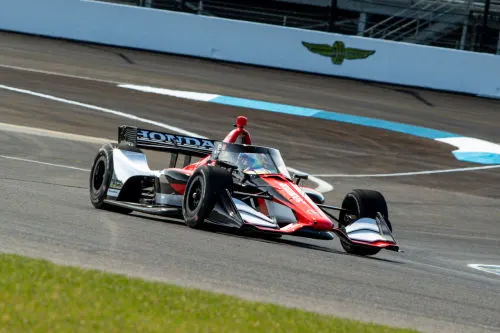
Which has been Tested With six-time INDYCAR SERIES champion Scott Dixon at the controls of the Honda test chassis operated by Chip Ganassi Racing. The Engine has modified version of the 13-turn, 2.6-mile Indianapolis Motor Speedway road course layout that hosts two races each year on the NTT INDYCAR SERIES schedule.

“This is an important step for HPD, Honda and INDYCAR as the series moves into the electrified era, and it was a successful day,” said David Salters, HPD president and technical director, “but there are many more steps to take before the full, hybrid power unit debuts in 2024. The all new 2.4-liter E85 bio-fueled engine has been designed, simulated, developed, dyno-tested, manufactured and assembled by the inspiring Honda men and women at HPD in California. We set ourselves these challenges to develop our people and technology here at HPD. We are very proud of the amazing team at HPD and our Honda “challenging spirit”. There is still a very, very long list of things to be accomplished before the power unit is tested in competition, but this is certainly a major milestone for everyone at Honda Performance Development”.
Where, The current, third-generation IndyCar engines are DOHC 2.2-liter V6 twin-turbo units developing an estimated 550–750 hp depending on the level of boost used. Engines are currently supplied by Chevrolet and Honda. The fourth-generation IndyCar engine will see engine displacement increased from 2.2 to 2.4 L and horsepower increased from 550–700 to 900 hp (410–522 to 671 kW). In addition, hybrid systems will also be introduced. The hybrid technology will include a motor, inverter, and electric storage device that will create energy recovery from the braking system.
Although low temperatures in the morning delayed the start of the test, Dixon and the Ganassi team completed the full list of opening-day test items prepared by HPD engineers without any issues. A second day of running is planned for tomorrow (Tuesday), with slightly warmer temperatures in the forecast for Indianapolis.
Twenty-five years after winning its first Indy car Manufacturers’ Championship, Honda clinched its 10th overall, and fourth consecutive, NTT INDYCAR SERIES Manufacturers’ Championship in 2021, including a dramatic record-tying fourth Indianapolis 500 triumph for Helio Castroneves in May.
Conclusion :
When the Current Generation INDYCAR are very much power full as next generation, but It consistes of only internal combustion engine and very much powerful. But next generation will be much more powerful with Both internal Combustion Engine and addition to Electrical Engine.
If The Next Generation IndyCar is Going to be a verymuch Starting Stage of Honda Motors to develope a hybrid/Electrical Vehicle for IndyCar and also for Passanger Vehicle.
Reference :