VEHICLE SIMULATION USING THE ADVISOR TOOL
OBJECTIVE:
- To check whether the EV_defaults_in file, the vehicle can travel for 45 km with the FTP drive cycle, if cargo mass is 500 kg and with all other default conditions.
- In the EV_defaults_in file, the battery capacity is changed and needs to run the simulation.
- To Perform the Gradeability test with PRIUS_Jpn_defaults_in file and compare the results and conclude.
PROCEDURE:
1)EV_DEFAULT SIMULATION:
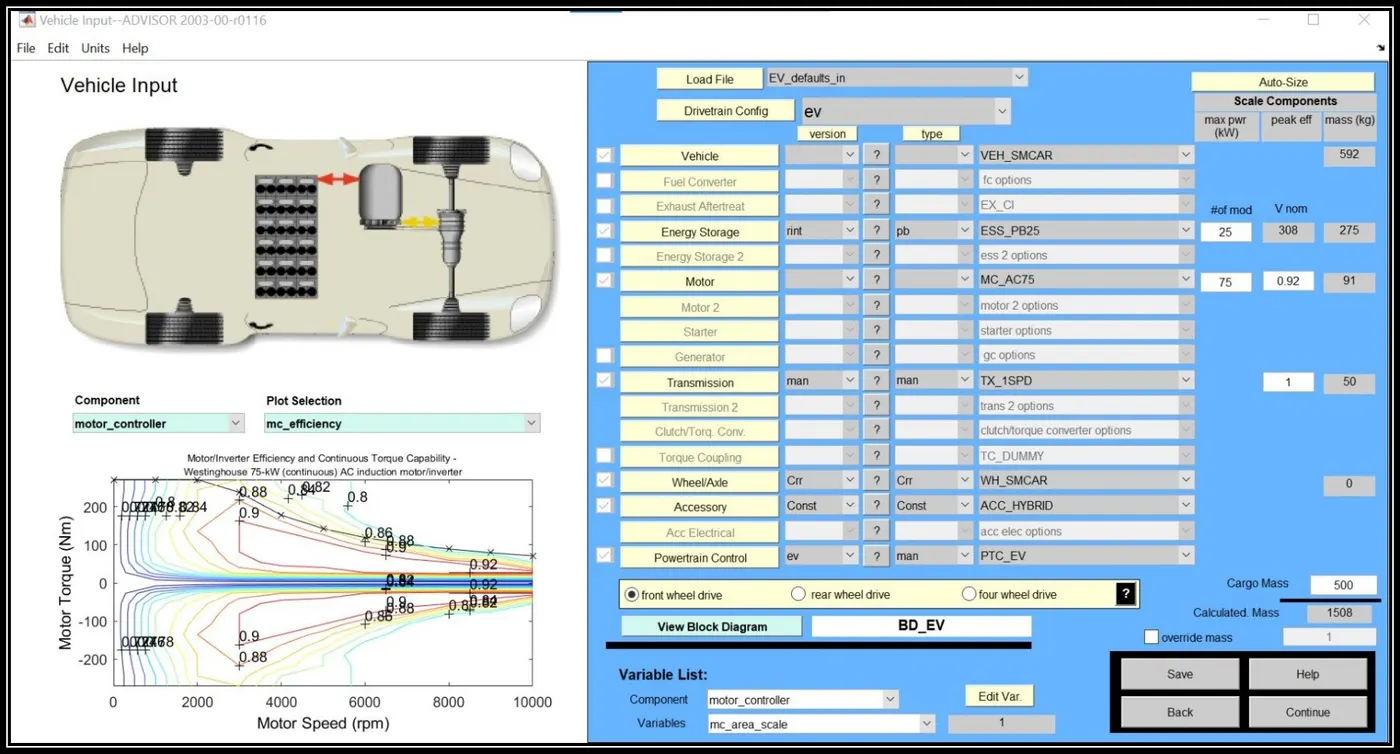
- Using the Advisor tool the EV default file is loaded and the cargo mass is changed to 500 Kg.
- All other parameters are set as the default values and select the continue option to proceed further.
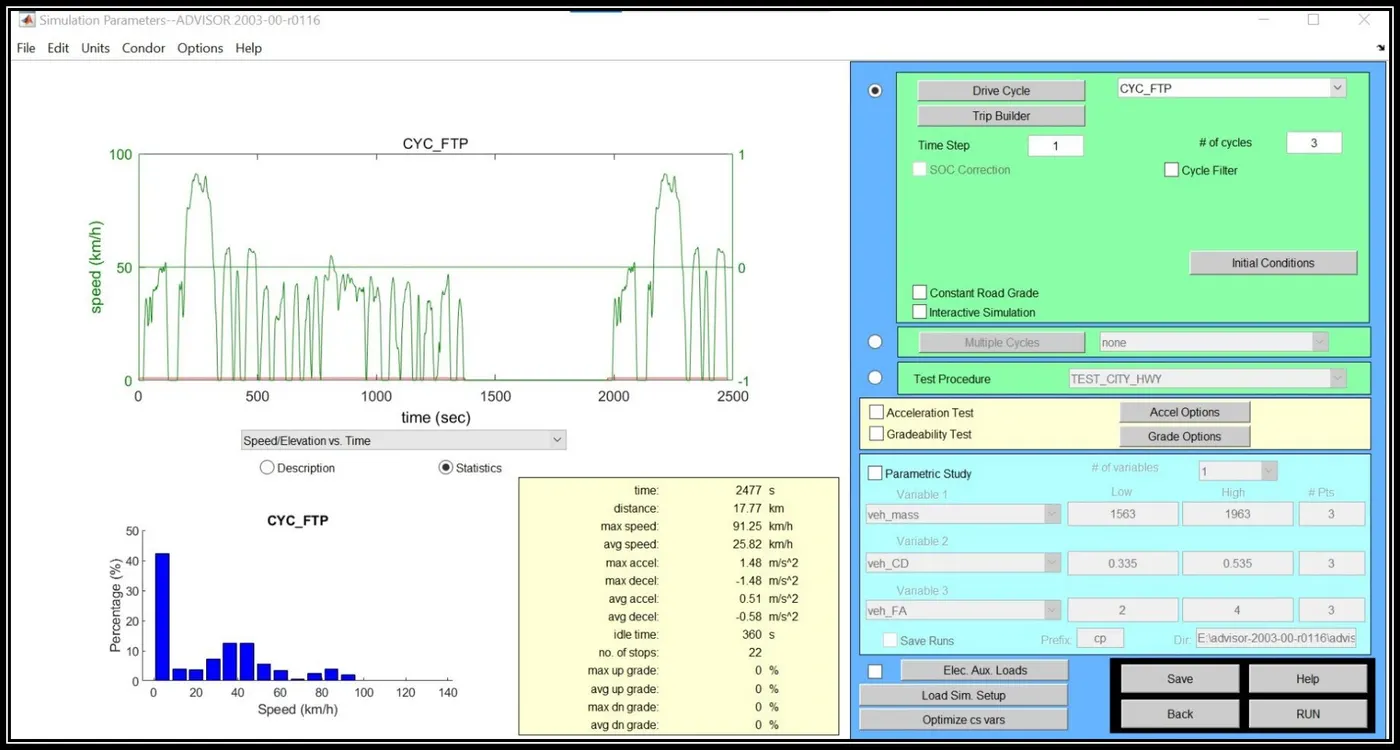
- After selecting the continue option, the above window will open and in that CYC_FTP drive cycle is selected.
- Below the graph, it was mentioned that many parameters regarding the outcome of the cycle and in that you can see that the distance covered by the drive cycle is 17.77Km.
- Based on our problem, we need to calculate whether the vehicle is capable of covering 45 Km with a cargo mass of 500Kg.
- So in order to cover 45 Km, we need to run the cycle 3 times. Hence, the number of cycles is changed to 3in the dialog box.
- After making these changes click on the run command, in order to simulate the vehicle according to the conditions provided.
RESULT:
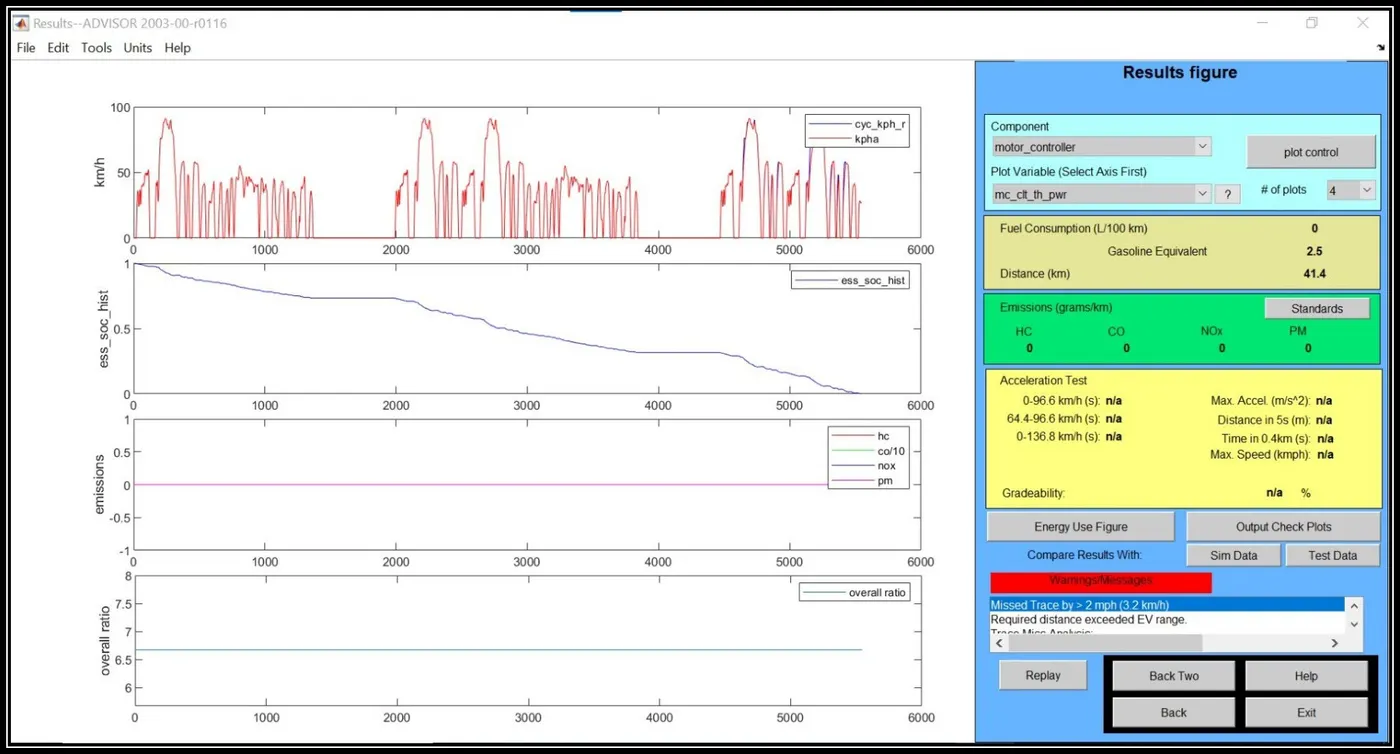
- Based on the above fig, it is clear that the total distance covered by the vehicle is 41.4Km and the SOC of the battery drops to zero before completing the cycle itself.
- Hence it doesn't satisfy our condition of covering 45Km with a cargo mass of 500Kg.
2)CHANGING THE BATTERY CAPACITY:
Objective:
In this time we use the same vehicle and cargo mass but at this time we are going to increase the battery capacity and run the simulation to check whether the vehicle is capable of covering the required distance.
Procedure:
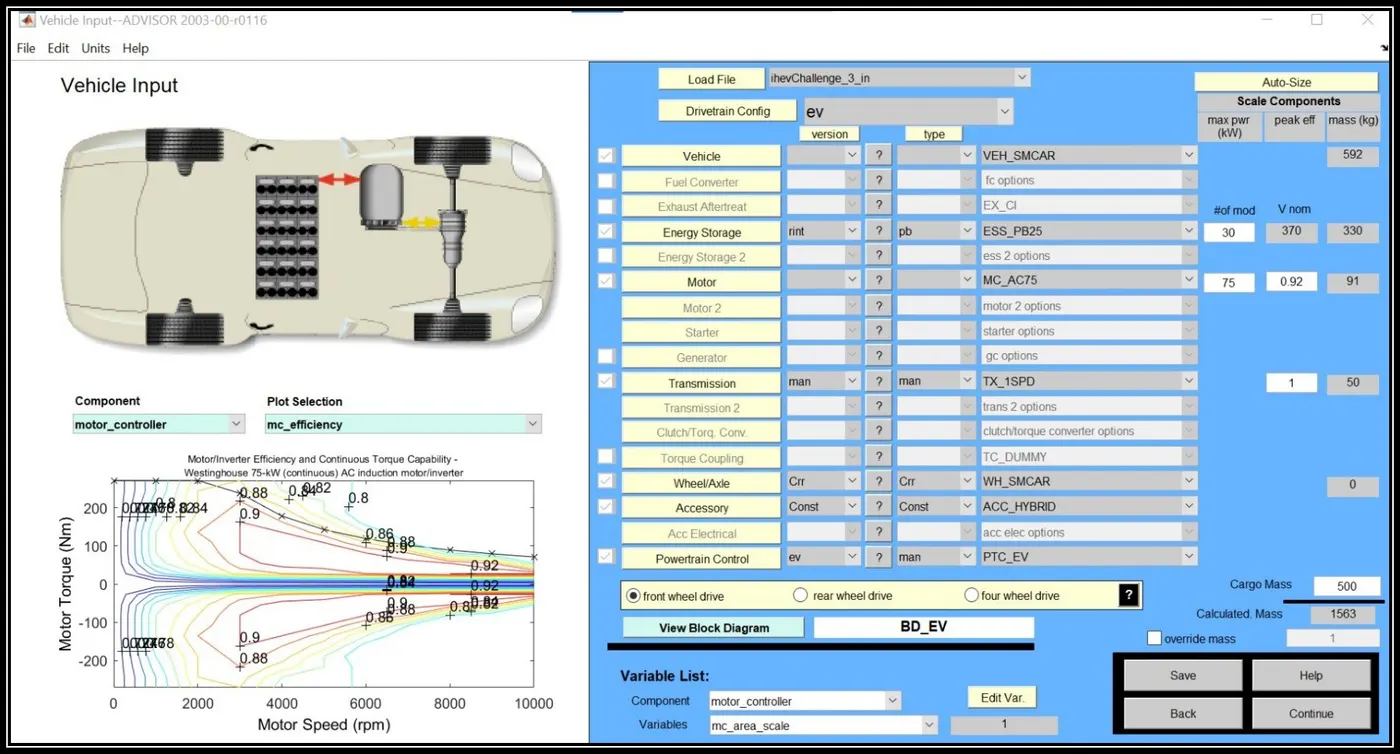
- Using the same procedure the EV default file is loaded and the cargo mass is changed to 500Kg.
- In order to change the battery capacity, we change the number of modules from 25 to 30 and so the voltage is changed corresponds to the module (ie308V-370V).
- Then, select the continue option to proceed further.
- Then, the CYC_FTP drive cycle is selected and the number of cycles is changed to 3 as mentioned earlier.
- Then, click on the run command in order to run the simulation.
RESULT:
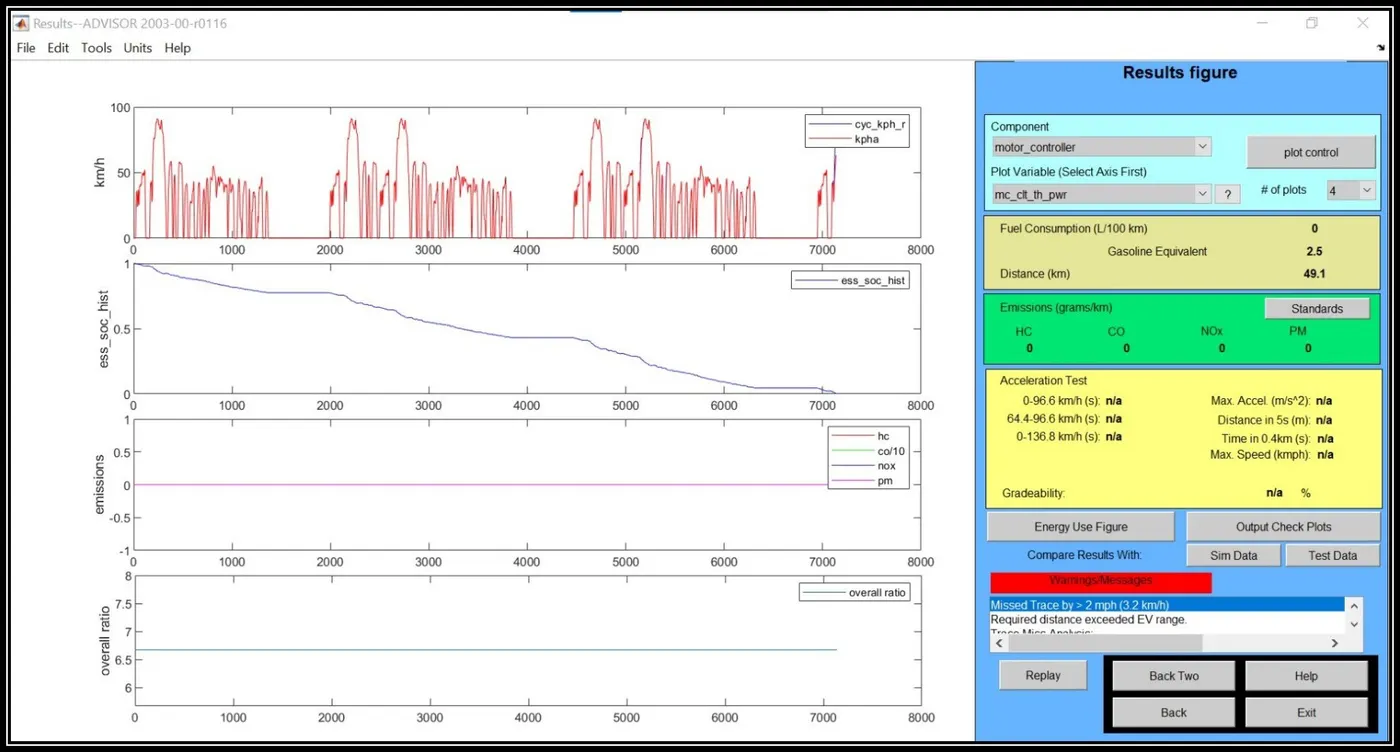
- Based on the above fig, it is evident that now it is capable of covering 45Km due to the increase in the battery capacity.
- The vehicle is now capable of covering 49.1Km according to our conditions.
- Thus, we observe whenever the battery capacity is increased, the SOC reduction time gets increased and so the vehicle covers a greater distance.
3)Gradeability test with Toyota PRIUS model:
Procedure:
- The Gradeability test is performed by trial and error method only, by changing the speed with time duration as a constant value.
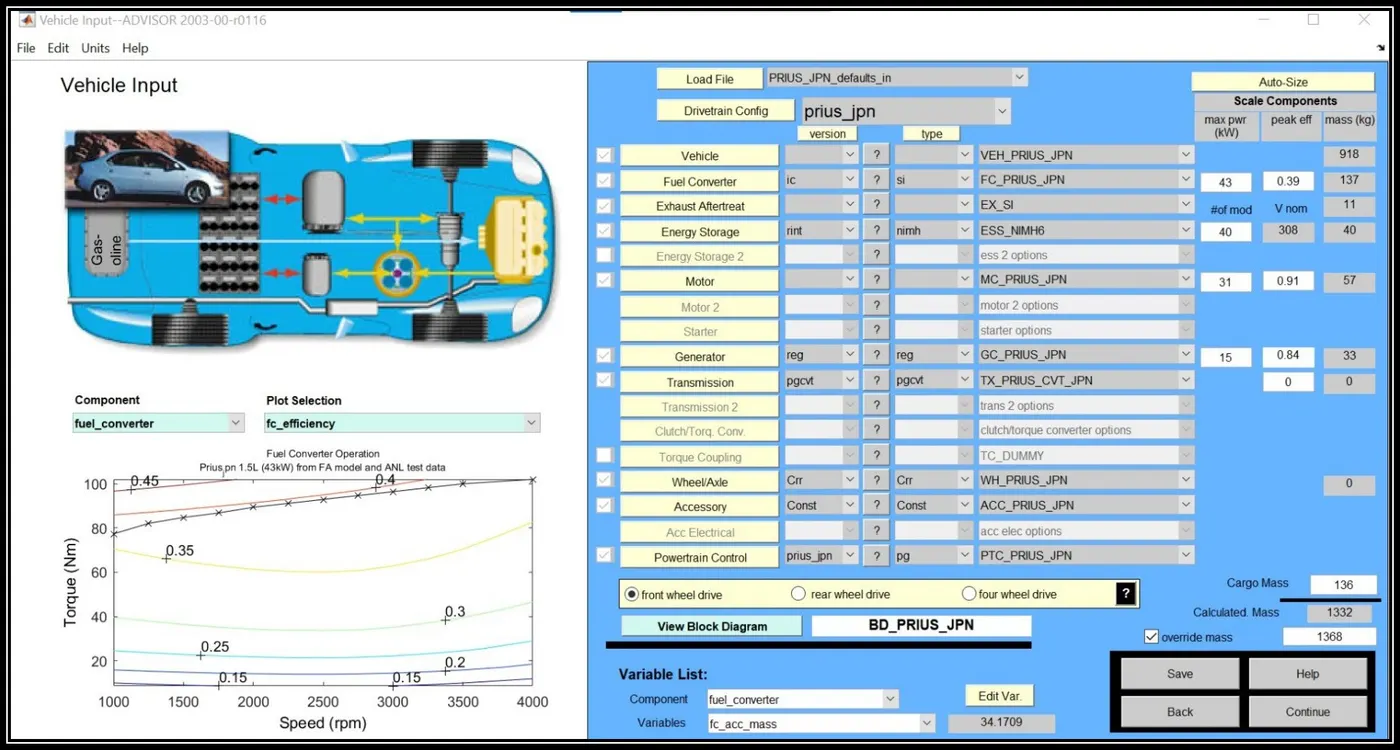
- The Pirus model is loaded to perform the gradability test and the default parameters are used to perform the test.
- After loading the file, select continue option to perform the test.
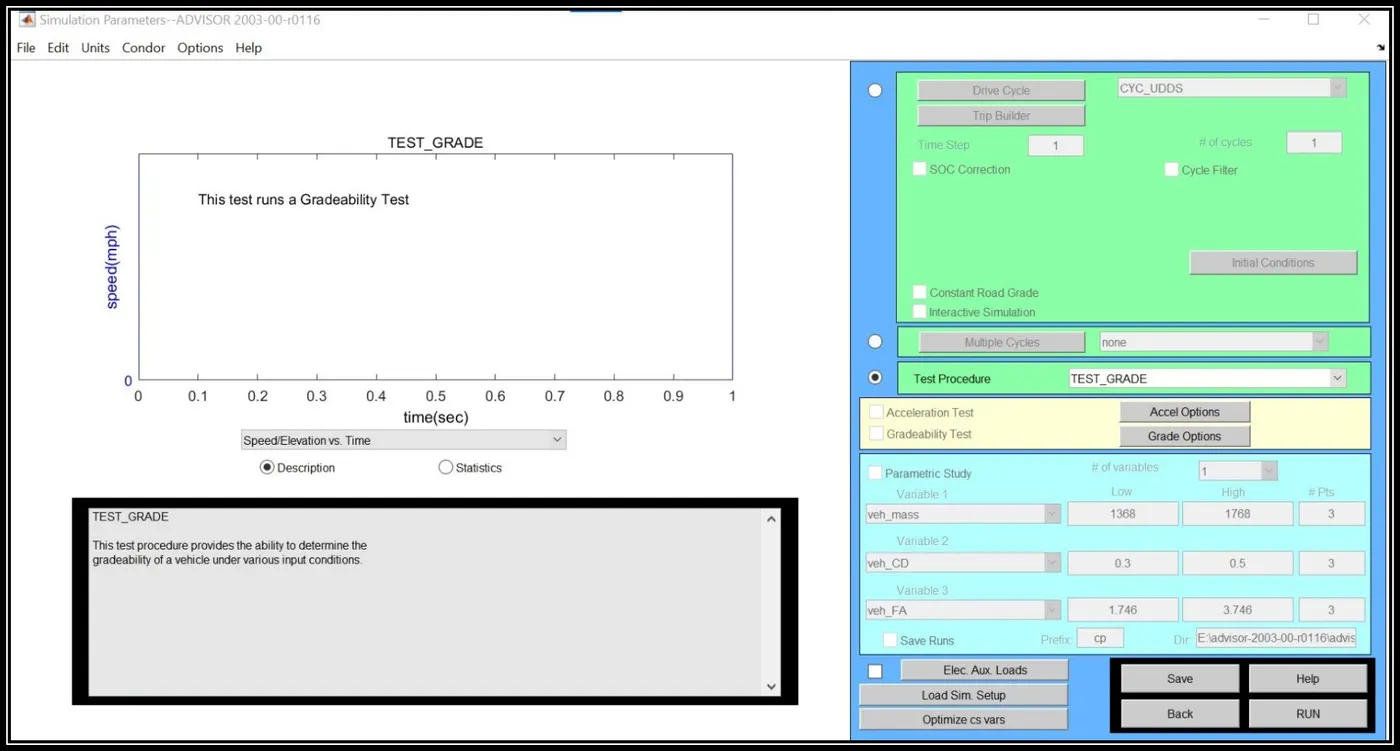
- In the next window,test_Grade is selected in the test procedure.
- After selecting the test procedure click on the run command.
- In order to perform the gradeability test, keep the time duration constant and vary the speed and check whether it satisfies or not.
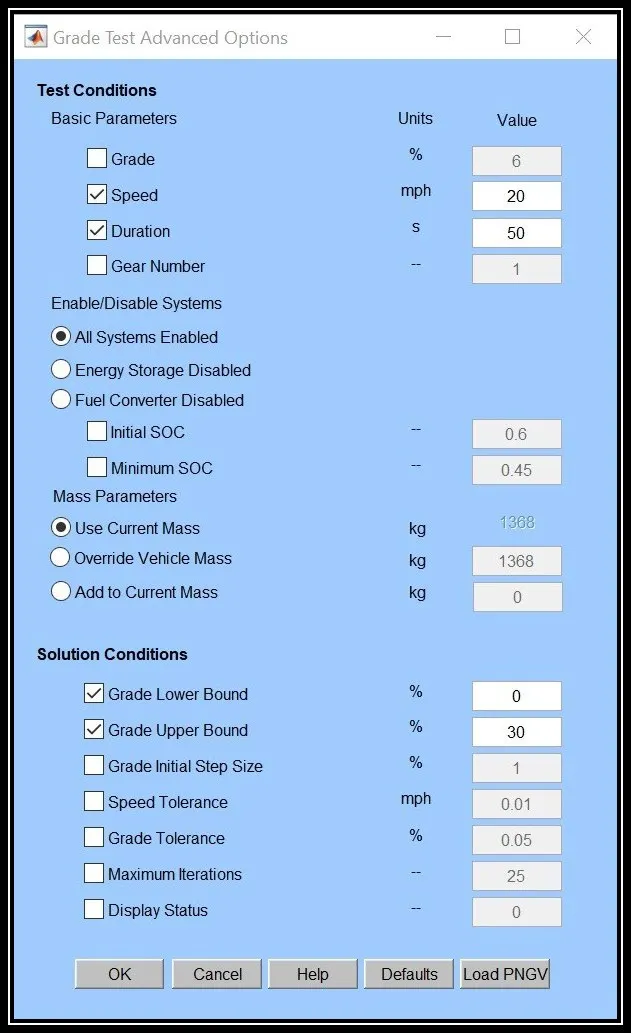
- Select the speed as 20mph initial condition and set the duration as 50 seconds.
- The lower and upper limit for gradeability is set as 0 and 30% using the Grade Lower bound and Grade Upper bound option.
- Then, select the ok option to proceed further.
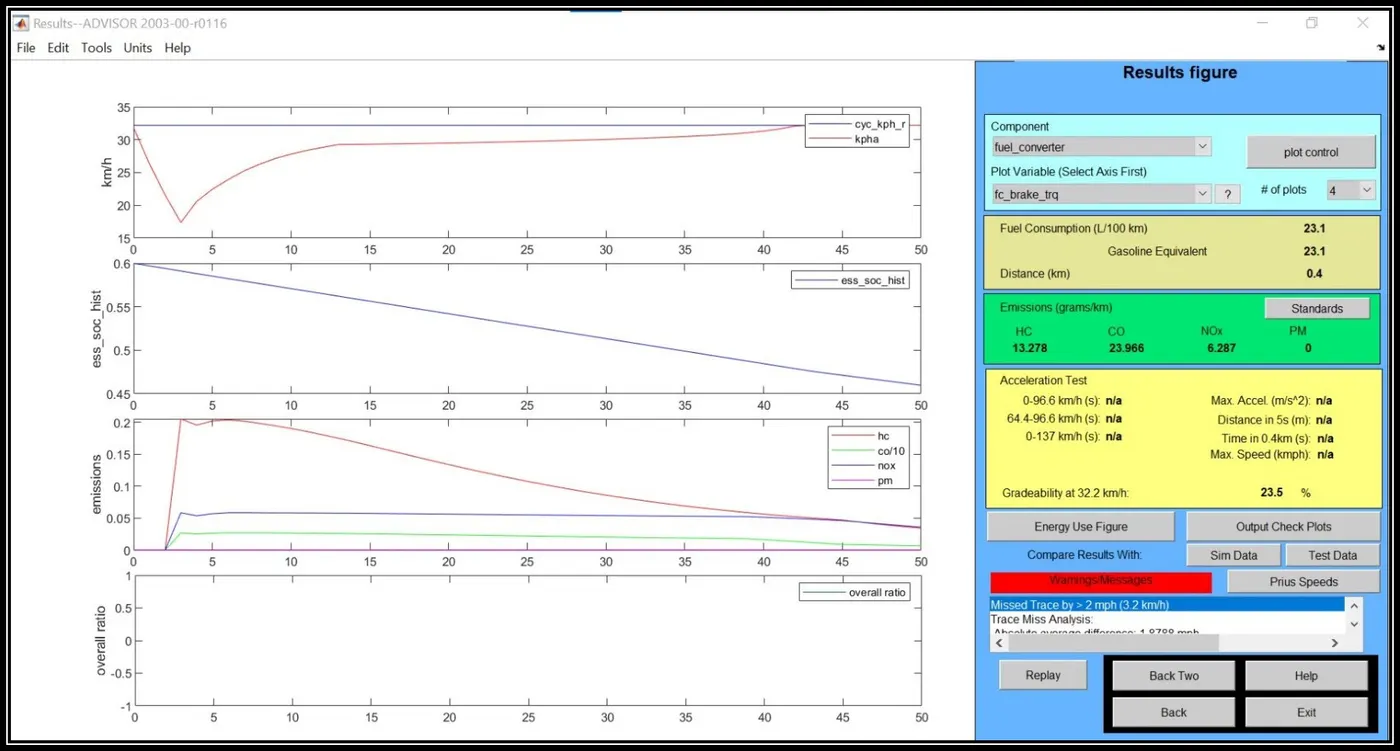
- Based on the result it is observed that the gradeability at 32.2Km/hr is found to be 23.5% and it satisfies the gradeability.
Trial-2:
- In this case, the speed is increased to 40mph and keeping the time duration as constant 50 seconds.
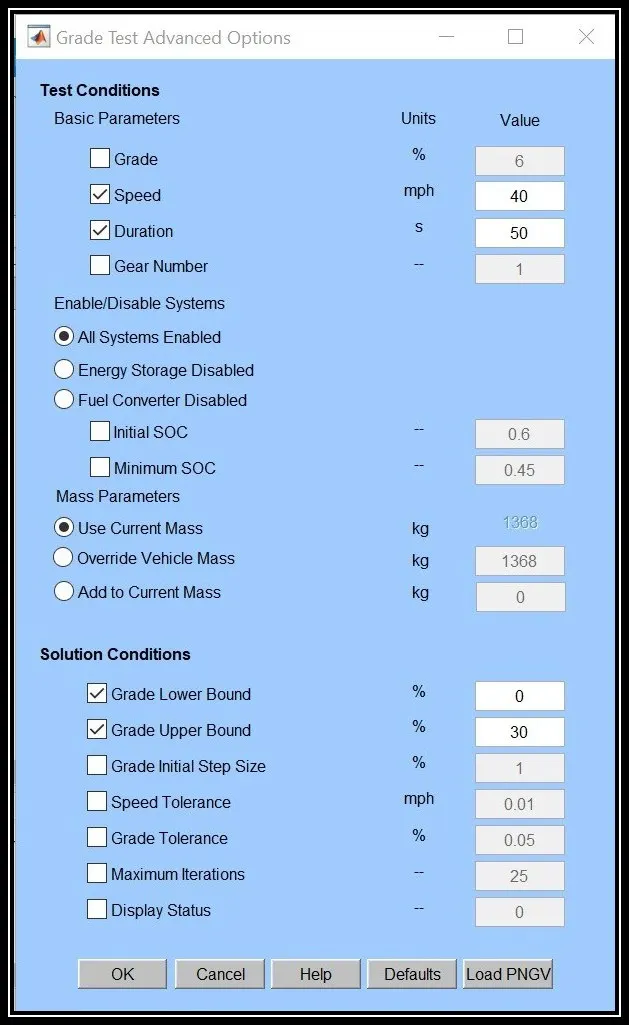
- In this case, as mentioned earlier the speed is set to 40mph and the time is set as the same 50seconds and click on the ok button to proceed further.
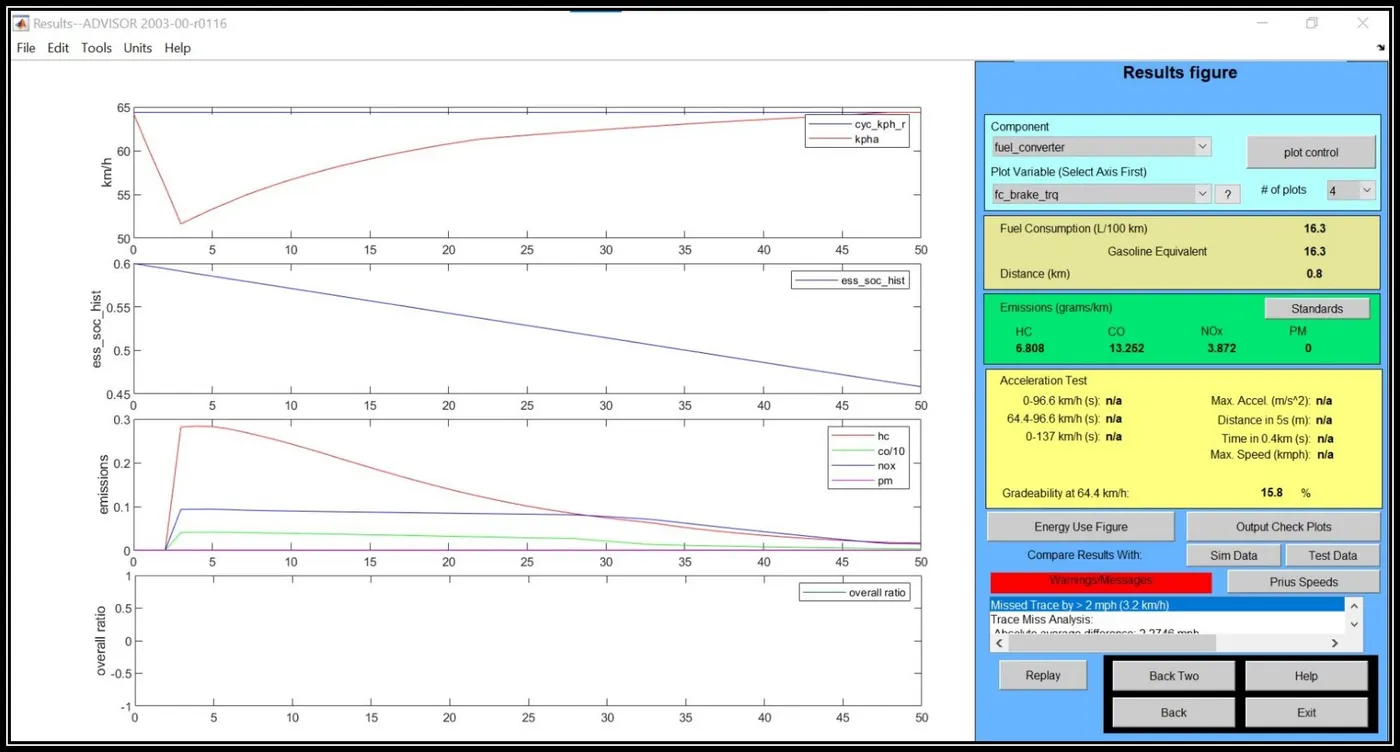
- Based on the result, it is observed that the gradeability at 64.4Kmph is 15.8%.
Trial-3:
- In this trial, the speed is further increased to 60mph.
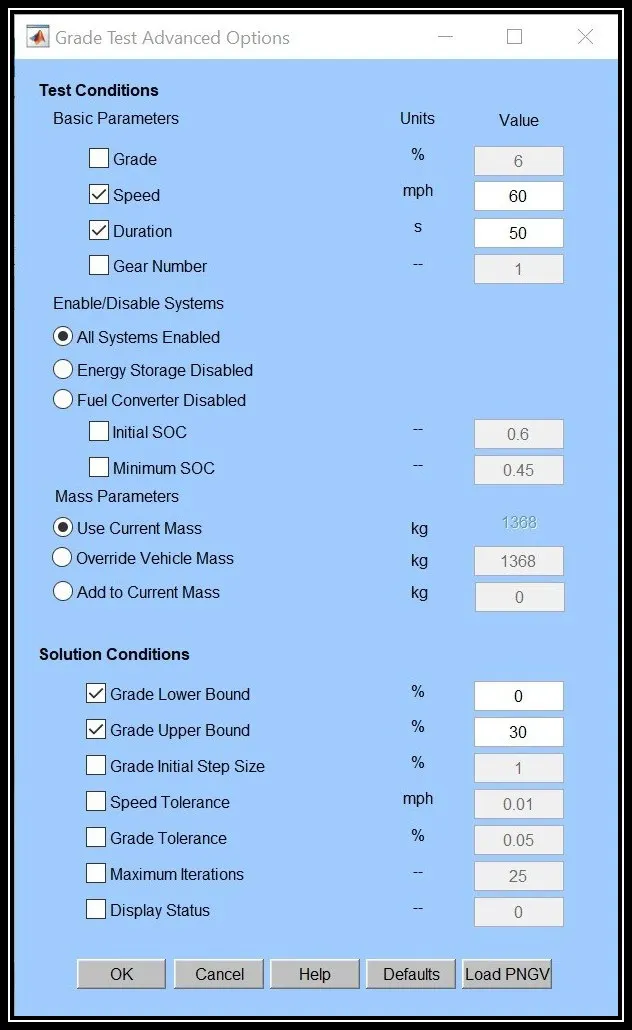
- After changing the speed to 60 mph and keeping the time as constant as 50 seconds, click on the ok button to proceed further.
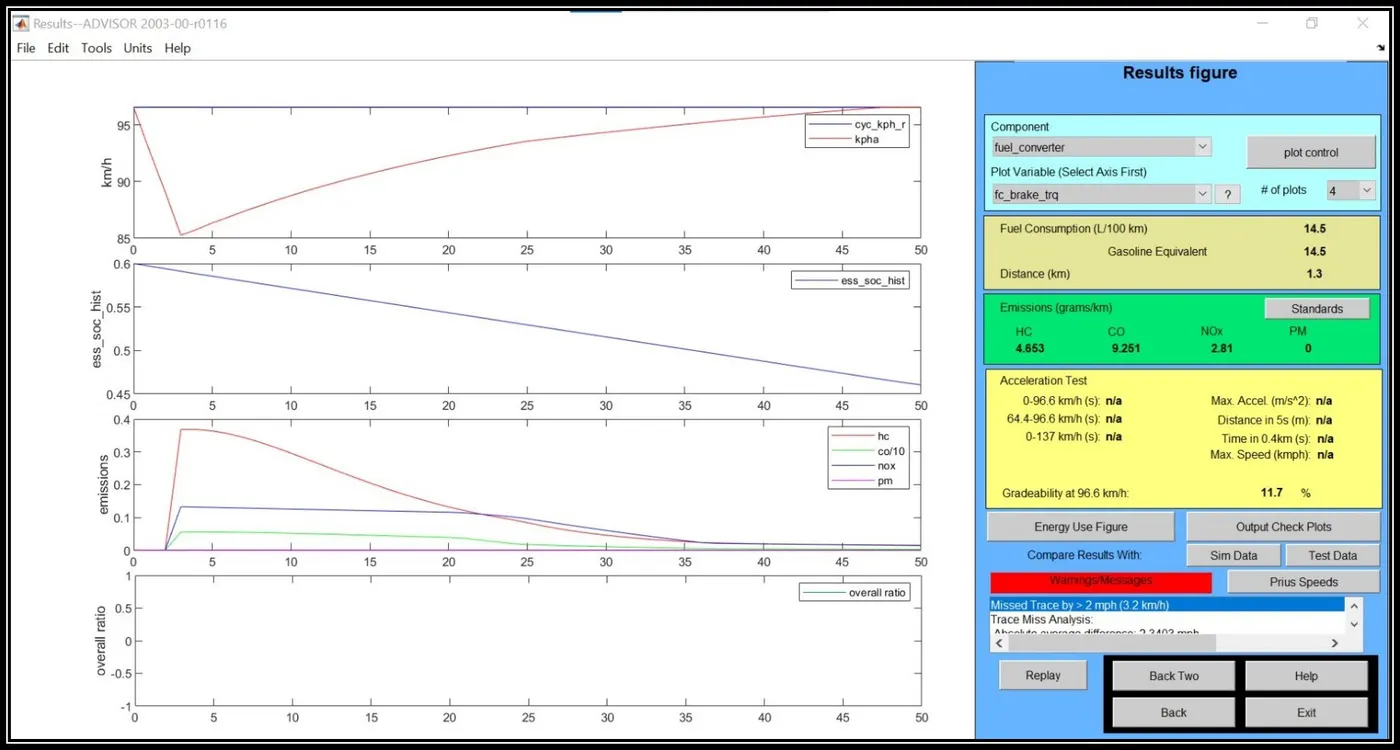
- Based on the result, it is observed that the gradeability is now further reduced to 11.7% at 96.6Kmph.
Trial-4:
- In this trial, the speed is further increased to 80mph.
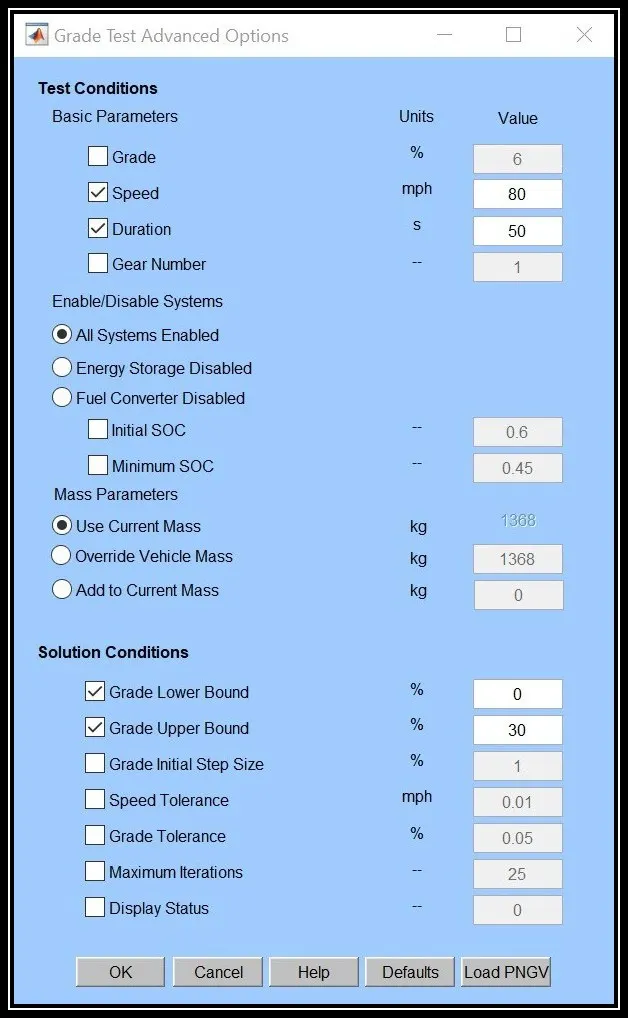
- Now, the speed is increased to 80mph and other parameters remains the same.
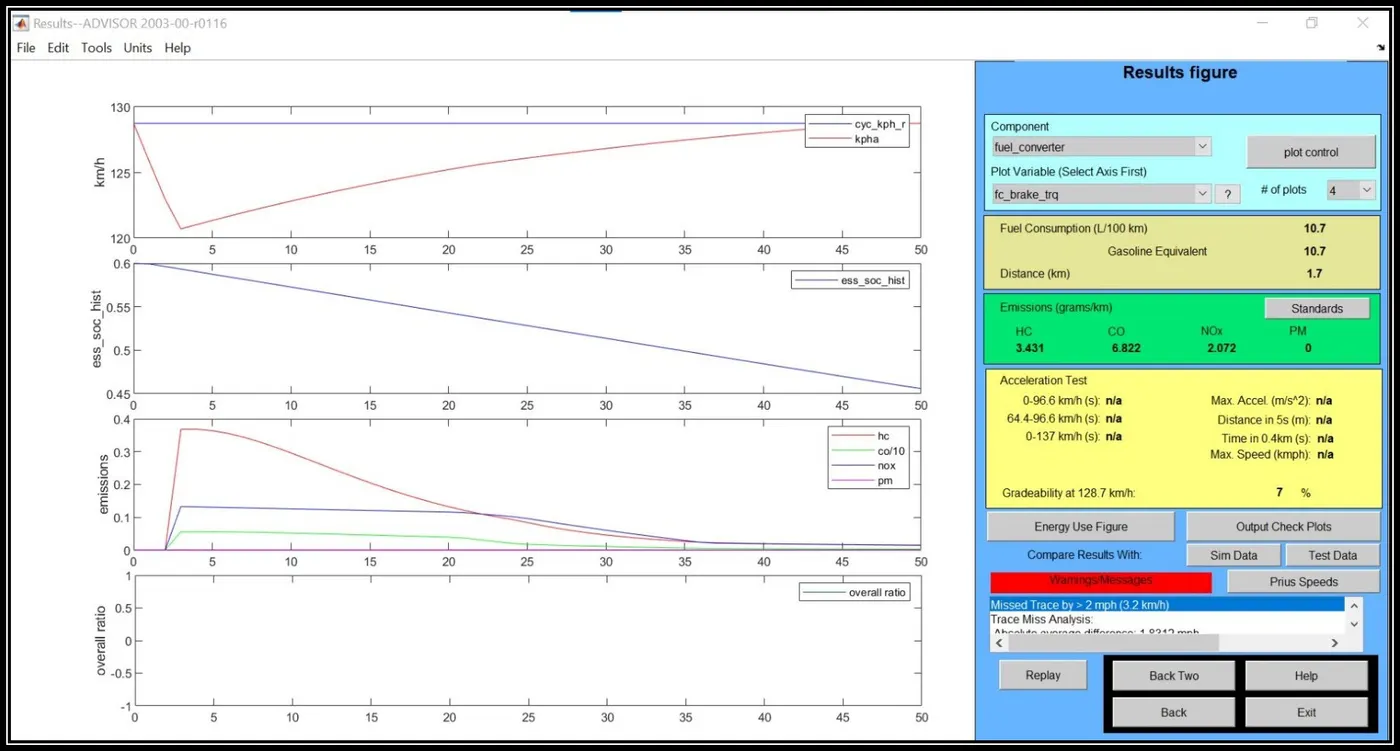
- Based on the result, it was observed that the gradeability is reduced to 7% at 128.7Kmph.
Trial-5:
- In this trial, the speed is further increased to 100mph:
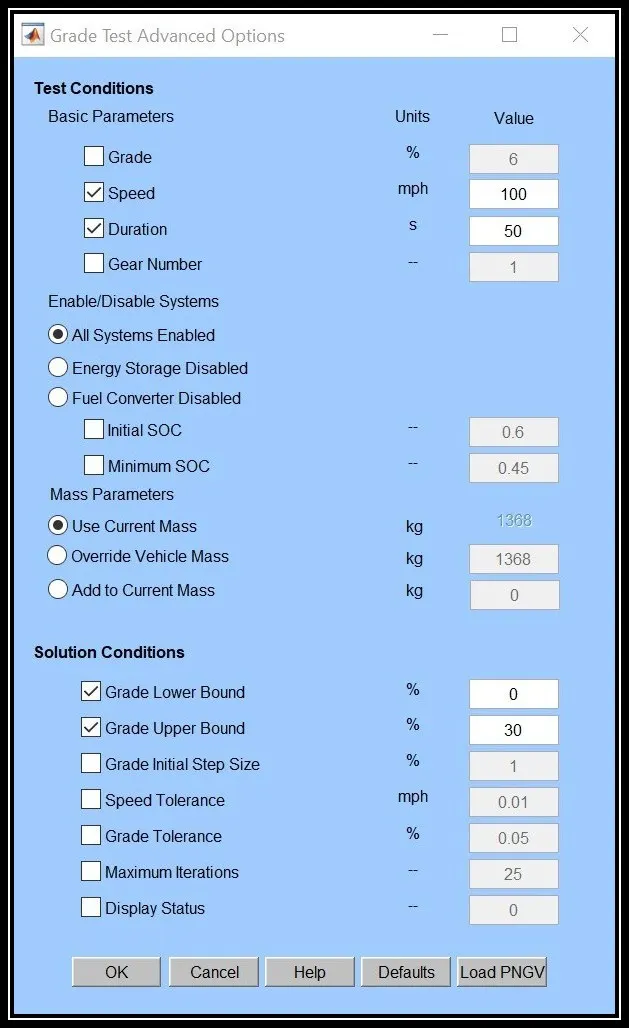
- In this trial, the speed is increased to 100mph and all the other parameter remains the same.
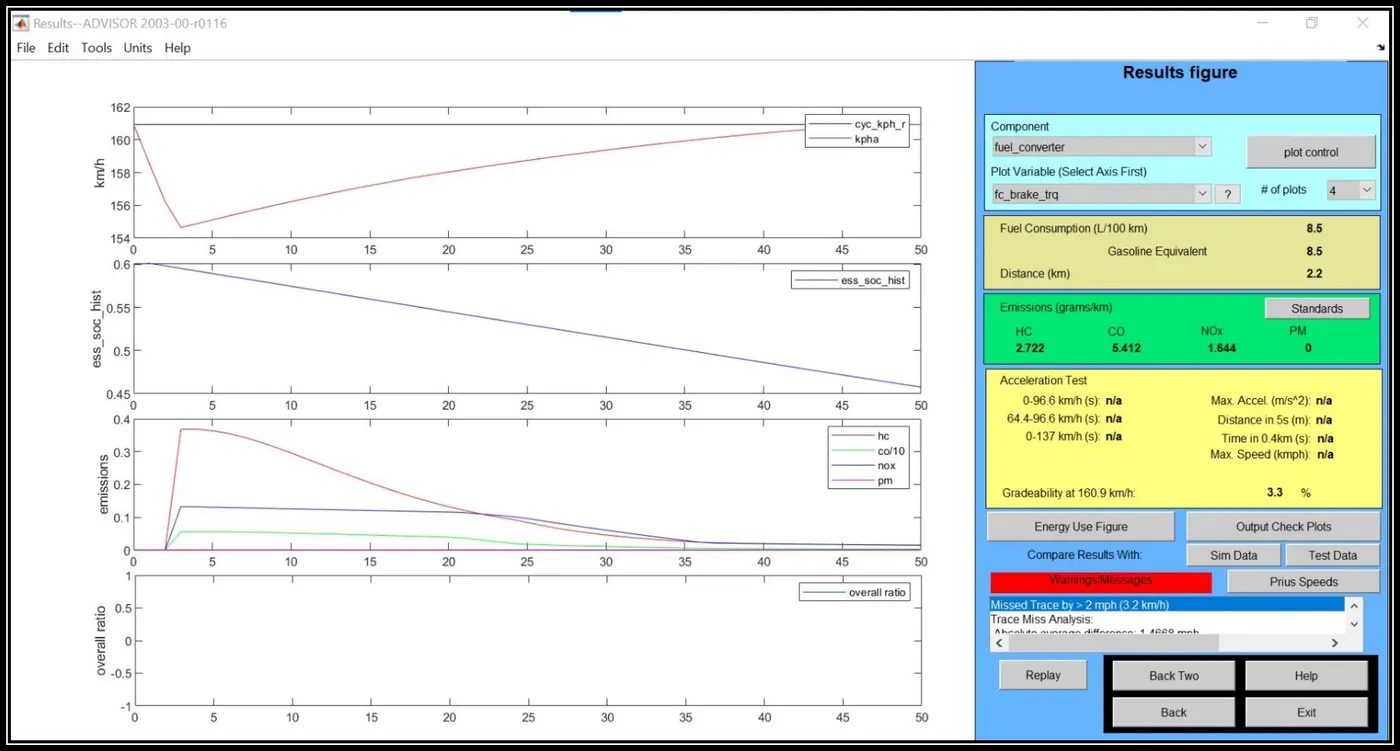
- Based on the result, it was observed that the gradeability is reduced to 3.3% at 160.9Kmph.
Trial-6:
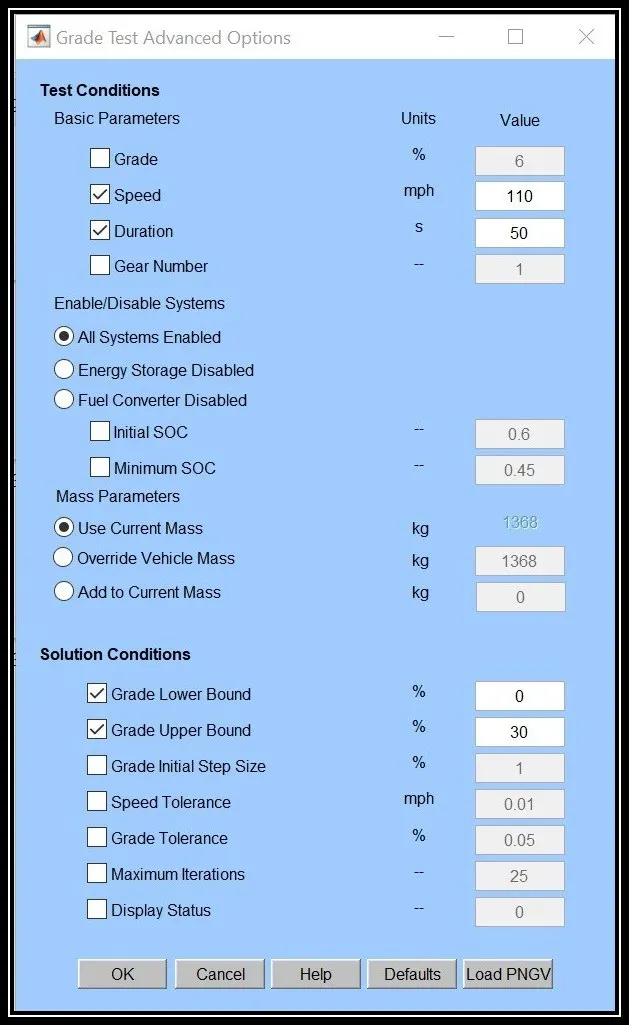
- In this trial, the speed is further to increased to 110mph and all the other parameter remains the same.
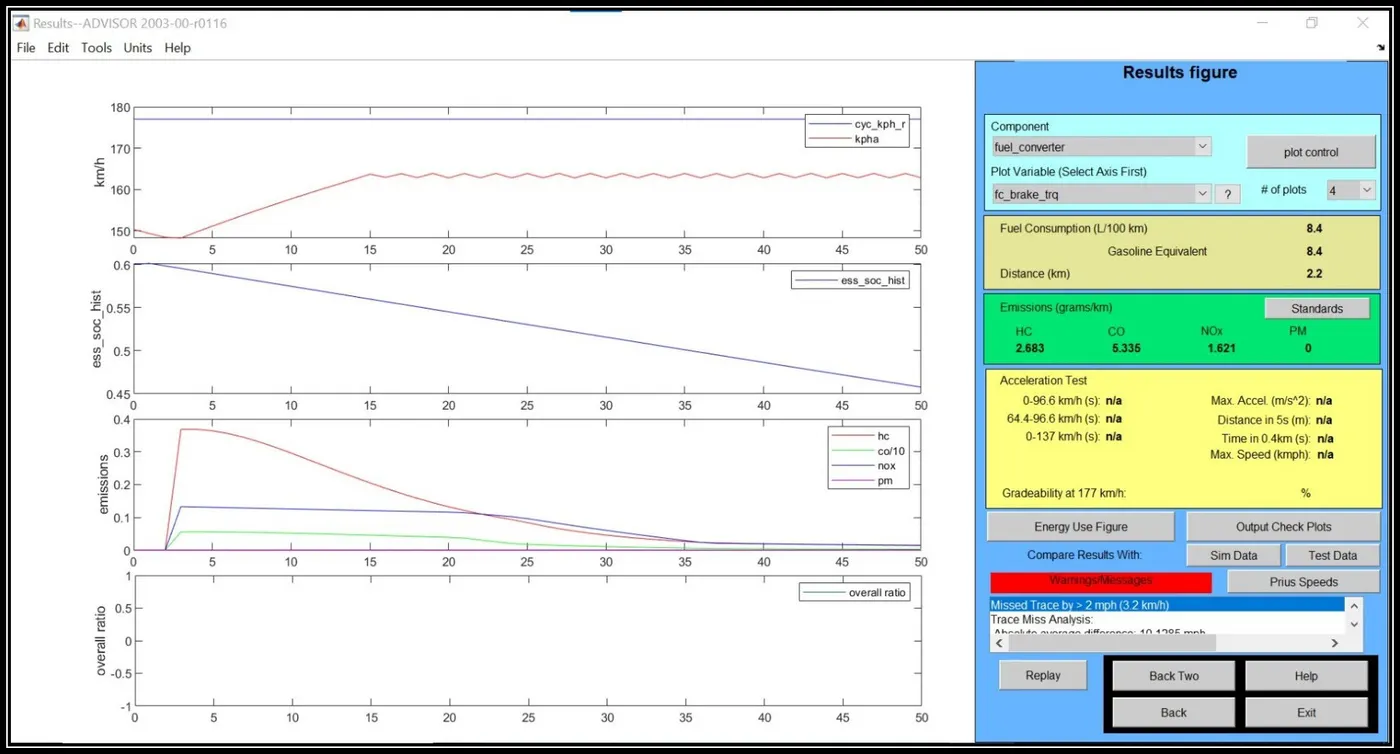
- Based on the result it is evident that the gradeability test fails at 110mph.
INFERENCE:
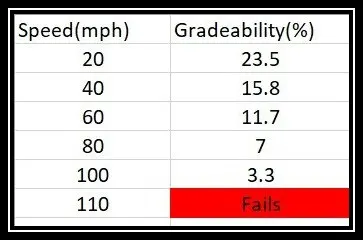
From the above trial, it is evident that the gradeability decreases with an increase in speed.