Underbody Coating
UNDERBODY COATING:
Underprovides body coating is a sprable coating, which protects the undersurface of the vechile from corrosion.
Underbody coating provides longterm protection from corrosion to car's underbody and it also protects the inner parts like internal body panels, frame rails and other inner cavities. protecting the underbelly of the car should be out top priority.
A car body is made up of several materials such as iron, steel, aluminium and other materials. Rusting is the common term for corrosion of iron and its alloys. A car's underbody is exposed to most wear and tear caused by muddy water, stones and other obstacles on the road. So that underbody coating offers a longterm solution for issues related to corrosion and rust.
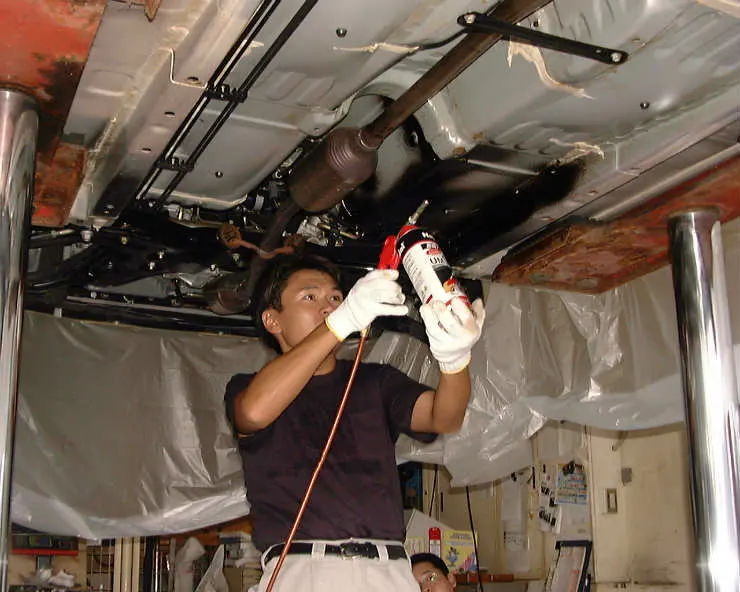
It protects the underbody substrates from:
* Environmental conditions
* Impacts
* Insulates against cold and heat
* Protects against corrosion
* Hides welds, repairs and body work with spray
TYPES OF UNDERBODY COATING:
Rubberized undercoating:
Rubberized undercoating is easy to apply and offers sound cushioning as well as protection form dust, moisture and etc.
In addition to your undercarriage, rubberized undercoating is also safe to use on wheel wells and quater panels, and dries to a soft rubbery finish that prevents further rust, damage or moisture seeps. The coating can be painted over and, if necessary for body work, can be easily removed with an under coating removal spray.
Polyurethane undercoating:
The other option for undercoating uour vehicle is use a polyurethane based sealant. this types of vehicle undercoating is a little bit quicker and easier to apply.
Often times, polyurethane undercoating will come in conister preload into an application gun. This type of sealent works by seeping into all crakes and seams, displacing salt and moisture and ozing around rusty areas to band with and protect unoxidized metal.
On this flipside, this type of car undercoating generally requires a little bit more surface prep work before applying sanding and applying an etching primer to bare metals before using are generally recommended.
Wax or paraffin based undercoating:
A paraffin based undercoating will be the cheapest and quickest opyion available with which to protect the undercoating of your vehicle. However, keep in mind that it will wear off quickwe than other types of undercoating and will need to be stripped and reapplied atleast over every year.
Alpha based undercoating:
For standard vehicles, any of the aforementioned types of undercoating will provide sufficient protection. for large trucks and heavy machinery, asphait based undercoating provides a bit of extra durability against rocks, chips and moisture.
Alpha based undercoating generally contains a little bit of rubberized material that sets up frimly and also helps soften noise. Generally sold in five gallon containers, this type of undercoating also needs more cure time than other three, and is not paintable, making it best to use only for undercarriages.
Advantages of underbody coating:
* Undercoating gives an extra layer of protection against rust and corrosion, protecting your car.
* It can be self applied.
* it minimizes the sound from underneah the car.
* It insulates the interior of the car from the exterme temperature from beneath the vehicle.
* The coating does not chip away when hit by stones.
Disadvantages of underbody coating:
* undercoating is not help you if corrosion already exists and the corrosion needs to be removed first before it can be applied, which can be expensive for you.
* It must be reapplied for every 3 to 5 years for best results.
* It adds weight to the vehicle.