Underbody Coating
UNDERBODY COATING
Automotive underbody coatings are applied on the underside of vehicles to provide a protective layer of protection between vehicle’s underside and damaging forces such as moisture, corrosion, stone chip damage and weather resistance.
UNDERBODY COATING PURPOSES
Automotive underbody coatings are generally applied on areas such as wheel arches, inside wing panels and the undercarriage of the vehicle. They provide a barrier between the metal component and its outside environment; hence, protecting the vehicle from damage and improving its vehicle life. Automotive underbody coatings not only provide corrosion and damage protection but also offer easy maintenance and reduce noise and vibrations.
Some of the desired properties of automotive underbody coatings include good adhesion, fast drying, tough, flexible and corrosion protection. Automotive underbody coatings may be solvent-based or water-based.
one of the market participants operating in the global automotive underbody coatings market is 3M
TYPES OF UNDERBODY COATING
1 . Rubberized Underbody Coating
Rubberized undercoatings do a great job of keeping existing rust all covered up and looking sharp, but it does absolutely nothing to slow down the spread of rust and corrosion
2 . Asphalt Based Automotive Undercoating
Best suited for lorries, trucks and large vehicles this provides a greater degree of protection compared to rubber-based coatings. However, asphalt-based coatings contain little amounts of rubber for sound-insulation purposes. The process of applying this coating is a bit time-consuming though.
This superior undercoating provides protection in wheel wells, gas tanks, frames, and floor pans. UnderCoat produces a very tough, yet flexible film with excellent adhesion, and helps prevent road salt from eating away at your car's metal and fiberglass
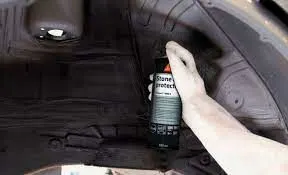
This type of sealant works by seeping into all cracks and seams, displacing salt and moisture and oozing around rusty areas to bond with and protect unoxidized metal. It also sands quickly in case you'll need to perform bodywork and can be painted over.