Underbody Coating
UNDERBODY COATING:
Vehicle undercoating simply refers to a defensive layer of specific materials that are applied to the underpart of vehicles for protection from mould, moisture, dust, rot, and all the other road scraps. Rust is the enemy for car owners because it can destroy the metal. Over time, pieces of your vehicle will start falling apart. That’s why it’s essential to keep rust in check. One way to do so is by applying an undercoating to the underbody of your car or truck. Undercoatings are designed to protect the bottom of your vehicle from salt, rock, gravel, moisture, and other corrosive substances. The coating is the formulation of spray that is applied to the chassis protecting it from rusting.
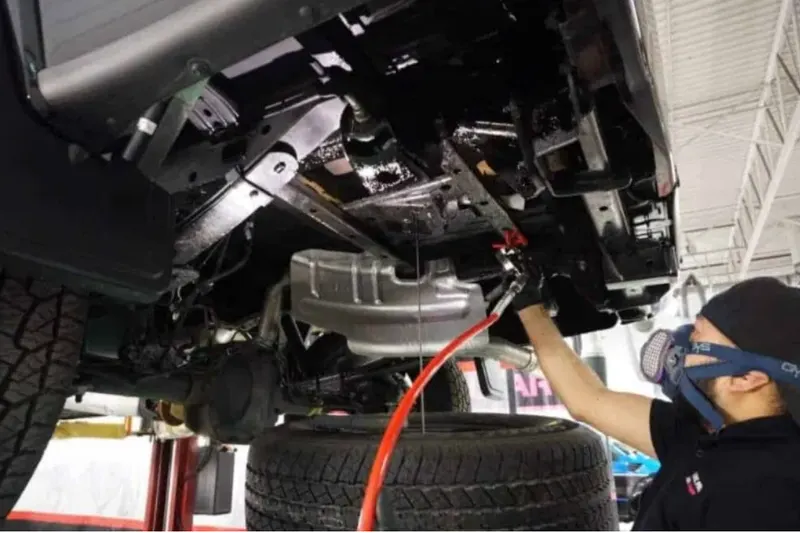
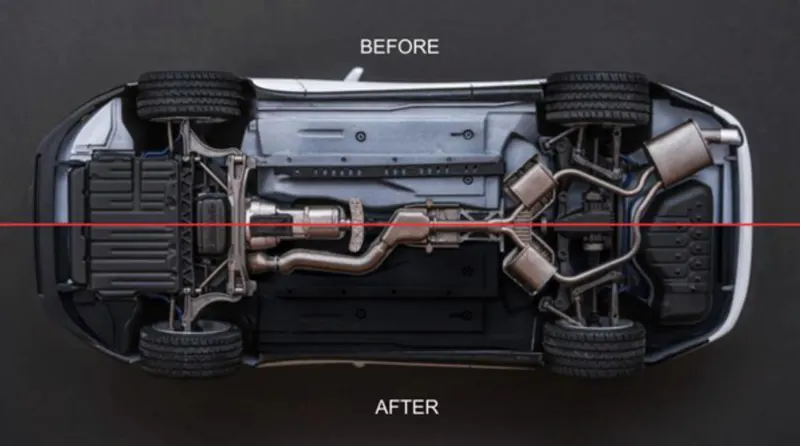
Types of Vehicles Underbody coating
1. Rubberized underbody coating
Rubberized underbody coating is easy to apply and generally offers the best protective coating for your car undercarriage. It cushions surfaces against moister, rust, dings, and dents. Rubberized undercoating is safe to use on quarter panels and wheel wells and dries with a soft rubbery finish.
2. Asphalt-based underbody coating
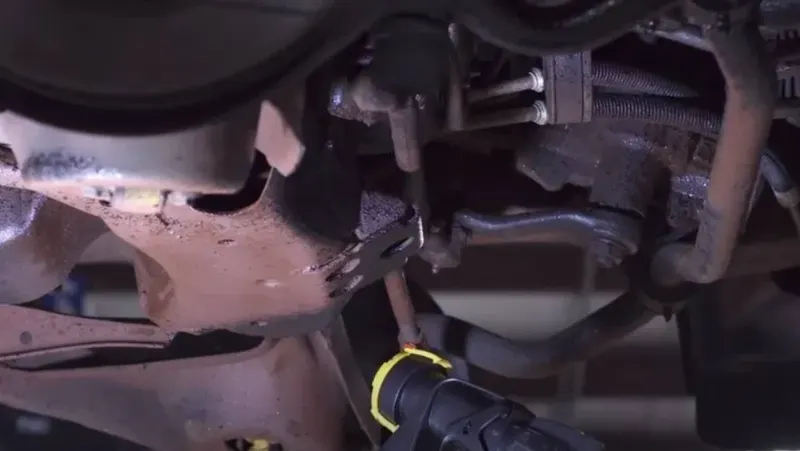
Asphalt-based undercoating offers a higher level of protection suitable for large trucks, recreational vehicles, and heavy machinery. It’s formulated with some bits of rubberized material to aid in noise reduction. It offers extra protection against chips and moister but is not paintable and therefore only suitable for undercarriages.
3. Polyurethane underbody coating
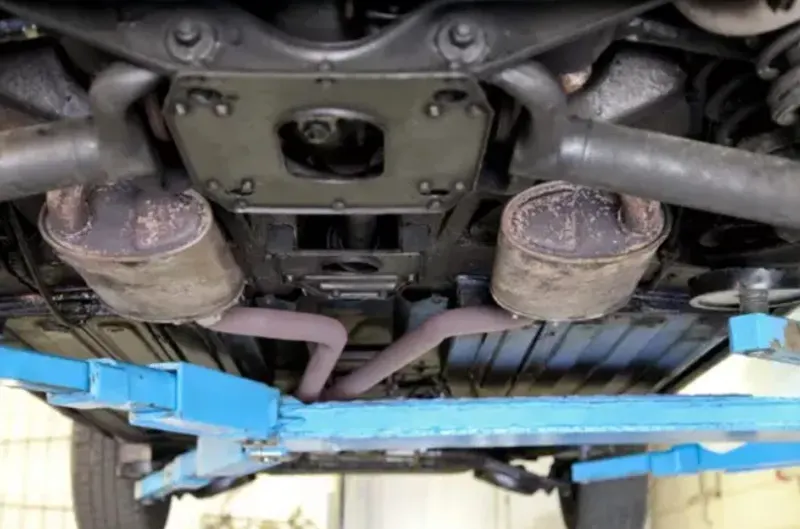
Polyurethane coating is easy to apply and works by sealing up cracks and seams. The compound displaces salt and moisture and protects the unoxidized metal from rust. It’s often sold in canisters that are ready to preload into an application gun. It, however, requires some surface prep work before application, like degreasing, and applying an etching primer to the bare metal.
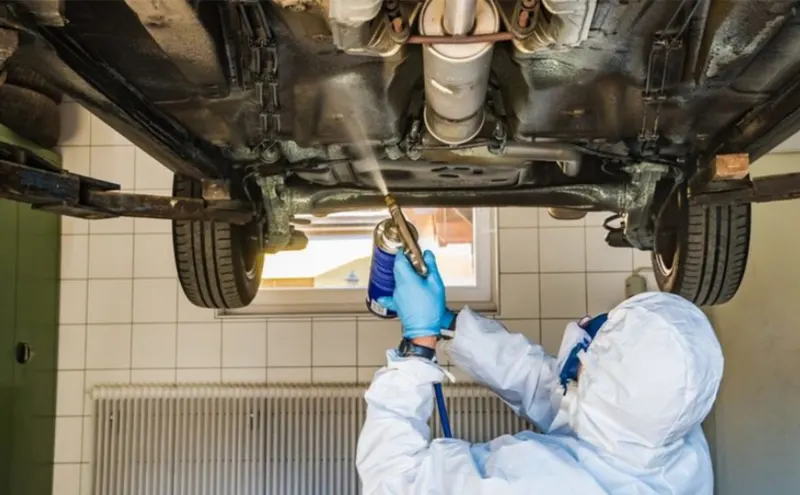
4. Wax or paraffin-based undercoating
Wax or paraffin-based undercoating sprays are the cheapest and quickest options available. However, their results don’t last long, and you may have to apply a fresh coat after only a few months. In addition, the wax isn’t very adhesive on a metal surface. Its main advantage is that it seeps quickly into cracks and seams, and offers moderate protective properties against moisture.
Modern Automotive Coating Processes
Modern automotive coating methods consist of five main steps. They include the following:
1. Pretreatment- Removes and cleans excess metal and forms an appropriate surface structure enabling bonding of a corrosion protection layer.
2. The next step is electrodeposition (ED) of the anti-corrosion or rust prevention layer.
3. A sealer like Poly Vinyl Chloride (PVC) is applied for anti-corrosion, elimination of water leaks, and minimization of chipping and vibrational noise.
4. A primer is then applied to promote adhesion between the surface and the basecoat; it also imparts a smoother surface for subsequent layers and has anti-chipping properties.
5. Finally, the topcoats that include a basecoat and clearcoat are applied; they provide surface properties that are sought after, including colour, appearance, gloss, smoothness, and weather resistance.
1. Pre-treatment
When the automobile body sheet metal components are welded together the resulting structure is referred to as the body‐in‐white (BIW). The first sequence in preparing the BIW for subsequent coating is pre-treatment. Pre-treatment consists of cleaning the body surface to remove remaining oils from the stamping process and welding residues through three primary liquid dips.
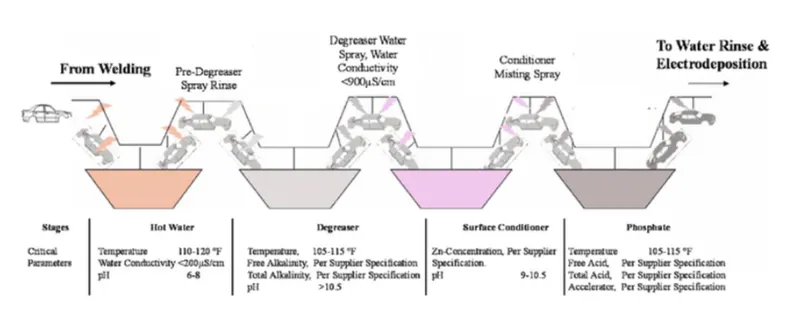
processes of degreasing, conditioning, and phosphating.
2. Electrodeposition
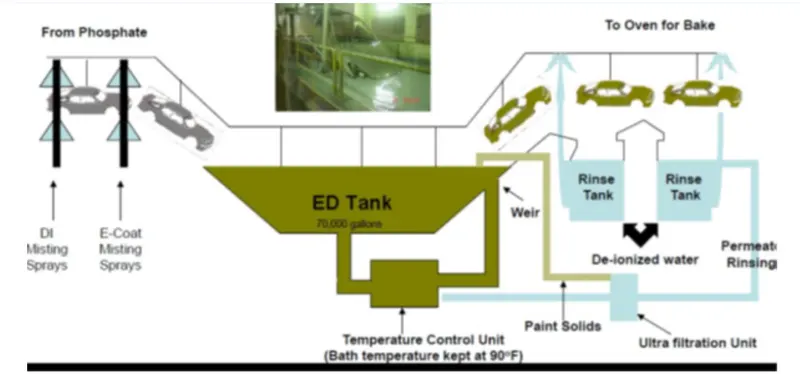
The electrodeposition coat or E-coat provides rust and corrosion protection. The E-coat solution consists of a mixture of resin, a binder, a paste containing the pigments, and a solvent. During anodic electrodeposition, metal parts are positively charged while the paint is negatively charged; because small amounts of metal ions migrate into the paint film, it limits the performance properties of the coating. Hence, anodic coatings are mainly used for interiors and offer excellent colour and gloss control.
3.Rustproof materials
The third step is underbody coating (UBC) and seam sealing using PVC (Polyvinyl Chloride) and urethane. This sealing has multiple purposes

The sealant is applied around and inside the doors, hood, trunk, and front dash, and onto the exterior and interior of metal joints and outer area of the back wheel well; application of the sealant is accomplished either manually or with robots and prevents air and water ingress and inhibits rust formation. Recently, PVC and acryl/urethane sealants have also been used in the underbody areas, a process called the Dampening Coat (DC), to impart noise‐proofing and vibration‐deadening. The noise and vibration are transferred from the engine, drive train, suspension system, road noise of the tires, and flowing air, and the underbody sealants reduce noise transfer into the passenger compartment of the automobile. The anti‐chipping material coating on lower doors and rocker panels.
Pros of Vehicle Undercoating
1. Provides an Extra Layer of Protection
In most cases, new cars, SUV’s and trucks come with good protection underneath. But, if you are living in cold climates or coastal areas, having a coated underpart is a great advantage. It provides your car with an extra layer of protection from rust and corrosion. While driving your car, road debris will come into contact with the undercoating instead of underneath metal components. Before the coating wears out, you can enjoy years of protection against early corrosion. Not only underneath but also the trailer of your car can be coated the same way using tailer paint.
2. Extends the Lifetime of Your Vehicle
If the undercoating is applied properly, it can extend the lifetime of your vehicle for a significant amount of time. Vehicle undercoating gives your car rust prevention power and makes your ride safe and functional. When you don’t apply it to your vehicle, then quick rust is the outcome, which will lead to corrosion eventually.
3. Reduces Internal Noise
No one likes to have a noisy ride on their vehicles. Sometimes roads with heavy traffic cause unbearable noise pollution outside. I’m sure that you wouldn’t like to have a noisy interior as well. Once your car is undercoated, it can reduce the interior noise inside of your vehicle and comparatively provide you with a more peaceful ride.
4. Self-Applied Facility
It is always preferable to go for professional touch for any kind of technical maintenance. But if your budget is tight, you need not worry about it much. With your basic car maintenance skills, you can do the job for yourself.
Cons of Vehicle Undercoating
1. Less Effective If Corrosion Already Exists
Once there is rust underneath, vehicle undercoating won’t give you many effective results. Though the coating will be covering the damage that already took place, the rust inside will continue its job to lead to corrosion.
2. Works Well on New Vehicles
If your car is already old enough or you bought a used one, then undercoating wouldn’t be a good choice. As coating the underneath of a used or old car requires the removal of all the residue, it will cost you more which is definitely not the best idea. So, it’s better to apply coating on new cars as they offer premium protection.
3. Not impervious to damage
An undercoating doesn’t always mean protection for a fixed amount of time. Based on your road trips and the things you have to drive against, the lifespan of your coating can be minimal.
4. Need to Reapply Every 3 to 5 Years
For ongoing protection, you need to make sure you are ready to invest in undercoating your vehicle every 3 to 5 years. Most users can ride their vehicles for 5 years without worrying much once the underpart is coated.
Purposes of Vehicle underbody coating
Save time and money.
If you pay a professional to put an undercoating on your vehicle, it can be costly. Plus, you have to make an appointment, set time aside to bring your car to the shop and wait for the results. If you do the job yourself, you'll save a lot of money, and you can choose when and where you want to do the project.
Minimize road noise.
Over time, your vehicle's undercarriage can rattle a bit due to age and rust-related calamities. Undercoat products are designed to fill in the small spaces and seams beneath your vehicle that can be noisy when you're driving.
Provide additional protection.
The best undercoat formulas will provide an extra layer of protection against dust, moisture, and corrosion. You have to worry less about gravel and other elements that may harm the undercarriage.
Significance of underbody coating
Undercoating helps to provide an additional layer of insulation and protection to the undercarriage of your vehicle.
Manufacturers may apply car underbody coating at the factory.
The undercoating covers most of the car’s underside, including floorboards, frames, gas tanks, pans, wheel wells and mufflers, suspension parts and exhaust pipes. This effect can be likened to the black coating of a parking lot or a road.
Undercoating materials adhere to metal, even if it is painted. Most of them come in pressurized cans for easy spray-on application, while an even spread may be tough to achieve without professional applicators.
Ingredients used in the manufacturing of undercoating include fibreglass, ceramics, rubber, asphalt and silicone. Each has different properties in terms of heat resistance and retention, but all give protection against the elements and damage.
Auto undercoating protects the undercarriage, a vehicle’s most vulnerable area. Unlike the visible portions of your vehicle, the undercarriage doesn’t get washed frequently but it absorbs most of the moisture, grime, salt and other substances when you come in contact with those, as you drive.
In addition to protecting your vehicle from elemental damage, good undercoating can also reduce engine noise, leaving you quieter than ever before.
Even though if you buy a new car with undercoating from the dealer, remember that undercoating wears off typically within a short period of 1 year. Worn, patchy car undercoating can get damaged when water and other elements then get trapped under the coat, further eroding metal.