Underbody Coating
UNDERBODY COATING
INTRODUCTION:
- A car's underbody is exposed to the most wear and tear caused by muddy water,potholed roads,stones and other obstacles on the road.Because it's not in plain sight,we often do not see the damage.
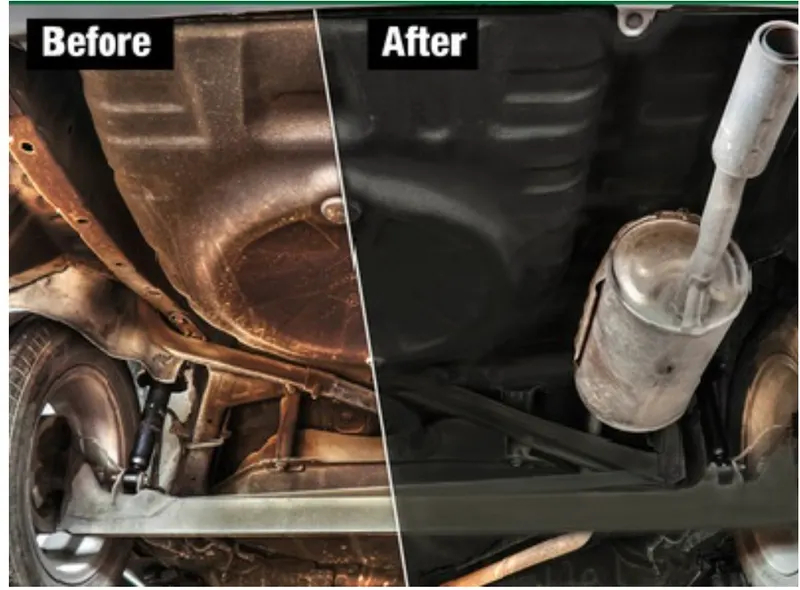
- In indian road conditions,a car's underbody is most prone to corrosion.Underbody coating provides long term protection from corrosion to cars underbody.It also protects parts like internal body panels,frame rails and other inner cavities that are not physically accessible but are prone to corrosion.
- Underbody protective coating is used to protect the vehicle chassis from external environment,to ensure the integrity and safety of car.The use of underbody coating plays a very important role in the service life of the vehicle.
- In general,it is required to spray such protective coating in the manufacturing of the new car.Due to highly competiveness of new car sales,car producers have pressure to reduce the manufacturing cost,so that they reduce or even completely eliminate the use of under body coating where it is not to be easily seem by car owners.As a consequence,our service life will be greatly reduced.
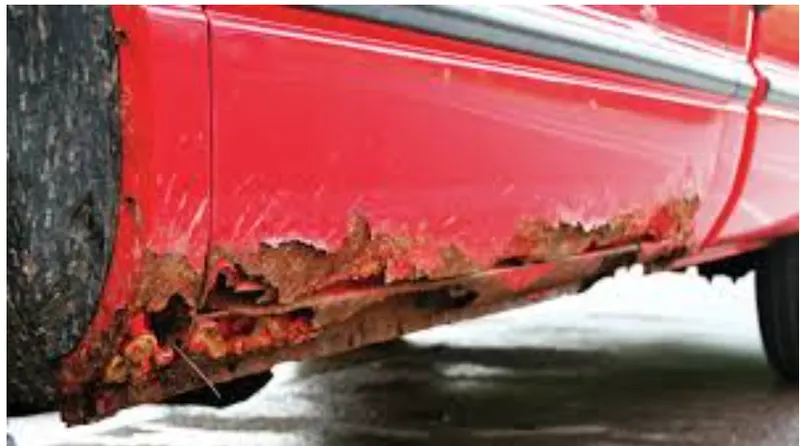
- Many car owner know to regularly maintances the vehicle by changing the engine oil and having the paid polished,but little attention has been paid to the bottom of the car.There are many cars whose surface looks glossy,while the under body's already rusting.
PURPOSE OF UNDERBODY COATING:
- Prevent from stone chip
- There are thousands of piecces of stones on the road,and they are constantly hitting your car on the under body,wheel arches,sills and the trunk lower part while driving on the road.In some cases,the under body might be scartched by uneven road.
- As such the thin corrosion protection coating on the metal sheet will be destroyed and leave the bare metal exposed to the air,which will soon come to corrosion when contact with the moisture in the air.If not promptly getting anti-rust treatment,then the rust will soon spread to large areas.Under body coating or the anti-stone chip coating is a thick elastic layer which could not be easily damaged by stone chipping or scratch,therfore could basically protect the metal sheet of the under body.
2. Prevents paint chipping:
- Running on the highway or while packing through a city road,you will often encounter sharp gravel or any other unattented object hitting the belly of your car with high momemtum.This scrapes and chips off the metal from down below.A thick layer of underbody coating definitely comes to aid and minimise the effects of such contacts on the body.
3. Protects Against Rust & Corrosion:
- The primary objective of getting underbody coating done is preventing metal components that are exposed on the bottom side of the car to damage from corrosion.You can shut out the adverse effects of corrosion on your car by simply applying a rubberised anti-rust coating all over the belly of your car.
4. External influence:
- External environment,such as the baking from the hot road in summer,the road's anti-frozen gent in winter,raining water and salty water in the atmosphere,will atach the under body of car.While the under body is covered by the thick and tight layers,it would act as a strong barrier to prevent these external substances attaching the metal sheet.
5. Protects vital components:
- Underneath a car is somewhere a lot of indispensable parts of a car are left exposed like the engine,silencer,etc.One simply can't afford to let these parts go bad due to rusting and hence in order to save yourself from a hefty repair bill,a considerably less expensive Anti-rust Coating is a must.
6. Reduces NVH Levels:
- Our country is filled with roads having uneven patches and potholes and while we manoeuvre our cars through such sections,the unpaved crumbs,and pebbles hit the car from underneath or get stuck in the wheel wells.
- The underbody coating's consistency is so thick that the layer it creats absorbs all the unpleasant noises and vibrations and marginally improves the driving experience.
TYPES OF UNDERBODY COATING:
- When having your vehicle rustproofed or an undercoating applied,you have a few options to choose from.Whether you prefer the latest technology or a more tried and true method,knowing what the different options are should allow you to choose the best one your vehicle.
1. Electronic method:
- Using a weak electric current,this small device can stop the corroding effects of rust.You can have these electronic decvices installed at the dealership,or save some money and buy them from a source outside of the dealership.The reviews on these devices are mixed,as this is a virtually new technology.
2. Undercoating:
- This method involves spraying a tar-based substance on the exposed parts of a vehicle's underbody.The tar-like undercoating acts as a barrier once it hardens, keeping out moisture,salt and other substances.
- This undercoating works best when applied to the undercarriage of a new vehicle.It also requires expert application,or it can crack,letting in moisture.
3. Dripless oil spray:
- A wax-like substance applied to the entire body of the vehicle,it hardnes once it has dried.One of the downsides of dripless oil sprays is that you need to have holes drilled into the body of the car at specific points to make it effective.The spray also has a high viscosity,meaning that it does not always get into all of the nooks and carnnies of your vehicles.
4. Drip oil spray:
- This is most commonly recommended rust protection.Drip oil sprays tend to continue to drip once applied until the dry.This dripping can last anywhere upto 48 hours after applications.
- Unlike the dripless varieties,the more watery nature of drip oil sprays means it gets into more areas on your vehicle,though you still need to have holes drilled in your vehicle's fenders,doors and other areas to make sure that it gets to all the areas it needs to.
TYPES OF UNDERBODY PAINT:
- A car underbody coating can be factory-applied or aftermarket.Most commonly these coatings are one of the three types.
Resin-Based:
- Polyurethanes and rubber coating are popular because their elastometric properties provide long-term stone chip damage and corrosion protection as well as sound deadending effects.These also have the benefit of being suitable for a wide range of substrates and they can be painted over.Can be spray-applied,high build and particularly good for areas of possible salt exposure.
Wax-Based:
- An excellent anti rust coating suitable for all substrates.The wax is applied soft and cures hard,either by brush or spray and can be layered thickly.It cannot be top coated.
Bitumen-Based:
- These underbody paint systems provide hard-wearing protection against stone chip damage and corrosion.They also have sound-deadending properties suitable across many substrates but cannot be painted over.
BENEFITS:
- Minimize Sound:It minimizes the sound from underneath the car resulting a noiseless,smooth driving experiences.
- Heat Insulation:It insulates the interrior of the car from extreme temperatures from beneath the vehicle providing a comforatable cabin experience.
- Anti-chipping property:If any stone hits the coating it does not get chipped away hence protects the underbody from exposure to water.
DISADVANTAGES:
- Nothing comes for free in this world.The same goes for undercoating.The undercoating or rustproofing spray is heavy in pockets.However it is nothing when you compare it with the cost of replacing a vehicle after corrosion.
- It won't do anything about the corrosion which is already present.It works best on new cars.
- An undercoating is not impervious to damage.It adds weight to the vehicles.Protects against rust and corrosion.
APPLICATION PROCEDURE OF UNDERBODY COATING:
- Lift up the vehicle,take off the wheel and plastic wheel covering.Throughly clean the underbody of the vehicle by high pressure water.
- Blasting with compressed air could accelerate the drying.Mask off the adjacent areas and parts with paper where not allowed to spray,such as exhausting pipe,brake system,engine,paint surface etc.
- Shake the can approx 40 times before use,connect the can with spray gun.Spray at room temperatures and form a distance of approx.25 cm in an x motion to built up a continuous coat.Do not spray on parts of the brake,engine or exhaust system.
- Apply this product until the desired layer thickness is reached.If a thick layer is required ,let layers dry in between.After each use,clean the spray by flushing with suitable solvent.