Underbody Coating
UNDERBODY COATING :
The Underbody coating is usually a dense cladding applied uniformly to the undercarriage of the automobile, underbody provides long term protection from corrosion to car’s underbody. It also protects parts like internal body panels, frame rails and other inner cavities that are not physically accessible but are prone to corrosion.
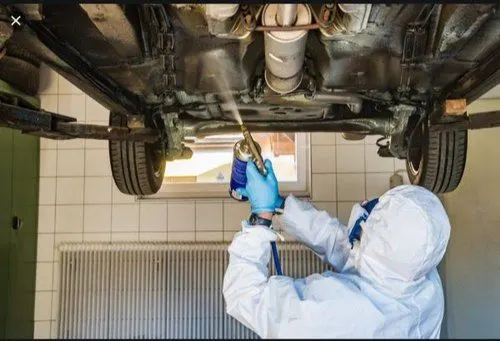
Types of undercoating
- Rubberized underbody coating:
This is generally thought of as the best underbody coating for your car. It preserves the underbody well, protecting it from scratches. Applying this to the undercarriage is not much of a hassle either.
- Wax Based underbody coating:
Wax based undercoating puts up a big fight against moisture. It is also the most affordable option out there.
- Asphalt Based Automotive Undercoating:
This is best suited for Lorries, trucks and large vehicles this provides a greater degree of protection compared to rubber based coating. However, asphalt-based coating contains little amounts of rubber for sound-insulation purposes. The process of applying this coating is bit time-consuming though.
- Polyurethane underbody coating:
This coating closes up splits and fractures on the underbody of the vehicle. It offers up good protection against corrosion and also bond with the metal. Unlike in the case of asphalt-based coating, you can paint over the polyurethane coating.
Different methods of undercoating
- Spray:
The spray is the most common method used by dealers. The spray consists of tar-like substance that is applied to the undercarriage. It functions as a barrier for salt, moisture and oxygen which causes corrosion.
- Electronic:
Removing the electrical current capacity of items underneath the vehicles is another method for applying to undercoat. A weak electric current circulates through the material, reducing the chances of rusting.
- Drip Oil Spray:
This method is incredibly effective at protecting the undercarriage. It covers every nook and corner of the chassis, forming a robust layer of protection.
- Dripless Oil Spray:
In this method waxy substance is applied to the body and undercarriage, forming a strong protective layer. However, the layer can easily wear and tear than the other counter methods.
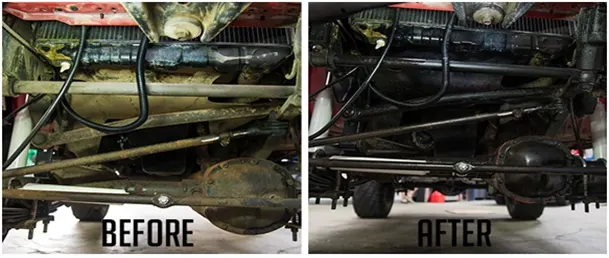
Undercarriage without coating Undercarriage with coating
Pros-
-
Minimizes Sound: It minimizes the sound from underneath the car resulting a noiseless, smooth driving experience.
-
Heat Insulation: It insulates the interior of the car from extreme temperatures from beneath the vehicle providing a comfortable cabin experience.
-
Anti-chipping property: If any stone hits the coating it does not get chipped away hence protects the underbody from exposure to water.
Cons-
-
Apllying underbody coating will not have any effect to the already corroded part.
-
Undercoating is costly.
-
Since the corrosion itself starts after few year, underbody coating is not preferable to ower who change their car after few year.
CONCLUSION-
Underbody coating is one of the hidden factors for prolonged life of the car. As it protects the car from dust, minor hit of small gravel, minor wear and tear and rust. It provides strength to the underbody. But the coating is not for lifetime, it removes or chipped out as time passes. In wet area, the coating damages faster as compared to dry area. So therefore, check-up is required over every 1 or 2 years.