Under Body Coating of Passenger car
UNDER BODY COATING
Introduction
At the beginning of the automotive industry about 100 years ago, cars were painted with
a varnish-like product that was brushed onto the vehicle surfaces; this coating was sanded and
smoothed, and then the varnish was reapplied and refinished to establish several layers of the coating. After multiple layers of varnish were applied, vehicles were polished to produce shiny surfaces. Some manufacturers, including Ford in the Model T line, employed a combination of brushing, dipping, and even pouring to fully cover and protect various parts of a car.
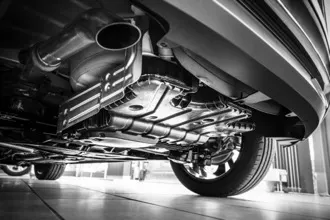
Under Body Coating
The Term Under body coating define itself what is under body coating . Its nothing but the additional coating which is sprayed under vehicle body to prevent from rusting in other words .
An undercoating is the first line of defense between an automobile’s metallic underside and the elements, and all vehicles receive a coating of this stuff before rolling off the assembly line. But these OEM coatings will eventually wear-out over time, leaving oil pans, transfer cases, suspension arms, and other metal components vulnerable to corrosion and rust.
In the Process of under body coating government also has certain rules and Norms to be followed by manufacturer while vehicle manufacturing .
The coating is the formulation of spray that is applied to the chassis protecting it from rusting.
Difference Between Under body coating and Rust proofing
Under Body coating is the formulation of spray that is applied to the chassis protecting it from rusting . which is applied under the body
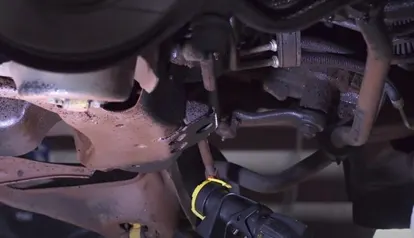
Under body coating
Rust proofing is a process that involves the application of rubberized sealants, lanolin oils, or any number of other rust-repelling coatings on corrosion-prone surfaces. Some of the common areas that get “rust-proofed” include the undersides of fenders, weld points and seams, fuel tanks, suspension arms, axles, rear differentials, and chassis cradles.
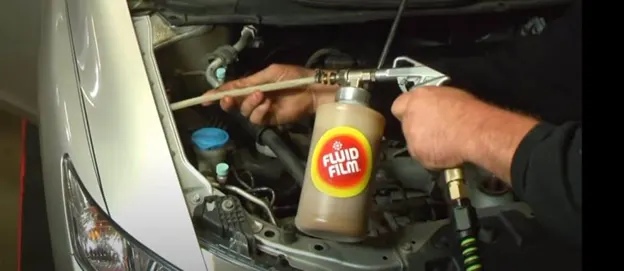
RUST PROFFING
Types of Under body coating

Generally Underbody coating is third step is underbody coating (UBC) and seam sealing using PVC (Polyvinyl Chloride) and urethane. This sealing has multiple purposes it is also typical to apply a soft tip primer coat that improves the chipping resistance (resistance against chipping by flying stones or debris). This layer is applied to the front edge of the hood, which is an area prone to chipping shock, using a high elastic resin that resides between the ED and primer coats. Also, during the third step, the radiator supports, wheel housing, and under rear areas of the body are coated with a relatively dull black pigment called a blackout coating.
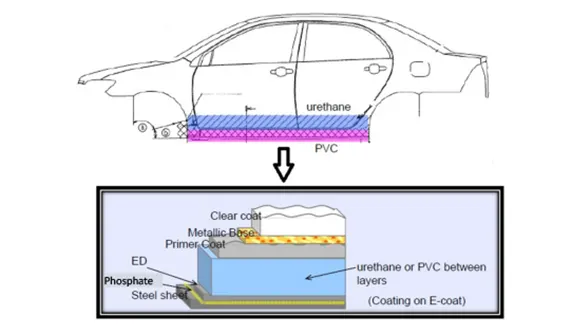
- Spray
The spray is the most common method used by dealers. The spray consists of a tar-like substance that is applied to the undercarriage. It functions as a barrier for salt, moisture, and oxygen, which causes corrosion.
We can also purchase it as a DIY product, but the whole magic lies behind the method of application, so it’s better to do the job with a dealer, especially if we have a new vehicle.
- Electronic
Removing the electrical current capacity of items underneath the vehicles is another method for applying to undercoat. A weak electric current circulates through the material, reducing the chances of rusting.
For using this method, a DIY solution wouldn’t work; we would need an expert.
- Drip Oil Spray
If we want to do it werself, then drip oil spray is the best option. This can be messy but incredibly effective at protecting the undercarriage. It covers every nook and corner of the chassis, forming a robust layer of protection.
Time is the factor where we have to show patience in this method. It takes a long time to dry. In some cases, it drips around 48 hours to a week.
- Dripless Oil Spray
Coming to the last option, the dripless oil spray. This waxy substance is applied to the body and undercarriage, forming a strong protective layer. It doesn’t take much time to dry; however, the layer can easily wear and tear than the other counter methods.
Barriers in Under Body Coating
Protection against stone chipping and corrosion are major issues in paint shop underbody applications – especially in high-stressed areas like wheelhouses and rocker panels. Typically, PVC is used to seal underbody seams and to form a protective coat on exposed areas and parts. In many cases, the material is applied bottom-up, which requires precise higher-pressure applications without compromising precision.
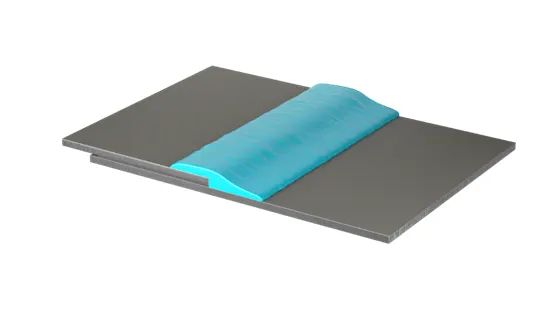
Flat Stream
Flat stream is a common application process developed to protect trim edges against corrosion. The material is applied with moderate pressure in a flat bead. The bead size and shape are defined by the nozzle geometry. The accurate material distribution and even contour of the application ensure a high-quality seal and prevent extensive rework.
Airless spraying
Airless spraying is a convenient solution for underbody protection against humidity and stone chipping. It is a high-pressure application that allows a larger distance between nozzle and car part yet providing a gapless material distribution. Airless spraying is flexible regarding coat thickness as well as application distance and application speed.
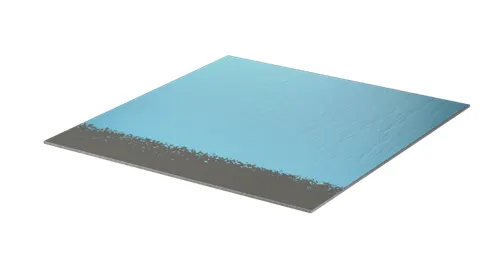
Wide flat stream
Wide flat stream is an extremely productive dispensing solution for underbody coating. By using customized wide slot nozzles, the application width can be up to 150 mm. The sharply contoured stream ensures a highly repeatable quality coat with no overspray. This prevents contamination of the car body and the production cell, and improves the visual appearance.
Pros of Under Body Coating
- It extends the lifespan of your car
The protection against rusting gives you the biggest advantage, which is the long-life of the vehicle. If undercoating is done the right way, then it will provide protection for up to 10 years. In some cases, the time span is more than ten years, which extends the lifespan of your vehicle.
- No more loud road noise
The undercoating serves as an extra layer of insulation, reducing the noise from penetrating inside components. Thus padding acts as a barrier between you and the source of the noise. If the road noise bothers you while driving your car, truck, or SUV, then applying to undercoat can help you.
3.Reinforcement
If your car comes with stock underbody coating, using another coating on top of it, is not going to hurt. It will offer additional reinforcement, protecting the underbody from water, road debris, gravel and small pebbles. There would also be a lesser chance for the factory coat to flake away.
Cons
Nothing comes for free in this world. The same goes for undercoating. The undercoating or rustproofing spray is heavy in pockets. However, it is nothing when you compare it with the cost of replacing a vehicle after corrosion.