Underbody Coating
UNDERBODY COATING
Underseal or underbody coating is a thick resilient coating applied to the underbody or chassis of an automobile to protect against impact damage from small stones, which would rapidly chip ordinary paint allowing to rusting.
Historically, a bitumen-based compound was used, but after approximately a decade, this becomes brittle and water can become trapped between the underseal and body metal. counterproductively creating a more favorable environment for rust than if no underseal was applied at all. wax-based underseals do not have this disadvantage, but can be eroded and eventually washed off by enthusiastic use of a hot pressure washer.
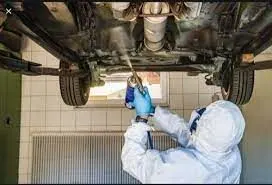
UNDERBODY COATING
Major Steps Involved In Underbody Coating:
1. Pretreatment
Pretreatment consists of cleaning the body surface to remove remaining oils from the stamping process and welding residues through three primary liquid dip processes of degreasing, conditioning, and phosphating. An additional pretreatment cleaning that employs ~pH 9 hot water can also be used.
2. Electrodeposition (ED)
An electrodeposition solution having a 90% Zn,10% Fe composition is the primary coating used in modern automobiles to prevent corrosion.
3. Rust-Proof Materials
The sealant is applied around and inside the doors, hood, trunk, and front dash, and onto the exterior and interior of metal joints and outer area of the back wheel, well application of the sealant is accomplished either manually or with robots and prevents air and water ingress and inhibits rust formation.
4. Primer
The primer fills and smooths minor imperfections and scratches that may be created during prior steps and by the intermediate sanding or grinding used to remove small imperfections. Additionally, most automobile bodies have surface imperfections that arise from the pressing, stamping, and welding operations.
5. Topcoat
The final steps in the body coating process is to apply the topcoat, which consists of two layers the basecoat and clearcoat. the basecoat contains the primary coloring pigment, and clearcoat provides a protective coating against environmental effects.
Different Types Of Underbody Coatings:
1. Rubberized Underbody Coating
These coatings are easy to apply and offers sound cushioning as well as protection from dust, moisture and dents
2. Polyurethane Underbody Coating
This type of undercoating is a little bit quicker and easy to apply. this type of undercoating often comes in a ready to preload into application gun.
3. Wax or Paraffin Based Underbody Coating
Wax or paraffin based underbody coating will be cheapest and quicker option available in the market, but it will drained out by climatic changes.
4. Asphalt Based Underbody Coating
This coating is mainly used in light commercial vehicles for vehicles such as trucks, buses, vans etc. this coating has little bit of rubberised material that set up firmly and also helps in reduction noice.
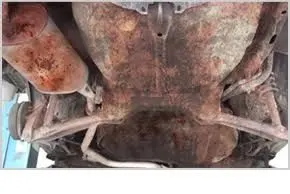
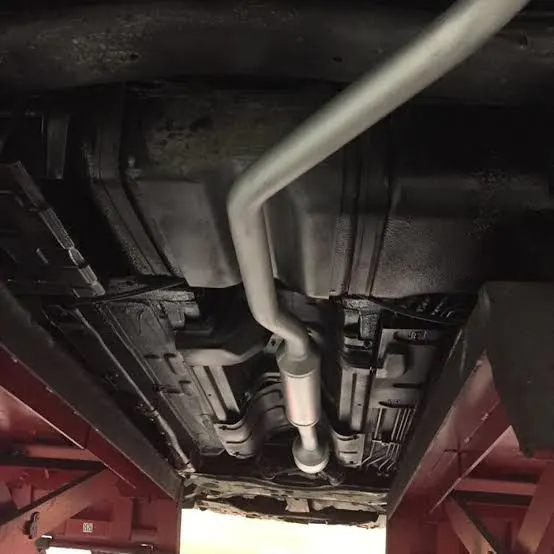
without underbody coating with under body coating
Pros And Cons of Underbody Coating:
Pros of Vehicle Undercoating
1. Provides an extra layer of protection
2. Extends the lifetime of vehicle
3. Reduces internal noice
4. Self applicable facility
5. Comes with several undercoating methods
Cons of Vehicle Undercoating
1. Less effective if corrosion already exists
2. Works well on new vehicles
3. Not impervious to damage
4. Need to reapply every 3 to 5 years
Benefits of Underbody Coating:
1. Prevents stone chip damage
A car underbody coating provides a durable elastic over the underbody and wheel arches which protects the substrate from stones, gravel, salt, and other debris which is thrown up by the road.
2. Protects from corrosion
The automotive coating process consists of at least five layers of protective and decorative paint. However, the underbody only receives the first two layers – the layers that provide the corrosion protection.
3. Prevents water ingress
By covering cracks in the paintwork or joints in the undercarriage of a vehicle, moisture or water from humid or wet environments is prevented from creeping into the underbody and causing corrosion.
4. Minimises sound
The noise of debris hitting a vehicle, or vibrations from the road can be dampened by the application of a car underbody coating. They prevent vibrations and because they are elastic they make far less noise when struck than the metal underneath.
5. Easy to maintain
Giving the undercarriage of a vehicle a uniform appearance means cleaning it down is simpler and so is identifying possible problems.