Underbody Coating
UNDERBODY COATING
What is underbody coating?
Underbody coating provides long term protection from corrosion to car’s underbody. It also protects parts like internal body panels, frame rails and other inner cavities that are not physically accessible but are prone to corrosion.
This is especially important for the undercarriage of your vehicle, which commonly comes into contact with substances such as water, chemicals such as salt, and other dirt and debris from the road. Without some sort of protection, the bottom of your vehicle can rust and corrode, leading to part failure. Before rustproofing or undercoating your undercarriage, you need to consider a few things.
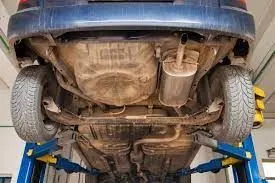
Different types of rustproofing/undercoating
When having your vehicle rustproofed or an undercoating applied, you have a few options to choose from. Whether you prefer the latest technology or a more tried and true method, knowing what the different options are should allow you to choose the best one for your vehicle.
Electronic method. Using a weak electric current, this small device can stop the corroding effects of rust.
You can have these electronic devices installed at the dealership, or save some money and buy them from a source outside of the dealership.
The reviews on these devices are mixed, as this is a virtually new technology.
Undercoating. This method involves spraying a tar-based substance on the exposed parts of a vehicle's underbody.
The tar-like undercoating acts as a barrier once it hardens, keeping out moisture, salt, and other substances.
This undercoating works best when applied to the undercarriage of a new vehicle. It also requires expert application, or it can crack, letting in moisture.
Dripless oil spray. A wax-like substance applied to the entire body of the vehicle, it hardens once it has dried.
One of the downsides of dripless oil sprays is that you need to have holes drilled into the body of the car at specific points to make it effective.
The spray also has a high viscosity, meaning that it does not always get into all of the nooks and crannies of your vehicle.
Drip oil spray. This is the most commonly recommended rust protection.
Drip oil sprays tend to continue to drip once applied until they dry. This dripping can last anywhere up to 48 hours after application.
Unlike the dripless varieties, the more watery nature of drip oil sprays means it gets into more areas on your vehicle, though you still need to have holes drilled in your vehicle's fenders, doors, and other areas to make sure that it gets to all the areas it needs to.
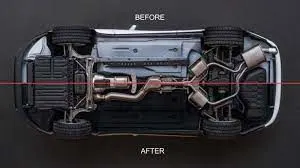
How to apply and remove an undercoating
Materials Needed
- Degreaser
- Grinder
- Microfiber towels
- Paint (black automotive paint)
- Paint Brush
- Primer
- Safety Glasses
- Sandpaper (at least 220 grit or larger)
- Scraper
- Undercoating
- Undercoating removal spray
- Vehicle hoist
While you could pay someone to apply an undercoating to your vehicle, you can also save money by doing it yourself. Before beginning, make sure you have the right equipment to successfully complete the task and enough space to complete the task safely.
Clean the underbody. Start by cleaning the underbody of the vehicle.
This requires you to put the vehicle up on a hoist.
Using a degreaser, clean the underside of the vehicle.
Next, remove all rust from the undercarriage using a grinder. Make sure to wear eye protection when doing so.
Sand any remaining rust using sandpaper designed for metal. You need a sandpaper with a grit of at least 220 or larger.
Wipe away all of the dust created from grinding and sanding.
Paint and prime the underbody. After removing any rust, it is time to prime and paint the underside of the vehicle.
Start by priming all of the areas you cleaned of rust. One of the best primer types to use is a high zinc primer. Allow the primer to dry.
Your next step is to paint over the primer with black automotive paint. Allow the paint to dry.
Undercoat the underbody. The last step in the process requires you to apply an undercoating to the underbody of your vehicle.
Apply the undercoating liberally to the underbody of your vehicle. Make sure to apply it to every part that you expect to be exposed to the road. Allow this coat to dry for at least an hour, or longer if the instructions call for it.
Apply a second coat of undercoating to the bottom of your vehicle. Allow this coat to dry overnight before driving on the road.
- Tip: Use a rubberized undercoating for best results. A rubberized undercoating is more durable and seals better, protecting the metal from exposure to water. Other types of material are Polyurethane, Asphalt and Wax/paraffin-based undercoating
Removing an undercoating. Removing an undercoating is a simple process.
Spray the undercoating with an undercoating removal spray.
Once the undercoating has been softened enough, use a scraper to remove the undercoating.
While rustproofing is best applied when you first purchase a new vehicle, you can get undercoating protection for your used vehicle to keep it safe from further exposure to water, dirt, and other substances from the road. And while it will not protect your vehicle from rust already on the underbody of your vehicle, you can take steps to halt further corrosion.
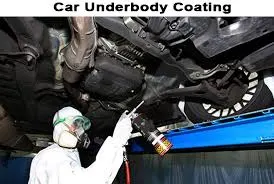
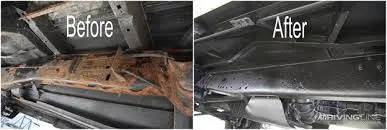
Advantages of Vehicle Undercoating
It’s hard to make someone understand what benefits undercoating brings to vehicles. These are the most common advantages that you will get after undercoating your vehicle.
-
Provides an Extra Layer of Protection
In most cases, new cars, SUV’s and trucks come with a good protection underneath. But, if you are living in cold climates or coastal areas, having a coated underpart is a great advantage.
It provides your car with an extra layer of protection from rust and corrosion. While driving your car, road debris will come into contact with the undercoating instead of underneath metal components.
Before the coating wears out, you can enjoy years of protection against early corrosion. Not only underneath but also the trailer of your car can be coated the same way using trailer paint.
-
Extends the Lifetime of Your Vehicle
If the undercoating is applied properly, it can extend the lifetime of your vehicle for a significant amount of time.
Vehicle undercoating gives your car rust prevention power and makes your ride safe and functional. When you don’t apply it to your vehicle, then quick rust is the outcome, which will lead to corrosion eventually.
Meanwhile, corrosion affects the integrity of the metal parts of your vehicle, causing mechanical breakdown sooner than expected. Most probably, you wouldn’t like to see your car having such an end this early. So, undercoating would be a smart investment here.
-
Reduces Internal Noise
No one likes to have a noisy ride on their vehicles. Sometimes roads with heavy traffic cause unbearable noise pollution outside. I’m sure that you wouldn’t like to have a noisy interior as well.
Once your car is undercoated, it can reduce the interior noise inside of your vehicle and comparatively provide you with a more peaceful ride.
Many car owners reported that once they have done the undercoating, the interior noise was much less than as it was before.
-
Self-Applied Facility
It is always preferable to go for professional touch for any kind of technical maintenance. But if your budget is tight, you need not to worry about it much. With your basic car maintenance skills, you can do the job for yourself.
When you go for professional help to undercoat your vehicle, it might cost you around 1500$. On the contrary, you can cover up the whole within 100$-150$ if you do the job for yourself.
This self-applied facility doesn’t come with smooth finishing like a professional one, but it surely worth the money.
Disadvantages of Vehicle Undercoating
Despite having some great advantages, undercoating comes with some drawbacks that don’t help that many vehicles of certain conditions.
-
Less Effective If Corrosion Already Exists
Once there is rust underneath, vehicle undercoating won’t give you much effective results. Though the coating will be covering the damage that already took place, but the rust inside will continue its job to lead to corrosion.
Undercoating slows down the process, but you must remove the rust first before coating.
-
Works Well on New Vehicles
If your car is already old enough or you bought a used one, then undercoating wouldn’t be a good choice. As coating the underneath of a used or old car requires the removal of all the residue, it will cost you more which is definitely not the best idea.
So, it’s better to apply coating on new cars as they offer premium protection.
For someone who changes his vehicle every 3 to 5 years, then vehicle undercoating is not a good use of your bucks. Because most new cars offer almost 5 years of default underneath protection that you can rely on.
-
Not Impervious to Damage
An undercoating doesn’t always mean protection for a fixed amount of time. Based on your road trips and the things you have to drive against, the lifespan of your coating can be minimal.
If you are bound to drive on dirty areas, gravel roads, it can reduce the quality of this protective layer earlier than expected.
-
Need to Reapply Every 3 to 5 Years
For ongoing protection, you need to make sure you are ready to invest in undercoating your vehicle every 3 to 5 years. Most users can ride their vehicles for 5 years without worrying much once the underpart is coated.
But if you happen to live in coastal areas then you might need to do it every 3 years for best results.