Underbody Coating
Under-Body Coating:
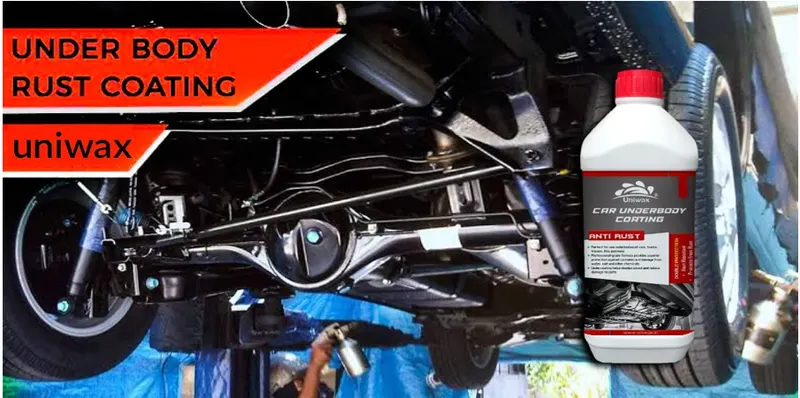
Under-body coating is a protective layer applied to the underside of a vehicle to prevent corrosion and rust caused by moisture, dirt, and debris. This coating is typically made of rubber, asphalt, or wax-based materials and is sprayed onto the vehicle's undercarriage to provide a barrier against the elements.
In Indian road conditions, a cars underbody is most prone to corrosion. Underbody coating provides long term protection from corrosion to car’s underbody. It also protects parts like internal body panels, frame rails and other inner cavities that are not physically accessible but are prone to corrosion.
Layers of under coat,
Learn which undercoat colours enhance the hiding power of which topcoat colours. For example, straight untinted white would be the correct undercoat colour for a bright lemon yellow topcoat colour. Red finish coats are best undercoated with a more robust hiding light grey tinted undercoat.
Choosing of under coat,Learn which undercoat colours enhance the hiding power of which topcoat colours. For example, straight untinted white would be the correct undercoat colour for a bright lemon yellow topcoat colour. Red finish coats are best undercoated with a more robust hiding light grey tinted undercoat.
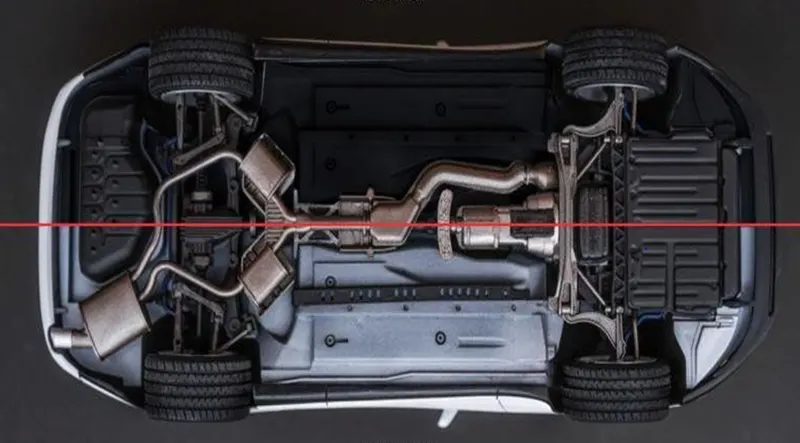
Under coated white body shown in image,
Most common types of Under body Coatings:
Rubber-Based Coating, Asphalt-Based Coating, Wax-Based Coating
i). Rubber based Under body Coating:
This type of coating is made from synthetic rubber and is typically the most durable and long-lasting option. Rubber-based coatings offer excellent protection against rust, corrosion, and abrasion.
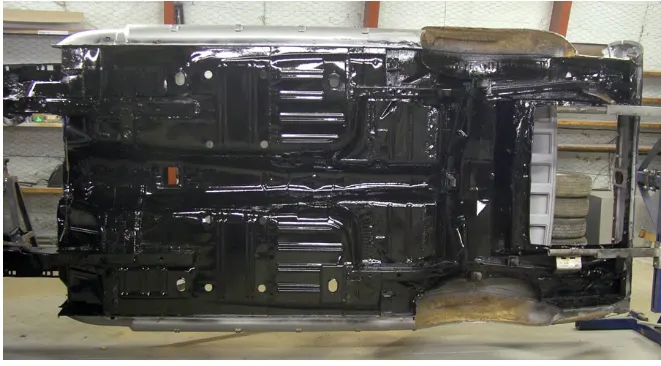
Composition: Rubber-based underbody coatings are usually made of a blend of synthetic rubber, polymers, resins, and other additives that provide flexibility, durability, and resistance to environmental elements. The coating may also contain rust inhibitors and other chemicals to prevent corrosion.
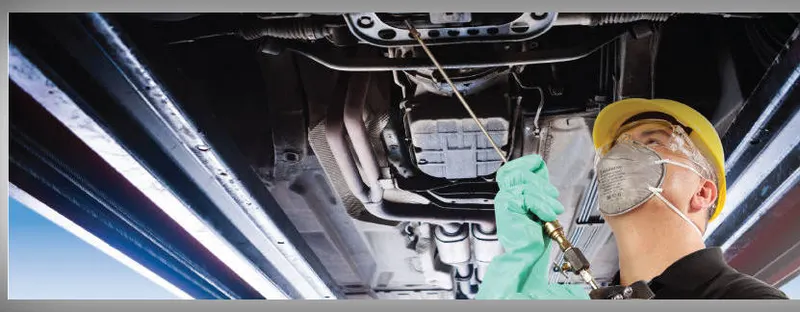
Application: The coating is applied using a spray gun or brush. The vehicle is first cleaned and dried to remove any dirt, grime, or debris. Then, the underbody coating is sprayed or brushed onto the underside of the vehicle, covering all exposed metal surfaces. The coating dries to form a rubber-like layer that adheres tightly to the metal surface.
Benefits: Rubber-based underbody coatings provide several benefits, including:
-
Protection against corrosion: The coating forms a protective barrier that prevents moisture and salt from coming into contact with the metal surface, reducing the risk of corrosion.
-
Soundproofing: The rubber-based coating can also act as a sound deadener, reducing road noise and vibration.
-
Insulation: The coating can also help to insulate the vehicle, reducing heat transfer from the road surface to the cabin.
ii). Asphalt based Under body Coating:
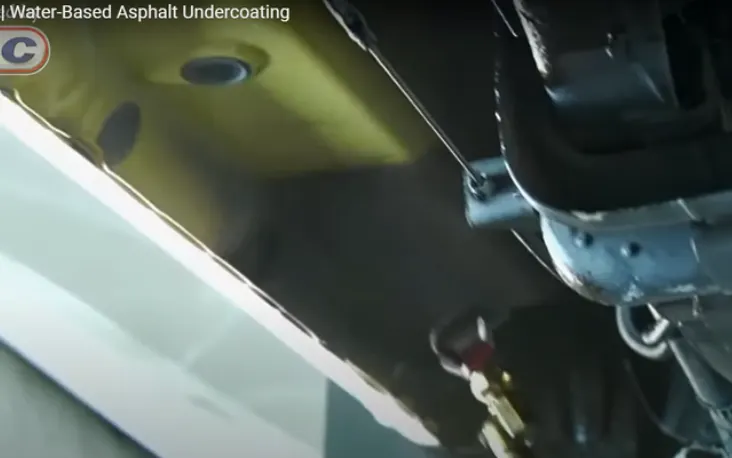
Asphalt based coatings are made from a combination of asphalt and solvents, and they are designed to provide a flexible and durable layer of protection against moisture and debris. This type of coating is generally less expensive than rubber-based coatings but may not offer the same level of protection.
Asphalt Based Undercoating does provide some benefits over Waxed Based Undercoating. They both stick well to most any surfaces and do a great job sealing out moisture, road chemicals and oxygen. But mainly, Asphalt undercoating has the benefit of being less expensive. They protect anywhere up to 5 years and dry to a Firm to Hard coating.
Asphalt Based Undercoating does require a thicker film thickness meaning you will have to apply more product to the surface to be protected then if you use a Wax Based Undercoating. Additionally, Asphalt based products require more surface preparation because they can actually seal in rust and moisture allowing it to continue to grow. Finally, Asphalt based products continue to dry out over time causing cracks in the coating surface.
So, if you are looking for a more cost effective undercoating that can protect your vehicle for up to 5 years but may require a little more surface preparation… then Asphalt Based Undercoating is what you need.
iii). Wax based Under body Coating:
Wax based coatings are made from a combination of wax and solvents and are typically the least expensive option. This type of coating is easy to apply, but it may not provide the same level of protection as rubber or asphalt-based coatings.
iv). Polyurethane Underbody Coating:
This coating closes up splits and fractures on the underbody of the vehicle. It offers up good protection against corrosion and also bonds with the metal. Unlike in the case of asphalt-based coating, you can paint over the polyurethane coating.
Polyurethane underbody coatings are made of a blend of polyurethane resins, solvents, and other additives that provide flexibility, durability, and resistance to environmental elements. The coating may also contain rust inhibitors and other chemicals to prevent corrosion.The coating is applied using a spray gun or brush. The vehicle is first cleaned and dried to remove any dirt, grime, or debris. Then, the underbody coating is sprayed or brushed onto the underside of the vehicle, covering all exposed metal surfaces. The coating dries to form a hard and durable layer that adheres tightly to the metal surface.
The coating can also help to insulate the vehicle, reducing heat transfer from the road surface to the cabin.Polyurethane underbody coatings require minimal maintenance. They can be easily cleaned using a pressure washer or hose to remove dirt and debris.
Pros,
- Under-body coatings provide a barrier against moisture, dirt, and debris, which can help prevent rust and corrosion.
- It can provide sound insulation, making for a quieter ride.
- It can be applied easily and is relatively inexpensive.
- They can also help to reduce road noise and vibrations, which can improve overall driving comfort.
- Under-body coatings are relatively easy to apply and can be done by a professional.
Cons,
- The cost of under-body coating varies depending on the type of coating and the vehicle's size.
- Some coatings may require regular reapplication to maintain their effectiveness.
- Over time, the coating can wear off, requiring reapplication to maintain its effectiveness.
- In rare cases, the coating can interfere with vehicle sensors, causing problems with the car's computer system.
- Under-body coatings can also make it difficult to spot and repair any damage to the undercarriage.