Underbody Coating
UNDERBODY COATING:-
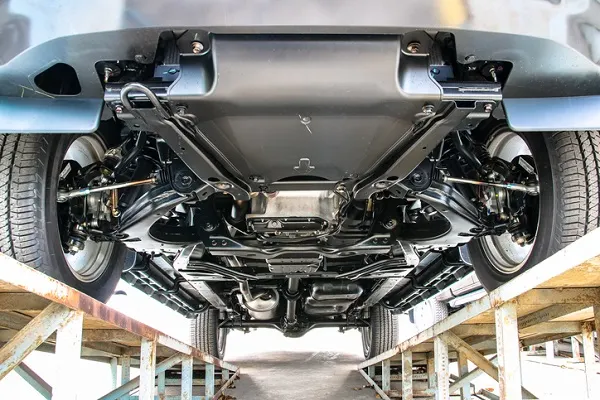
It's an important to protect all aspects of your vehicle from damage, rust, and decay. All the moving parts work together to form a well-functioning and safe to drive whole, and it's easy to forget about the things on your vehicle that you don't see like the underbelly. That's where car undercoating comes into play.
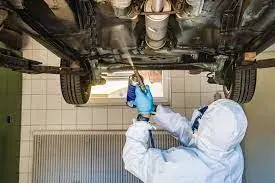
In Indian road conditions, a cars underbody is most prone to corrosion. Underbody coating provides long term protection from to car's underbody. It also protects parts like internal body panels, frame rails and other inner cavities that are not physically accessible but are prone to corrosion.
WHY UNDERBODY COATING:-
Having an automobile treated with an underbody coating is not only a smart way to extend the lifespan of the vehicle, but it also protects crucial brake and suspension components from seizing due to corrosion.
PURPOSE OF UNDERBODY COATING:-
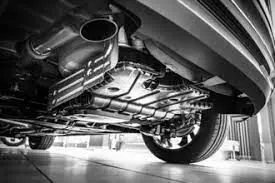
The main purpose of underbody coating is to check rust especially in the body components like frame rails along with other exposed metal parts.
Underbody coating can also reduce wear and tear.
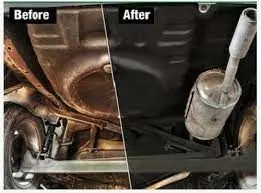
Underbody coating is the sprayed application of a wax Or rubber-composite onto the entire underside of the vehicle. It's designed to create a rust-proof layer between the underside of the vehicle and the water, ice, and salt of the road. Underbody coating provides a more comprehensive protective layer for your vehicle.
TYPES OF UNDERBODY COATING:-
Let see the different types of underbody coating,
1.Rubberized underbody coating
2.Wax based underbody coating
3.Asphalt based automotive undercoating
4.Polyurethane underbody coating
5.Water-based undercoating
6.Petroleum-based undercoating
Rubberized undercoating:-
It is usually a dense cladding applied uniformly to the undercarriage of the automobiles. It is normally sprayed or painted on when the car is just out of the dealership and is clean.
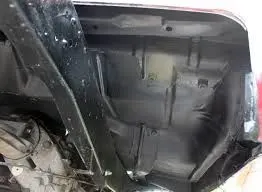
Rubberized vehicle undercoating is easy to apply and offers sound cushioning as well as protection from dust, moisture, and dings or dents.
In addition to your undercarriage, rubberized undercoating is also safe to use on wheels and panels, and dries to a soft rubbery finish that prevents further rust, damage, or moisture seeps. The coating can be painted over and, if necessary for bodywork, can be easily removed with an undercoating removal spray.
Advantages:-
1. Easy to apply
2. Quickly applied with no fuss
3. Undercoat can be painted for a neat finish
4. Gives satisfactory protection
5. Simple way to undercoat your car.
6. Safe apply
7. Truly dries to a soft rubbery finish that prevents further rust, damage, or moisture seepage.
Wax based underbody coating:-
It is an effective and highly adhesive rust protection for treated and untreated undersides. A resistant protective coat forms once it has dried, which is resistant to weather, road salt and acids.
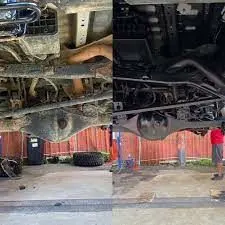
It is the preferred undercarriage coating for cars often driven on highways and normal roads. It provides sufficient guard for cars in fairly moist regions.
Advantages:-
1. Readily flows into seams to guarantee any exposed and prone surfaces are protected
2. The most inexpensive underbody coating option.
3. Conveniently available in spray guy canisters or aerosol cans.
Asphalt based automotive undercoating:-
It reportedly has the most damage-resistant properties. Although asphalt-based undercoating is ideal for trucks, military, and all terrain vehicles, it will also help protect your car, truck, motorcycle and heavy machinery from the elements.
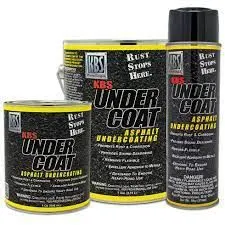
It last long and the best for endurance vehicles that have to undergo heavy road use.
When it comes to large trucks, heavy machinery, military and all terrain vehicles, asphalt-based undercoating provides added Duarabitlity against rocks, chips and moisture. It's usually available from professional service shop.
It contains a little bit of rubberized material that sets up firmly and also helps soften noise.
This type of undercoating also needs more cure time than the others and this is not paintable.
Advantages:-
1. Formulated to protect from dirt, rust and corrosion, it normally has a shelf life of up to two years
2. Provides extra durability as it is the strongest and thickest undercoating.
Polyurethane underbody coating:-
It comes in canisters and ready to preload into an application gun. This type of sealant works by seeping into all cracks and seams, displacing salt and moisture and oozing around rusty areas to bond with and protect unoxidized metal. It also sands quickly in case you will need to perform bodywork and can be painted over.
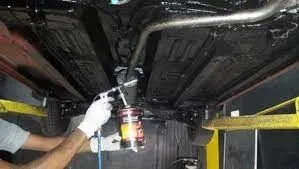
This type of vehicle undercoating is a little bit quicker and easier to apply.
The polyurethane used in this product is a high-quality and durable material that is perfect for any weather condition. It is ideal for standard vehicles.
This type of car undercoating generally requires a little bit more surface prep work before applying, sanding and applying an etching primer to bare metals before using are generally recommended.
Advantages:-
1. It has a long lifespan and is resistant to wear and tear.
2. Easily and quickly applicable.
3. Trickles into cracks and rusty spots already present on the underbody of your car and fills them,hence protecting the underlying metal.
4. Quick and simple to remove, as it sands easily.
5. Dislodges salt, moisture and oozing around rusty areas to bond with and protect unoxidized metal.
6. Can be painted over.
Water-based underbody coating:-
This is a protective layer that helps your car stay protected from harsh water condition. It is made from an advanced polymer that is non-toxic and environmentally friendly.
When it comes to DIY(Do It Yourself) undercoating, this type is the most popular. Coming in an aerosol can, it can be purchased from most automotive shops.
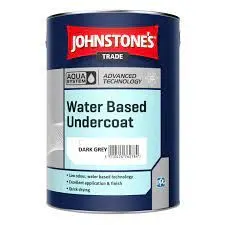
The product can be applied to any surface including metal, plastic, rubber and glass. It will keep your car protected from rust, salt and moisture. This undercoating provides a protective barrier that lasts for only a year depending on where you drive your car.
This product is easy to apply and can be done in a single day.
Advantages:-
1. Thin-set, it takes a short time to dry
2. Can be done at home.
Petroleum-based underbody coating:-
Petroleum-based undercoating is made from oil and they have greater deflective for road salts and grime. The petroleum base helps repel ice and water better than water-based coating.
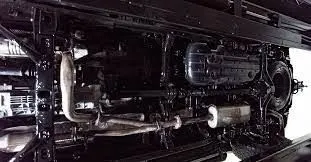
It can be purchased in your professional vehicle servicing shops. This type of undercoating also needs to be replaced once a year by the owner.
Pros of underbody coating:-
Let us see the advantages of underbody coating,
1. Protection against corrosion and rust:-
Underbody coating offers a layer of protection against corrosion and rust. Any debris will be repelled by the undercoating.
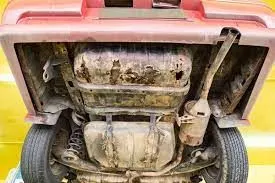
You can expect years of protection from undercoating although it wears out in the end. This is the reason why the process is popular. A car is a large investment so it pays to take the best care of it you can.
2. Extend the life of your vehicle:-
It will extend the life of your car. Undercoating stops rust.
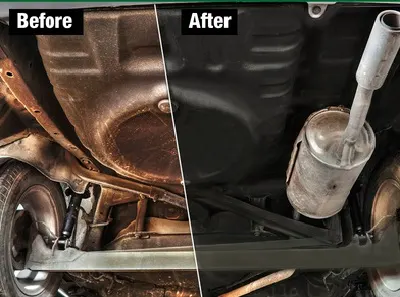
Corrosion is not just about causing an issue with the metal under your car but it can also get into cables and wires, in fact anything made of aluminum or steel can be affected including the engine and transmission.
3.Cover small damages:-
You can undercoat damaged parts of the car such as scratches, chips and nicks caused by debris flying up as you drive.
Modern undercoating can cover small areas of damages.
4.You can do it yourself:-
You have the choice of undercoating your own vehicle or getting it done professionally.
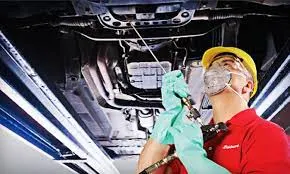
It is perhaps best to get the professionals to do it if you have the budget.
Doing it yourself can reduce this cost by 90% although it can be messy to do.
5.Many options:-
There are different methods to choose from, one is electronic which is used to stop the corrosion of rust already present.
Then you have the standard undercoating which applies a thick, tar like substance.
Another option is dripless oil spray with fills the body of the vehicle with something wax like and then sets hard.
Finally there is the drip-oil way which can drip for upto 2days after application and this is the most common method used by car dealerships.
6. Reduce noise inside your car:-
Undercoating your vehicle can reduce noise inside the car while you are driving.
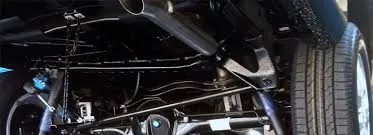
The coating creates a sound barrier meaning the interior of the car will be quieter.
Vehicle Undercoating Cons:-
1. It's not effective on cars with corrosion:-
If your vehicle already has some corrosion it is not as effective.
Applying undercoat over rust means that although you are stopping more moisture and airflow to the rusted area, the rusting process will still keep happening.
An undercoat will slow down the corrosion rather than reverse or stop it. You should attempt to remove the rust before applying an undercoat.
This is not always easy though, since rust can penetrate deeply into the metal, so encapsulating the rust and then applying an undercoat could be a waste of money.
2. Does not work so well on old cars:-
It does not work so well on old cars because the residue from under the car has to be removed before the undercoating is applied.
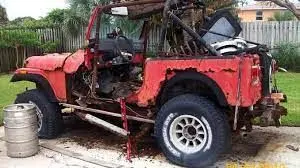
If you don't remove the debris first, the already present debris will be sealed in.
3. It's useless on new cars:-
It might not be wise if you tend to change cars every few years, since it takes between 3 and 5 years before rust starts to show.
In fact it might be 10 years before your car is affected in anyway at all by corrosion.
This means if you get a new car every few years then undercoating it would be a waste of money because it simply is not required.
4. Your vehicle's warranty might be voided :-
Your vehicle's warranty might be voided if you option for a third party undercoating treatment. Some new cars already come with undercoating so adding anything else risks your warranty.
5. It makes your vehicle heavier :-
It makes the vehicle 10 to 20 pounds heavier which affects fuel economy.
This is negligible in terms of fuel costs but still something to bear in mind.
6. It can be damaged :-
It can be damaged.
Although you can expect a hard layer of protection against debris, driving on dirty or gravel roads often means the protective layer's integrity will be reduced over time.
7. It can be expensive:-
Reapply it every 3 to 5 years. This is the only way to ensure your vehicle is protected properly.
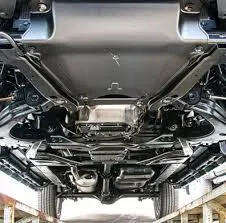
Since it can cost more to get the undercoating professionally applied, this is quite big cost to do it regularly.
CONCLUSION:-
Although some vehicles can be benefitted with an undercoat, not ever car needs it. It is important to figure out whether or not undercoating is a good idea.
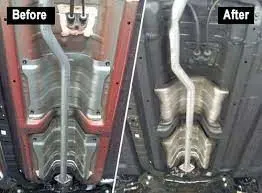
You can do your own vehicle undercoating. This is the cheapest way.
It is a good idea to inspect your undercoating or have the dealership do it, on a yearly basis to check for any issues with the integrity.
* THANK YOU *