Underbody Coating
UNDERBODY COATING
INTRODUCTION
In this chapter we will understand about Underbody coating and reasons why we study about it, Underbody coating benefits and Underbody coating several methods.
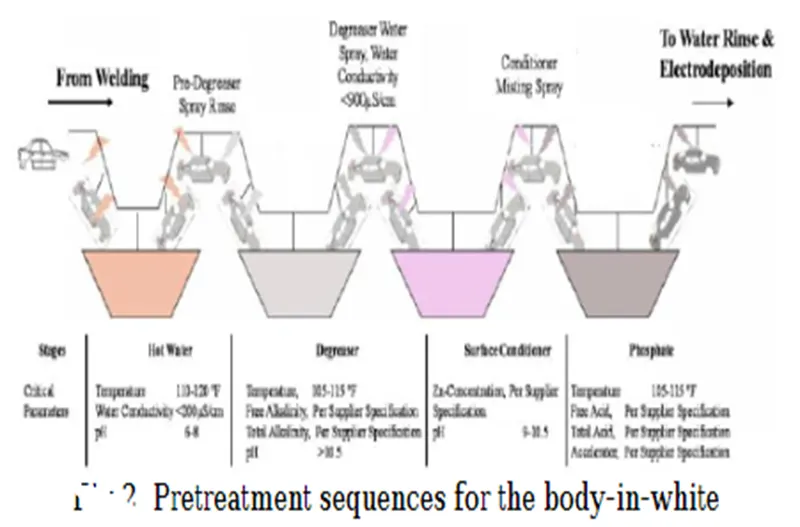
At the beginning of the automotive industry about 100 years ago, cars were painted with a varnish-like product that was brushed onto the vehicle surfaces; this coating was sanded and smoothed, and then varnish was reapplied and refinished to establish several layers of the coating. After multiple layers of varnish were applied, vehicles were polished to produce shiny surfaces. Some manufactures, including Ford in the model T line, employed a combination of brushing, dipping, & even pouring to fully cover and protect various parts of car. All of these coating steps were implemented manually, and it was not uncommon for the period between ht beginnings of the coating process to the end, when the coating was dry and the car was ready to sell, to take upto 40 days. Between the 1920s & 1940s, automotive transitioned to using spray equipment & ‘stoving enamels’ that were based on alkyd resins; these two advancements decreased application and drying times to a week or less. Because of the newly developed spray coating technologies, the surface finishes were more even & less sanding was needed.
Just like how people require shelter and additional care, cars need them too. Just parking your car inside a garage will not solve the problem as the car is exposed to ever-changing weather conditions especially in a country like India. Cars need to be given additional care especially during monsoon seasons and South India’s monsoon season just being around the corner, the car’s underbody should be given extra care. A car’s underbody is exposed the most to muddy terrains, potholes, debris and stones, and wet and even flooded roads that lead to corrosion of the underbody. Since the underbody is hard for us to inspect by ourselves, it is important to have an underbody coating in order to ensure your car is protected during these times. But here’s a list of reasons why you should get underbody coating and what all external factors it prevents.
Underbody coating is an important aspect of vehicle maintenance and protection, and there are several reasons why you should consider studying about it:
Protection against rust and corrosion: The underbody of a vehicle is particularly vulnerable to rust and corrosion due to its exposure to moisture, salt, and other elements on the road. An underbody coating helps to protect the vehicle's metal components from rust and corrosion, preserving its longevity and resale value.
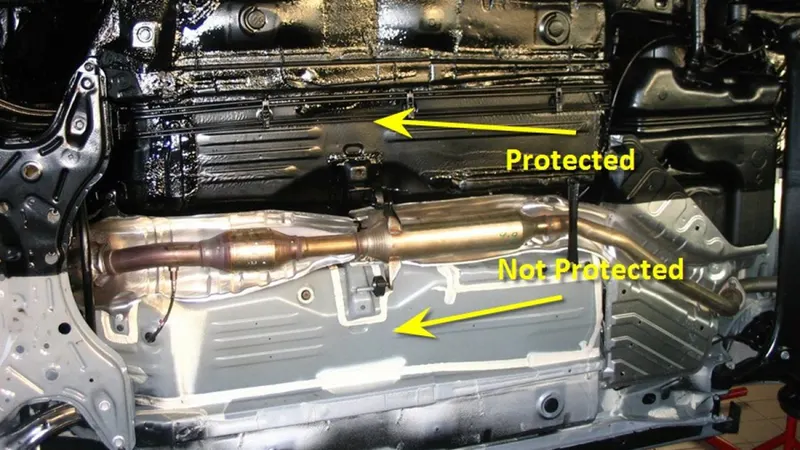
Improved road handling: An underbody coating can also provide additional insulation to reduce road noise and vibration, leading to a smoother and more comfortable ride.
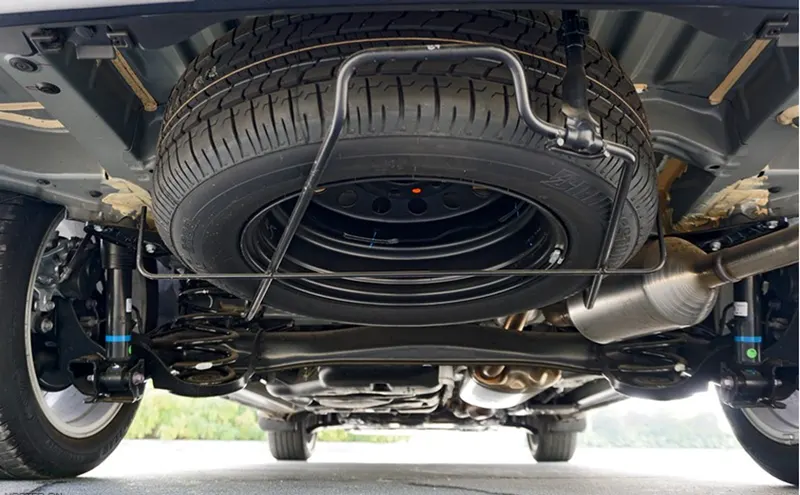
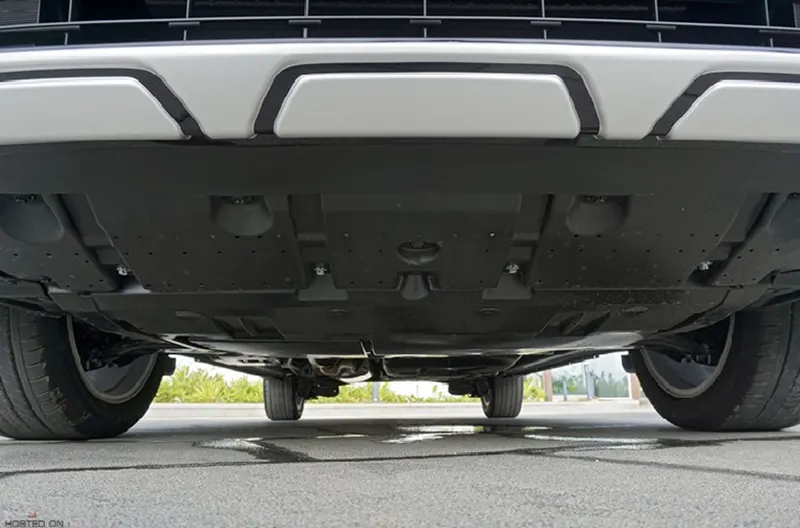
Enhanced fuel efficiency: An underbody coating can also improve the aerodynamics of a vehicle, reducing drag and improving fuel efficiency.
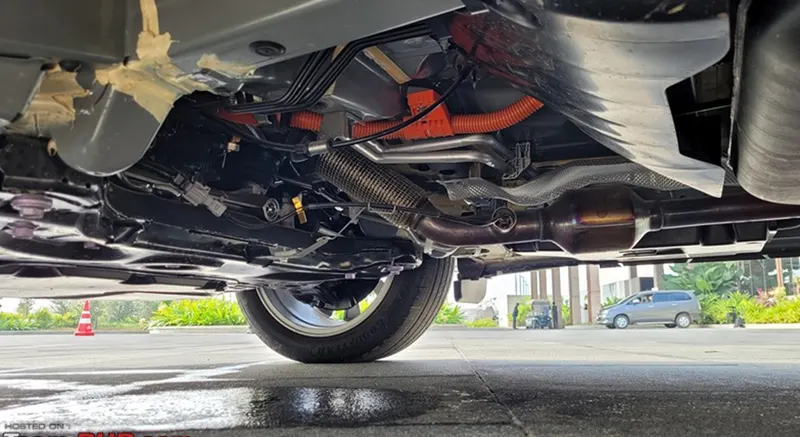
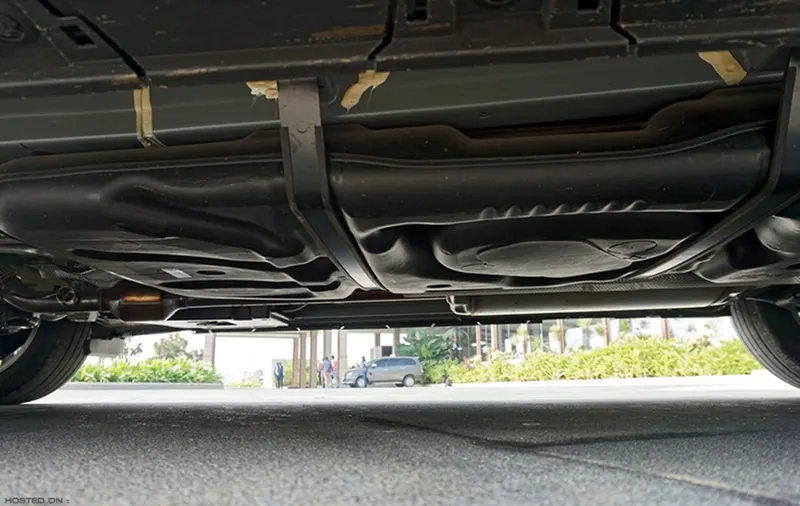
Increased durability: An underbody coating can provide an extra layer of protection to the vehicle, helping to prevent damage from rocks, debris, and other obstacles on the road.
UNDERBODY COATING:
Underbody coating is a protective layer that is applied to the undercarriage of a vehicle. It is designed to protect the underbody of the vehicle from rust, corrosion, and damage caused by rocks, stones, and other debris that can be thrown up by the wheels while driving. The coating is typically made of a rubberized material that is sprayed onto the undercarriage, forming a protective barrier. This type of coating is typically applied to new vehicles at the factory, but it can also be added aftermarket. The main benefits of an underbody coating include improved rust protection, better sound insulation, and improved road handling.
TYPES OF UNDERBODY COATING:
By studying about underbody coating, you can learn more about the various types of coatings available, how they are applied, and how they can help to protect your vehicle and improve its performance.
There are several methods of underbody coating in a car, including:
- Spray application: This is the most common method of underbody coating and involves applying the coating material to the undercarriage using a specialized spray gun. The spray gun allows the coating to be applied evenly and in a controlled manner, resulting in a uniform coating.
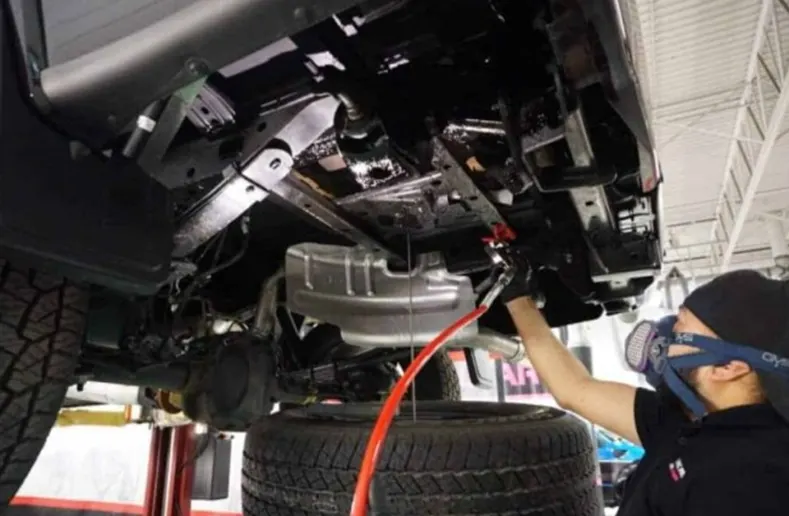
- Brush application: This method involves applying the underbody coating to the undercarriage using a brush. This method is typically used for applying coatings to hard-to-reach areas or for touch-up work.
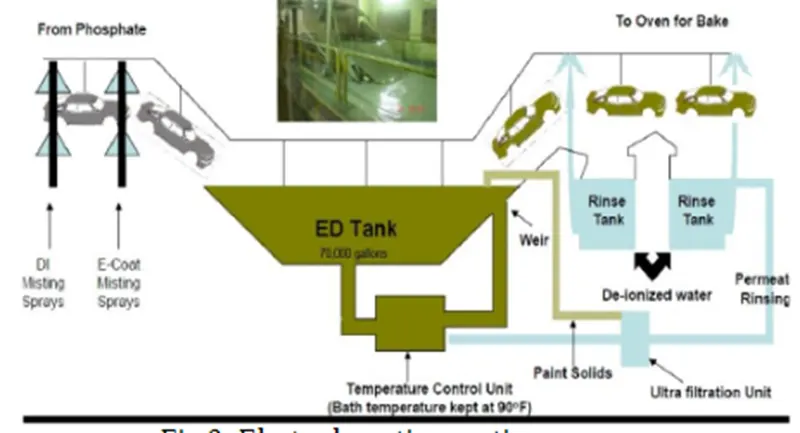
- Dip application: This method involves immersing the entire undercarriage of the vehicle into a bath of the coating material. The vehicle is then removed from the bath and the excess material is drained off. This method is typically used for large-scale coating operations and is typically performed in a specialized coating facility.
- Roller application: This method involves applying the underbody coating to the undercarriage using a roller. This method is typically used for applying coatings to large, flat areas of the undercarriage.
The method of underbody coating used will depend on the type of coating being used, the type of vehicle, and the condition of the undercarriage. A professional and experienced installer should be consulted to ensure that the correct method is used for the desired level of protection.
CONCLUSION:
Automotive coatings confront an almost limitless variety of environments & environmental assaults. Targeting customers, expectations, together with maximizing efficiencies & meeting environmental regulations with new processes, has brought automotive coating to a level not imagined 100 years ago. The appearance of the surface significantly affects a customer’s perception of product quality. Additionally, customer expectations for the attributes given by the appearance of coating s continue to increase as manufactures compete to provide surfaces that offer enhanced surface characteristics. The current paper gave a semi-comprehensive & up-to-date review of these new processes & coating technologies to be of value to industrial practitioners & researches. New developments in automotive coatings were chronicled & discusses, & then related to improvements in production technologies & paints. Modern automotive coating procedures were also discussed in details. Finally, the discussion covered recent trends in automotive coating processes & potential future developments.