Underbody Coating
(1).
ANS:
Under-Body Coating :
Diagram :
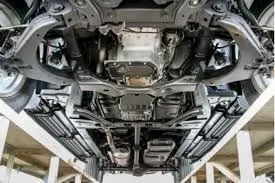
(a). Purpose and Definition :
- Underbody coating provides long term protection from corrosion to car's underbody.
- In indian road conditions, a cars underbody is most prone to corrosion.
- It also protects parts like internal body panels, frame rails and other inner cavities that are not physically accessible but are prone to corrosion. In indian road conditions, a cars underbody is most prone to corrosion.
- Underbody coatings those which are used to prevent car bodies against rust and corrosion.
- This underbody coating helps in protection from dust and moisture also some other factors such as poor road conditions, rocks getting thrown from tires and denting the metal and salt from water during monsoon which plays an important role in damaging the underbelly of a car.
Benefits :
a. Minimize sound :
It minimizes the sound from underneath the car resulting a noiseless, smooth driving experience.
b. Heat insulation :
It insulates the interior of the car from extreme temperatures from beneath the vehicle providing a comfartable cabin experience.
c. Anti-chipping property :
If any stone hits the coating it does not get chipped away hence protects the underbody from exposure to water.
(b). Types of underbody coatings :
There are five types of undercoatings are there
They are named as :
1. Rubberized undercoating
2. Polyurethane undercoating
3. Wax or Paraffin-Based undercoating
4. Asphalt-Based undercoating
5. Applying Undercoating at home
1. Rubberized Undercoating :
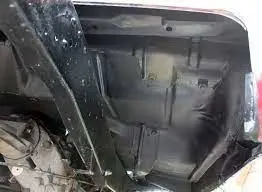
- It is easy to apply and offers sound-cushioning as well as protection from dust, moisture' and dings or dent.
- In addition to your undercarrige, rubberized undercoating is also safe to use on wheel wells and quarter panels, and dries to a soft rubbery finish that prevents further rust, damage or moisture seeps.
- The coating can be painted over and, if neccessary for bodywork, can be easily removed with an under coating removal spray.
2.Polyurethane Undercoating :
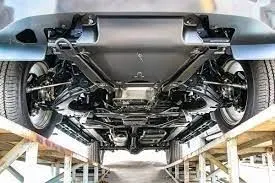
- The other option for undercoating your vehicle is to use a polyurethane-based sealant.
- This type of vehicle undercoating is a little bit quicker and easier to apply.
- Oftentimes, polyurethane undercoating will come in consisters resdy to preload into an application gun.
3. Wax or Paraffin-Based Undercoatings :
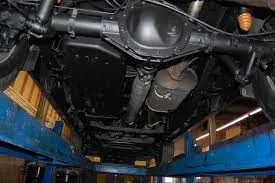
- A paraffin based undercoating will be the cheapest and quickest option available with which to protect the undercarriage of your vehicle.
- However, keep in mind that it will wear of quicker than other types of undercoating and will need to be stripped and reapplied atleast once ever year.
- Wax-based undercoatings never truly harden.
4. Asphalt-Based Undercoating :
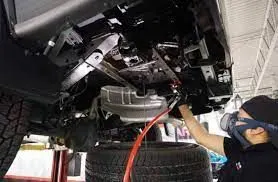
- For standard vehicles, any of the aforementioned types of undercoating will provide sufficient protection.
- For large trucks and heavy machinery, asphalt-based undercoating provides a bit of extra durability against rocks, chips, and moisture.
- Asphalt-based undercoating generally contains a little bit of rubberized material that sets up firmly and also helps soften noise.
5. Applying undercoating at home :
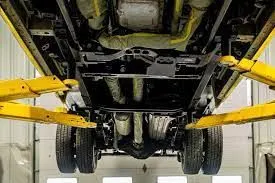
- Once you've selected that best undercoating for your vehicle, make sure your work area is clean, well-ventilated, and has adequate lighting.
- Wearing a dust mask and old protective clothing is advised.
Pros and cons of Underbody coating :
( a ) Pros :
1. Protection against corrosion and Rust
2. Extend the life of your vehicle
3. Cover small damages
4. You can do it your self
5. Many options
6. Reduce noise inside your car
( b ) cons :
1. It's not effective on cars with corrosion
2. Doesn't work so well on old cars
3. It's useless on new cars
4. Your vehicle's warranty might be voided
5. It makes your vehicle heavier
6. It can be damaged
7. It can be expensive