Underbody Coating
A Report on Under-Body Coating
Under-Body coatings are generally given to the undercarriage of any automobile which are prone to corrosion during their life span. The undercarriage of an automobile generally consists of the chassis and all other parts which are mounted onto it. Eg., Engine housing, transmission housing, differential mounting, exhaust, and resonators, would always be resting on the undercarriage and also lie next to the tires which have direct contact with the road, so any wear that's been developed on its surface can result in expensive spare changes.
The road condition and geographical location can play important roles in determining the lives of these undercarriage. Some developing countries like India are prone to sand and tropical climates which might results in unpleasant rainfall. These are the main detrimental agents that damage painted surfaces. To avoid these issues undercoating is always preferred by automobile manufacturers to resist the corrosive conditions.
Under-Body Coating can be:
1. Undercoating using Rubber - Adding a material layer of rubber, will help in reducing the noise generated from the powertrain and acts as an extension to the under-carriage to stop the entry of the abrasive materials and wet materials formed over the underbody. These lack apperance when they are used under body. Thus, can be used in under-carriage.
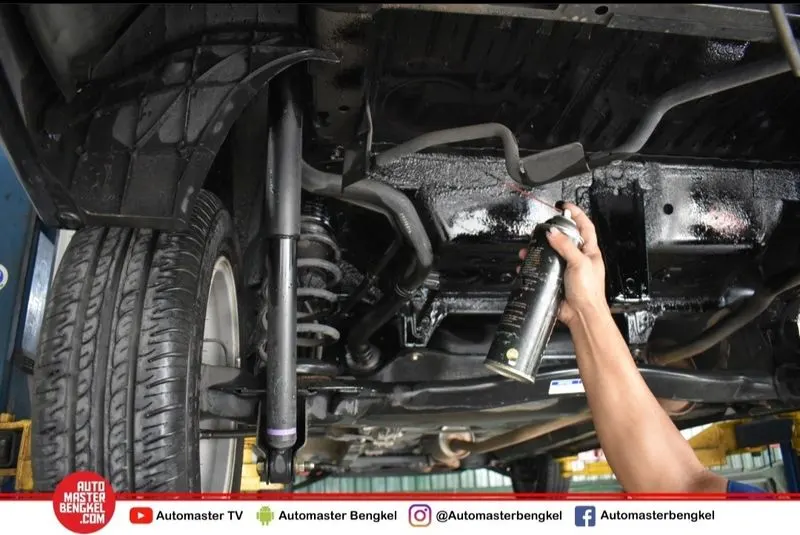
Advantages:
- There is zero difficulty in application of Rubber to undercarriage as they wont create much mess around, when it is being used.
- These are time efficent to work with.
- The protection that rubber can provide are sufficient.
- It provides less rough surface after dried as they are good elastomers.
Disadvantages:
- The improper application of rubber can result in trapped air and moisture to cause corrosion inside the undercoated region.
- It can't protect the already rusted region before application, as it should be replaced or else can spread to other regions post coating.
2. Undercoating using PU (Poly-Urethane): Polyurethane are the plastic compounds which are used in painting to provide durablity to the materials that are not achieved by other compounds. They have really excellent chemical resistance properties that can be made used with undercarriage metals to withstand rusting. They also hyder-phobic materials that doesn't permeate the flow of water. Moreover, the coating done by Poly-urethane on undercarriage are highly durable, because it can withstand in extreme climatic condition.
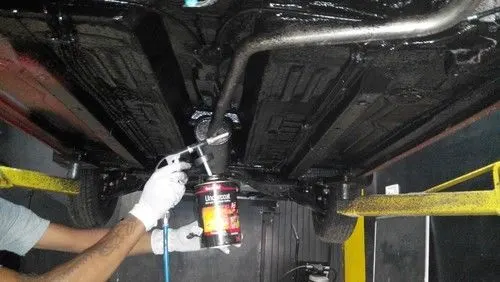
Advantages:
- The protection provided by these materials are really comes in long-term compared to other undercoating sealants.
- They are excellent to use as they are easy to handle.
- Removal of post under-coating can be done easily.
- They can remove moisture and salt from the corners.
Disadvantages:
- The preparation or pre-treatment of undercarriage must be met before applying PU over them.
- They consumes much time as the etching given to the metal takes long wait time.
3. Undercoating using Wax: Wax coating are temporary that don't last long compared to to other sealants whereas for short-duration, it can provide superior finish. It can't handle harsh conditions and starts to wear off.
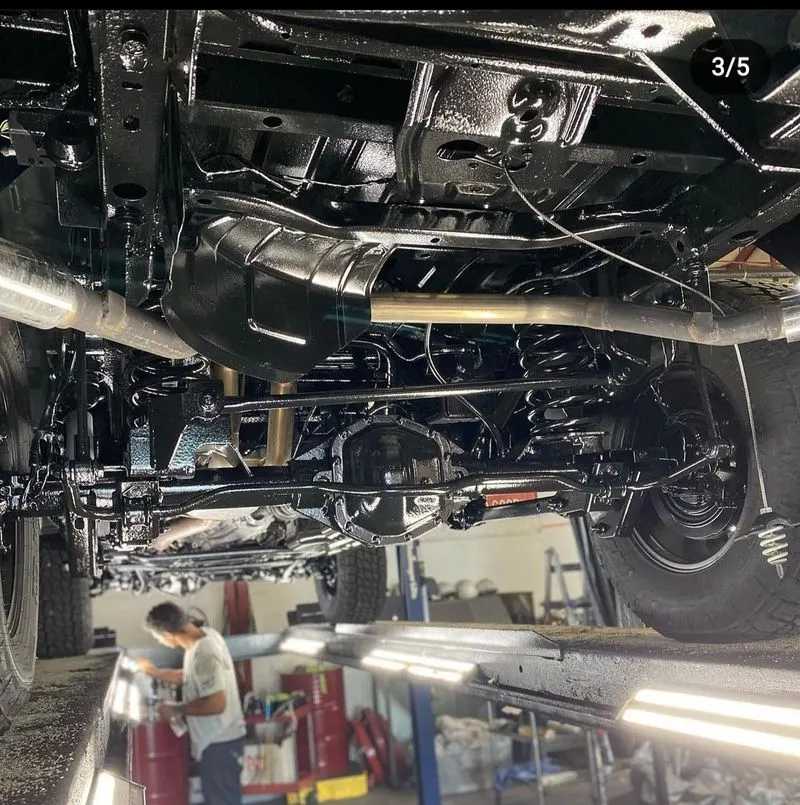
Advantages:
- They have superior flow property that covers every uneven surfaces of the undercarriage.
- They are cost-efficent coating sealents.
- They are available in cainsters and aersol sprays.
Disadvantages:
- They dont completely dry.
- Their life are comparitively lesser compared to other undercoating agents.
4. Undercoating by Asphalt: These are excellent materials that stick to any body regardless of any pre-treatment done to the surface. These stop the entry of moisture into them, thus providing corrosion resistance. These lack appearance ,hence are best suit to under-carriage.
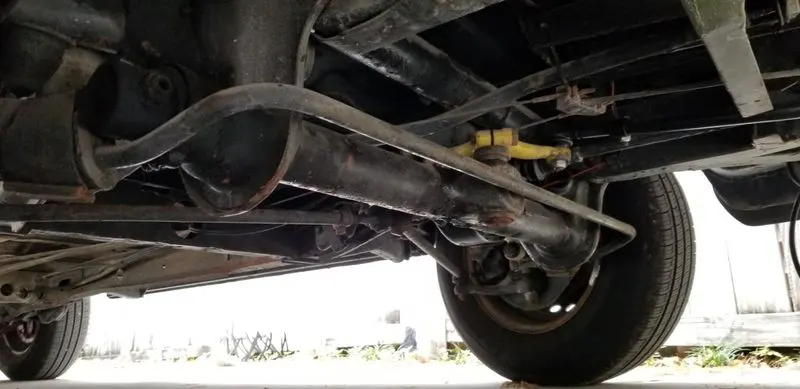
Advantages:
- They are best undercoating materials as it gives 95% of protection compared to other materials with 2 1/2 years shelf life.
- They can give thick coating which are durable in harsh environments.
Disadvantages:
- The time that Asphalt takes to cure are pretty high, hence highly time consuming process.
- It cannot undergo secondary treatments such as coating asthetically using paints.
- They are only ussd with heavy hauling vechicles such as trucks and buses.