Underbody Coating
WHAT IS UNDER BODY COATING ?
An underboading coating is a thick layer of cladding or thick resilient coating applied to the underside or chassis of an automobile to protect against impact damage from small stones, mud which would rapidly chip ordinary paint, allowing chassis to begin rust.
Mostly vehicles in some territories with extreme environmental conditions like high rainfall, cold waters, salty atmosphere (coastal areas) the application of underseal or undercoating is strongly reuired to ensure the long vehicle life.
No matter the climate, the underbelly of every vehicle needs proper care and protection. Undercoating helps protect the vehicle against rust and corrosion.
Seals on the underbody parts have gotten a lot tighter and more effective at keeping out dust and moisture, but there are are other factors to consider. On poor roads small chips of stones, mud, dust, sand thrown from the tires and denting the metal, and corrosion from wet conditions, salty atmosphere all play a huge part in the damage or decay of a vehicle's underbelly. In order to protect the vehicle underbody parts from these factors, underbody coatings are very necessary.
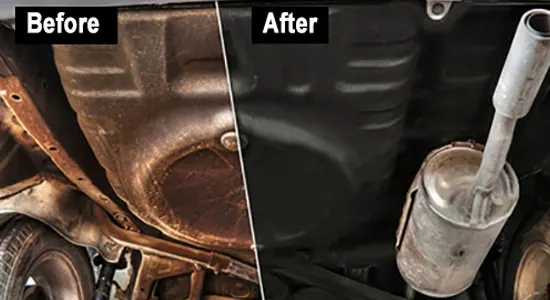
Purpose of UBC:
- Vehicles must have if those exists in places like Coastal areas
Vehicles in the coastal areas are much more prone to corrosion than any other region. The content of salt in the water floating around during the monsoon season is way too high. Adding to this is the humidity in such areas and these elements further speed up the process of corrosion. Hence, getting the car with a nice underbody coating is of utmost importance for people living in coastal areas.
- A must have if cars are near Un-paved/muddy roads
In areas like large sections of unpaved roads, then monsoon is just going to make things worse. The sand is going to mix with the water and all that mud wil get stuck under the vehicle or car's underbelly. This makes cars underbody more vulnerable to damage and a nice and thick layer of coating will help
- It also affects car resale value
Damage due to corrosion, if left unattended cloud lead to some permanent damage , which will cost in terms of rapid depreciation in the cas's resale value. This will make it almost impossible for car to pass a strict inspection when it is put it up for sale. Hence, regular checks of car's underbody condition is the key to maintaining its value
TYPES OF UNDER-BOADY COATING
- Rubberized Underbody Coating
This is generally thought of as the best underbody coating for your car. It preserves the underbody well, protecting it from scratches. Applying this to the undercarriage is not much of a hassle either.
- Wax Based Underbody Coating
This – more or less – ephemeral undercoating will wear away in a few months’ time. On the upside, wax-based undercoating puts up a big fight against moisture. It is also the most affordable option out there.
- Asphalt Based Underbody Coating
Best suited for lorries, trucks and large vehicles this provides a greater degree of protection compared to rubber-based coatings. However, asphalt-based coatings contain little amounts of rubber for sound-insulation purposes. The process of applying this coating is a bit time-consuming though.
- Polyurethane Underbody Coating
This coating closes up splits and fractures on the underbody of the vehicle. It offers up good protection against corrosion and also bonds with the metal. Unlike in the case of asphalt-based coating, you can paint over the polyurethane coating.
Pros & Cons of Underbody coatings:
Pros:
- Protects against Rust & Corrosion
- Reduces NVH (Noise Vibraions Harshness) levels
- Prevents paint chipping
- Protects vital components
- Prolongs car's life
- Easy maintenance
Cons:
- Won't helpful if corrosion/rust already present
- Works best in new cars
- A 3rd party undercaoting service might void vehicle's warranty
- Adds weight to the vehicle
- Must be reapplied every 3 to 5 years for best results
- Risk of damage during application
Conclusion :
Automotive coatings confront an almost limitless variety of environments & environmental assaults. Targeting customers, expectations, together with maximizing efficiencies & meeting environmental regulations with new processes, has brought automotive coating to a level not imagined 100 years ago. The appearance of the surface significantly affects a customer’s perception of product quality. Additionally, customer expectations for the attributes given by the appearance of coating s continue to increase as manufactures compete to provide surfaces that offer enhanced surface characteristics.