Underbody Coating
1. Underbody coating
Underbody coating is the process of covering the surface by Electro deposition, Primer coating and painting to Corrosion protection, friction reduction, wear protection or scratch resistance.
Underbody coating provides long term protection from corrosion to car’s underbody. It also protects parts like internal body panels, frame rails and other inner cavities that are not physically accessible but are prone to corrosion.
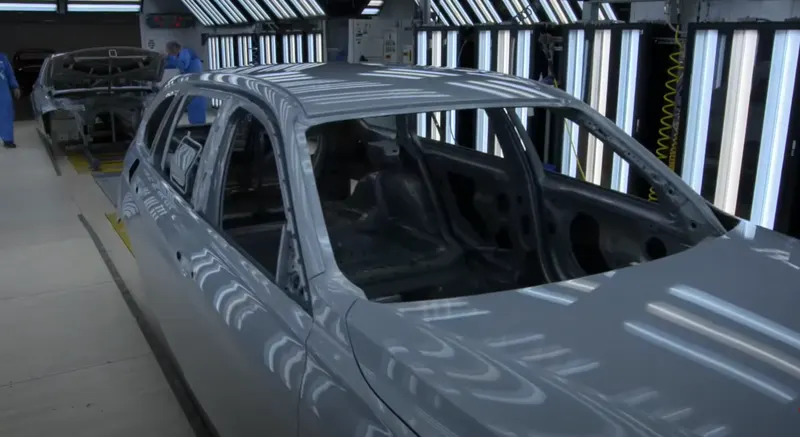
Underbody coating is done on BIW of car shown in the fig.
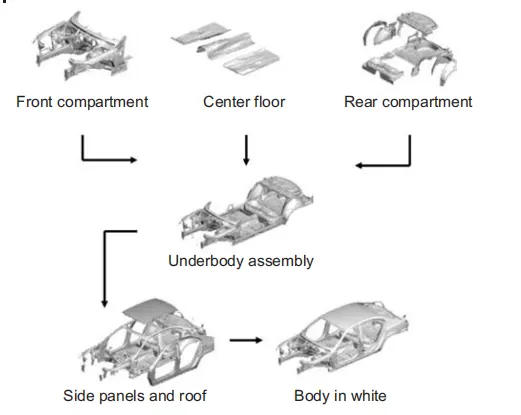
Underbody coating Process
Modern automotive coating methods consist of five main steps. They include the following:
1.Pretreatment: removes and cleans excess metal and forms an appropriate surface structure enabling bonding of a corrosion protection layer.
When the automobile body sheet metal components are welded together, the resulting structure is referred to as the body-in-white (BIW). The first sequence in preparing the BIW for subsequent coating is pretreatment. Pretreatment consists of cleaning the body surface to remove remaining oils from the stamping process and welding residues through three primary liquid dip processes of degreasing, conditioning, and phosphating
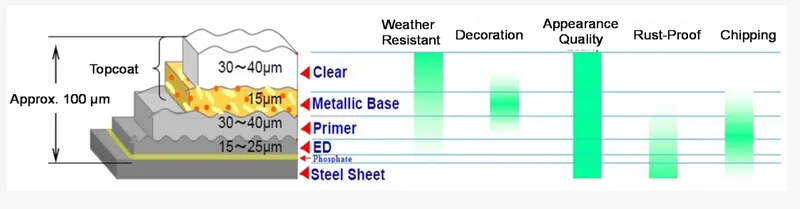
2. The next step is electrodeposition (ED) of the anti-corrosion or rust prevention layer.
E-coating is a method of painting which uses electrical current to deposit the paint. The process works on the principal of "Opposites Attract". This process is also known as Electro Deposition (ED).
Electro-deposition of primer coating has become universal for a modern automotive paint shop. In ED, charged particles from the paint emulsion move to Anode (AED) or Cathode (CED) under electrical forces. The direct current established through the bath makes the pigment and resin base of the paint wander towards the body surfaces
3. A sealer like Poly Vinyl Chloride (PVC): The sealant is applied around and inside the doors, hood, trunk, and front dash, and onto the exterior and interior of metal joints and outer area of the back wheel well; application of the sealant is accomplished either manually or with robots . it is applied for anti-corrosion, elimination of water leaks, and minimization of chipping and vibrational noise.
4. A primer is then applied to promote adhesion between the surface and the basecoat; it also imparts a smoother surface for subsequent layers and has anti-chipping properties.
5. The topcoats that include a basecoat and clearcoat are applied; they provide surface properties that are sought after, including color, appearance, gloss, smoothness, and weather resistance.
Underbody coating purposes.
1. Reduces NVH (Noise Vibrations Harshness) Levels
2. Heat Insulation: It insulates the interior of the car from extreme temperatures from beneath the vehicle providing a comfortable cabin experience.
3. Anti-chipping property: If any stone hits the coating it does not get chipped away hence protects the underbody from exposure to water.
Before
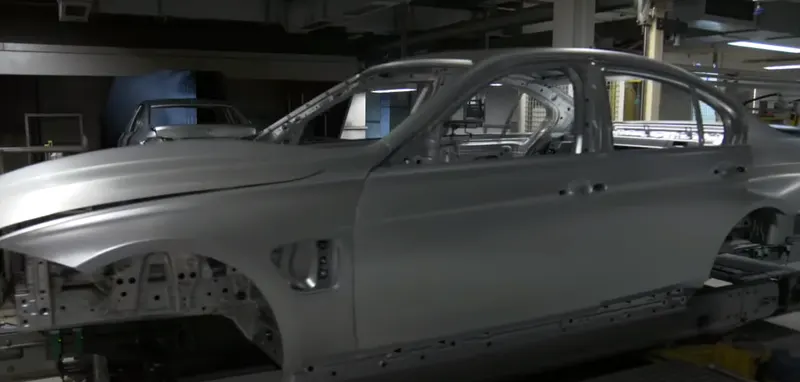
After