Underbody Coating
UNDERBODY COATING
Undercoating gives you an extra layer of protection against rust and corrosion, protecting your car. Undercoating will eventually wear out, but you can get years of protection from it. Even vehicles in warmer climates gain protection as debris is repelled and kept away from eating at the vehicle.
COATING
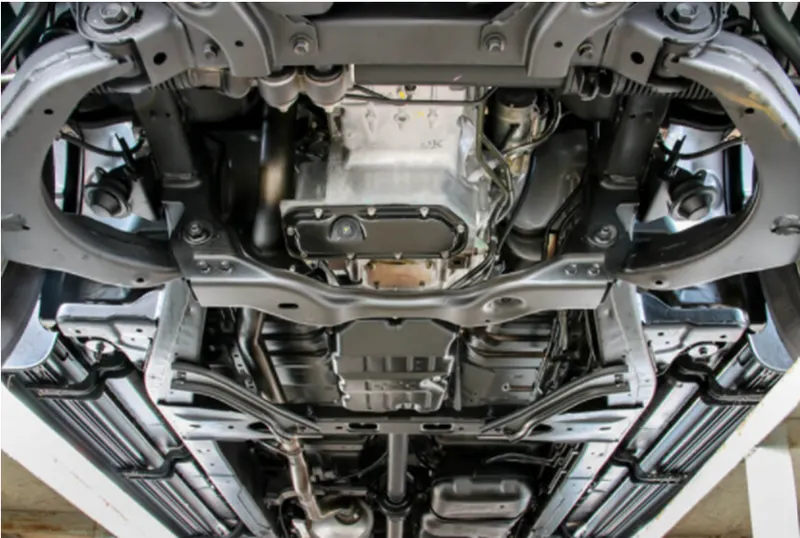
Under Body Coating
Underbody components:
Rear Floor Panel, Tunnel, Front Shock Tower Wheel House, Front Side Rail, Rear Shock Tower Wheel House, Rear Seat Panel, Dash Cross Member, Rear Back Panel, Rear Side Rail, Rear Floor Cross Member, Side Sill Inner, Front Floor Panel.
Cons of Undercoating:
A used vehicle may already have residue on the bottom of the car or even have spots of rust and corrosion. Undercoating will not help you if corrosion already exists and the corrosion needs to be removed first before it can be applied, which can be expensive for you.
Modern procedure for automotive coating processes:
- Pre-Treatment - The excess material is removed and the surface is cleaned to make it suitable for the coating process. The dirt and welding residue is cleaned and removed during pre-treatment. The pre-treatment also consists of 4 stages [Hot Water, Degreaser, Surface Conditioner, Phosphate] which are done before electrode deposition processes.
- Electrodeposition - The electrode deposition coat provides rust and corrosion protection. It is done over Body in White. The metal underbody and the frames are coated to prevent corrosion. While areas that are not coated are primed before applying the additional coating.
- Rustproof materials [Sealers/PVC] - The underbody coating has some specific advantages when compared to that of electrode deposition. The underbody coating has noise reduction, vibration reduction, and anti chipping properties in addition to that of underbody coating.
- Primer - The primer is applied over the top body of a car to improve weather resistance, improve appearance, chipping resistance, improve adhesion between electrodeposition coat and topcoat, and reduce the volatile organic compounds that cause the atmospheric pollution.
- Topcoat - The topcoat has two stages, they are base coat and clear coat. The base coat has the primary coloring pigment, while the clearcoat provides a protective coating against environmental effects, ultraviolet light degradation, unmatched color retention and a smooth even finish.
Underbody coating methods:
- Rubberized underbody coating - It is mainly coated to the underbody to prevent it from scratches. Applying rubberized underbody coating is a convenient process.
- Polyurethane underbody coating - Polyurethane-based underbody coating protects the lower surface or underbody of the vehicle from cracks and fractures. Paint can be directly applied after Polyurethane-based underbody coating.
- Wax or Paraffin underbody coating - This type of underbody coating is applied to prevent the underbody surface from moisture. The major disadvantage of this process is this type of coating is not long-lasting but is affordable.
- Asphalt-based underbody coating - Paint cannot be directly applied after Asphalt based underbody coating. It is a time-consuming coating process that is preferred for heavy-duty vehicles for its high protection capabilities than Rubberized underbody coating. However, this material has little rubber content for sound insulation.