Underbody Coating
1. Write a one-pager about Under-Body Coating and its purpose, its types in detail, and its pros and cons.
Under- Body Coating
In Indian road conditions, most cars underbody is prone to corrosion. Underbody coating provides long term protection from corrosion to car’s underbody. It also protects parts like internal body panels, frame rails and other inner cavities that are not physically accessible but are prone to corrosion.
Underbody Coating and its purpose:
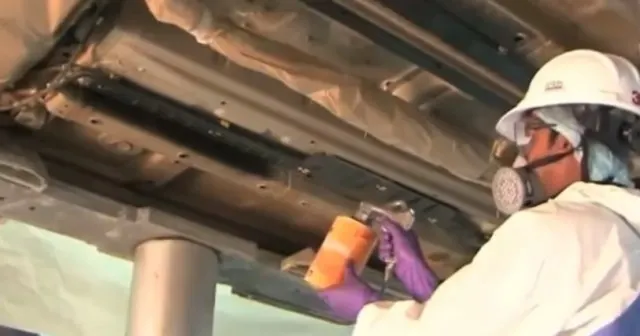
Underbody coating is usually a dense cladding (often based on rubber) applied uniformly to the undercarriage of the automobile. It is normally sprayed or painted on when the car is just out of the dealership and is clean. But even if you are getting the undercoating applied after a couple of years, it’s fine too. This is because it can prevent further damage to the undercarriage.
The main purpose of undercoating is to check rust especially in the body components like frame rails along with other exposed metal parts. Underbody coating can also reduce wear and tear. Getting a fresh coat can cost you up to ₹6,000 approx.
Types of Under Coating
1. Rubberised Under body Coating
This is generally thought of as the best underbody coating for your car. It preserves the underbody well, protecting it from scratches. Applying this to the undercarriage is not much of a hassle either.
2. Wax Based Under Coating
This more or less ephemeral undercoating will wear away in a few months’ time. On the upside, wax-based undercoating puts up a big fight against moisture. It is also the most affordable option out there.
3. Asphalt based Automotive Undercoating
Best suited for lorries, trucks and large vehicles this provides a greater degree of protection compared to rubber-based coatings. However, asphalt-based coatings contain little amounts of rubber for sound-insulation purposes. The process of applying this coating is a bit time-consuming though.
4. Polyurethane Underbody coating
This coating closes up splits and fractures on the underbody of the vehicle. It offers up good protection against corrosion and also bonds with the metal. Unlike in the case of asphalt-based coating, you can paint over the polyurethane coating.
Pros :
Fights Rust : It plays an important role in keeping corrosion at bay. Underbody coating can come in handy especially if you live near the sea, where there is too much humidity, and rusting is just one of those everyday things. You should also seriously consider undercoating if you reside in a place where it snows in winter.
Absorbs noise : Believe it or not, very thick undercoating can soften the noises that reach the cabin. Since the undercoating is often made up of rubber it absorbs some of the rackets. The occupants of the car could spare themselves of the road noises – at least up to a certain extend.
Reinforcements : If your car comes with stock underbody coating, using another coating on top of it, is not going to hurt. It will offer additional reinforcement, protecting the underbody from water, road debris, gravel and small pebbles. There would also be a lesser chance for the factory coat to flake away.
Prolong car life : Good undercoating not only defends the underbody from corrosion but also protects the engine and transmission as well! Less rusting coupled with slower wear and tear can surely add years to the lifespan of your vehicle. There would be fewer dents, dings and scratches on the undercarriage for you to fret about.
Easy to Clean : Underbody coatings can also make it easier for you to clean the car. You can drive on all kinds of roads even in bad weather conditions without your car’s undercarriage paying the price for it.
Cons :
Applying on Corrosed area wont give any better result : For an undercoating to be effective, it must be in place before the underbelly of your car begins to rust. If you apply it over corrosion, you won’t be making an improvement. It will look better until the rust breaks its way through the layer of undercoating you’ve applied. If you have rust present, then it must be removed, with the metal repaired, before the undercoating is applied for best results.
It works best on new Vehicles : If you’ve purchased a used vehicle, then the cost of preparing the underbelly for an undercoating might be more than the value of the car. You must remove all the residue from the bottom before it can be applied. Failing to do so will seal in the debris that is present already, which can lead to more problems. The best time to have an undercoating applied is when a vehicle is purchased new because it offers a superior level of protection then.
Most vehicles make it five years before corrosion begins to show : For vehicle owners who purchase something new every 3 to 5 years, then rustproofing may not be a good use of your cash. Although an undercoating does add value to a used car, that only applies when the rustproofing product used provides a transferrable lifetime warranty. Most vehicles that are on the road today are able to make it five years before any corrosion begins to show. It may be 7 to 10 years before the functionality of the vehicle is negatively impacted by the lack of an undercoating.If you wash your vehicle regularly, especially during the winter months, then you might be able to save the time and money required for this service.
A third-party undercoating service might void your vehicle’s warranty : Some new cars no longer need the undercoating service provided because the structure of the vehicle has it built-in already. If you hire a third-party provider to apply an undercoating, you could void the corrosion-perforation warranty that is factory-provided. Most vehicles today that leave the factory floor are all provided with included rust-proofing.If you are purchasing a used vehicle, an undercoating to a clean underbelly could extend the life of the vehicle and give it more value. For new vehicle purchases, you should ask the dealer what rustproofing options are included before paying for a separate undercoating option. Ask for documentation of what is provided instead of taking the word of the salesperson or the service personnel.Many dealers have language in their terms and conditions that only written agreements are binding.
It adds weight to the vehicle : Although the amount of weight added to a vehicle with an undercoating is minimal (between 10 to 20 pounds for most vehicles), there is an element of fuel economy to consider. When your vehicle weighs more, the distance you can travel on a single tank of fuel is reduced. The undercoating might reduce your efficiency by up to one mile per gallon, which creates an additional fuel cost over time that is worth considering.
An undercoating is not impervious to damage : An undercoating can provide a hardened layer of protection against dirt and debris that may cause corrosion. Depending on where you drive, however, the lifespan of this product may be minimal. If you drive your vehicle on gravel roads or dirty areas frequently, you reduce the integrity of the protective layer.You might find that your undercoating begins to chip off in as little as 25,000 miles because of this issue. Driving in a salty environment is not the only threat to the integrity of this product.
It must be reapplied every 3 to 5 years for best results : The only way for an undercoating to provide ongoing protection for your vehicle is to have the service repeated frequently. Most owners can have a new layer applied in about 5 years without worrying about their underbelly being compromised. In salty or destructive environments, however, you may need to have a new undercoating applied every 3 years for best results.
The pros and cons of a vehicle undercoating offer a complex opportunity to protect some new and used cars, but not all new vehicles require it. You must perform your own due diligence on a vehicle you’re wanting to purchase to decide if this service is right for you. And, if cost is an issue, it is possible to apply your own undercoating, though such an action might void an active warranty.