Underbody Coating
UNDERBODY COATING-
Underbody coating provides long term protection from corrosion to car's underbody. It also protects parts like internal body panels, frame rails and other inner cavities that are not physically accessible but are prone to corrosion.
The Underbody Coating mainly consists of 5 steps-
-
Pretreatment: removes and cleans excess metal and forms an appropriate corrosion protection layer.
-
The next step is electrodeposition (ED) of the anti-corrosion or rust prevention layer.
-
A sealer like Poly Vinyl Chloride (PVC) is applied for anti-corrosion, elimination of water leaks, and minimization of chipping and vibrational noise.
-
A primer is then applied to promote adhesion between the surface and the basecoat; it also imparts a smoother surface for subsequent layers and has anti-chipping properties.
-
Finally, the topcoats that include a basecoat and clearcoat are applied; they provide surface properties that are sought after, including color, appearance, gloss, smoothness, and weather resistance.
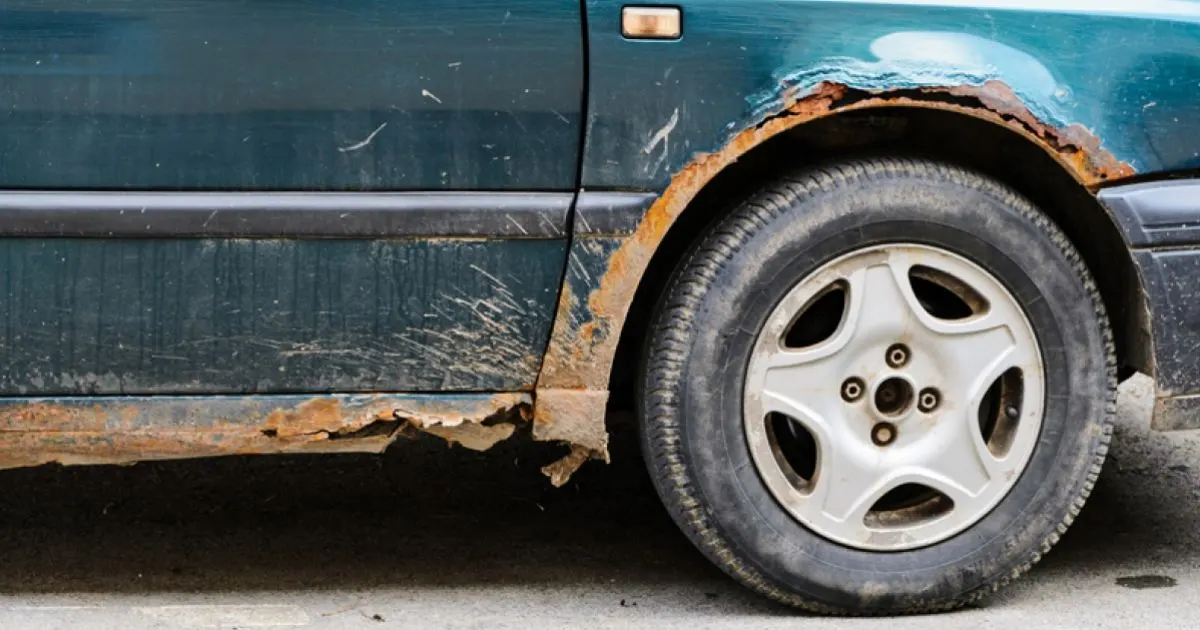
Rusting in Cars
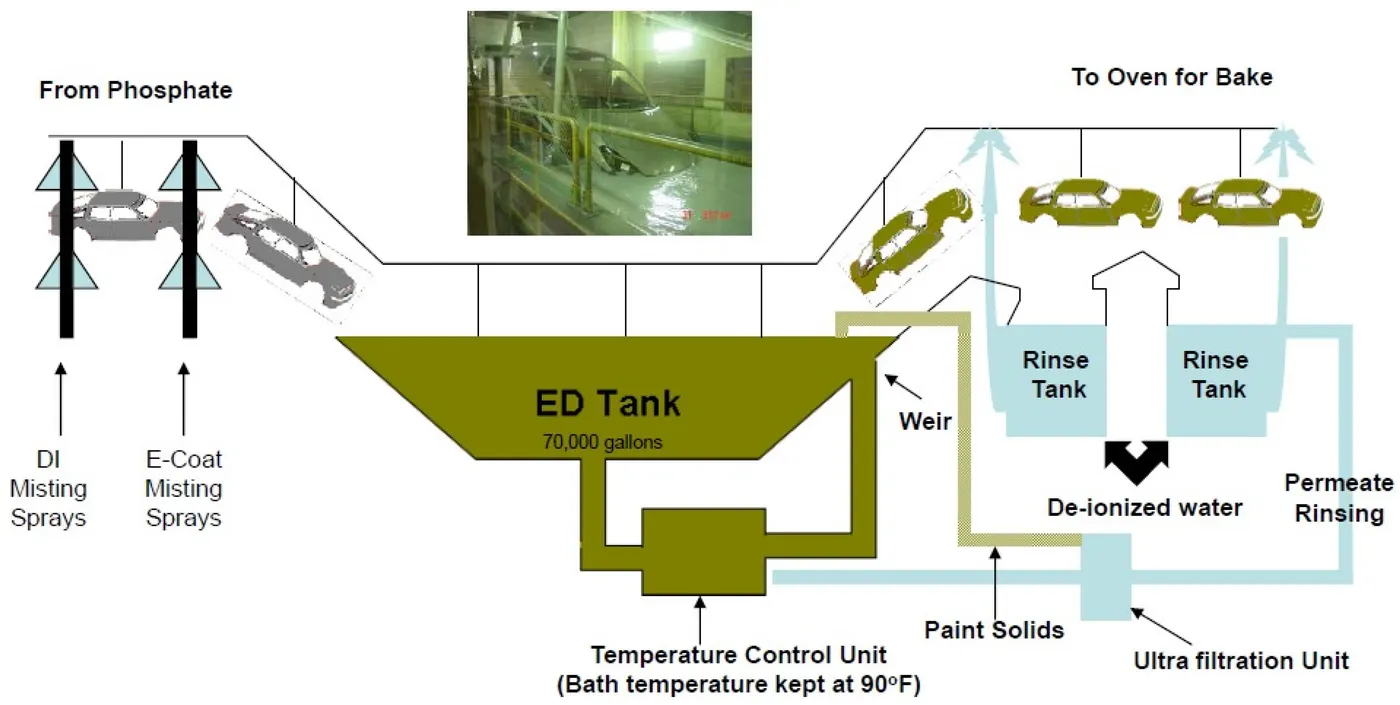
ED COATING
Types of undercoating
1.) ED method- Have explained above with figure.
2.) Spray- Coating can be done simply by using the spray of wax type material containing rust and corrosion inhibitors applied on the car body and on the underbody then the wax material protects the body from corrosion sometimes the wax material seeps out from the scratches and seals the scratch and prevents corrosion. Hence also called Cavity wax injection method.
3.) Rubberized underbody coating- These coatings are easy to apply and offer sound-cushioning as well as protection from dust, moisture and dents. The coatings are safe even to use on wheel wells and quarter panels and when it is dried forms a soft rubbery finish that prevents further rust and moisture seep.
4.)Polyurethane underbody coating- This type of undercoating is a lit a bit quicker and easy to apply. This type of undercoating often comes in a canister ready to preload into application gun. This type of undercoating always requires surface preparations before applying.
5.)Asphalt-based underbody coating- The above-mentioned undercoating is mainly used for light commercial vehicles. For vehicles such as trucks, buses, vans etc. asphalt-based undercoating is used for sufficient protection against rock chips and moisture. These asphalt-based undercoatings have a little bit of rubberised material that set up firmly and also helps in reduction in noise.
Advantages-
- Minimizes sound- It minimizes the sound from underneath the car.
- Heat insulation- It insulates the interior of the car from the extreme temperature from beneath the vehicle.
- Anti-chipping property- The coating does not chip away when hit by stones.
Disadvantages-
- Cost- Increase the cost.
- It is need to reapply at bottom after every 3-5 years.
- It also increase the weight of the vehicle.