Underbody Coating
UNDERBODY COATING
AIM - Explanation of coating process provided to vehicles before paint shop.
Underseal (often called undercoating ) is a thick resilient coating applied to the underbody or chassis of an automobile to protect against impact damage from small stones, which would rapidly chip ordinary paint, allowing rusting to begin.
Historically a bitumen-based compound was used, but after approximately a decade this becomes brittle and water can become trapped between the underseal and body metal, counterproductively creating a more favourable environment for rust than if no underseal was applied at all. wax-based underseals do not have this disadvantage but can be eroded and eventually washed off by enthusiastic use of a hot pressure washer. Rubber-based underseals are also sometimes used.
Vehicles for sale in some territories are not undersealed, because the climate is not sufficiently aggressive to warrant it. If such a vehicle is subsequently imported into a country with high rainfall, cold winters and where salting of the roads is common, application of underseal is strongly recommended to ensure the vehicle has a long life.
Underbody Coating :- Under body coating uses a sealant or chemical which may be applied by the robots or manually so that it reaches every single surface properly. This coating is applied after the ED coating is done to the full body of vehicle. Under coating is needed by the vehicle again after maximum ve to six years of use.
ED Coating (Electro Deposition Coating) – is a process which uses electric current to deposit the paint or chemical to deposit on to the full body of vehicle. In it the full body is dipped into the white primer after which it comes out as a complete white body so as the term is given BIW (Body in White). After it is dipped at different angles the electric current is applied which makes the positive charged particles in paint to get deposited on the negatively charged body surface. Body is taken out at different angles and then sent to heat treatment which ensures that the body is completely dry. It ensures proper cleaning of all residues of dust, aluminum etc. before body goes to the under coating and paint shop.
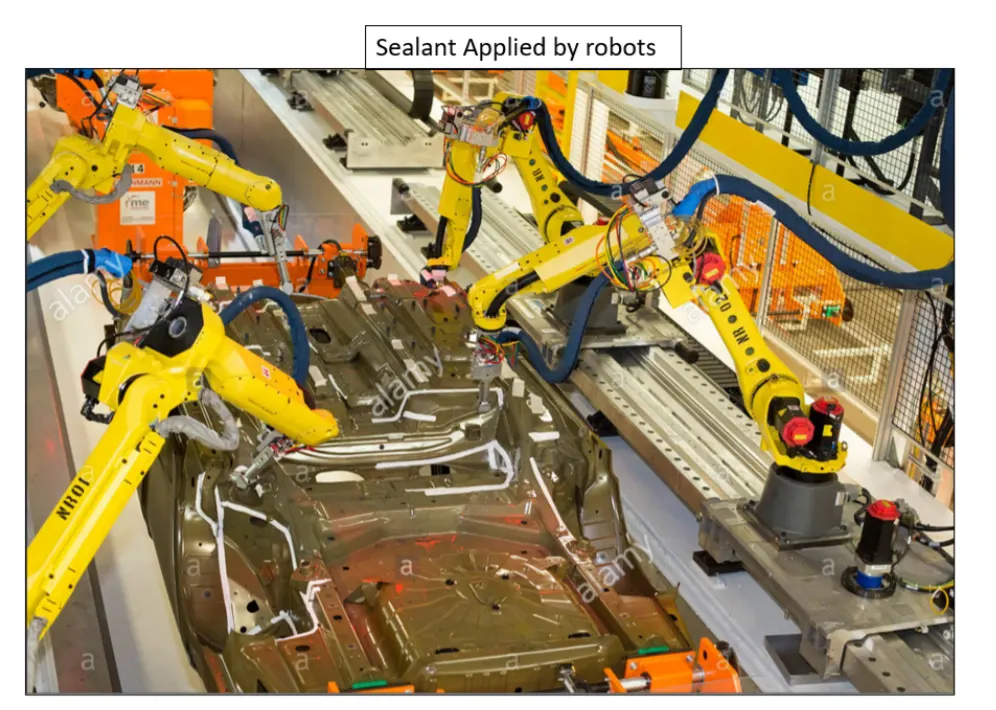
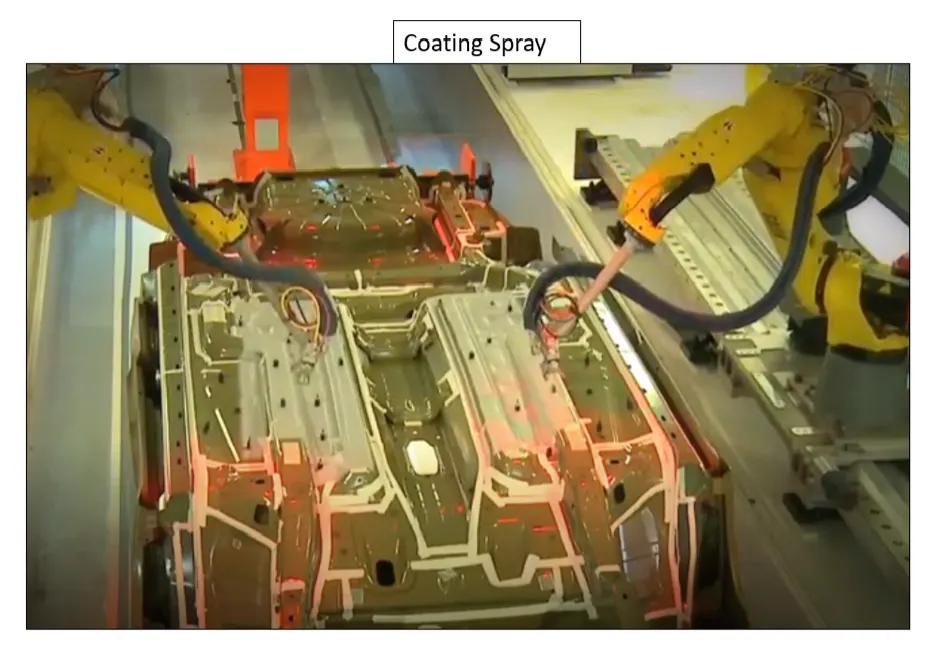
As soon as the body is completely dried from chemical, it is sent to the next process in which robots with different kind of nozzles spray the sealant on its underbody.
Types of under body coating and chemicals used in it:
1. RUBBERIZED UNDERCOATING
Rubberized undercoating is easy to apply, and generally offers the best protective coating for your car’s undercarriage. It cushions surfaces against moisture, rust, dings, and dents. Rubberized undercoating is safe to use on quarter panels and wheel wells and dries with a soft rubbery nish.
2. ASPHALT-BASED UNDERCOATING
Asphalt-based undercoating offers a higher level of protection suitable for large trucks, recreational vehicles, and heavy machinery. It’s formulated with some bits of rubberized material to aid in noise reduction. It offers extra protection against chips and moisture but is not paintable and, therefore, only suitable for undercarriages.
3. POLYURETHANE UNDERCOATING
Polyurethane coating is easy to apply and works by sealing up cracks and seams. The compound displaces salt and moisture and protects the unoxidized metal from rust. It’s often sold in canisters that are ready to preload into an application gun. It, however, requires some surface prep work before application, like degreasing, and applying an etching primer to the bare metal.
4. WAX OR PARAFFIN-BASED UNDERCOATING
Wax or paran-based undercoating sprays are the cheapest and quickest options available. However, their results don’t last long, and you may have to apply a fresh coat after only a few months. In addition, the wax isn’t very adhesive on a metal surface. Its main advantage is that it seeps quickly into cracks and seams, and offers moderate protective properties against moisture.
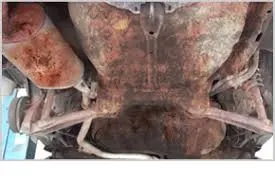
This can be protected by Coating..
Benefits of undercoating:-
• Minimizes Sound: It minimizes the sound from underneath the car resulting a noiseless, smooth driving experience.
• Heat Insulation: It insulates the interior of the car from extreme temperatures from beneath the vehicle providing a comfortable cabin experience.
• Anti-chipping property: If any stone hits the coating it does not get chipped away hence protects the underbody from exposure to water.
Disadvantages of underbody Coating:
It won’t do anything about the corrosion which is already present.
For an undercoating to be effective, it must be in place before the underbelly of your car begins to rust. If you apply it over corrosion, you won’t be making an improvement.
It works best on new cars.
If you’ve purchased a used vehicle, then the cost of preparing the underbelly for an undercoating might be more than the value of the car. You must remove all the residue from the bottom before it can be applied.
Most vehicles make it ve years before corrosion begins to show.
For vehicle owners who purchase something new every 3 to 5 years, then rustproong may not be a good use of your cash.
A third-party undercoating service might void your vehicle’s warranty.
Some new cars no longer need the undercoating service provided because the structure of the vehicle has it built-in already. If you hire a third-party provider to apply an undercoating, you could void the corrosion-perforation warranty that is factory-provided. Most vehicles today that leave the factory floor are all provided with included rust-proofing.
Underbody Coating Process Images:
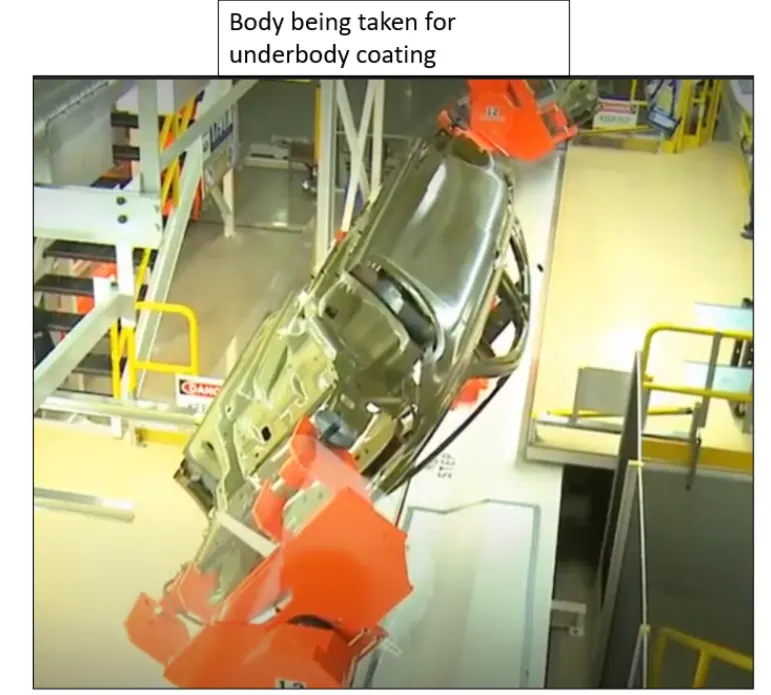
1. Body being taken for underbody coating.
2, Sealant is Applied by the robots.
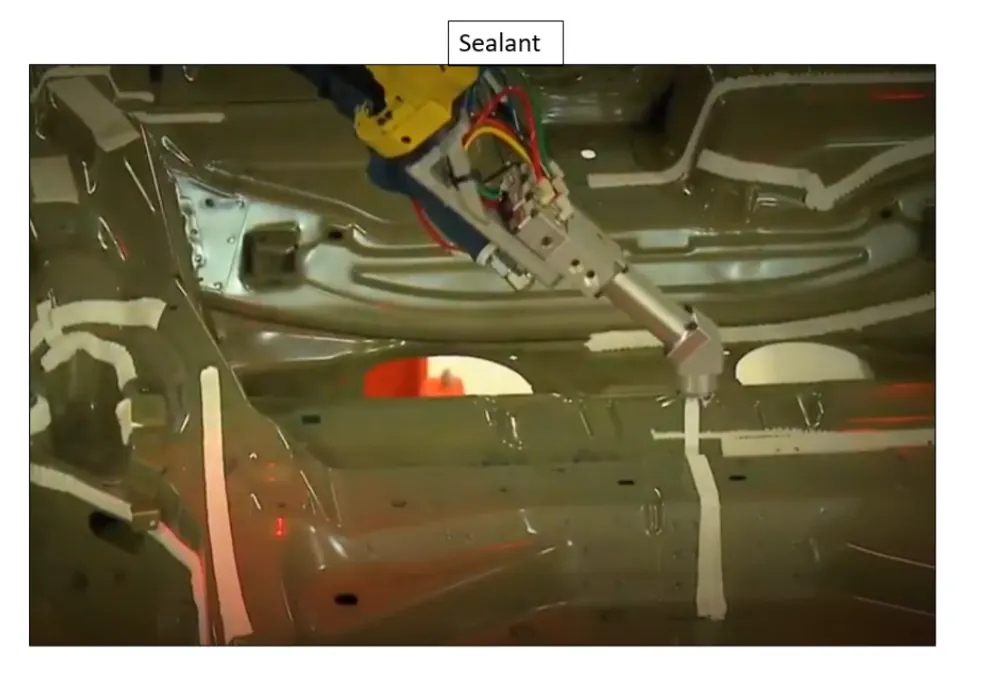
3, Spray coating is done.
4. Then the body is sent for paint shop after dusting.
Thus,
This is procedure for undercoating.