Underbody Coating
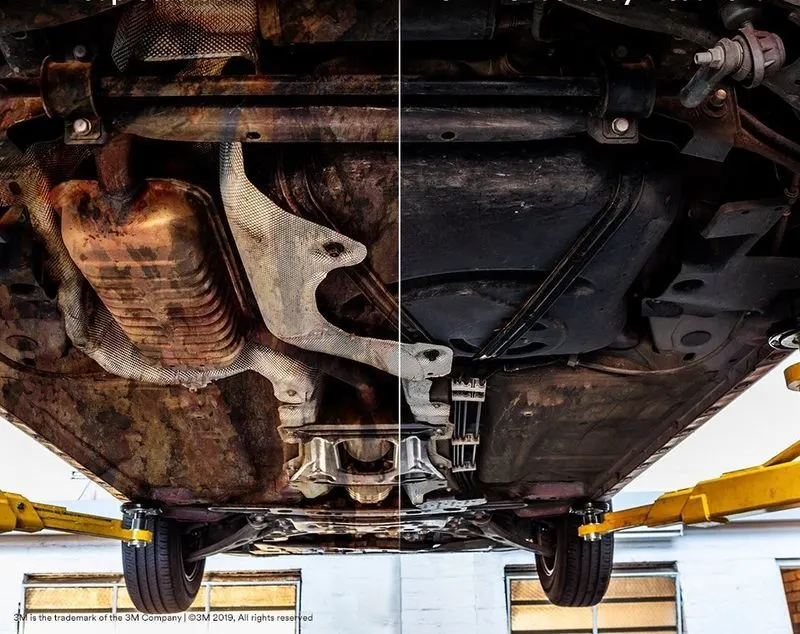
UNDER BODY COATING : Underbody coating is a dense cladding applied uniformly to the under body of an automobile and it is also knwon as anti-corrosion coating. Due to road condition, automobile's underbody is more prone to corrosion. Underbody coating is mostly used for to stop the corrosion at the bottom of the automobile. It also protects other component of vehicle such as internal body panels, frame rail and other cavities that are not physically accessibile but prone to corrosion.
Corrosion rate of this coating can be found by the fallowing formula:
R = k(wi-wf) / ATρ
where,
R = corrosion rate, mm/year
wi = initial wieght, g
wf = final wieght, gρ
A = Total surface area, mm
ρ = density gm/cm2
K = unit conversion constant
Different types of underbody coatings are
RUBBERIZED UNDERCOATING:
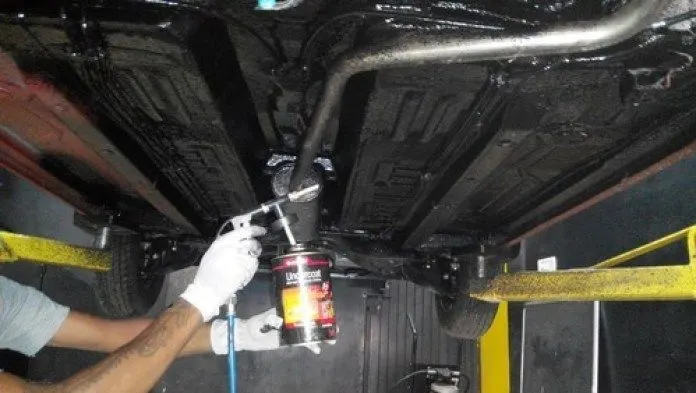
Rubberized car undercoating is simple to apply and provides sound insulation as well as protection from dust, moisture, and dents. The coating can be painted over and quickly removed with an undercoating remover spray if necessary for bodywork. Therefore, rubberized coating is the greatest option for safeguarding your vehicle's undercarriage since it offers the most straightforward and effective protection against rust and moisture.
POLYURETANE UNDERCOATING:
A polyurethane-based sealer is another choice for undercoating your vehicle. This sort of undercoating for vehicles is a little faster and easier to apply. It is frequently sold in canisters that are ready to be loaded into an application gun. This form of sealant bonds with and protects unoxidized metal by seeping into all cracks and seams, displacing salt and moisture, and oozing around rusty regions. It also sands fast in the event that bodywork is required, and it may be painted over. This sort of automotive undercoating, on the other hand, usually necessitates a little more surface prep work before application, such as sanding and applying an etching primer to exposed metals.
WAX OR PARAFFIN BASED UNDERCOATINGS:
A paraffin-based undercoating will be the most cost-effective and time-efficient way to protect the vehicle's underside. However, that it will wear off faster than other undercoatings and will need to be stripped and redone annually. Undercoatings made of wax never truly harden. They drip or run into seams and cracks during application to give protective characteristics.
ASPHALT BASED UNDERCOATINGS:
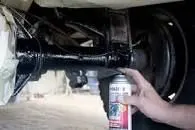
Asphalt-based undercoating adds a layer of protection against pebbles, chips, and moisture for large trucks and heavy gear. A small amount of rubberized material is usually included in asphalt-based undercoatings to help them form up firmly and soften noise. This form of undercoating, which is often offered in five gallon containers, requires more cure time than the other three and is NOT paintable, making it best suited for usage on undercarriages.
ADVANTAGES OF UNDERBODY COATING :
1 . Protect the vehicle components.
2. Wear off the the rust and corrosion.
3. Increase the life span of vehicle and components.
4. Feel freely in driving.
5. Reduce the noise effect in vehicle motion.
6. Reducing vibrations
DISADVANTAGES OF UNDERBODY COATING :
1. Highly cost.
2. Correct time to do service and apply underbody coating.
3. Care on vehicle every time.
4. Due to bad roads, weather, cold weather and rainy seasons to the vehicle is damaged due to salt and water wear it.