TRANSFER FUNCTION
OBJECTIVE:
- To explain how hybrid electric cars can be operated more efficiently by an autonomous driving system.
- To Derive the transfer function of the suspension system of a car and convert it to state-space format.
- To check whether the transfer functions of RC and CR (output across R) circuits same.
PROCEDURE:
1)Hybrid electric cars can be operated more efficiently by an autonomous driving system:
- The word Hybrid means a combination of two different things. The majority of hybrid electric vehicles are using a combination of gasoline engines and electric motors.
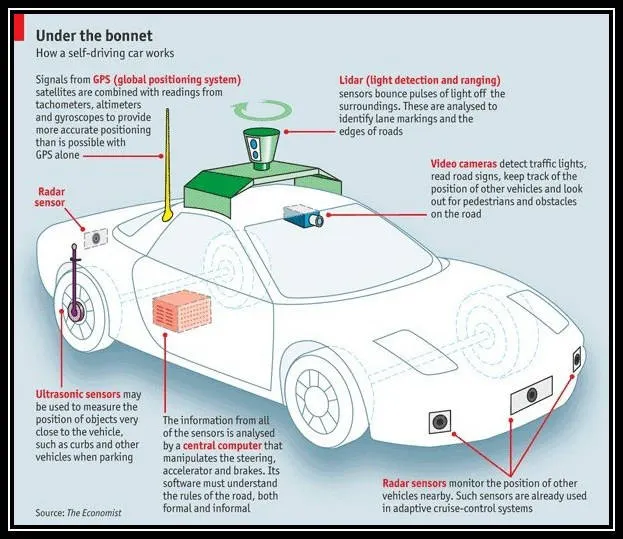
- In autonomous driving systems, several sensors are used to operate the vehicle to achieve more efficiency and safety.
- The sensors in an autonomous vehicle include radar sensors, ultrasonic sensors, and LIDAR sensors.
- The location is detected by the Global Positioning System(GPS).
- It is a new and promising technology that uses real-time geographical data received from several GPS satellites to calculate coordinates, speed, and course to help navigate the car. GPS integrates the data received from tachometers, gyroscopes, altimeters to provide more accurate positioning.
- The LIDAR(Light Detecting and Ranging) sensors are used to identify the lanes marked at the edge of the roads. These sensors shoot out an invisible beam of light from across the light spectrum. These sensors use ultraviolet and infrared light to map out the environment around it. It can get a sense of both the physical dimensions and motion (if any) of objects in its vicinity.
- RADAR sensors used as the adaptive cruise control (ACC) system to monitor the position of objects around the vehicle. The ultrasonic sensors are used to measure the position of objects very close to the vehicle such as speed brakes and other vehicles in the parking area. cameras also mounted to detect the traffic signals keep track of other vehicles and look out for pedestrians and obstacles on the road. The information from all of the sensors is analyzed by the central computer that manipulates the steering, accelerator, and brakes.
2)Transfer function of the suspension system of a car:
- The dynamics of the suspension of a vehicle can be analyzed by running simulations through a mathematical model.
- The simplest model of a vehicle's suspension is called the quarter car suspension model.
- The model consists of two mass bodies, quarter vehicle and wheel, and lumped parameters for stiffness and damping for both suspension and tire.
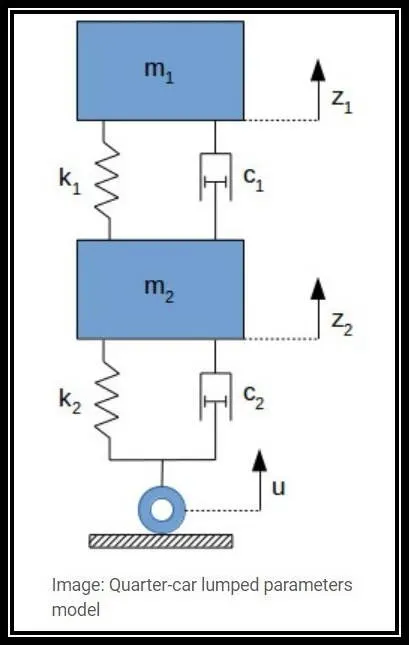
m1 [kg] – the mass of a quarter of the vehicle body
m2 [kg] – the mass of the wheel and suspension
k1 [N/m] – spring constant (stiffness) of the suspension system
c1 [N·s/m] – damping constant of the suspension system
k2 [N/m] – spring constant (stiffness) of the wheel and tire
c2 [N·s/m] – damping constant of the wheel and tire
z1 [m] – displacement of the vehicle body (output)
z2 [m] – displacement of the wheel (output)
u [m] – road profile change (input)
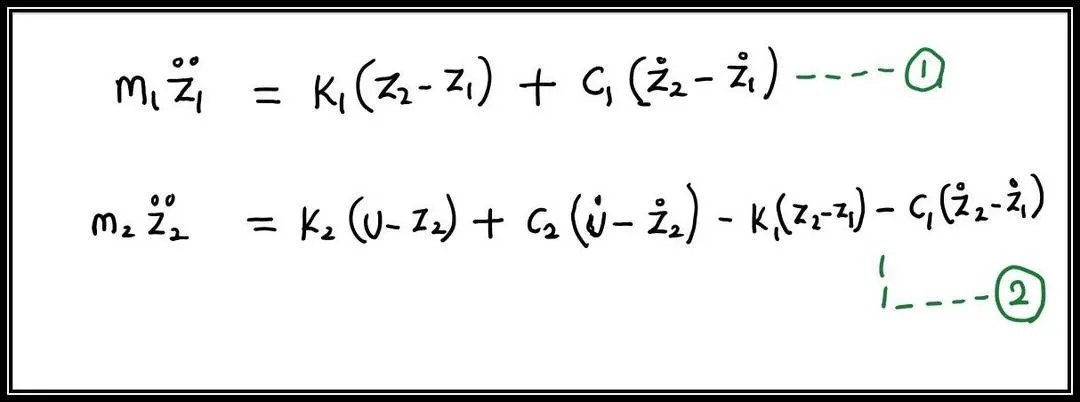
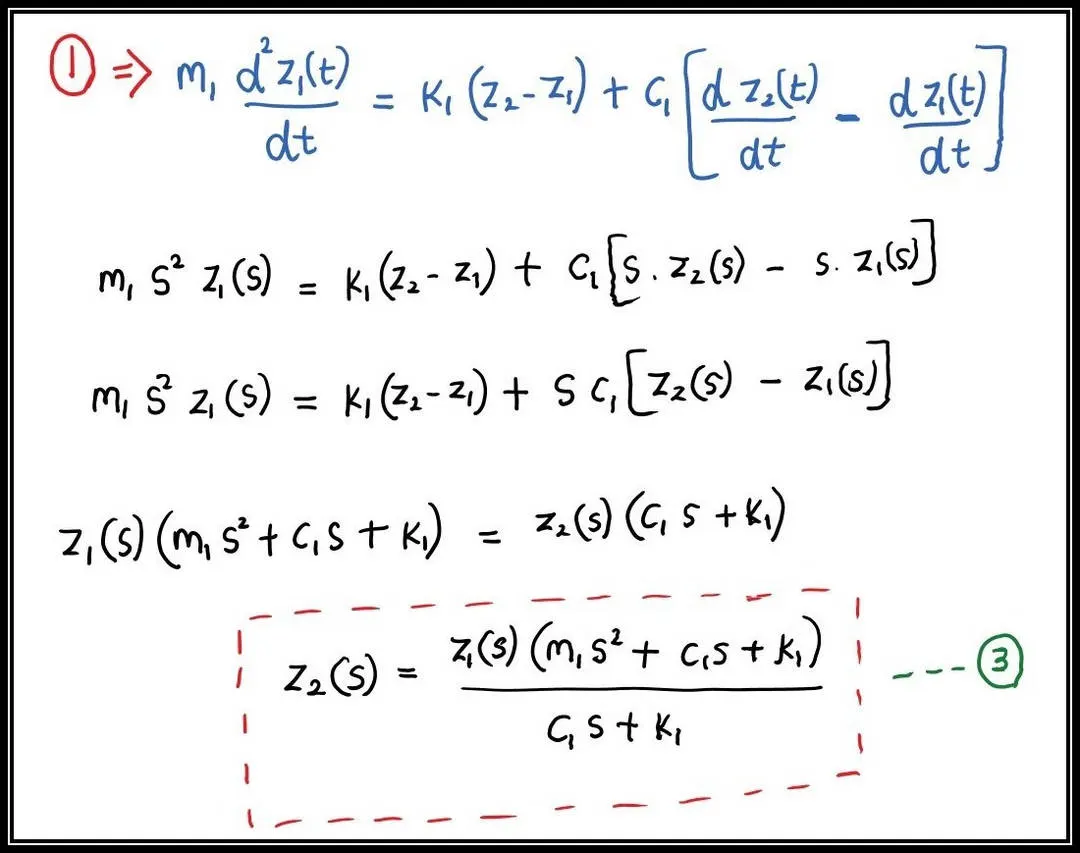
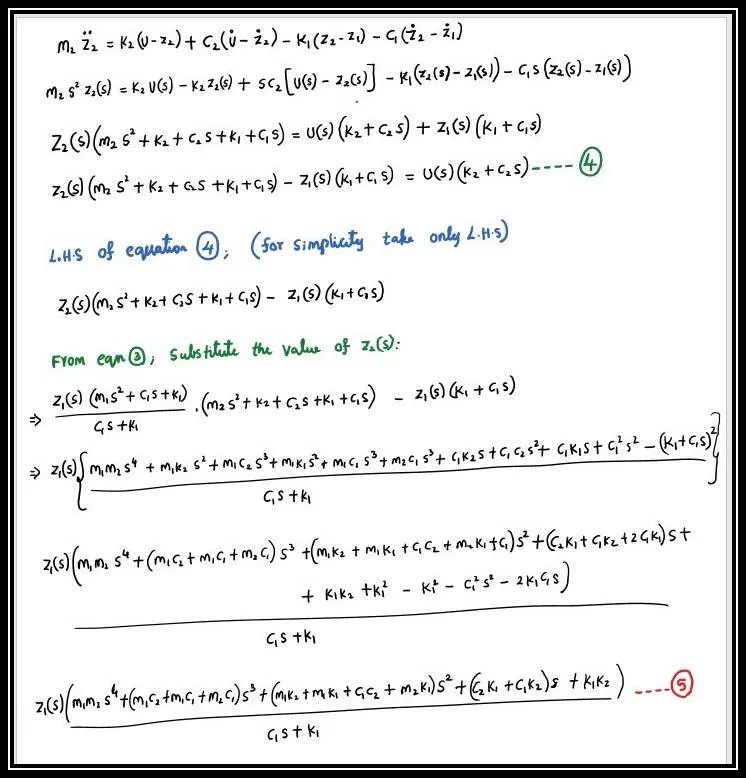
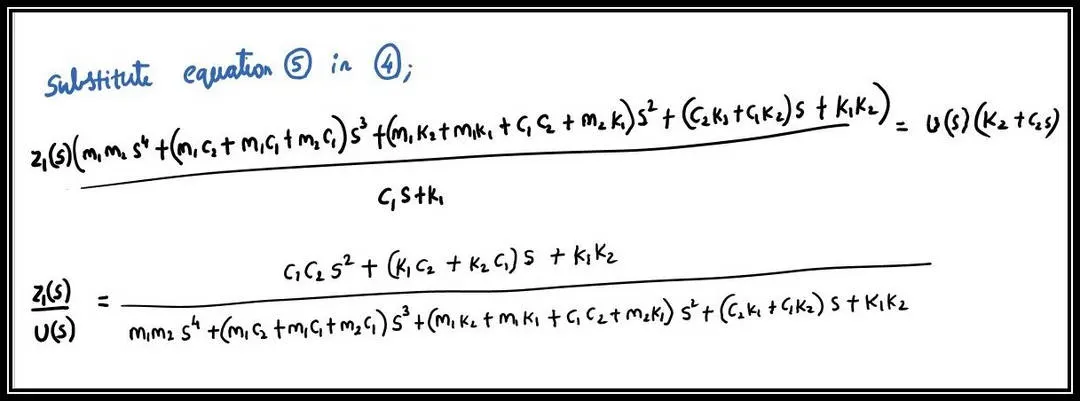
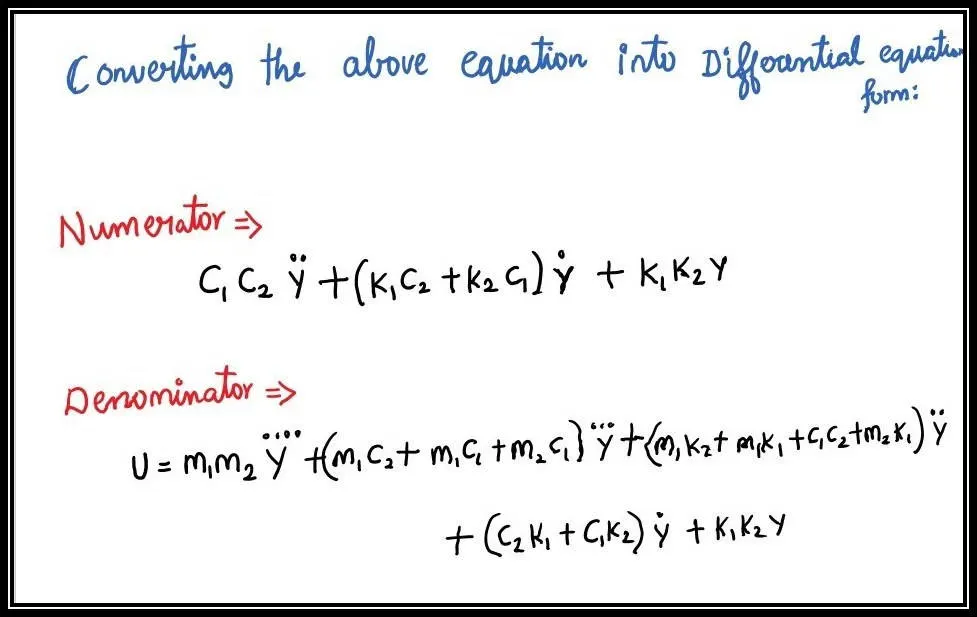
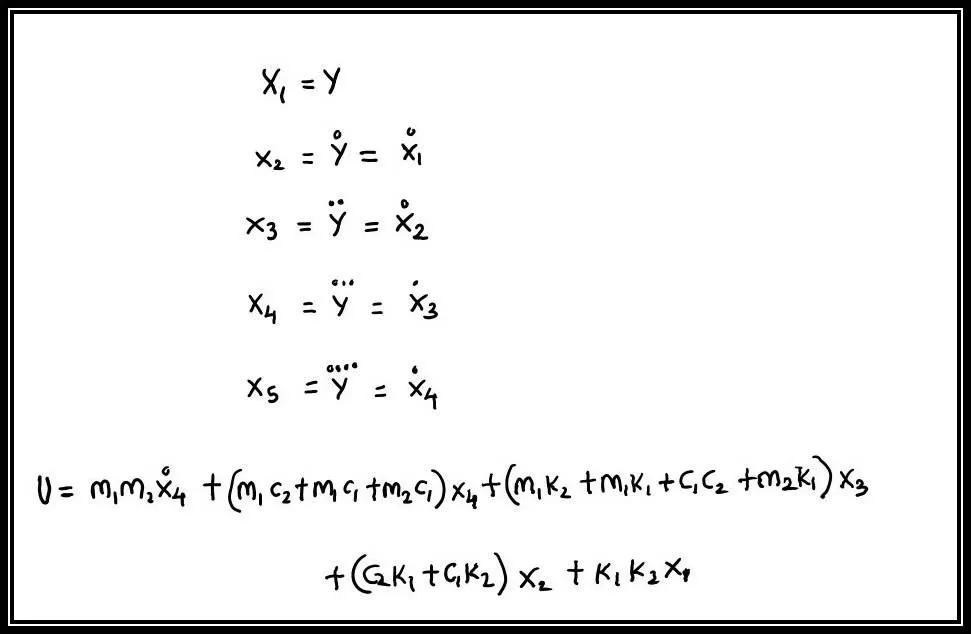
Considering all initial conditions being zero and applying Laplace's transform to equations(1)&(2):
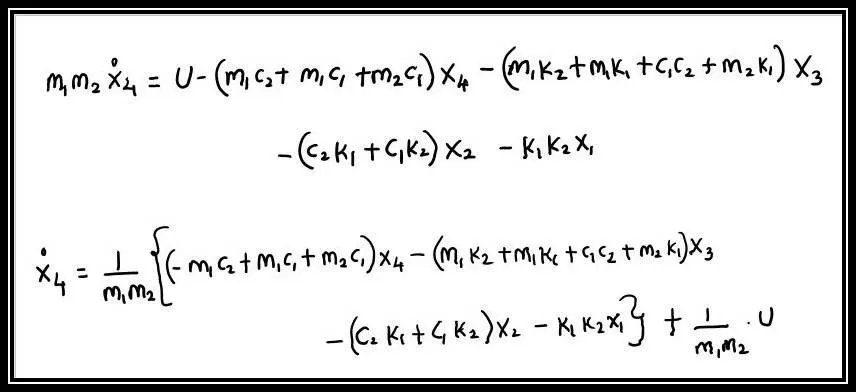
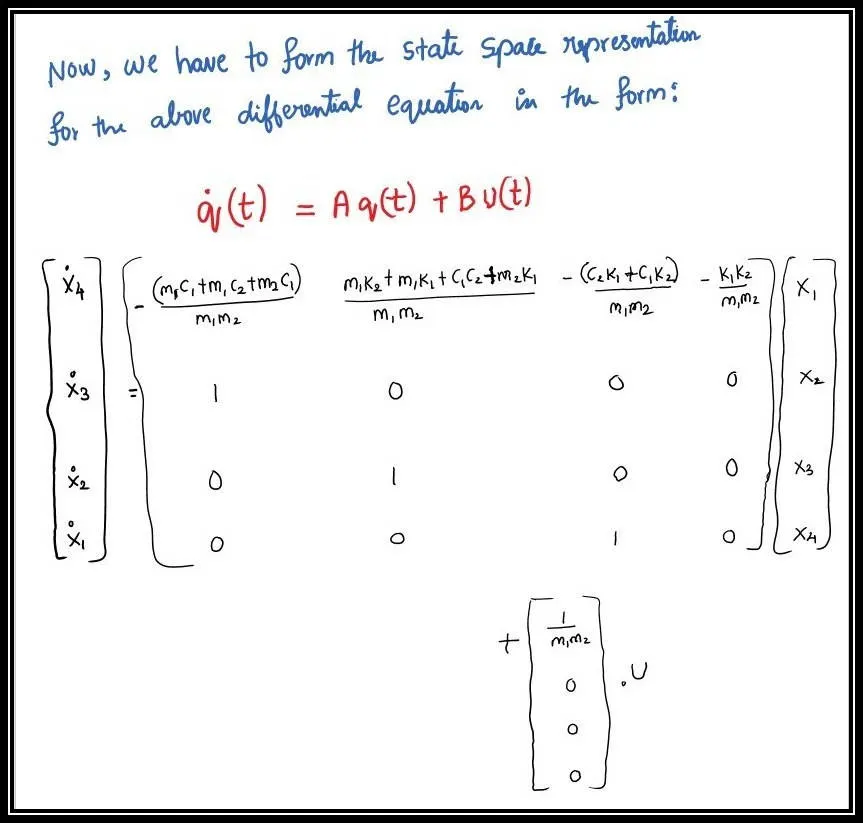
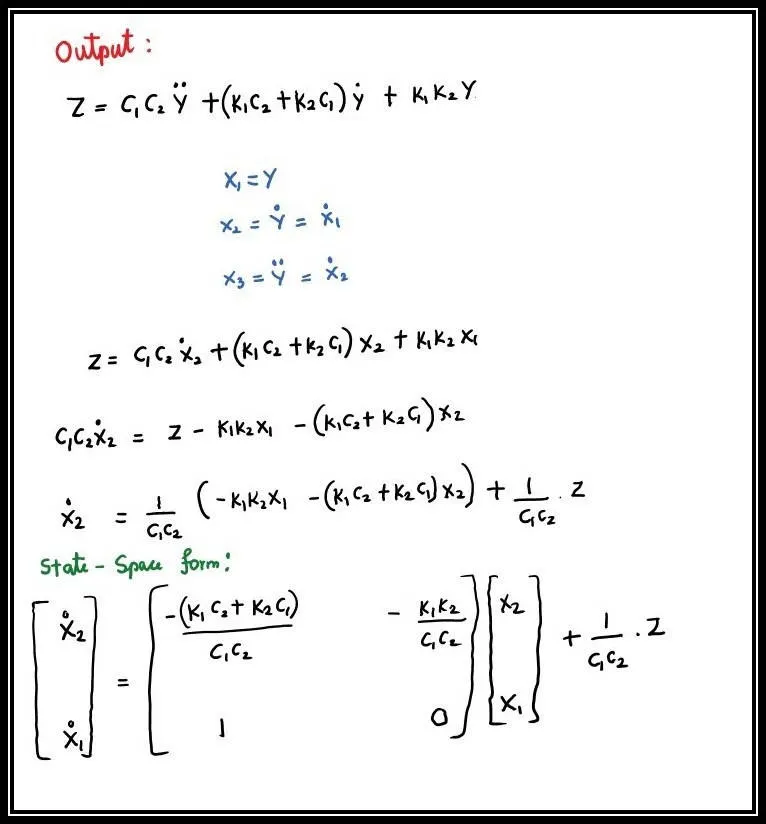
STATE-SPACE FORMAT:
Reference:
The above article is referred for the derivation of the transfer function and State-space format.
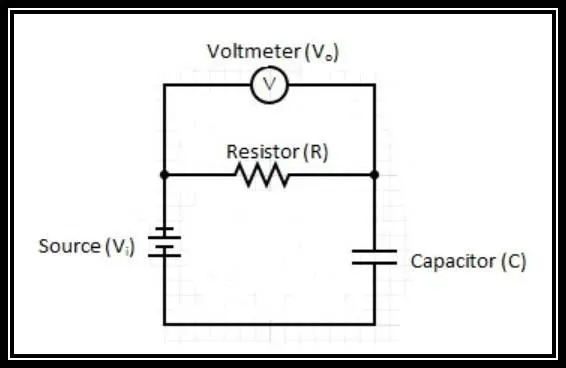
3) The Transfrom Function for the RC Circuit with output measured across Capacitor:
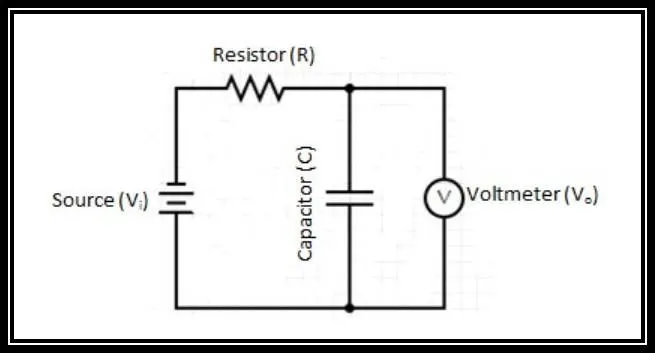
Vi(t)=Input voltage source;
i(t)=Source Current;
V0=Output voltage;
C=Capacitance of the capacitor;
R=Resistance of resistor;
t=Time;
s=Complex variable;
By applying Kirchoff's Voltage Law:
Vi(t)=VR+VC
Vi(t)=i(t)+V0
Vi(S)=R.C.S.V0(S)+V0(S)
Vi(S)=[R.C.S.+1]
`(V0(S))/(Vi(S))`=`1/(1+R.C.S)`-----------------------(1)
The Transform Function for the CR Circuit with output measured across Resistor:
Vi(t)=Ri(t)+`1/Ci(t)dt`
V0(t)=Ri(t)
Applying Laplace Transform equation:
Vi(S)=RI(S)+`1/(CS)*I(S)`
V0(S)=RI(S)
I(S)=V0(S)/R
Vi(S)=V0(S)+`1/(CS).(Vo(S))/R`
Vi(S)=[1+`1/(R.C.S)`]V0(S)
`(V0(S))/(Vi(S))`=`(R.C.S)/(R.C.S+1)`---------------(2)
From equation (1)&(2) it is clear that the transfer functions of RC and CR(output across R) is not the same.