Supervised Learning - Classification Week 7 Challenge
1
- Pros:
- It works really well with a clear margin of separation
- It is effective in high dimensional spaces.
- It is effective in cases where the number of dimensions is greater than the number of samples.
- It uses a subset of training points in the decision function (called support vectors), so it is also memory efficient.
- Cons:
- It doesn’t perform well when we have large data set because the required training time is higher
- It also doesn’t perform very well, when the data set has more noise i.e. target classes are overlapping
- SVM doesn’t directly provide probability estimates, these are calculated using an expensive five-fold cross-validation. It is included in the related SVC method of Python scikit-learn library.
2 ,
Finding missing values in dataset
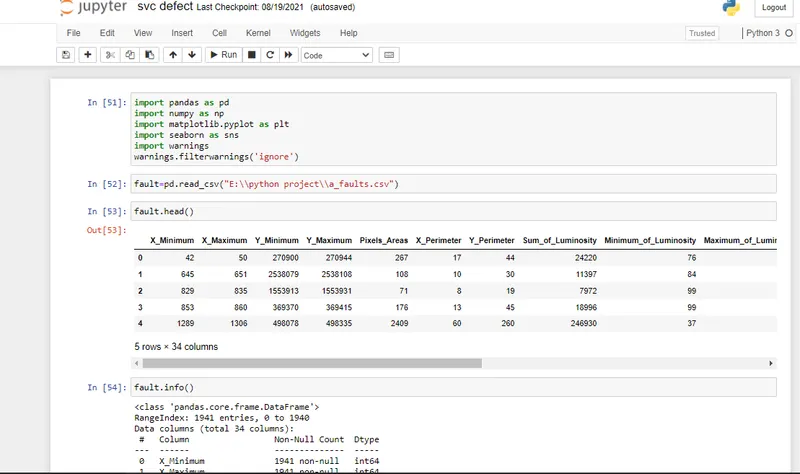
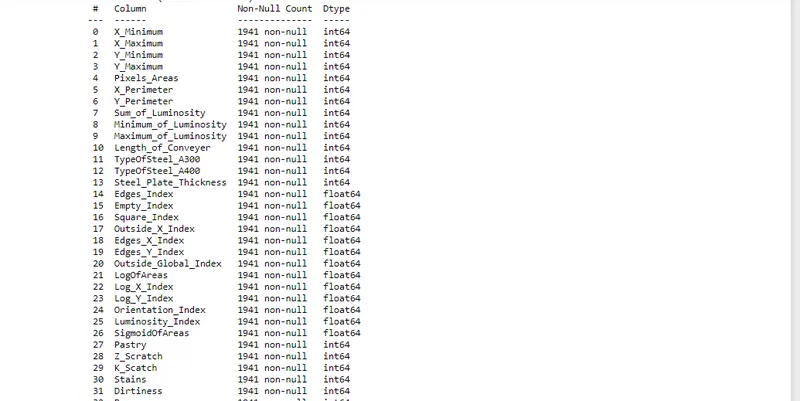
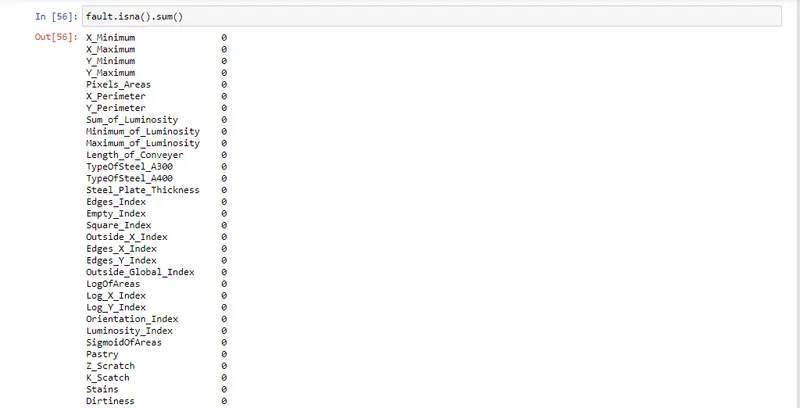
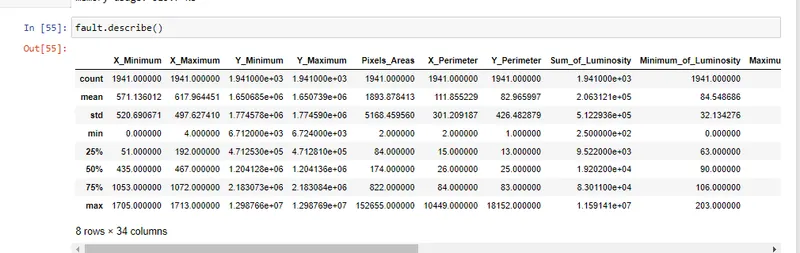
there is no missing values in the data set,there are 1941 data 27 attributes and 6 defects
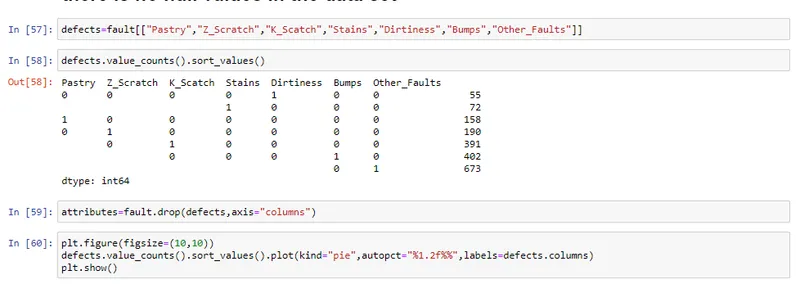
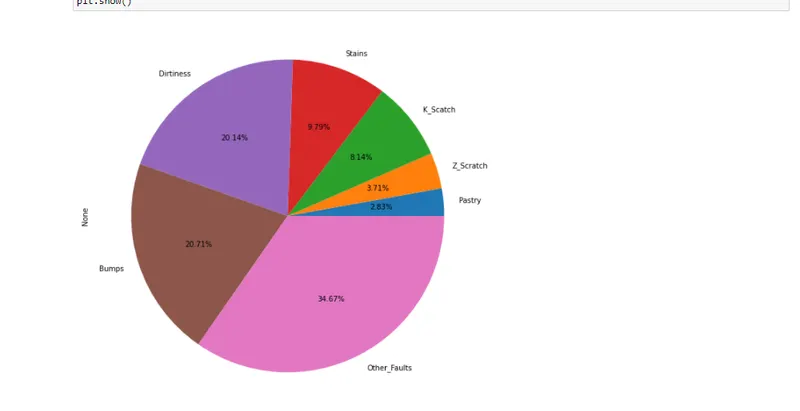
with the above graph it is confirmed that most of the defects are comes in the catagorty other_faults
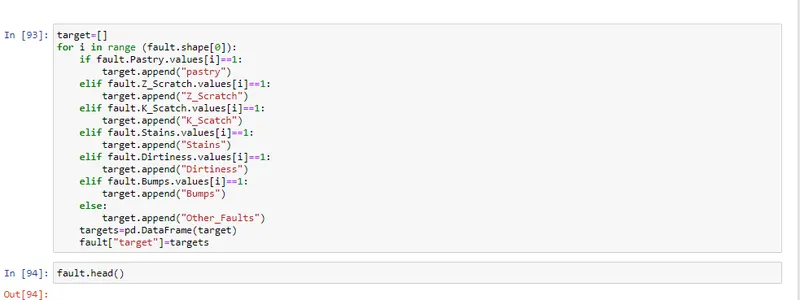
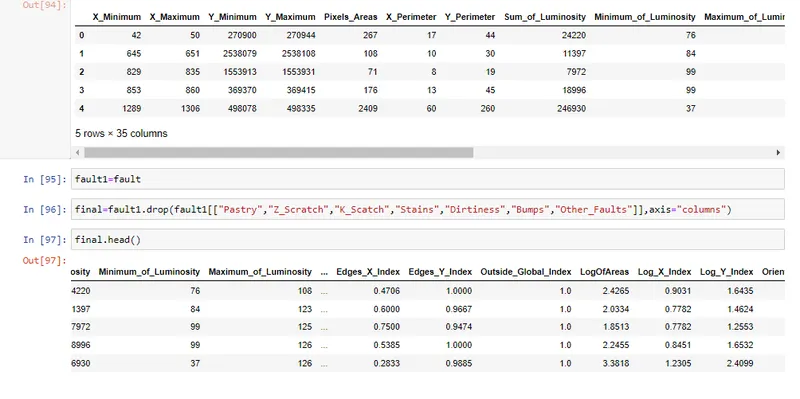
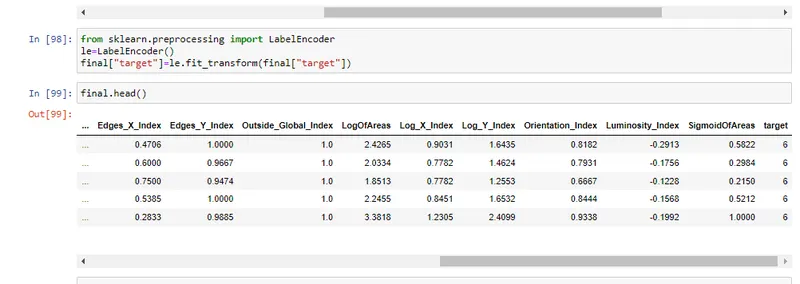
faults catagory are converted in single column and lable encoder has done to perform train and test

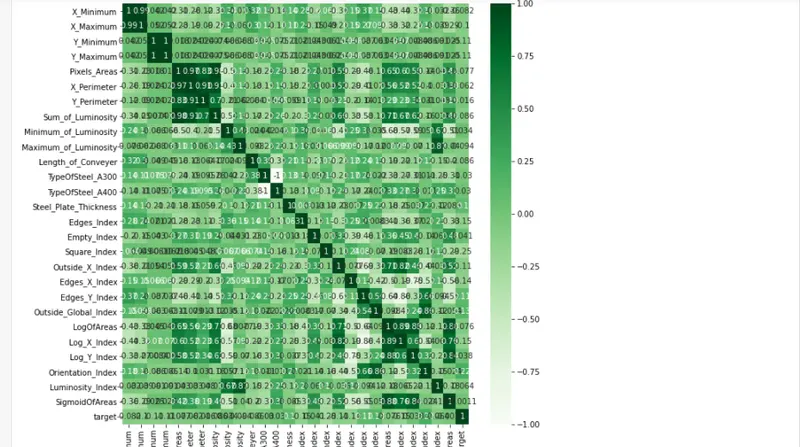
with heatmap predicted there is a corelation between :
X_peremeter and pixels_Areas
sum_of_luminosity and pixels_Areas
x_perimeter and sum_luminosity
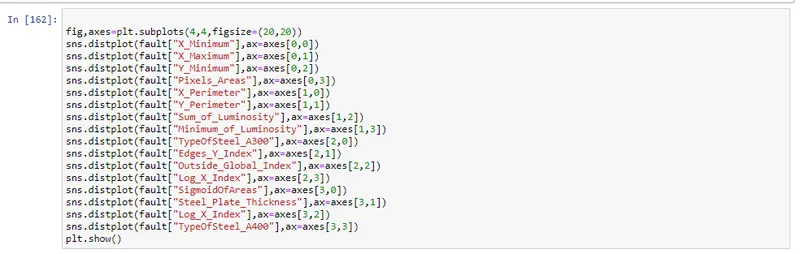
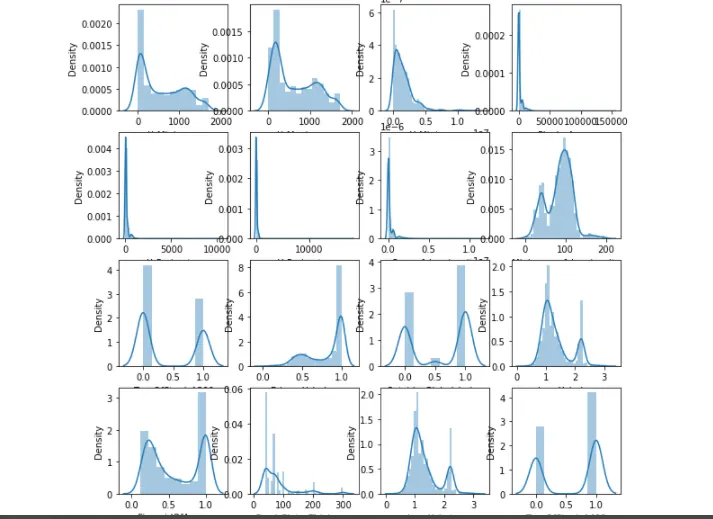
with distripution curve it is found that most of fault occur in A400 type metal compared to A300 type

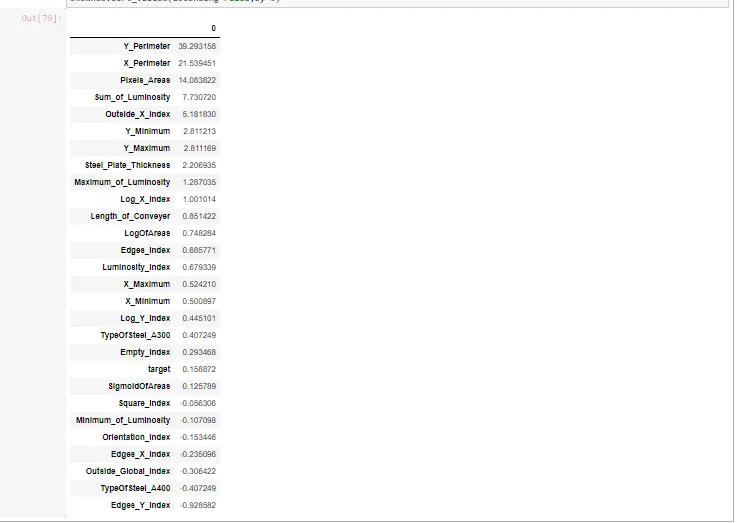
the skweness is more positive in Y_peremeter,x_perimeter and negative in Edge_Y_index
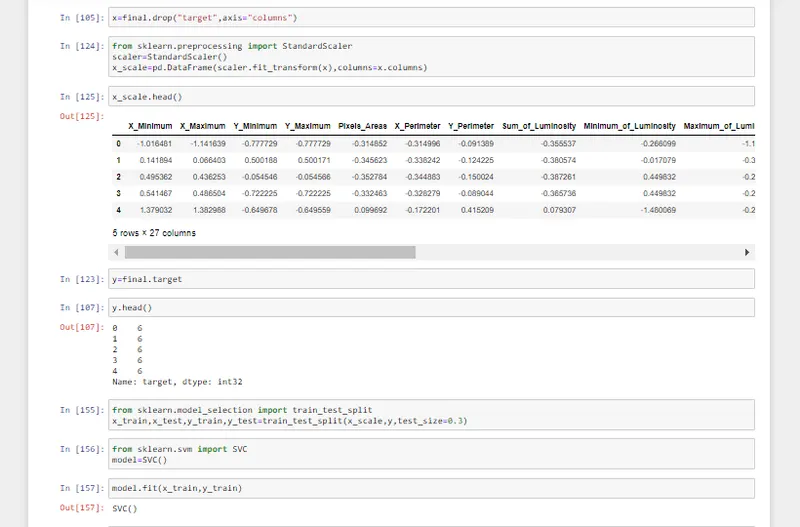
data trained with SVC

getting score of 0.77
comparision with y_test and y_predict by using confusion matrix heat map graph to understand better
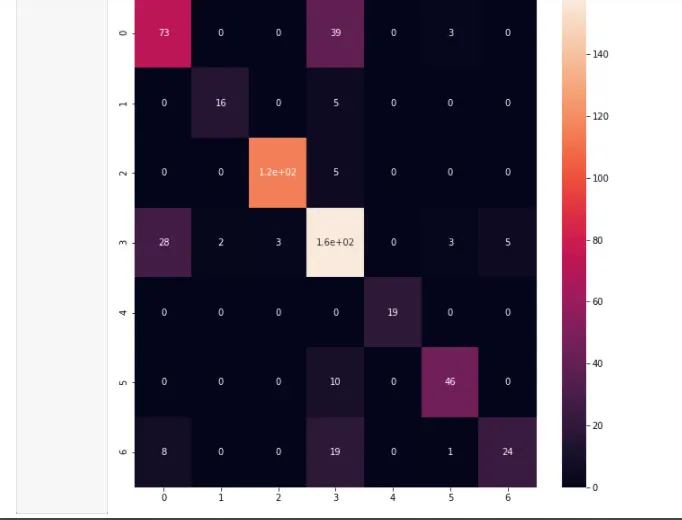

according to heat map of confusion matrix mostly pastary, other_faults,Z_scratch are predicted incorrectly so we need to analysie deeply

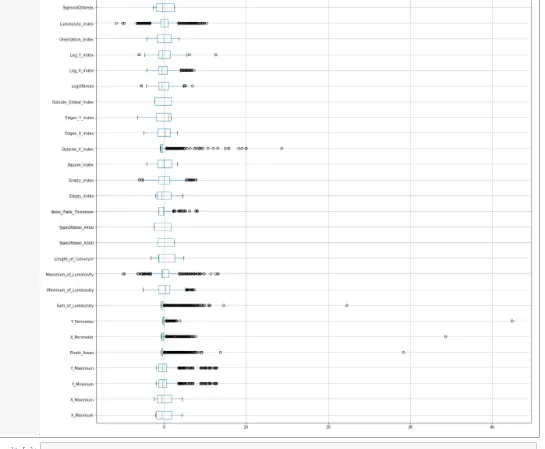
according to box plot there are so many outliers we need to understand and remove the outliers then further do the same analysis to increase the predict score