STRUCTURED MESHING ON LAMBORGHINI AVENTADOR CAR MODEL USING HYPERMESH
Objective:
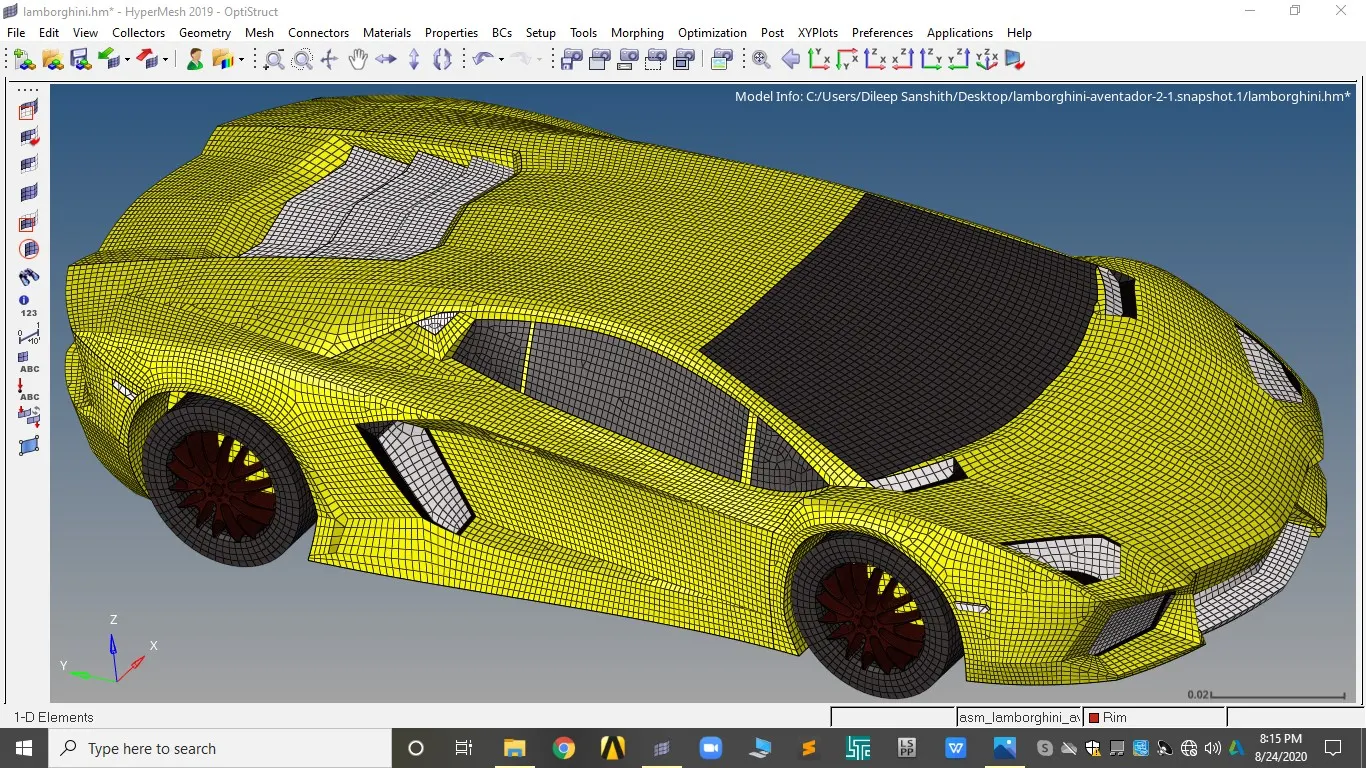
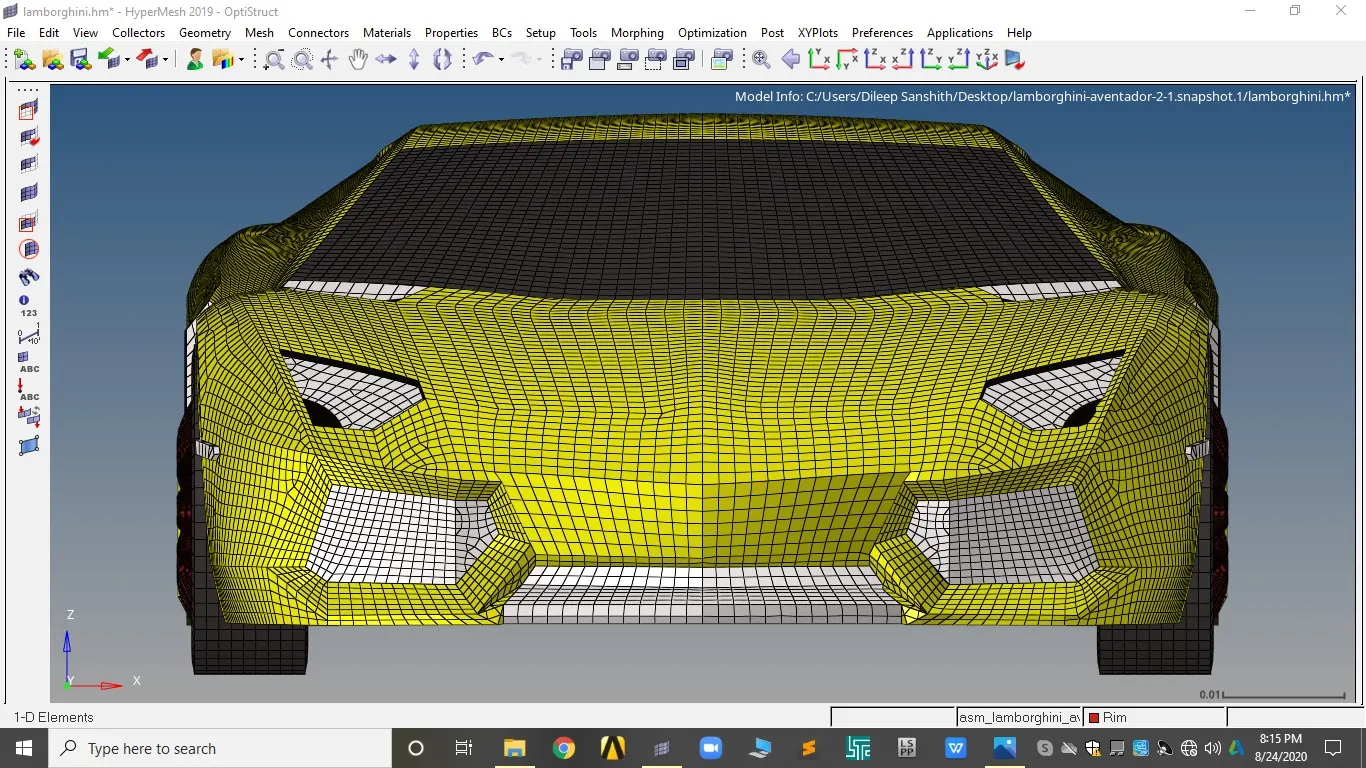
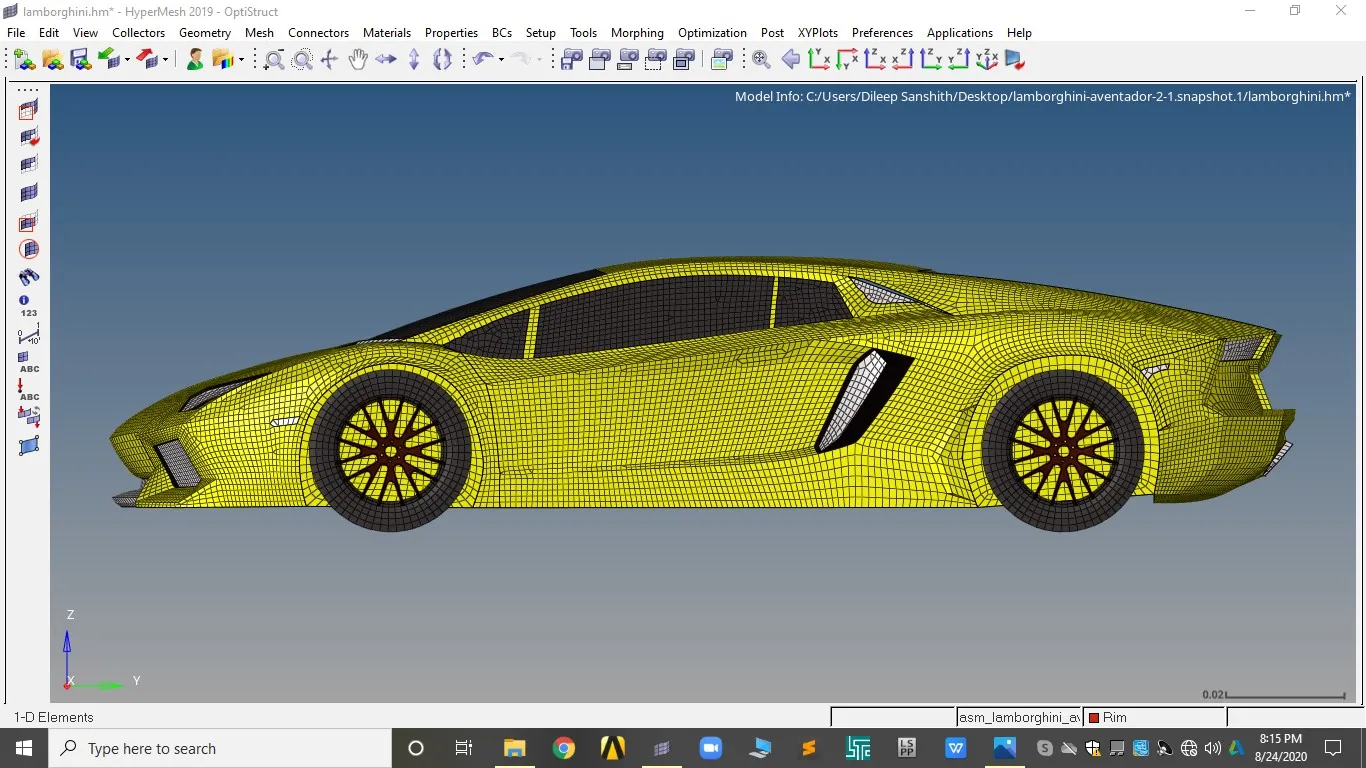
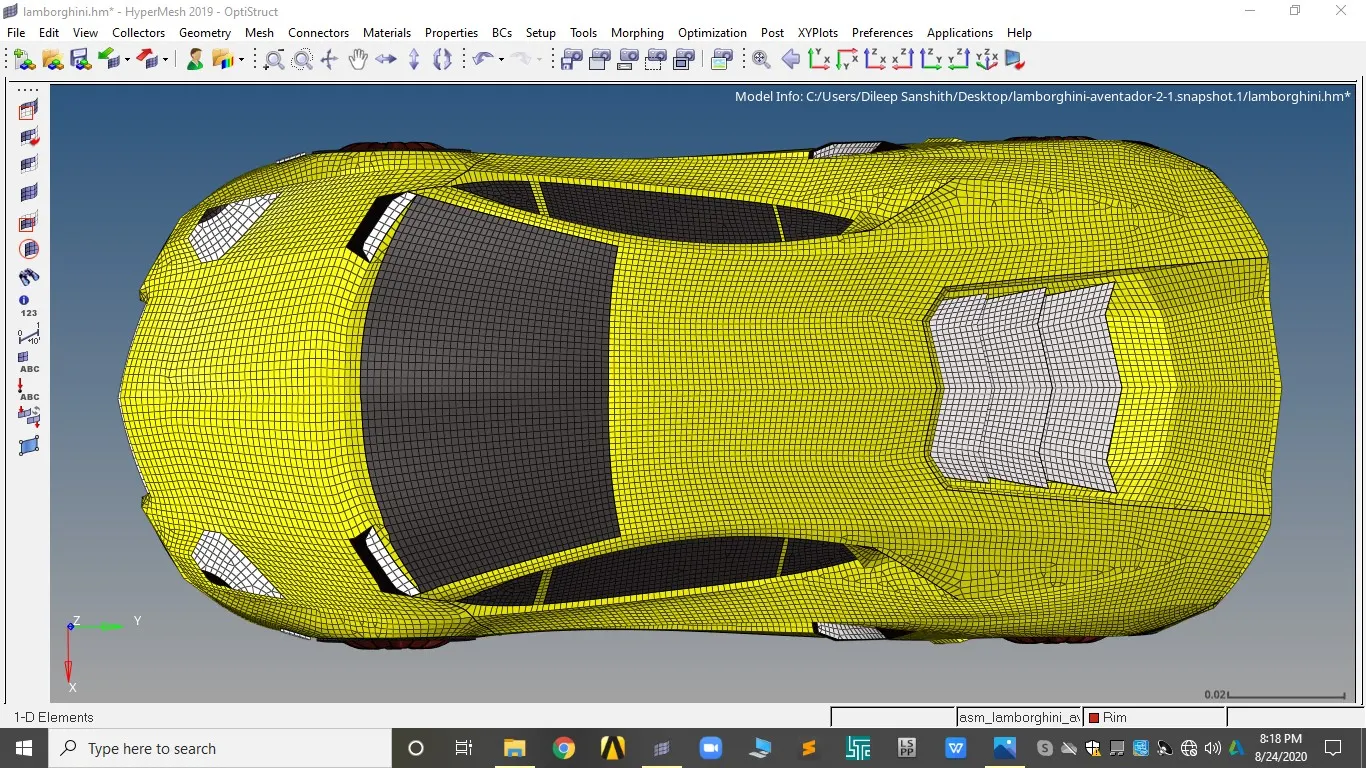
To perform a structured desirable mesh pattern on a Lamborghini Aventador car model using Hypermesh.
Methodology:
1. Geometry cleanup
2. Surfaces splitting
3. Meshing each surfaces one by one
4. Correcting mesh flow
Geometry cleanup:
Hypermesh can be directly used to access the geometric models from leading design software’s like CATIA, Pro-E etc.
With use of many highly advanced tools presented in Hypermesh helps to overcome the FEM challenges, including many topological irregularities multi body contacts and others. This can import geometry from any CAD system and various data exchange standards.
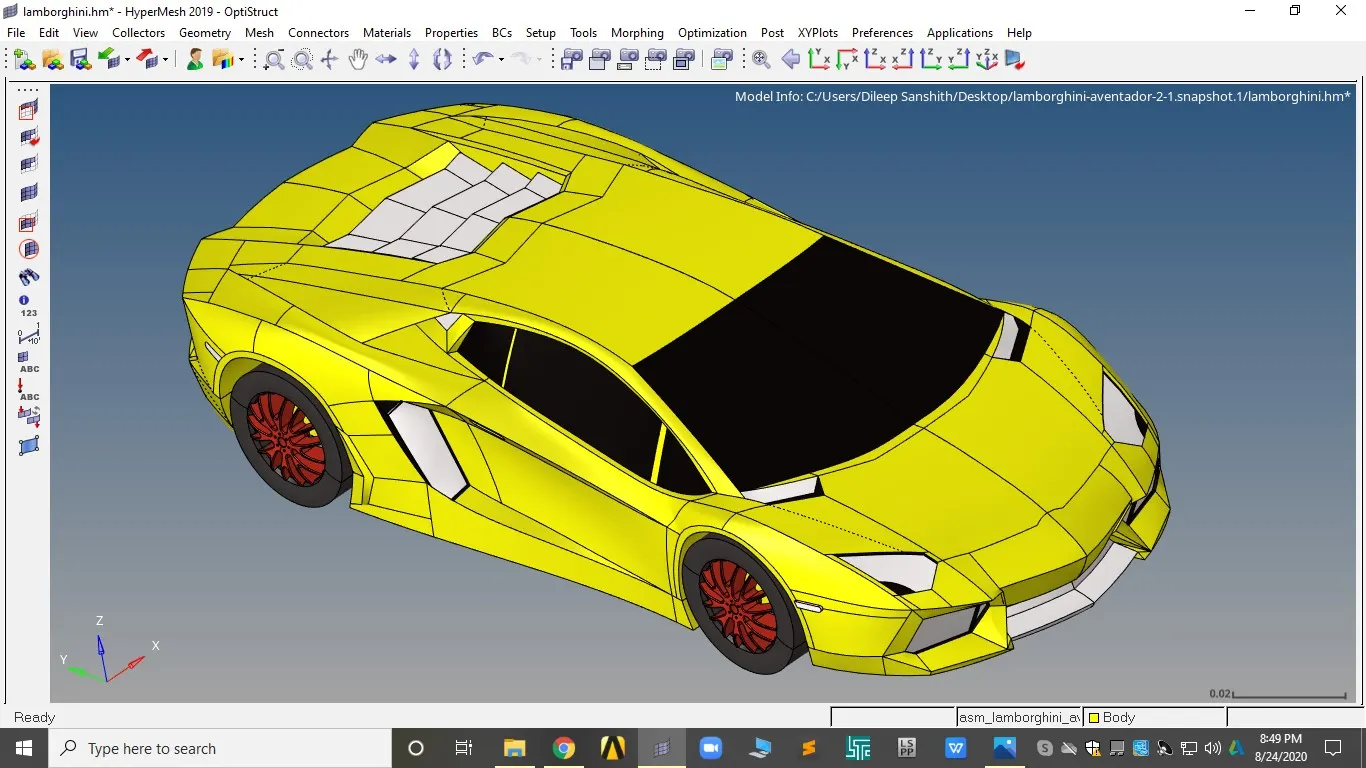
The Lamborghini Aventador car body model is obtained from Grabcad website https://grabcad.com/library/lamborghini-aventador-86
The geometry is imported into Hypermesh with autocleanup option turning on so as to correct any topological errors in the model and preventing data loss.
All the solid geometries present in the model are deleted and left with only surfaces.
The model is viewed in topology display mode and shaded mode to evaluate its integrity.
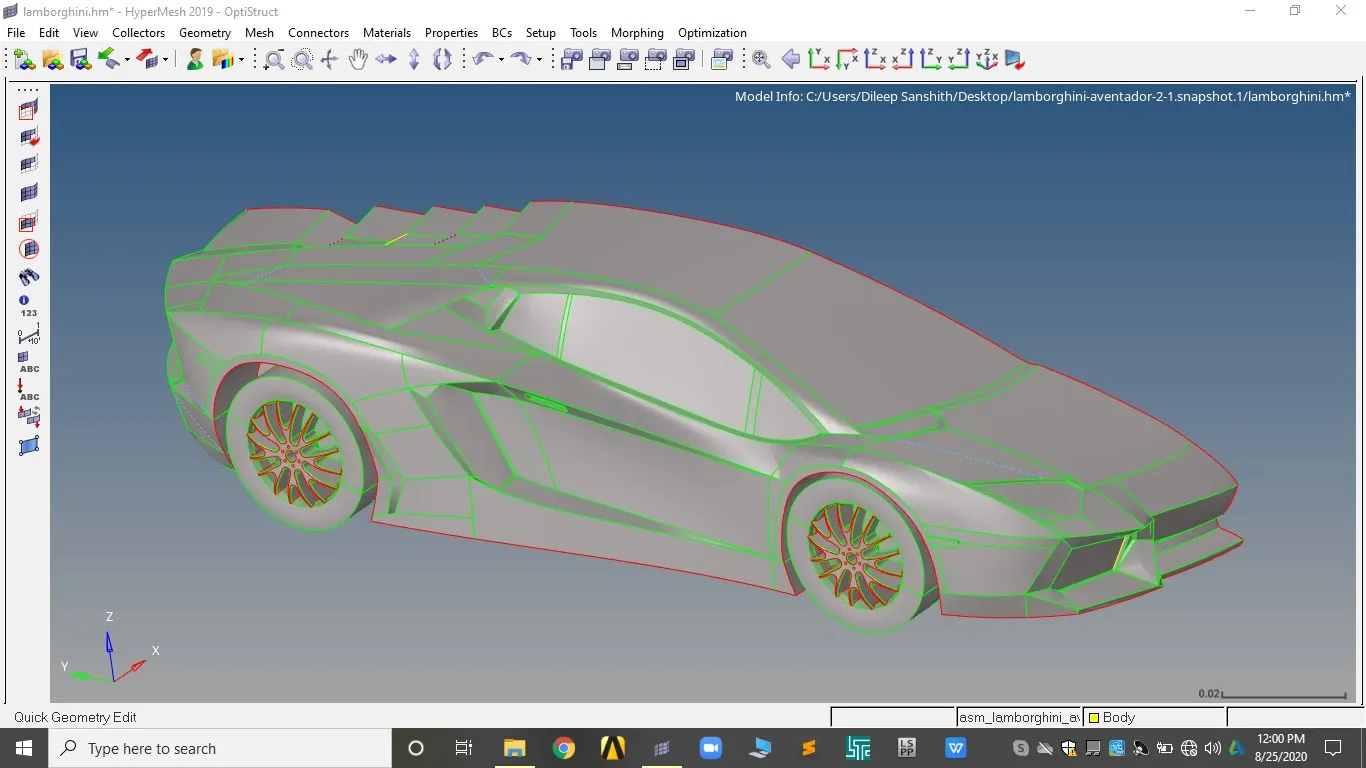
Multiple red free edge pairs are combined at one time using equivalence tool from the surface edges option with an approximate tolerance gap. Most of the free red edges are combined into green shared edges.
The unstitched surfaces are combined manually using toggle edges and move-retain point option from quick edit panel.
The car model is cut into two halves using trim surfcaes with line option in symmetrical axis so as to perform meshing only to half of the model and reflecting the elements with respect to the axis of symmetry later.
Splitting surfaces:
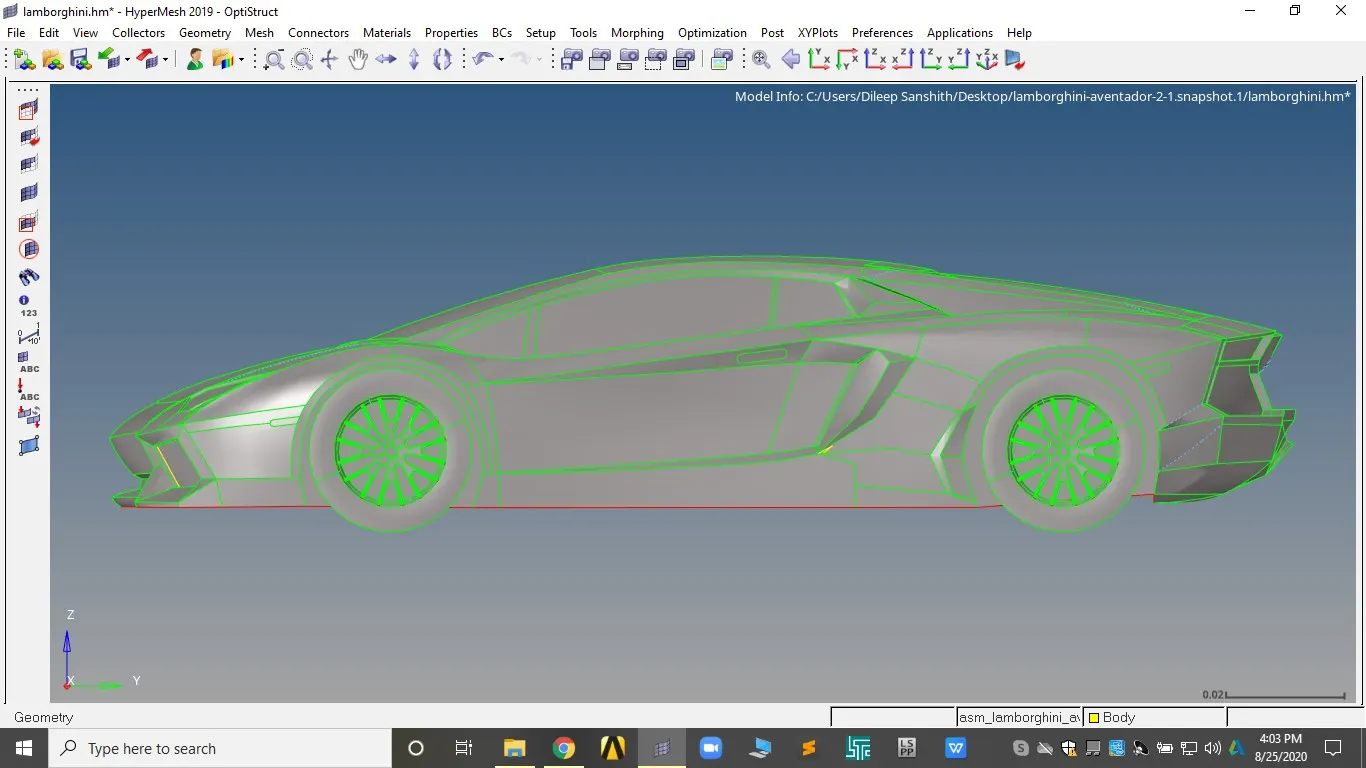
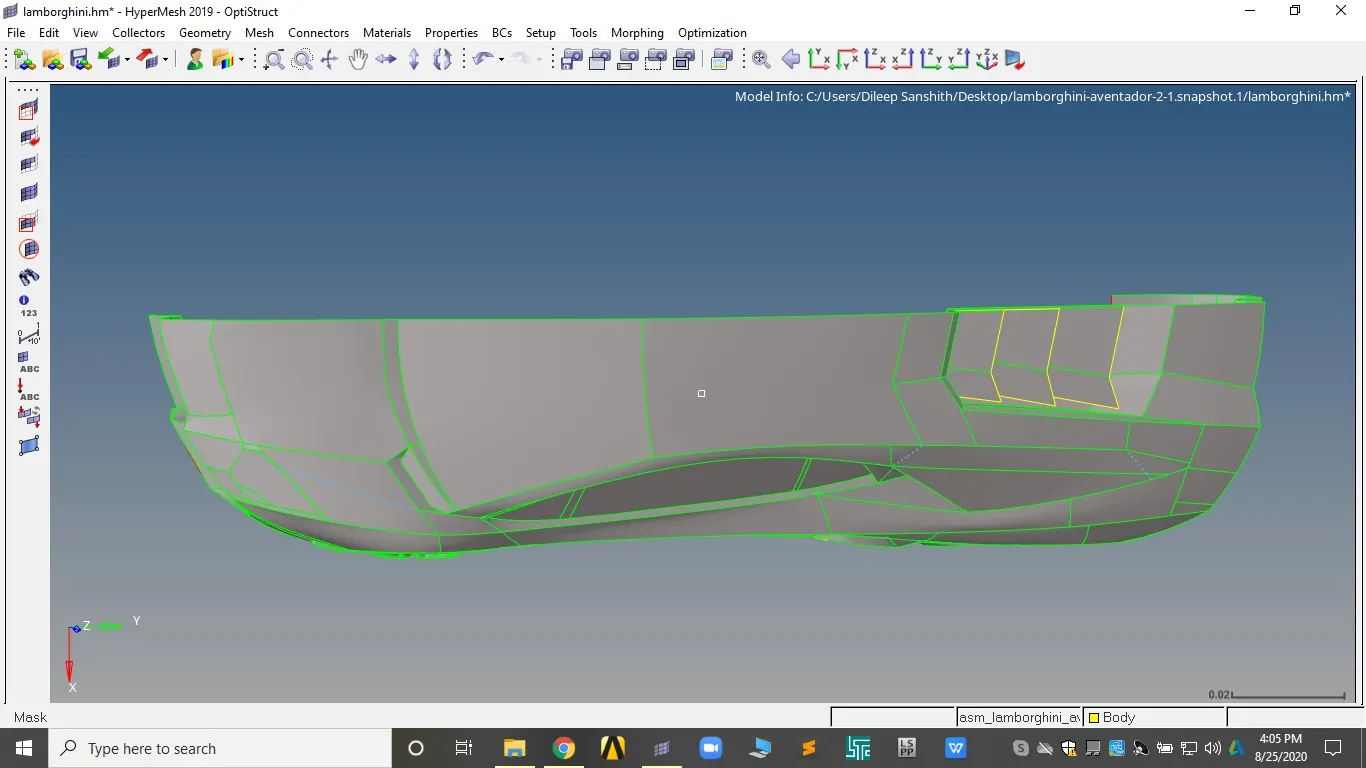
In order to perform a good mesh flow pattern easily, various surfaces in the model are split into smaller regions.
Using split node-node and split node-line options, most of the surfaces of the model are divides into multiple shaped regions.
Most of the surfaces are split up into rectangular shapes so as to obtained a quad mapped shell elements.
Meshing the surfaces:
Hypermesh provided with rich set of tools made it possible to achieve a required mesh quality with the different meshing techniques starting from manual to completely automatic meshing.
In 2D panel, automesh option is used to perform the meshing process.
With an approximate element size of 1 unit and element type as mixed, the split-up surfaces are ready for meshing.
The surfaces are meshed one by one followed by obtaining a good mesh flow using density and mesh style option.
With an appropriate element density, each surface is meshed. Using mesh style option, a correct element type and mapping shape are chosen.
For example, if the surface is having a square or rectangular kind of shape, an element type of quad and mapping shape as rectangle is selected to obtained a structured mesh pattern.
If the surface has five sides, then quad element with pentagon mapping shape is selected.
Mixed elements are used, in cases of surfaces having triangular shapes, and to capture the edges perfectly.
The adjacent surfaces are meshed one by one in this manner to maintain element connectivity between them.
Reflecting elements:
The created elements are ensured for connectivity with adjacent elements of surfaces.
Using reflect option from tools panel, all the elements created are selected and duplicated to their original components.
The duplicated elements are reflected to the other side with respect to the axis of symmetry by choosing a suitable base node.
The reflected nodes are merged together with the original nodes using the equivalence node option with an appropriate tolerance gap from edges option.
Now the FE model looks complete.
Conclusion:
The Lamborghini Aventador model is meshed with desirable mesh pattern and a proper mesh flow is achieved.
In this project, quad elements are preferred mostly and tria elements are avoided from occurence at most of the surfaces.
Considering the effect of wave propagation in any FE analysis, the mesh flow of the model is focussed mainly in this project.