Structural dynamics
Q.01)
STATIC ANALYSIS :
- Static analysis calculates the response of a structure to static loads, where the loads do not change over time
- Under static loading condition we can easily determine the internal stresses and deflections.
- In static analysis structure does not allow to go under damage.
- Structure allow to go under limited deflection under static loading condition within the elastic limits.
- There isn't any damping effect of structure consider in the static analysis.
DYNAMIC ANALYSIS :
- Dynamic analysis consider for the load which varries their magnitude with the time.
- Under dynamic loading determining internal forces is not easy there are other methods used to force calculations.
- For dynamic analysis structure allows to go under damage upto a limit withoutmembers loosing their strength to carry vertical loads.
- In dynamic analysis structure crosses the elastic limit and go to the inelastic limit.
- In dynamic analysis we consider Interia forces and Damping forces.
Q.02)
1) ELASTIC BEHAVIOR:
- Structure regains its shape and size after removal of external applied displacement causing load or force.
- Under proportionality limit structure behave as a pure elastic in nature.
- For the sturcture having huge importance are consider to deflect under the elastic limits.
2) INELASTIC BEHAVIOR :
- Structure does not regain its shape and size fully after removal of external applied load is termed as the Inelastic deformation.
- In the inelastic limit stress is not proportional to the strain under sustained loadings.
3) PLASTIC BEHAVIOR:
- For the stresses behind the elastic limit, plastic behavior shown by the material.
- there is no possibility of regaining of the shape and size of the structure even after complety removal of loading.
4) NON-LINEAR BEHAVIOR:
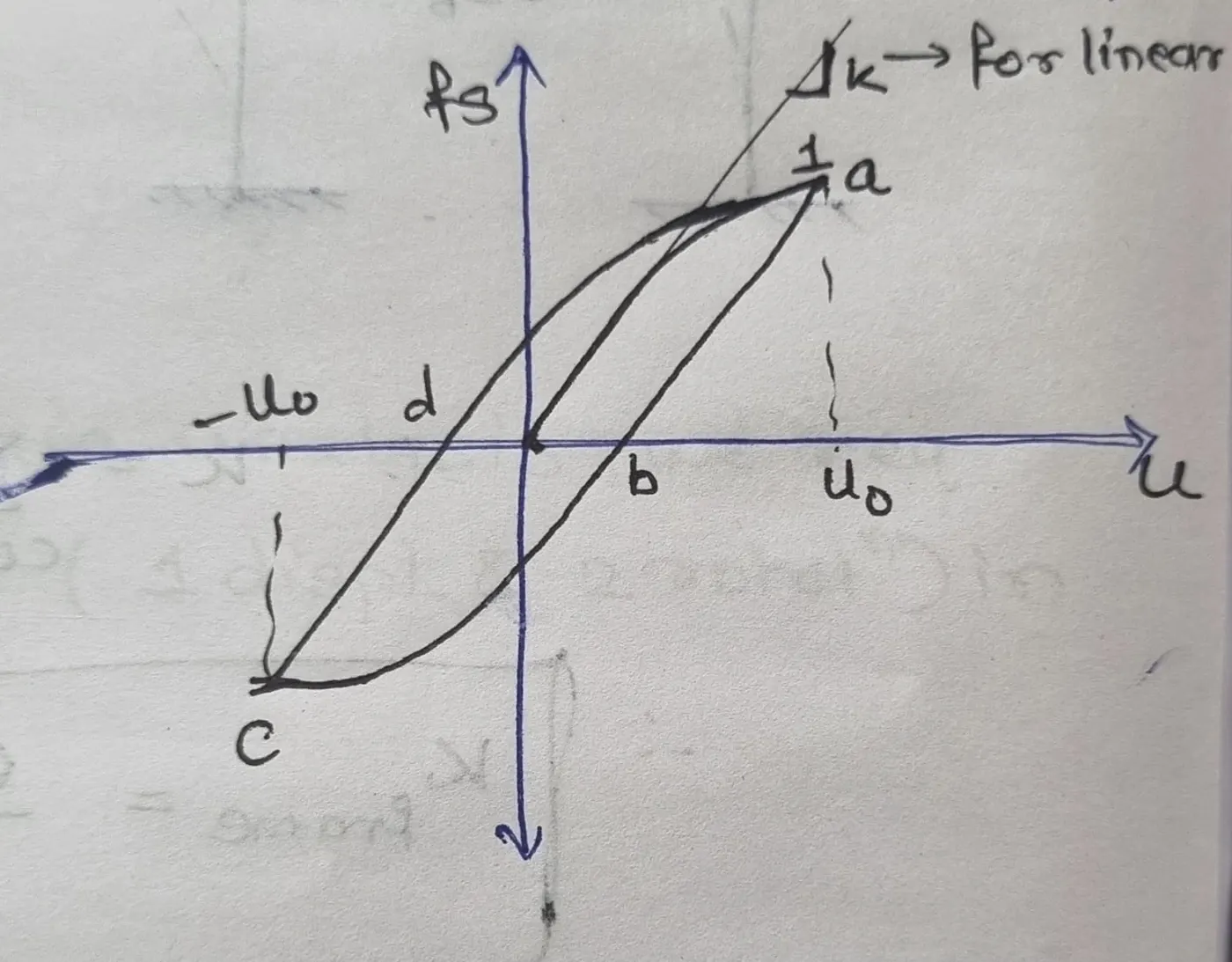
- When the section does to shows the stress-strain proportionality relationship the material under goes to the Non-linear behaviour.
- In non-linear behavoiur there is high increase in the strain even after the slight change in the stress suring loading.
Q.03)
1. Stiffness component:
- Stiffness is the internal resistance offered by the structure to the deflection.
- More is the stiffness of structure it goes under the less deflection.
- Stiffness can be defined by the internal forces developed in the structure under unit deflection.
- fs = k* u for the linear elastic structure.
2. Damping component:
- Damping of structure is the internal force which developed in the structure to resist the displacement developed due to external forcce which helps to get structure on its equilibrium state.
- it is related to velocity component.
- fd = c*v.
3. Mass component:
- In EOM the component mass is defined as Interia force.
- Inertial force is relatedd to the Acceleration.
- fi = m*a.

Q.04)
NATURAL PERIOD OF VIBRATION:(Tn)
- It is time period required for the undamped system to complete one cycle of free vibration.
- It is related to the natural circular frequency of vibration wn, having unit os radian per second.
- Tn = 2*pie / wn.
- where wn = natural circular frequency.
NATURAL CYCLIC FREQUENCY (fn):
It is the number of cycles completed in one second.
unit is Hertz.
fn = 1/Tn.
Q.05)
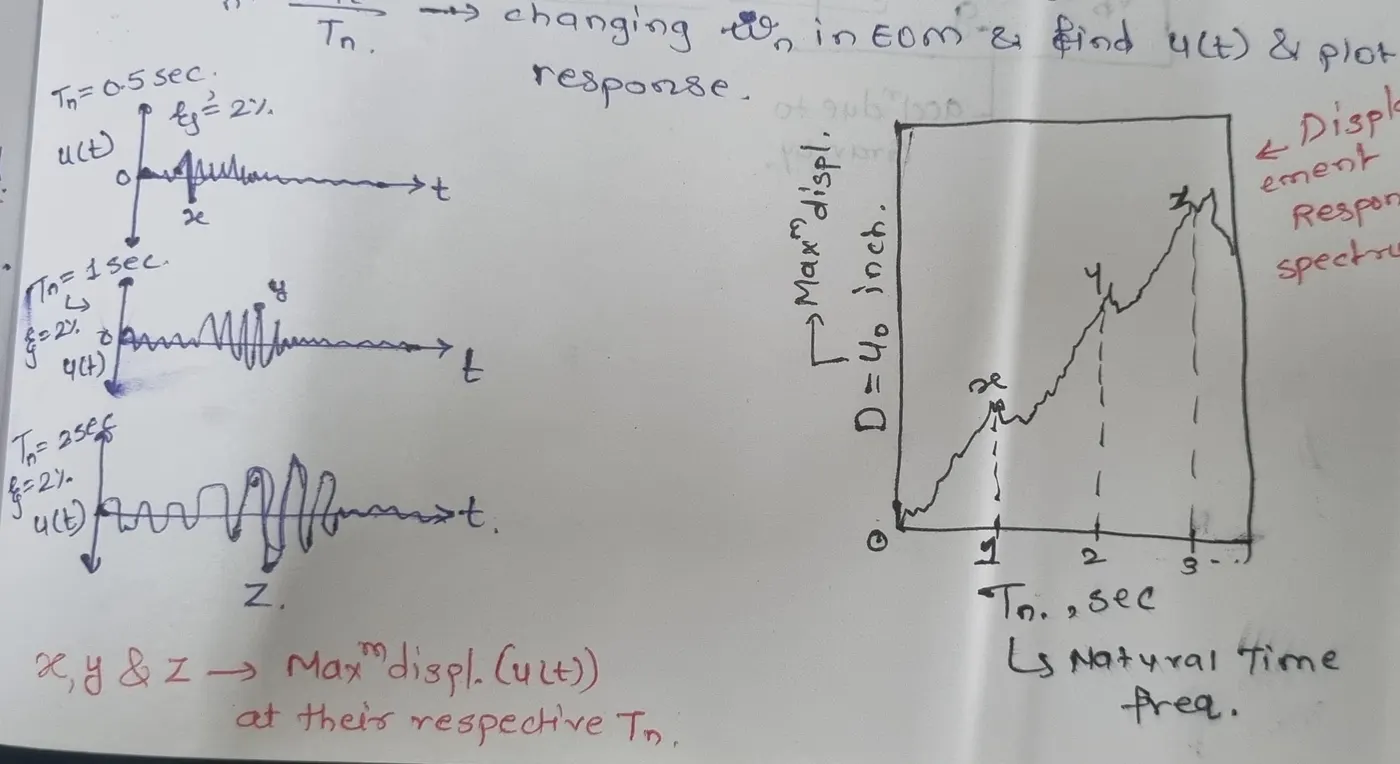
- It is a central concept in earthquake engineering, response spectrum is a practical means of characterizing ground motions and their effects on structures of different Tn .
- A plot of the peak value of a response quantity (u,v and a) as a function of the natural vibration period Tn of the system,is called the response spectrum for that quantity.
- Each such a plot isdoe the Single degree of fredom haaavin fixed damoing ratio and several such plots for different values of damping ratio are included to cover the range of damoing values encountered in actual structure.
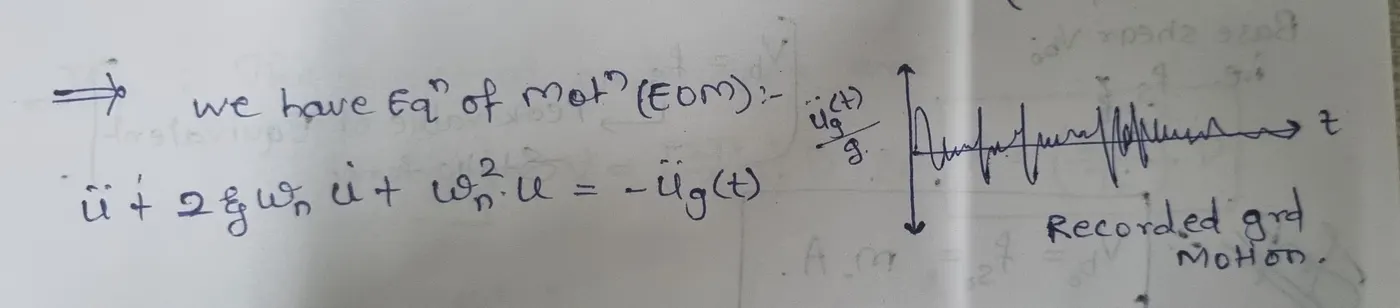
- we have equation of motion (EOM):