Structural dynamics
|
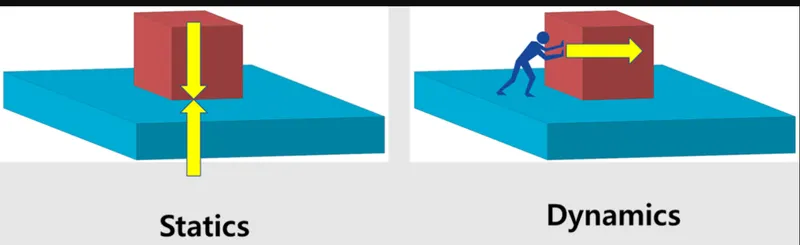
1. STATIC ANALYSIS |
DYNAMIC ANALYSIS |
| *Represents all possible states and transition in all possible case proceedings | *Represents one particular case proceedings |
| *Super set of ideal model,generalisation and upper bound | *subset of ideal model,specialisation,lower bound |
| *Checks the code without trying to execute it | *Check the execution of codes inside a virtual sandbox |
2. a) Elastic behaviour :
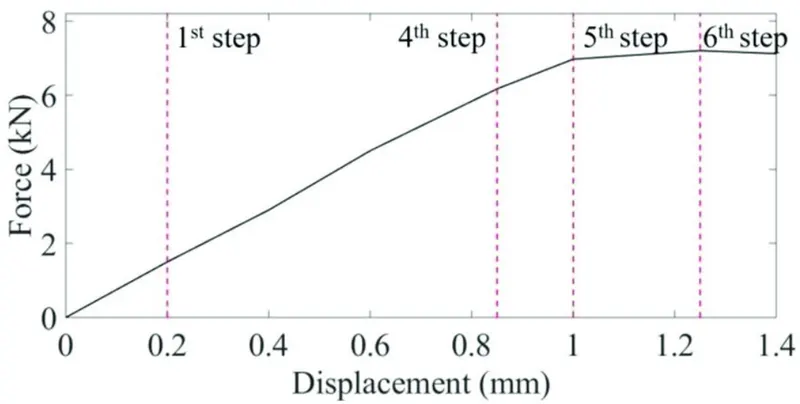
b) Inelastic behaviour :
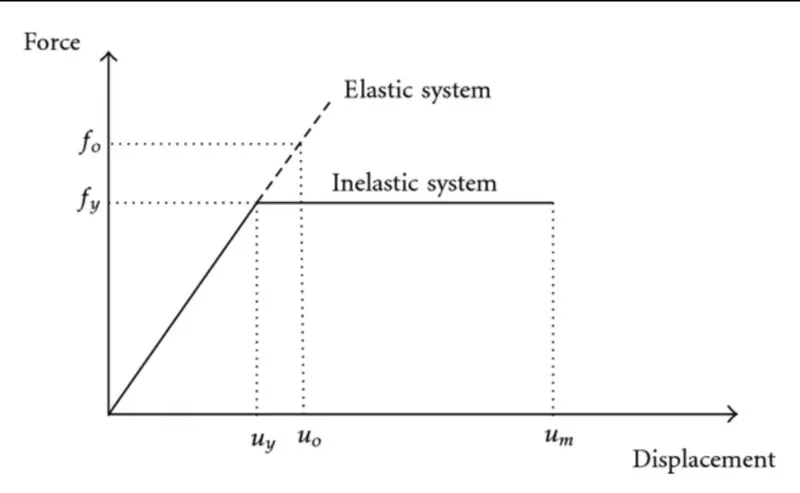
c)Plastic behaviour:
d) Non linear inelastic behaviour :
3)MASS :
The equation of motion of a particle of mass 1g is d2 x dt2 + pi2x = 0, where x is displacement in mm from mean position
Stiffness :
The equation of motion for a spring mass system excited by a harmonic force is Mx + Kx = Fcos (wt) where M is the mass, K is the spring stiffness, F is the force amplitude and w is the angular frequency of excitation.
DAMPING COMPONENTS :
Damping force is denoted by Fd. Fd = - pv where v is the magnitude of the velocity of the object and p, the viscous damping coefficient, represents the damping force per unit velocity.
4.RELATION BETWEEN NATURAL PERIOD AND NATURAL FREQUENCY :
A building's natural frequency is simply inverse of the fundamental period and for flexible and dynamically sensitive building and other structures this natural frequency is used in the gust factor.
Natural period - The no of seconds it takes for the building to naturally vibrate back and forth
Natural frequency - The frequency at which a system oscillates when not subjected to a continuous or repeated external forces.
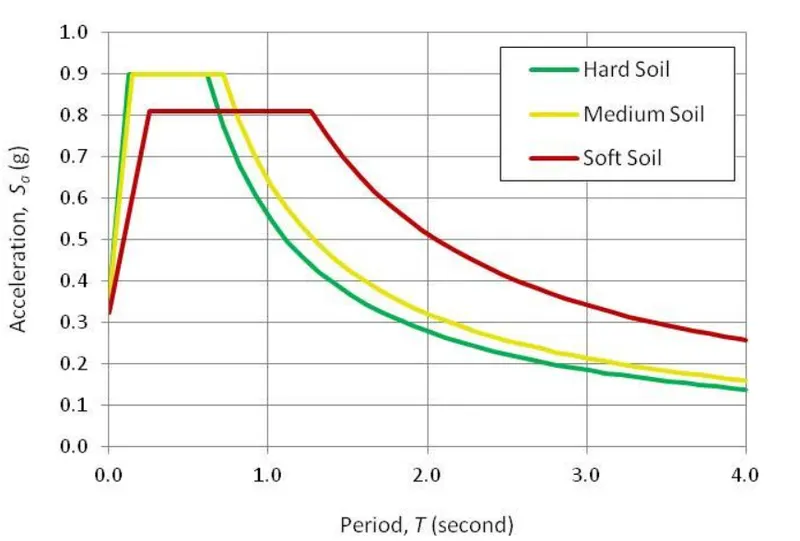
5.RESPONSE SPECTRUM :
A Response spectrum is a plot of the peak or steady state response of a series of oscillations of varying natural frequency that are forced into the motion by the same base vibration or shock.The resulting plot can then be used to pick off the response of any linear system given its natural frequency of oscillation.