Structural dynamics
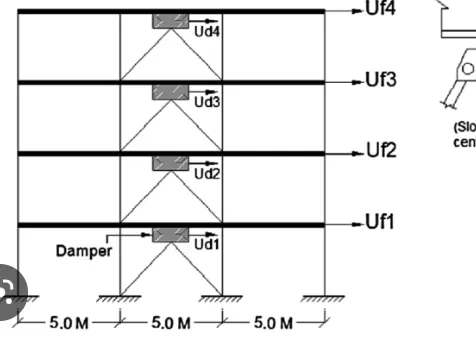
1. Differentiate Static analysis and Dynamic analysis with proper representing pictures (30 marks)
| Static Testing | Dynamic Testing |
|---|---|
| no variation of time with load | variation of toad with time |
| In static testing whole code is not executed. | In dynamic testing whole code is executed. |
| motion cannot be disregarded | motion is fundmentslly used |
| Static testing is performed before code deployment. | Dynamic testing is performed after code deployment. |
| Static testing is less costly. | Dynamic testing is highly costly. |
| 3 DOF is necessary to define the displacement | only 1 DOF is necessary to define the displacement |
2. Explain the following with a relevant force-displacement graph (40 marks)
- Elastic behavior
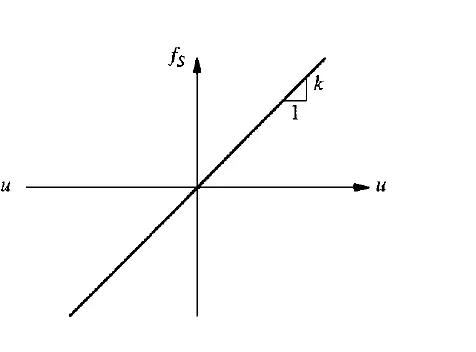
As we can see in the above figure fs= u(t) . it means external force or force is a single-valued function that is only a function of u (t)
the only assumption in this is it remains in elastic when we increase the force
fs = K.u
where fs is the force
K is the lateral stiffness of the material
u is the displacement of the object
2.Inelastic behavior
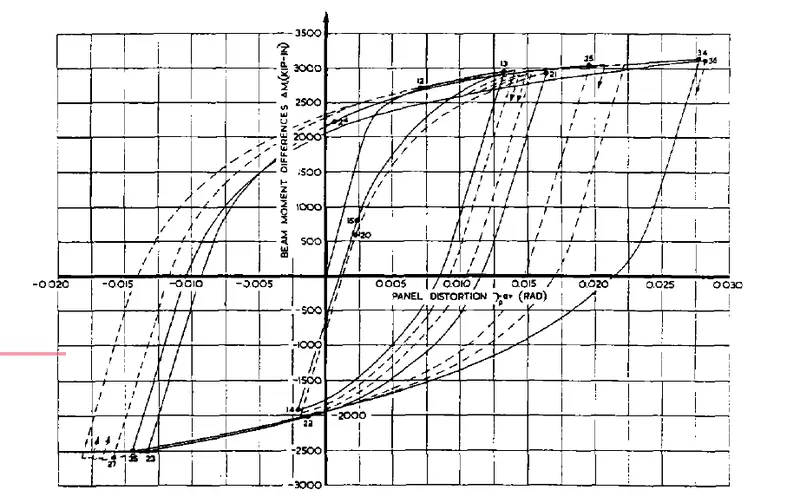
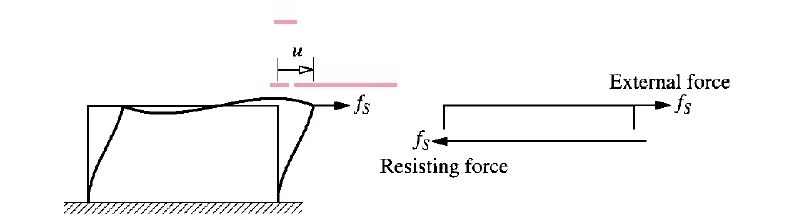
this above figure implies that the force fs corresponding to the deformation u is not single valued and depends on the history of the deformations and whether the deformation is increasing (positive velocity) or decreasing.
the resisting force cn be expressed as
fs=fs (u,v)
where u and v are the displacement and the v is the velocity respectively.
3. Plastic behavior
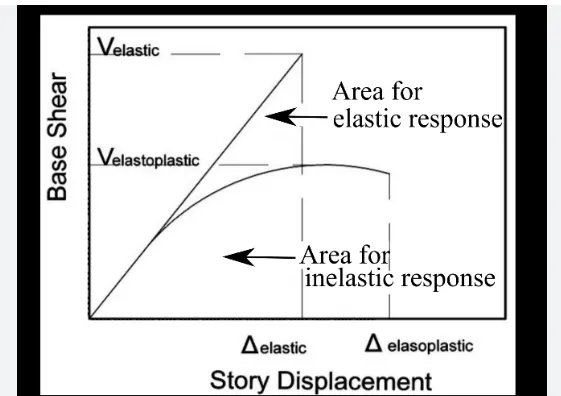
- Elastic deformation: when the load is removed, the object will return to its original shape
- Plastic deformation: when the load is removed, the object will not return to its original shape or length. This is beyond the elastic limit
- Elastic limit: the point beyond which the object does not return to its original length when the load is removed
- These regions can be determined from a Force-Extension graph:

4.Non-linear Inelastic behavior
3. Explain Mass, Stiffness & Damping components in the equation of motion (30 marks)
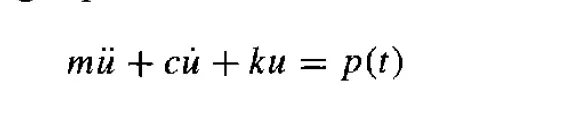
where mu - is the mass component of the structure that is the inertial force used to deform the structure.
the mass component which is concentrated at the roof of the structure or the building
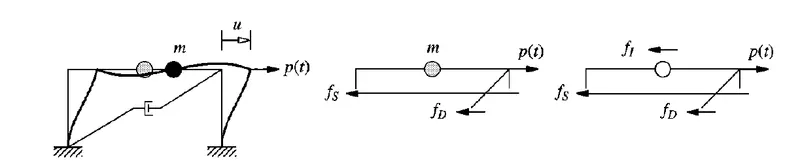
The Stiffness component - fs= ku
The stiffness,of a body is a measure of the resistance offered by an elastic body to deformation. For an elastic body with a single degree of freedom (DOF) (for example, stretching or compression of a rod), the stiffness is defined as

where,� is the force on the body
- �
 is the displacement produced by the force along the same degree of freedom (for instance, the change in length of a stretched spring)
the stiffness of the structure is defined by the above formula where fs is the force on the structure
k= lateral stiffness which is defined as force /length
u= displacement of the structure
The Daping Component - fd= cv
where fd is the damping force
c = daping component
v= velocity of the structure in the motion
4. Provide relationship between Natural period (Tn) & Natural frequency (f) and provide their definitions (25 marks)
- Natural period (Tn) – the vibration of the system (Tn) is the time required for the undamped system to complete one cycle of free vibration (seconds).
- Tn = 2π/ωn or ωn = 2π/Tn
- Natural frequency (f) - number of the cycle (or one complete revolution) executed by the system in one second with units in hertz.
- f=1/Tn
- Natural vibration properties ωn, Tn, and f depend only on the mass and stiffness of the structure.
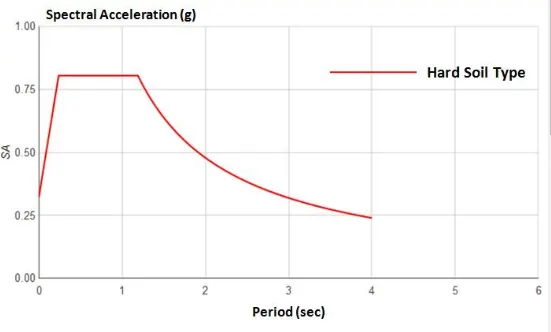
Explain in detail about Response spectrum & its Graph (25 marks)
- A response spectrum is a function of frequency or period, showing the peak response of an SHM oscillator that is subjected to a TRANSIENT event. It is a function of the natural frequency of the oscillator and of its damping. Thus, it is not a direct representation of the frequency content of the excitation (as in a Fourier transform), but rather of the effect that the signal has on a postulated system with a single degree of freedom (SDOF).
-
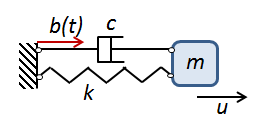
Analysis of an SDOF System
Consider a mass-spring-damper system attached to a moving base. The foundation has a given movement,
 .
.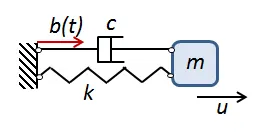 The SDOF system.
The equation of motion for the mass can, if there are no external forces, be written as

Dividing by the mass, and using customary notation,

Here, the undamped natural (angular) frequency is

and the damping ratio is