Steady Vs Unsteady flow over a cylinder
Question:
Simulate the flow over a cylinder and explain the phenomenon of Karman vortex street.
PART-I
- Simulate the flow with the steady and unsteady case and calculate the Strouhal Number for Re= 100.
PART-II
- Calculate the coefficient of drag and lift over a cylinder by setting the Reynolds number to 10,100,1000,10000 & 100000. (Run with steady solver)
- Discuss the effect of Reynolds number on the coefficient of drag. [ Results should be validated with any standard literature and error should be within 5 %]
Expected results:-
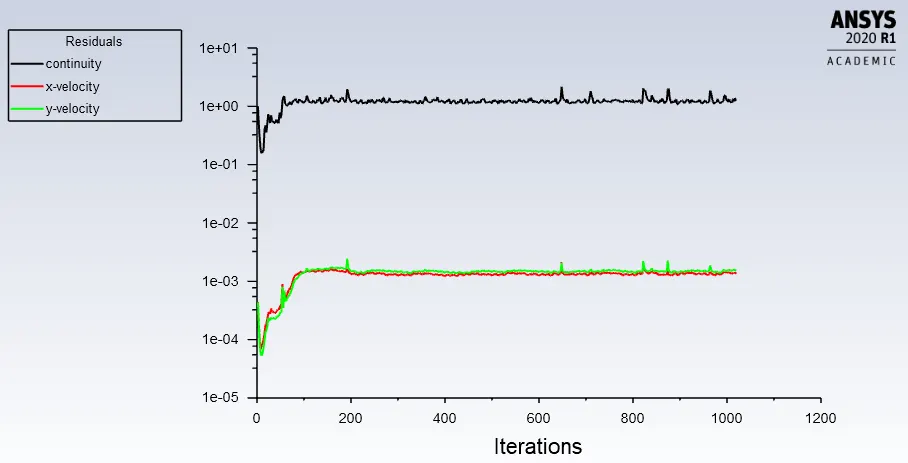
- In both approaches, show that the flow has converged. That is, what quantities or plots need to be looked at to determine that the flow has converged?
- Plots of the coefficient of drag and lift.
- Plots to show vortex shedding behind the cylinder.
- Mention the preferred material at the end of the challenge submission page.
Solution:
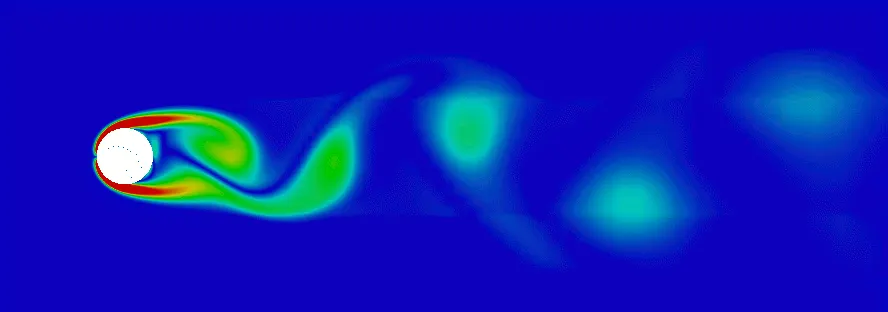
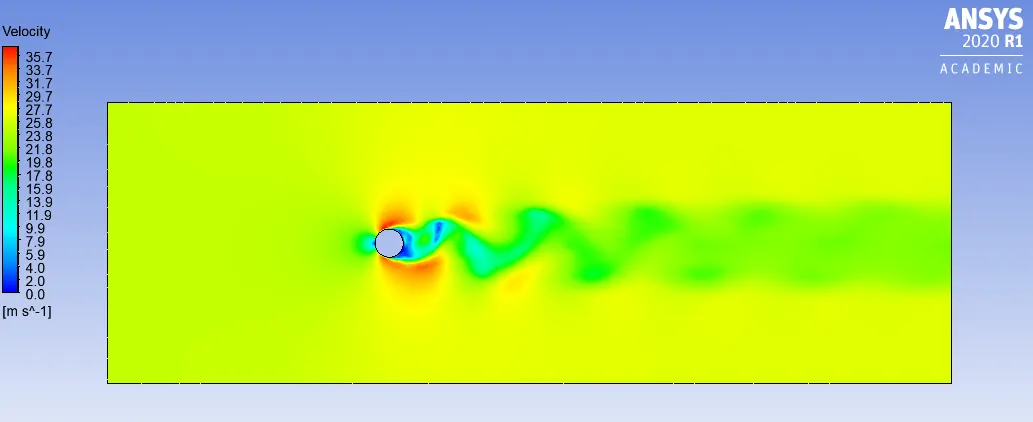
When fluid flows around a cylindrical object, there is a range of flow velocities for which a von Karman vortex street is formed. For velocities exceeding laminar flow, the inertia of the fluid starts to become significant and, as the fluid stream passes the frontmost part of the cylinder, it is unable to negotiate the rear half of the cylinder. Hence the fluid tends to separate from the front surface and peel off as it approaches the rear end of the cylinder, ending up shedding vortices.
Kármán vortex street (or a von Kármán vortex street) is a repeating pattern of swirling vortices, caused by process known as vortex shedding, which is responsible for the unsteady separation of flow of a fluid around blunt bodies.
Geometry:
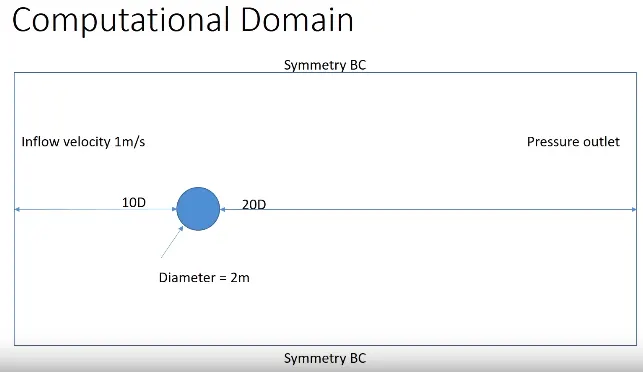
>Cylinder Dia, D = 2m
Meshing:
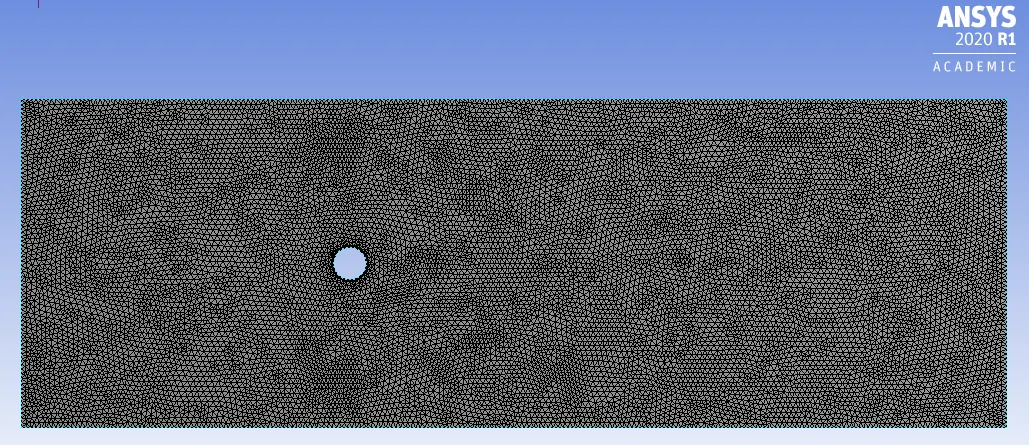
>Type of Meshing used: Triangular Meshing
>Element Size: 0.30m
>Number of Elements: 28280
>Number of Nodes: 28280
-Inflation Layer:
The inflation layer control is introduced at cylinder wall to create thin elements that can capture the normal gradient with minimal elements, with appropriate growth rate.. Inflation layers are used to correctly capture the velocity and temperature gradients near no-slip walls.
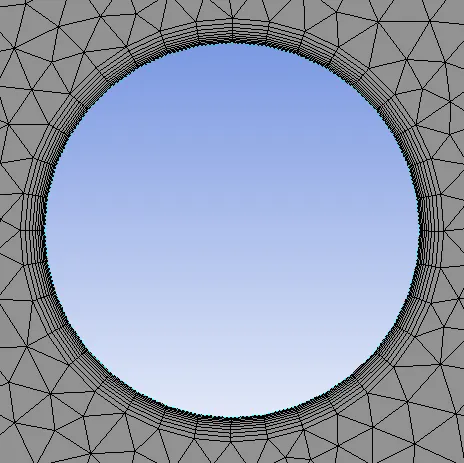
>Maximum Layers: 10
>Growth Rate: 1.2
-Edge Sizing:
Edge sizing is introduced for smooth distribution of mesh around cylinder wall.
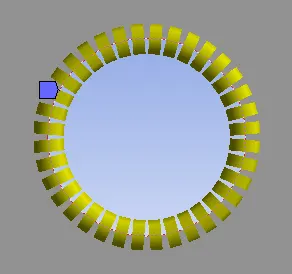
>Number of Divisions: 36
Set Up:
a. Material: Fluid
>Fluid Density: 1 kg/m3
>Fluid Viscosity: 0.05 kg/m-s
b. Boundary Conditions:
>No slip boundary condition as the velocity over first cell of cylinder wall is zero.
>Cylinder wall is considered to be stationary and fixed.
c. Viscous Model: Laminar
PART 1:
1. Steady Flow for Re = 100:
We know that,
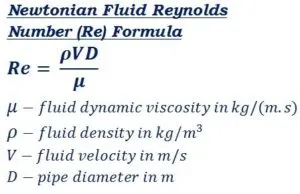
Therefore, for given Re = 100, Fluid Velocity = 2.5 m/s
-Results of Steady State:
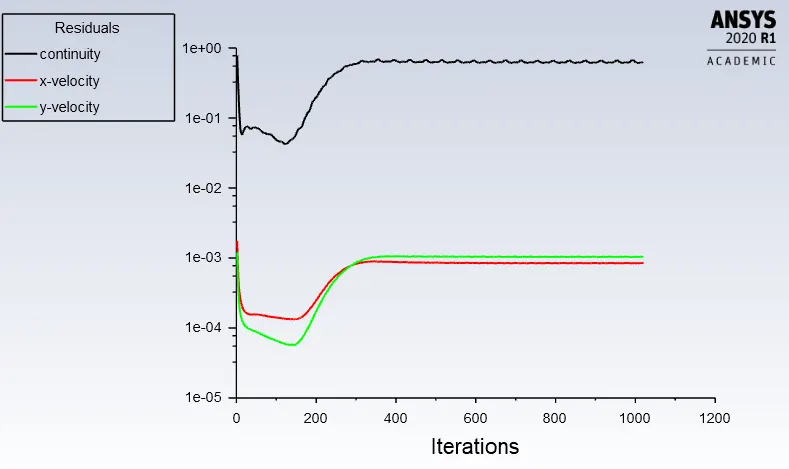
>Residual Plot:
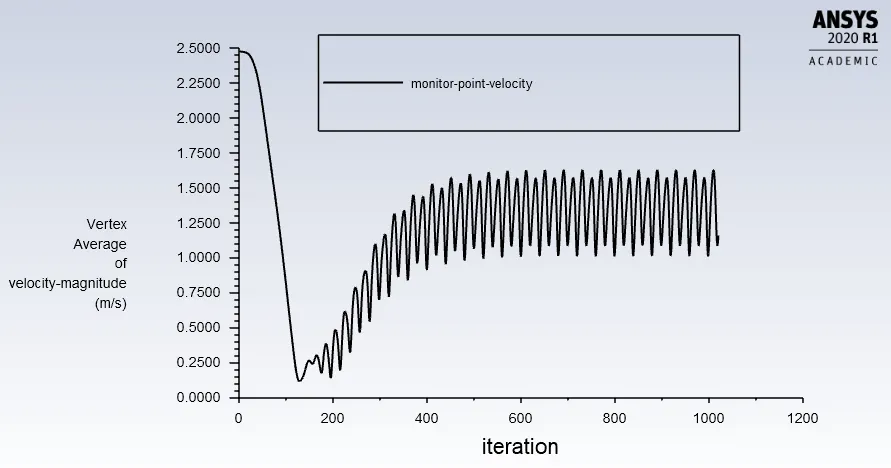
>Vertex Average of Velocity Magnitude Plot:
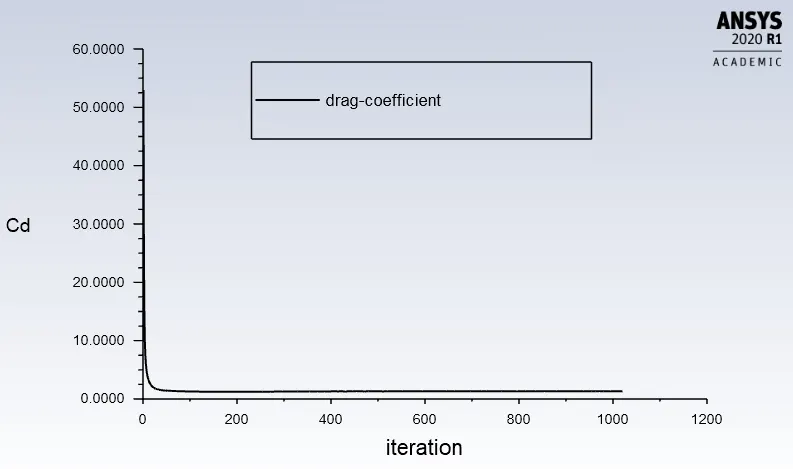
>Coefficient of Drag Plot:
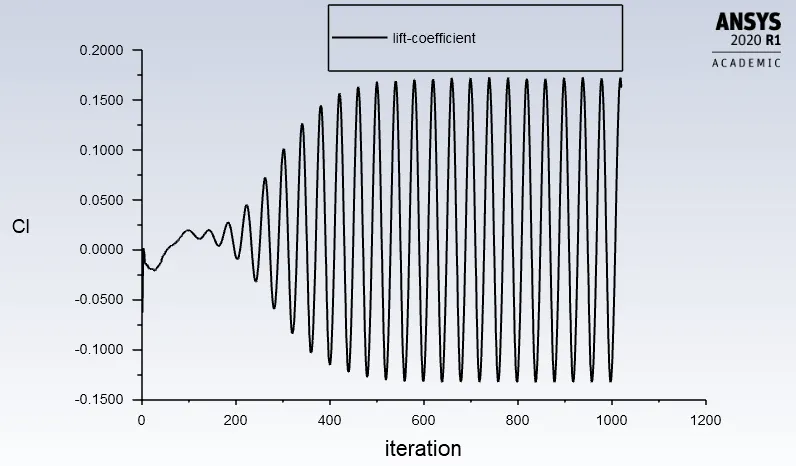
>Coefficient of Lift Plot:
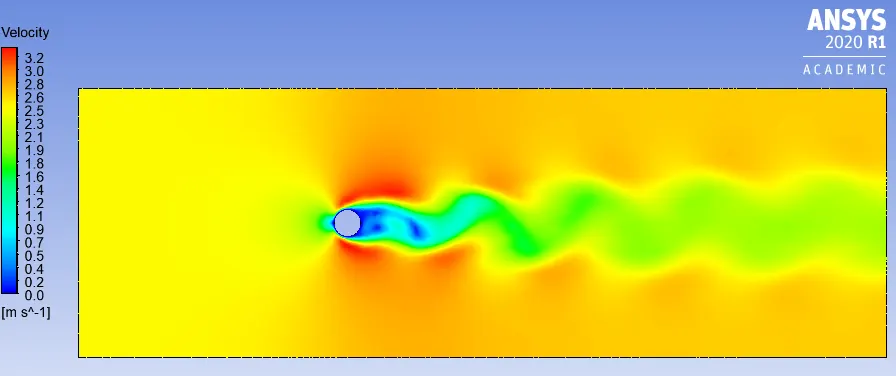
>Velocity Contour Plot:
>Animation of the steady flow over cylinder at Re=100:
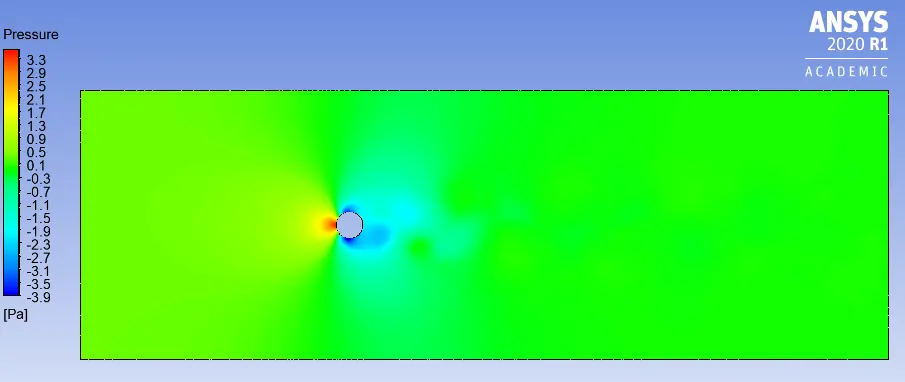
>Pressure Contour Plot:
The Strouhal number represents the ratio of inertial forces due to the local acceleration of the flow to the inertial forces due to the convective acceleration. Depending on the time scale of the problem, this ratio may be of order unity, and therefore its importance is not obvious.
Furthermore, if the flow velocity increases, the frequency of vortex formation will likewise increase, leading to a direct relation between the two. The proportionality constant is called the Strouhal number and turns out to be a function of the Reynolds number. For that reason it is now known as the Strouhal-Reynolds number.
Strouhal number is defined as St = fD/U, where f is the vortex shedding frequency, D is the diameter of the sphere, and U is the free-stream velocity. It is very nearly equal to 0.2 for a large range of Reynolds numbers.
In a steady flow, velocity at given point is zero. Hence, Strouhal number cannot be calculated for steady flow.
2. Unteady Flow for Re = 100:
-Results of Steady State:
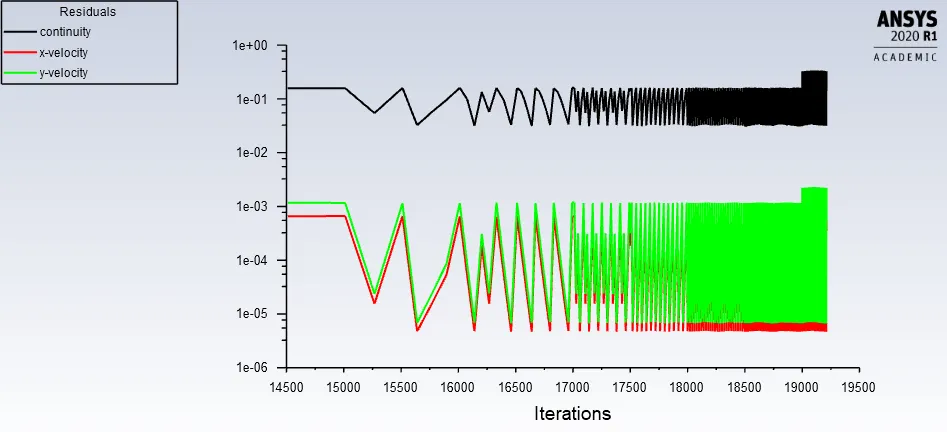
>Residual Plot:
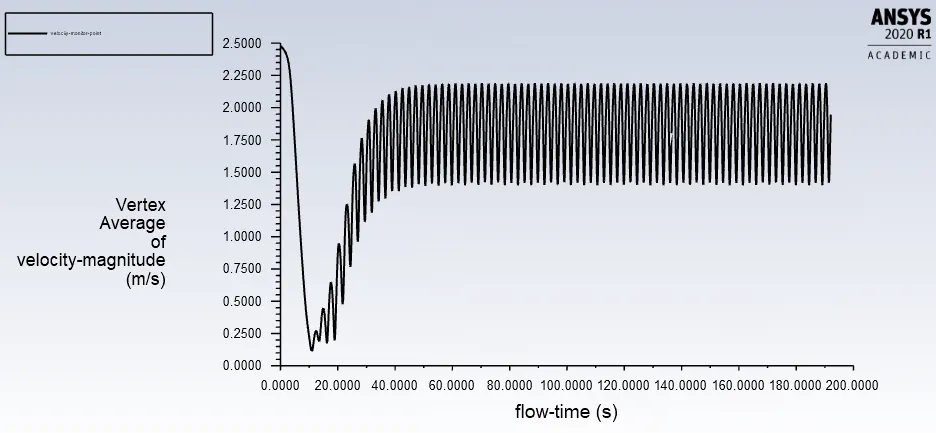
>Vertex Average of Velocity Magnitude Plot:
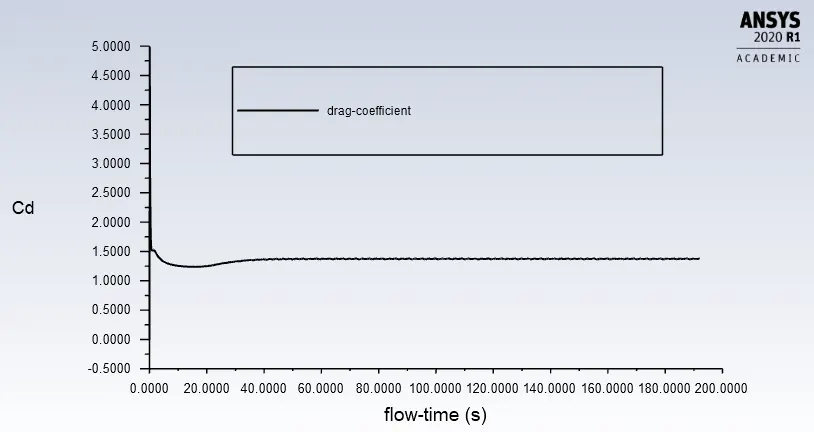
>Coefficient of Drag Plot:
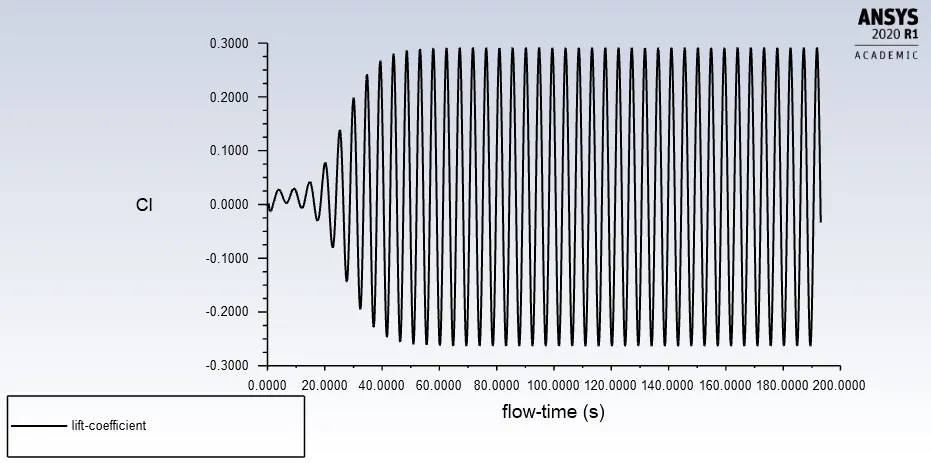
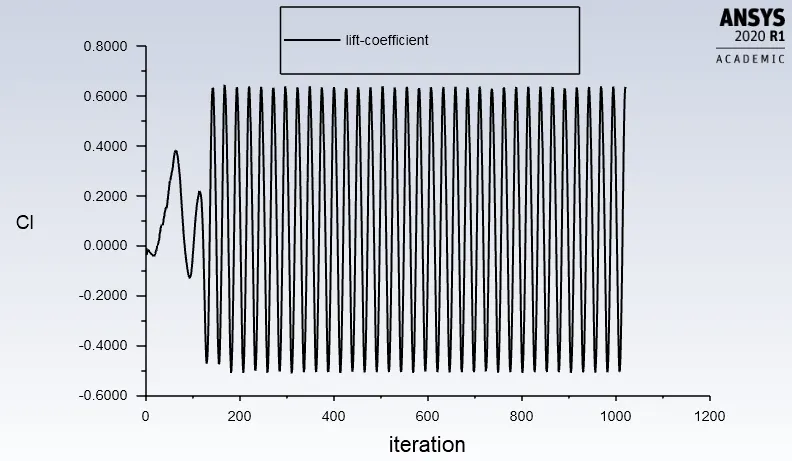
>Coefficient of Lift Plot:
>Strouhal Number for Unsteady State:
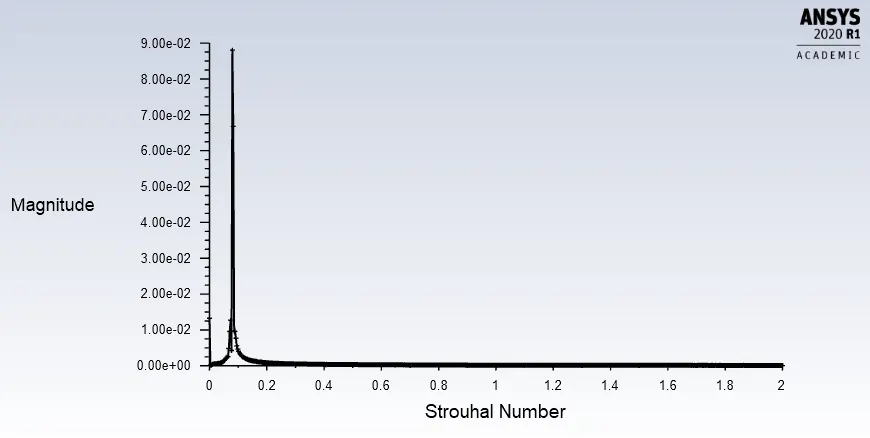
From the above plot, Strouhal Number for the given Transient flow is 0.175
We know that Strouhal number St = fD/U, where f = Number of cycles per unit time = 4/20 = 0.2
Therefore, Strouhal number St = (0.2 X 2) / 2.5 = 0.16
>Velocity Contour Plot:
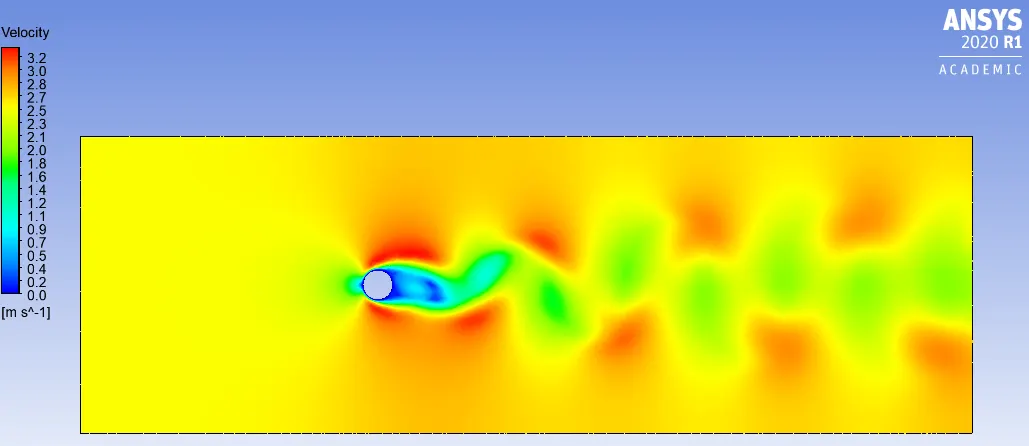
>Animation of the transient flow over cylinder at Re=100:
>Pressure Contour Plot:
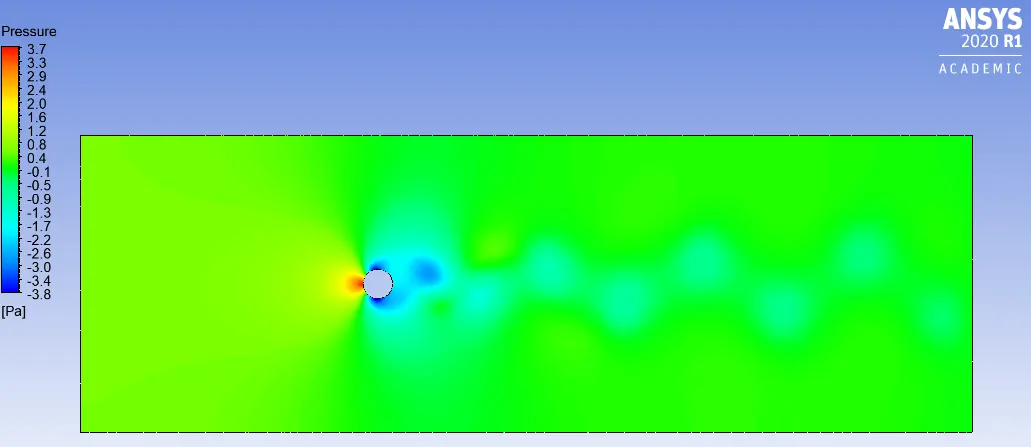
>Coefficient of Lift and Drag values for Steady and Unsteady Flow for Re=100:

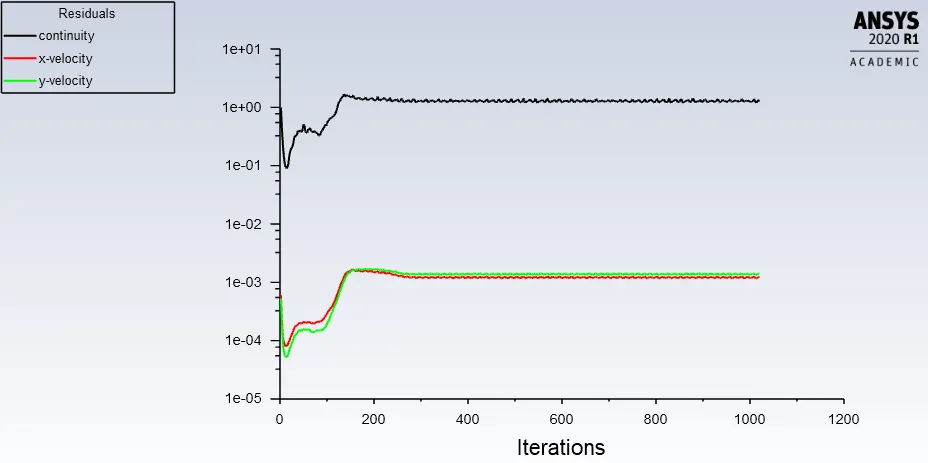
Referring to the above plots and contours obtained from the simulation, it can be concluded that the flow has converged in both cases.
PART-II
1. Coefficient of drag and lift over cylinder for Reynolds numbers 10,100,1000,10000 & 100000 (steady solver).
a. Re = 10
>Residual Plot:
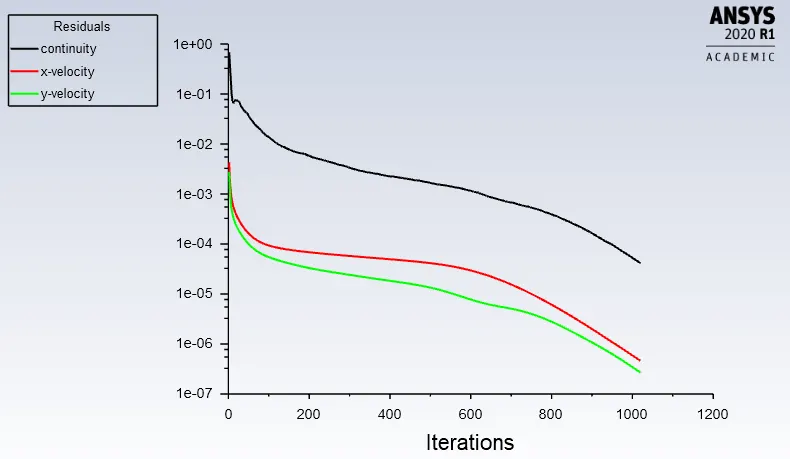
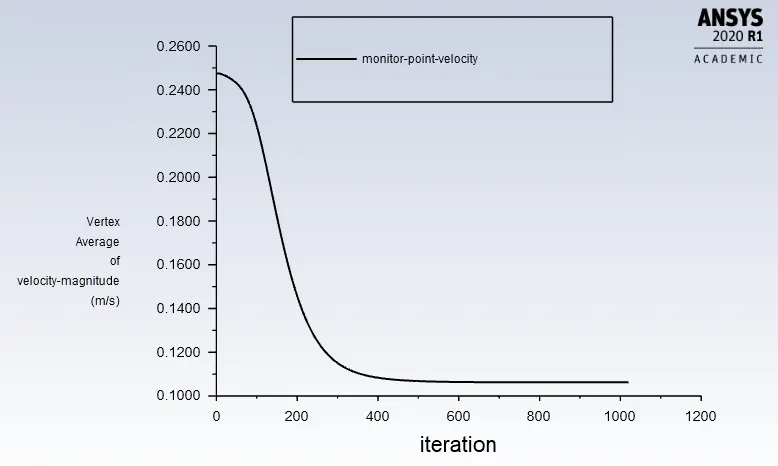
>Vertex Average of Velocity Magnitude Plot:
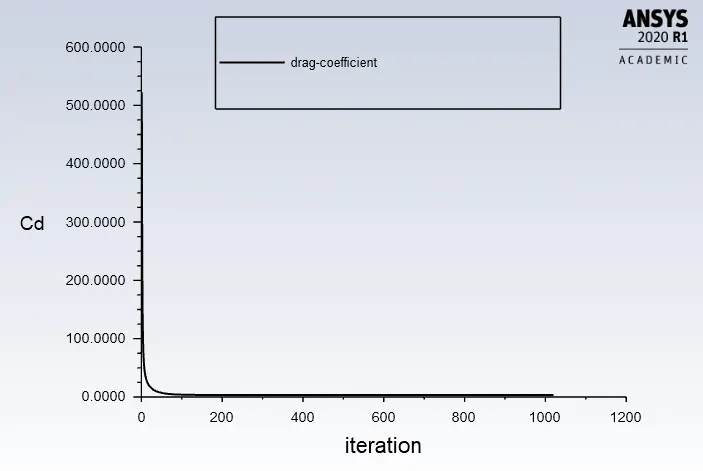
>Coefficient of Drag Plot:
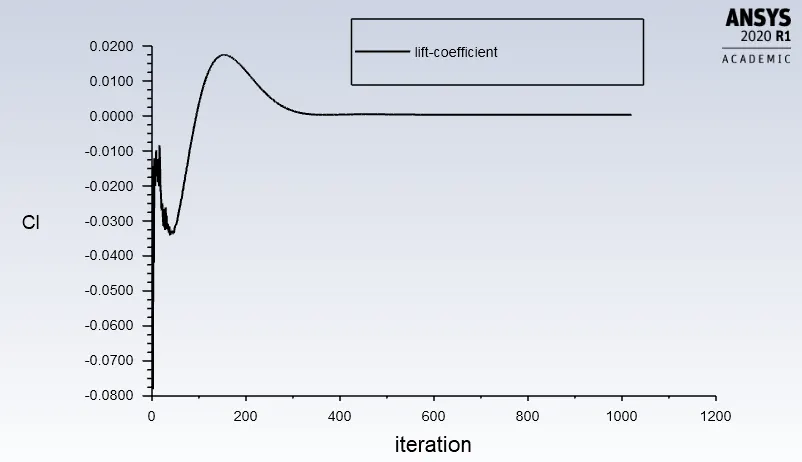
>Coefficient of Lift Plot:
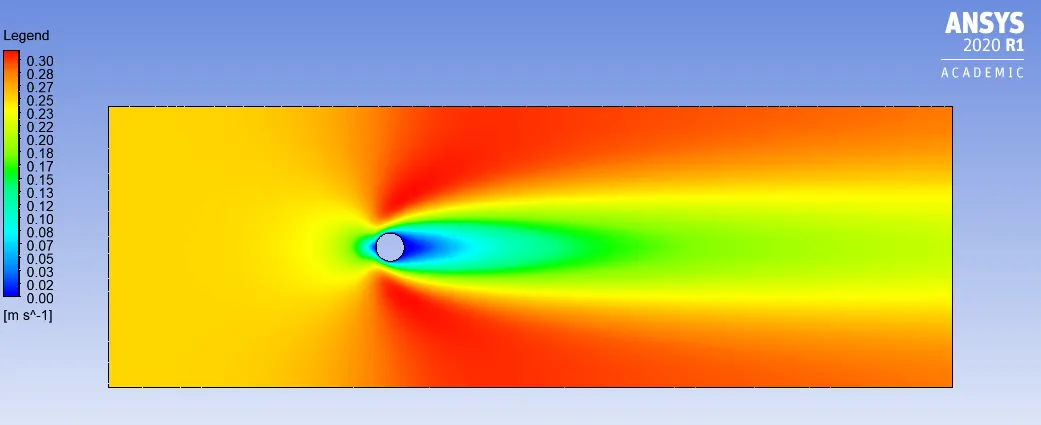
>Velocity Contour Plot:
>Pressure Contour Plot:
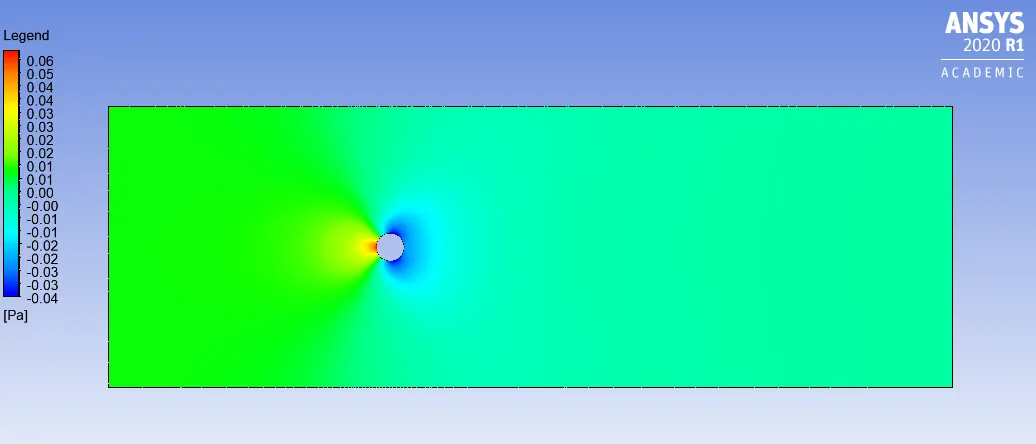
b. Re = 100
>Residual Plot:
>Vertex Average of Velocity Magnitude Plot:
>Coefficient of Drag Plot:
>Coefficient of Lift Plot:
>Velocity Contour Plot:
>Pressure Contour Plot:
c. Re = 1000
>Residual Plot:
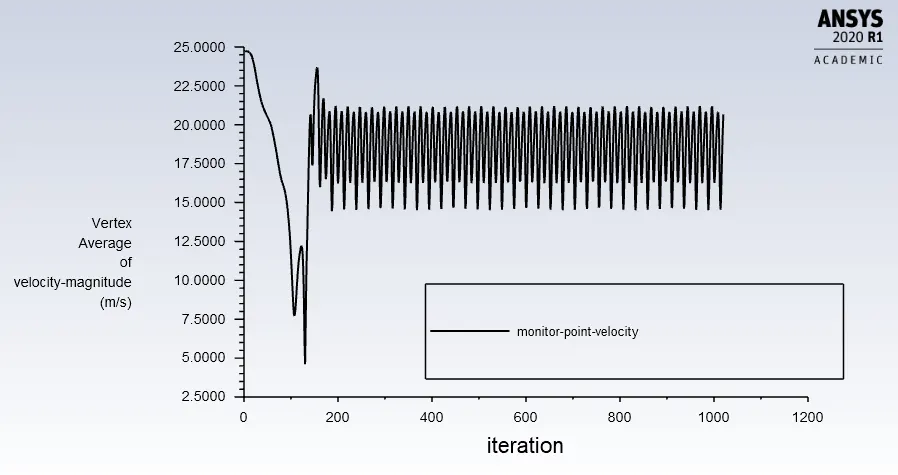
>Vertex Average of Velocity Magnitude Plot:
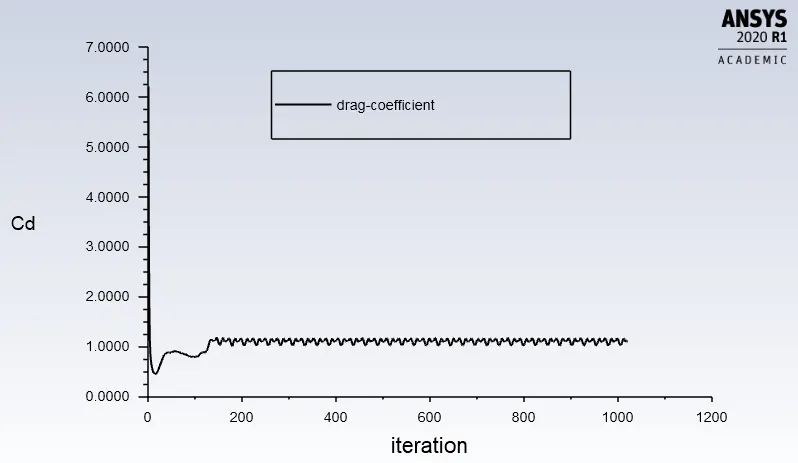
>Coefficient of Drag Plot:
>Coefficient of Lift Plot:
>Velocity Contour Plot:
>Pressure Contour Plot:
c. Re = 10000
>Residual Plot:
>Vertex Average of Velocity Magnitude Plot:
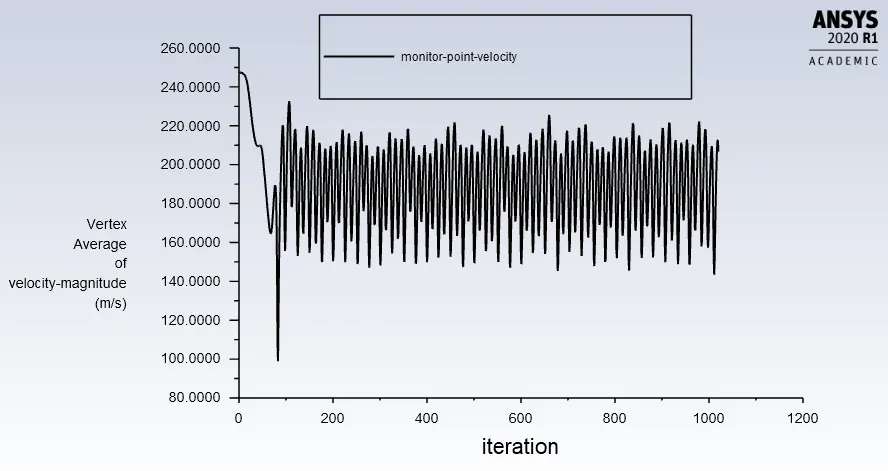
>Coefficient of Drag Plot:
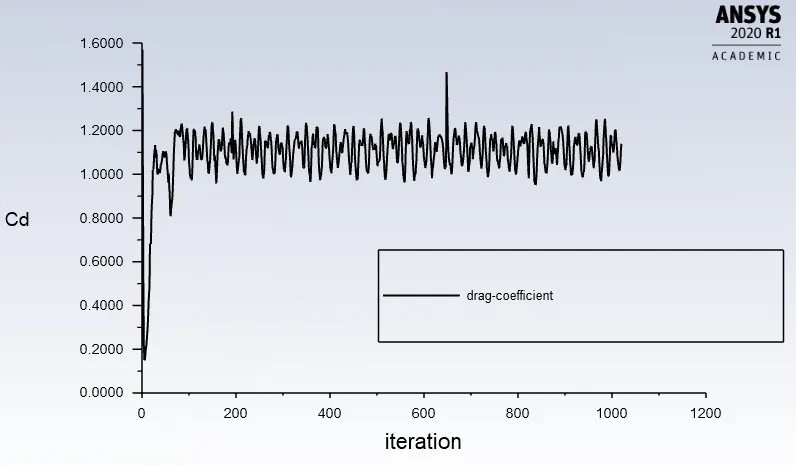
>Coefficient of Lift Plot:
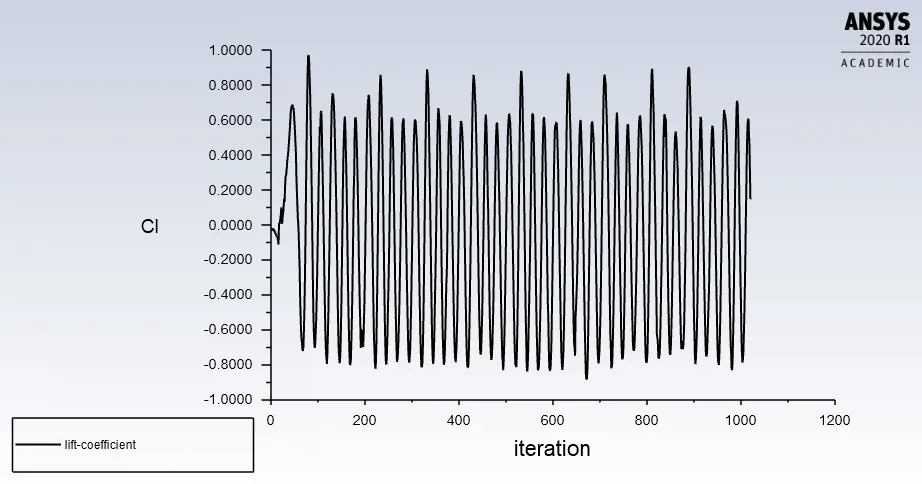
>Velocity Contour Plot:
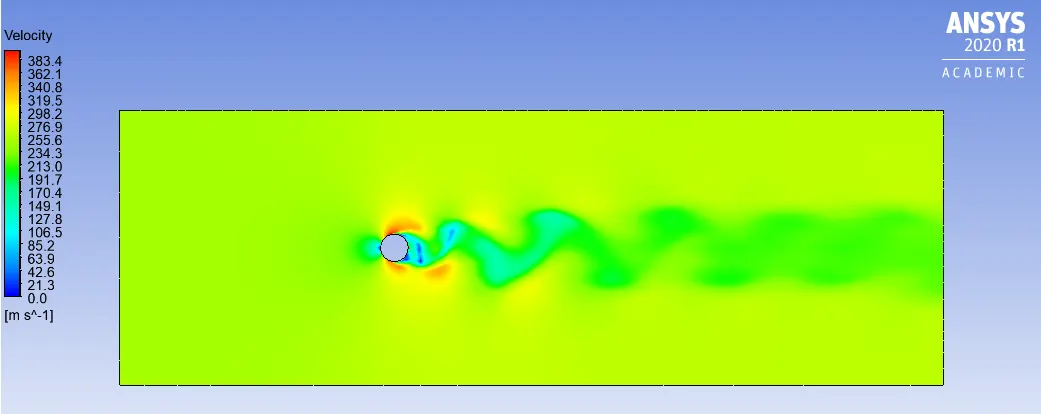
>Pressure Contour Plot:
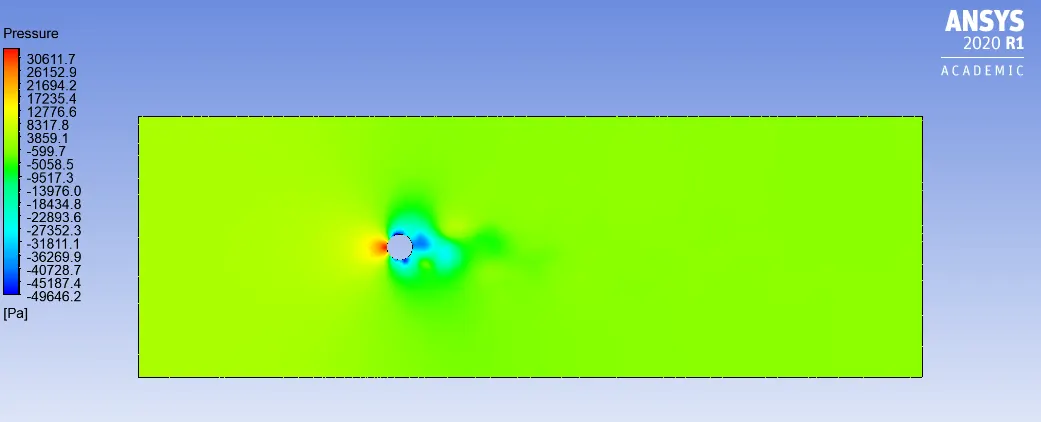
d. Re = 100000
>Residual Plot:
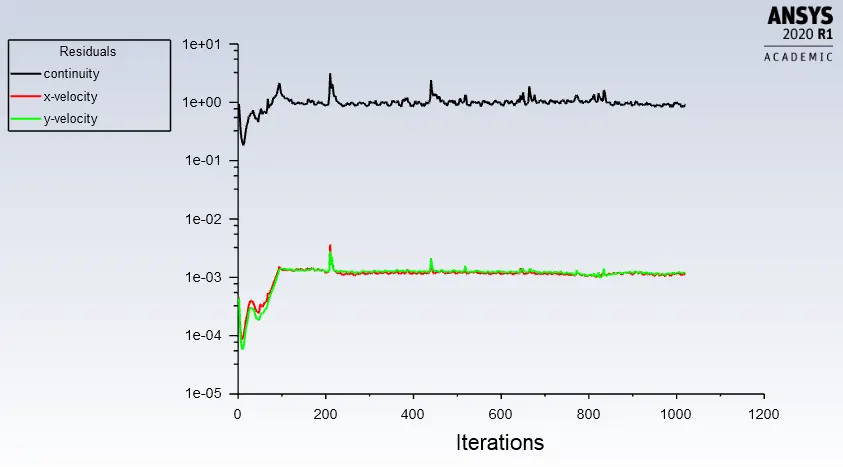
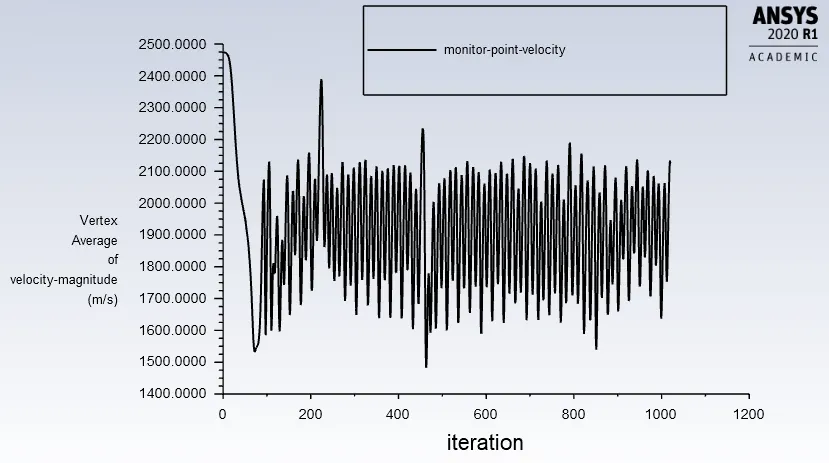
>Vertex Average of Velocity Magnitude Plot:
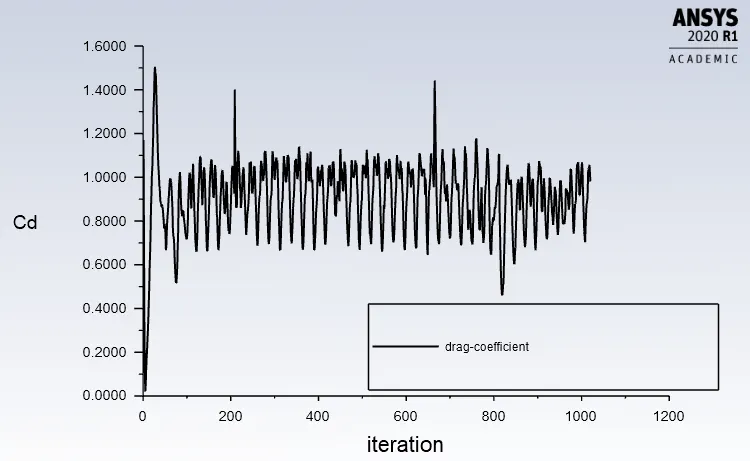
>Coefficient of Drag Plot:
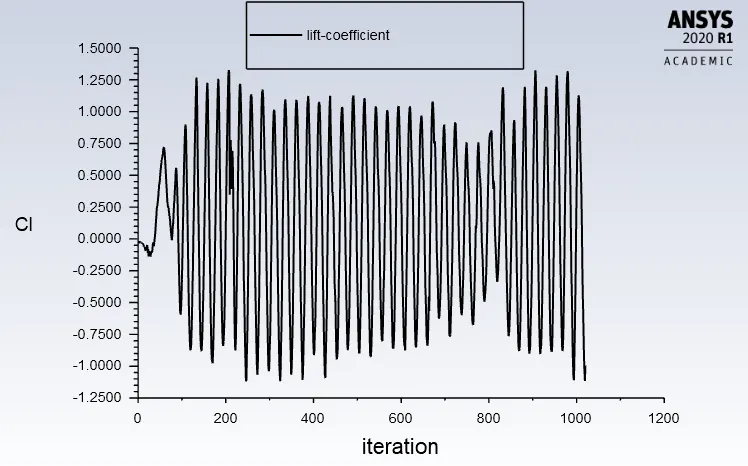
>Coefficient of Lift Plot:
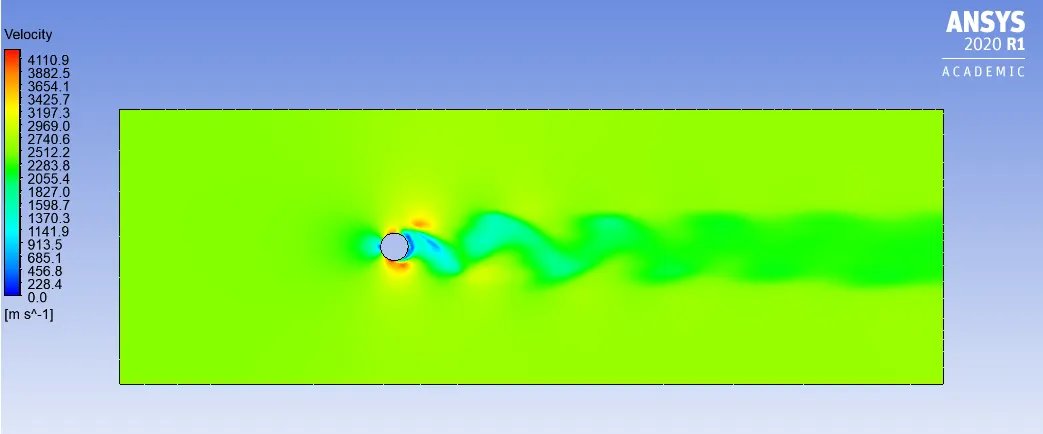
>Velocity Contour Plot:
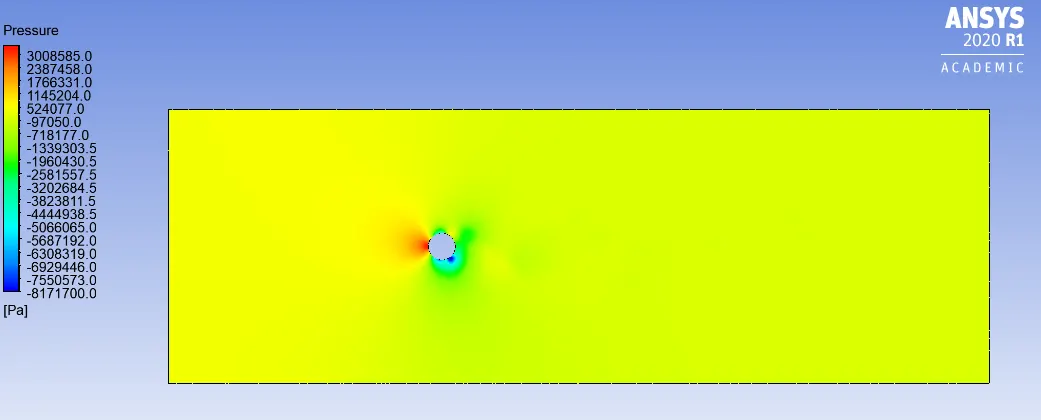
>Pressure Contour Plot:
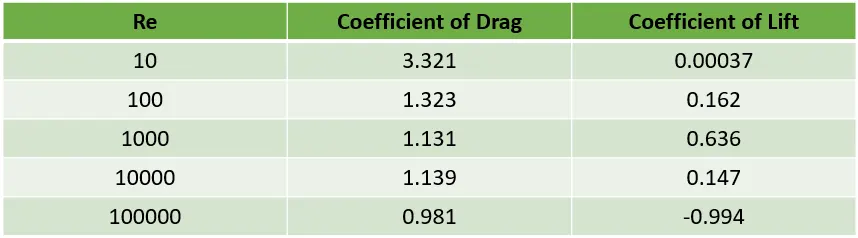
- Coefficient of drag and lift values of the cylinder for Reynolds numbers 10,100,1000,10000 & 100000:
2. Effect of Reynolds number on the coefficient of drag:
From the above results following can be observed:
- As the Re increases coefficient of drag decreases accordingly.
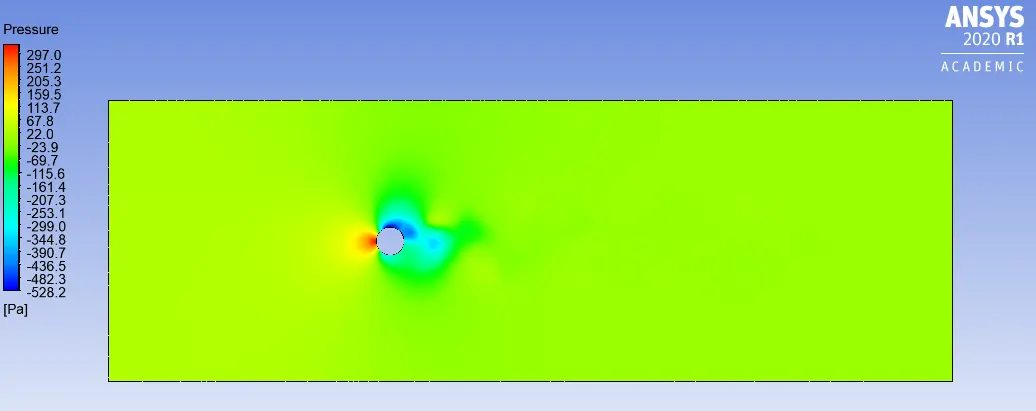
- The increase in Re leads to shedding of vortices from upper and lower cylinder surface at a particular frequency. At lower Re=10, there is no formation of vortices. Vortex shedding takes place at higher Re like 100, 1000, 10000 and 100000 from the above results obtained from simulation.
- Transient model is appropriate for Vortex Karman Street phenomenon as it is time dependent.
>Validation of Cd value obtained for Re=100, with respect to any standard literature:
- Cd value from literature [1] for 2-D = 1.3353

- Cd value obtained from the simulation for Re 100 = 1.323
Percentage of error = [(1.3353-1.323)/1.3353] X 100 = 0.91%
From comparing the value of Cd [1] with Cd value obtained from the simulation carried out, it can be observed that percentage of error is within 5%.
References:
[1] Numerical simulation of laminar flow past a circular cylinder, CTFD Division, National Aerospace Laboratories, Airport Road, Bangalore